




Does Increasing Popularity of Wilderness Areas Destroy Their Appeal?
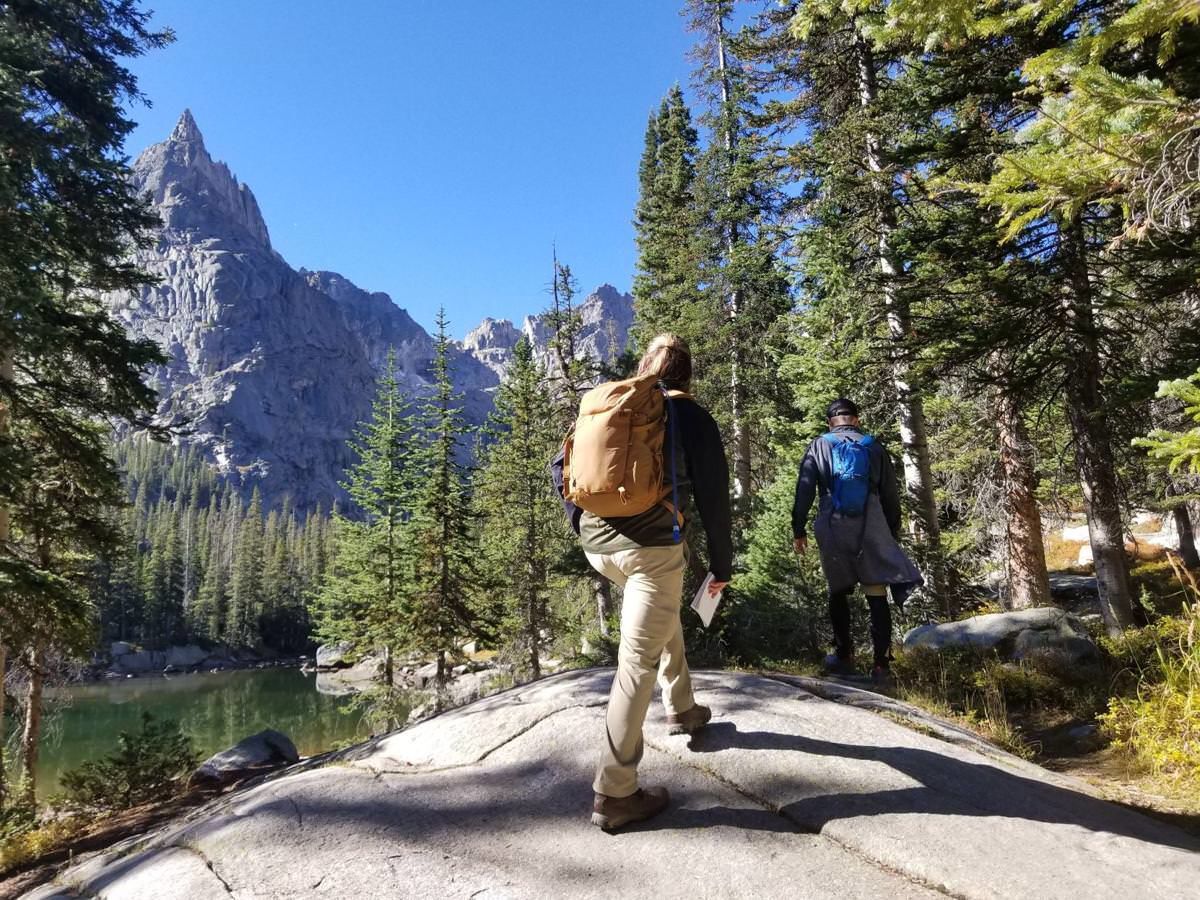
Lone Eagle Peak is there when the wildflowers burst around it. When the aspen leaves glow beside the trail through the Indian Peaks Wilderness, it’s there, the fall air in this glacial cirque chilling, but not as chilling as the mountain’s emotional effect.
It is hauntingly beautiful, appearing like a perfect, gray pyramid over the emerald lake it protects. Lone Eagle Peak is there when the deep water freezes, when the snow piles high. It feels most natural then, because no one is around. Except for Andy Borek.
The wilderness manager pays respects every season — a particular favorite is the first dusting on that impossibly sharp summit. For these regular visits, he considers himself privileged.
“It’s iconic, gorgeous,” he says of the 11,919-foot peak, named in honor of Charles Lindbergh, best known for his achievements in flight but whose environmentalism better suits the context of this granite marvel.
“I would rather have birds than airplanes,” Lindbergh once famously said. And indeed, the mount resembles an eagle’s beak aimed at the heavens, its mighty wings the glaciers sprawling on either side. Lindbergh spoke adamantly about his fear of technology, about how we would fail to grasp nature because of it.
Yet it’s partly technology to blame for the “loved-to-death” description by Borek. One sees Lone Eagle Peak’s picture on social media and absolutely must visit — ready or not for the 15-mile day required if all of the 12 designated campsites are taken, as is typically the case on weekends. (After Sept. 15, the sites are first come, first served.)
Look up the Cascade Trail and find nothing but praise.
“It’s too easy to pull up Summit Post or Mountain Project and see those star ratings,” Borek says of the popular websites. “That’s great. It’s a beautiful trail. But if everybody does it, you’re not gonna have, in my opinion, the best experience.”
Though Lone Eagle is awe-inspiring, his return visits always reinforce the conflict raging within him.
He wants people to see it. It’s their “intrinsic right,” he tells me, taking time between fighting the Silver Creek Fire, away from his post at the Sulphur Ranger District.
“I have a deep, deep love and respect for that area,” Borek says, “but it’s hard for me to see so many people that don’t have good education or good camping practices.”
In 2017, he and fellow rangers tallied 450 illegal fire rings in the area, despite rules posted at the trailhead, at the junction entering the Crater Lake backcountry and on permit slips. Also last year, more than 26,000 people signed the registry at this western portal of the Indian Peaks Wilderness, designated by the 1964 act with the decree forgotten by this Front Range boom. Wilderness areas were meant to be places “where the Earth and its community of life are untrammeled by man, where man himself is a visitor who does not remain.”
But the space is plenty in the 76,711-acre wilderness. Unclaimed by north-bordering Rocky Mountain National Park, this is land boasting Colorado’s classic ruggedness, mixed woods with clear streams and valleys with rock promontories, soaring peaks of native legend and alpine realms above 13,000 feet.
The choices are plenty at the end of County Road 6, where from Monarch Lake backpackers set off to higher, less-journeyed destinations. But we were bound for Crater Lake. The picture of Lone Eagle pestered my conscience long enough. I had to see if it was real.
We left late to camp near the trailhead, pulling onto the dirt road through darkness, the black canvas of the lake blending with the sky and its shooting stars. An awakened, grumbling host collected our site fee — sometimes your public lands are $21 — and made sure we saw the kiosk at the ranger station up the road. The machine took my $5 and printed a day slip to be placed on the dash. (Maintenance is expensive, Borek says.)
The trail was empty at daybreak. Soon the sun would rise and illuminate green and golden hillsides and reveal delights not captured in any one picture.
The silence was broken by several cascades. High ridges swirled to distant spires and monoliths. After turning for the Crater Lake backcountry, we found ourselves at a panoramic sanctuary with the forest behind us, the granite wonderland ahead. From this perspective, Lone Eagle was not a pyramid. It had a humpback, and it was still perfect.
We stayed awhile at Crater Lake, long enough for the Saturday crowd to build. On the way back, we were surprised by the number of day hikers coming up, some with unleashed dogs. We warned them about the mother moose and her calves ahead.
We didn’t leave Lone Eagle before pausing for a moment with no one else around. Later, Borek would tell me that sadly, he and his rangers “can’t maintain the opportunity for solitude.”
But this was one. “It’s always hard to leaves places like this,” said my hiking partner. “You’re just so thankful to be here.”
Back home, I was guilty. “I’m guilty too,” Borek said of posting pictures.
Before I knew it, someone had shared mine on Facebook. I read a growing number of excited responses to the question: “Who wants to go with me?”
And maybe I should have felt guilty. But actually, I did not.
Get OutThere
Signup today for free and be the first to get notified on new updates.
PREV
PREVIOUS

The First Diaries: That Time I Hiked My First Thirteener
Facebook Twitter WhatsApp SMS Email Print Copy article link Save Facebook Twitter WhatsApp SMS Email Print Copy article link Save Introducing The First Diaries, a weekly column in which one Coloradan documents her misadventures, trials, and triumphs in the outdoors as she tries a new activity or adventure each week. With humor, practical advice, and some […]
Coal Debate Could Determine Future of Colorado Town
Facebook Twitter WhatsApp SMS Email Print Copy article link Save Facebook Twitter WhatsApp SMS Email Print Copy article link Save To find KS Kreations in downtown Craig, just follow the smell. Chocolate chips oozing out of a fresh baked cookie the size of your face. A raspberry bubbling inside a crumble. An Ultimate Grilled Cheese […]