




Long-lost messages found on aspen trees in Colorado
pabradyphoto
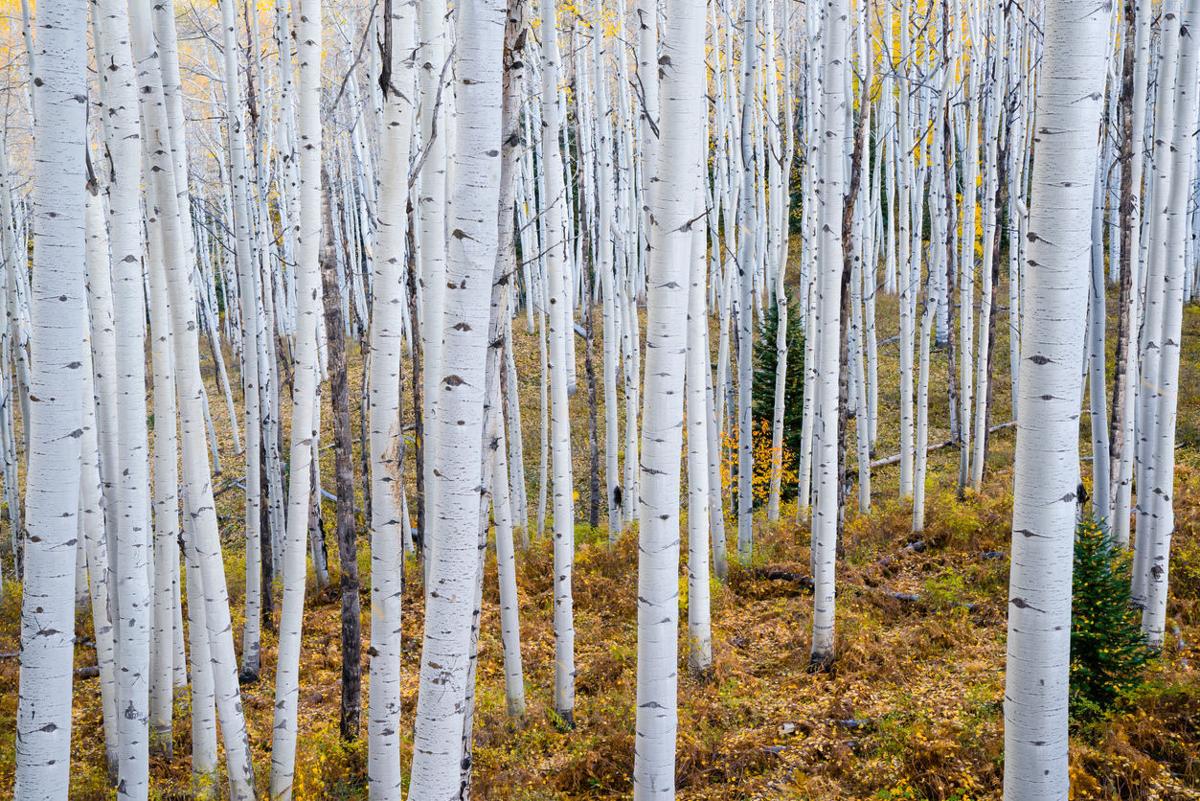
Sometime in the late 1970s, while riding horseback through Colorado’s southwest wilderness, Peggy Bergon noticed something on the aspen trees that she couldn’t ignore.
The etches on the white trunks were different than the big, black carvings of hearts and initials that fill groves today – grafitti that land managers say is like a wound, opening the tree to disease. Bergon spotted lines that appeared less harsh, thinner and lighter, flowing to form elegant handwriting and whole images: horses, chickens, self-portraits. Names were beside dates from much earlier in the century.
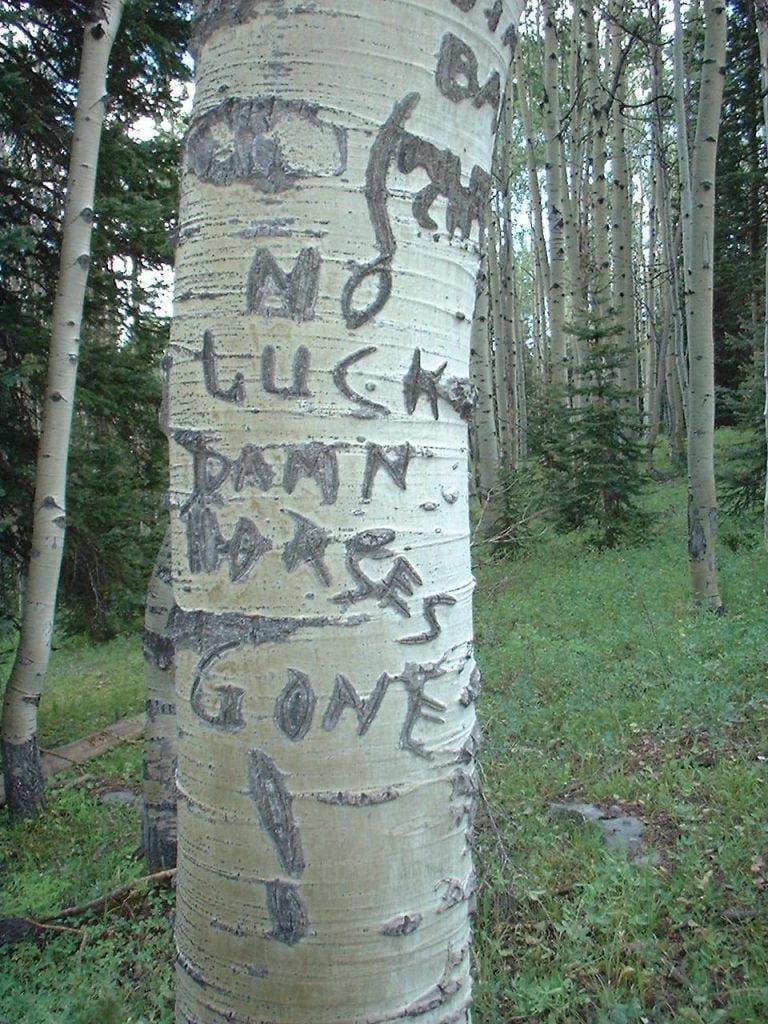
“NO LUCK DAMN HORSES GONE, ” reads a carving on an aspen tree in the San Juan Mountains. It is believed to be an arborglyph left by sheepherders. Photo Credit: Ruth Lambert, San Juan Mountains Association

“NO LUCK DAMN HORSES GONE, ” reads a carving on an aspen tree in the San Juan Mountains. It is believed to be an arborglyph left by sheepherders. Photo Credit: Ruth Lambert, San Juan Mountains Association
“I just took out my camera and started photographing,” Bergon says from her home in Pagosa Springs. “I thought they were fascinating.”
Five thousand pictures later, she’s one of the state’s leading experts in an obscure research field, a citizen scientist obsessed with the carvings known as arborglyphs. They are what sheepherders, mostly Hispanic, left in the high country. Throughout the summer, their flocks munched on sweet grass before the return down, typically around mid- to late-September, when the aspen leaves turn.
Forgotten in the golden spectacle is the history that some trees keep. Lost in the frontier tales of railroads, prospectors and cowboys are those of the old sheepherders.
“They’re some of the unsung heroes of western history,” Bergon says.
Their messages are short but speak loudly of a hard life in the bitter woods.
One written in Spanish translates to: “Couldn’t pay me $1 million to come back here.”
“Es triste a vivir solo,” reads another. “It’s sad to live alone.”
Those were recorded by U.S. Forest Service archaeologist Angie Krall, who has catalogued arborglyphs in the Medicine Bow-Routt National Forest near Steamboat Springs and in the San Juan Mountains. On the trees she read names of men and villages and traced them to New Mexico.
“These were often poor people who traveled a great distance to make money to bring back to their families in the wintertime,” Krall says. “Probably the people most desperate for a wage would take these jobs.”
So they suffered in the cold, desolate Rockies while their sheep developed the wool that the nation widely desired through World War II. Herders used the aspens as message boards, tipping others to refreshing springs and savage wolves. But mostly, the trees were canvases on which to express their anguish.
With a knife or nail, they drew homes, as if wishing for one. They drew crosses and stars, as if to keep their faith. Long-haired women in bare detail – “aspen erotica” – suggest longing for a companion.
“The one resounding note in my research is the loneliness,” says Andrew Gulliford, the history professor at Durango’s Fort Lewis College who has written a yet-to-be published book on Colorado’s sheep industry.
Herders started early, moving on foot or horseback before sunrise with flocks as large as 1,000 head. They’d try to catch turkey or fish in hopes of supplementing their meals of beans and corn. They wielded rifles and set traps to fend off predators. They used plants and roots for their medical needs.
“They had to be absolutely self-reliant,” says Gulliford, whose research of past herders stretches to the present, to the Western Slope sheepmen who come from Peru on work visas.
“You don’t get Americans wanting to do this labor,” he says.
And it’s a challenge to get them interested in the history of the job, arborglyph lovers say. Studies have been sporadic in Colorado as the carvings hide high and fade fast.
“There’s a million out there that haven’t been documented,” says Krall. And under the the threat of age – 100 is an old aspen – as well as pests and fire mitigation, it’s likely they’ll never be documented.
Krall is certain arborglyphs can be found in all areas of the state, though she’s unaware of any that have been recorded across the Pikes Peak region. No such documentation was available upon request from the Forest Service’s district ranger office or Colorado Springs Cultural Services.
“Coloradans like to hike and climb mountains, and I think it’s useful for them to know people have been there long before them,” Gulliford says. “Now almost everything in the mountains is a recreation landscape, but once upon a time it was a working landscape. Some of the things that people may see, like carvings on a tree, that was part of a working landscape.”
Look for the big aspens, says Bergon, the grown ones that might still be standing from those long gone days. That’s her advice for hikers who tag along for her arborglyph tours outside Pagosa Springs.
She guides them off trail. “But a ton are right on the trail,” she says. “I think most people just walk right by them.”
Get OutThere
Signup today for free and be the first to get notified on new updates.
PREV
PREVIOUS

3 stunt-related family deaths don’t keep daredevil from Colorado air show
Facebook Twitter WhatsApp SMS Email Print Copy article link Save Facebook Twitter WhatsApp SMS Email Print Copy article link Save Missouri daredevil stunt pilot Kyle Franklin aims for at least two gasps from onlookers — OK, maybe three — during his seemingly unbelievable twists, turns, stalls, falls and signature flat inverted spin at air shows. […]
Iconic ‘Balanced Rock’ destined to fall in Colorado
Facebook Twitter WhatsApp SMS Email Print Copy article link Save Facebook Twitter WhatsApp SMS Email Print Copy article link Save Ever wonder what will happen when Balanced Rock — the iconic 700-ton red sandstone ballerina perched on its tiptoes in the heart of the Garden of the Gods — no longer lives up to its […]