




Ghosts and bloodshed along Colorado’s forgotten wagon highway
STERLING • Now these high plains on the far, northeast fringes of Colorado are streaked by highways. But the barrenness remains, for many miles nothing but grass and sky as far as the eye can see.
And you can almost put yourself out there. You can almost feel the fear they must’ve felt, the fear that must come from being on a blank canvas for days, weeks, months, like being stranded at sea. You can almost see the ghosts.
“Sometimes on a summer night,” wrote a lifelong valley resident, “one hears strange noises coming from the river: a woman’s cry, a wagon creaking up out of the sand; and fancy lets one question who is searching and lamenting for his past tonight.”
That comes from the late Nell Brown Propst’s book, “Forgotten People: A History of the South Platte Trail.” It was otherwise known as the Overland Trail. Or “the Incredible Highway,” as Propst wrote. “The path that became an empire” — the thoroughfare of dreamers going west.
Then finally native tribes decided enough was enough. They’d been pushed to the brink, along with the buffalo.
It was the winter of 1865. Less than two months prior, the Army killed Cheyenne and Arapaho men, women and children in what became known as the Sand Creek massacre. In what became known as Bloody January, warriors began destroying stations along the Overland Trail, including the bustling center called American Ranche.
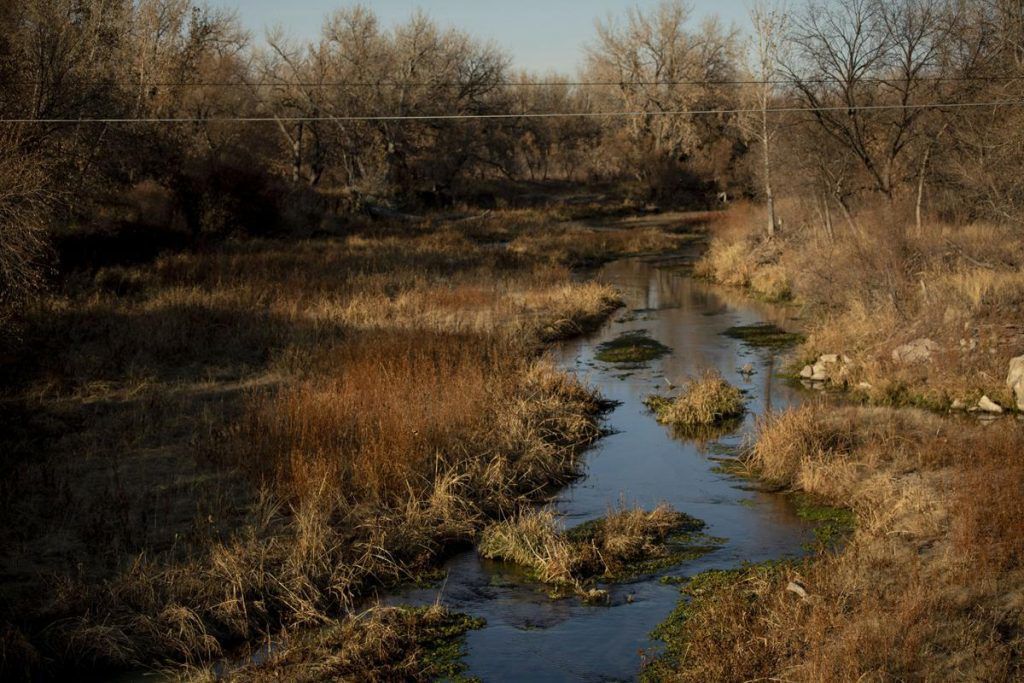
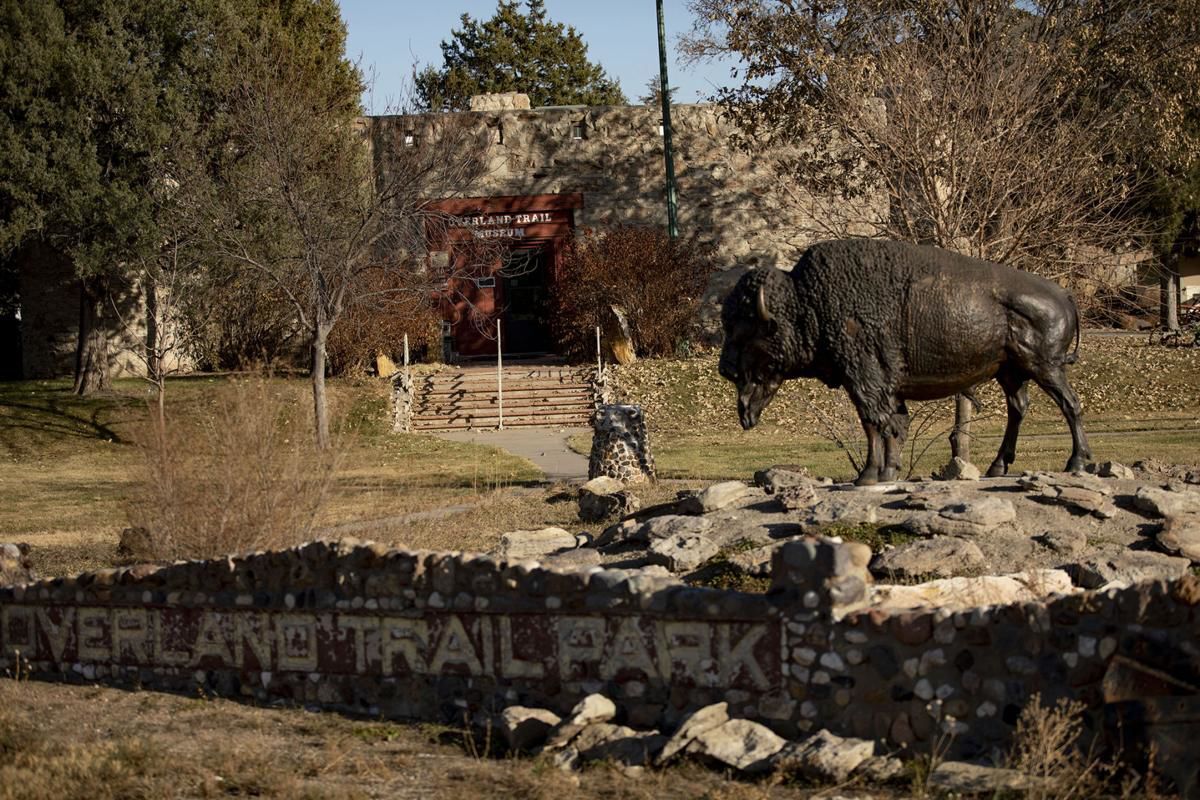
The Overland Trail Recreation Site in Sterling. The Overland Trail is said to have been the most heavily traveled trail leading to Colorado gold. Originating in Atchison, Kan., the Overland Trail paralleled the Oregon Trail following the South Platte River.Chancey Bush , the gazette

The Overland Trail Recreation Site in Sterling. The Overland Trail is said to have been the most heavily traveled trail leading to Colorado gold. Originating in Atchison, Kan., the Overland Trail paralleled the Oregon Trail following the South Platte River.Chancey Bush , the gazette
At once, “a strange calm had settled over the country,” Propst wrote. “The road acclaimed as the busiest in America, perhaps in the world, was suddenly mere wagon ruts over the open prairie.”
The white man would have his revenge. Col. Eugene A. Carr’s surprise attack on Tall Bull would effectively mark the end of the frontier, scholars surmise, and with it, the end of the Overland Trail.
The path’s popularity was brief. But here in Sterling, here in the cattle-smelling, prison- and oil-defined seat of Logan County, the Overland Trail Museum stands to represent all that it meant to the territory that became Colorado.
The Oregon Trail’s wagon tracks can still be viewed, giving its history a dramatic visual that the Overland Trail lacks. Ruts are believed to be overgrown and plowed.
But Overland’s importance cannot be overstated, say those here at the museum.
“People were looking for a new start,” Gwen Duncan says behind the counter.
“Or a rough finish,” colleague Bobbie Hupke says.
Those travelers were to encounter people Propst described as “the proud and sensitive Cheyennes, the tolerant and hospitable Arapahoes, the reflective and resilient Sioux.”
… “(T)hen the whites, most of whom believed that their government had somehow legally cleared the way for them — the explorers, the soldiers, the ranchers, the homesteading farmers, and then finally the town-builders, merchants and manufacturers.”
Following the Louisiana Purchase, Maj. Stephen Long deemed the land “almost wholly unfit for cultivation.” But maybe he underestimated the power of grit and greed inspired by gold.
The pioneer Horace Greeley later in 1859 observed “rich and deep soil in some of the creek bottoms” of the South Platte. And “should the gold mines justify their current promise,” he reckoned farming could yield “richer rewards than elsewhere on earth.”
The Homestead Act of 1862 was further invitation. And so the masses flocked to the trail that emanated in Atchison, Kan., running hundreds of miles west and more on branches that split north to present-day Wyoming, south to Denver and the gold fields beyond.
The museum maintains the Overland Trail saw nearly 20,000 explorers every year. Propst found estimates of 75,000 and 150,000 in the spring of 1859. Another author, Doris Monahan, dug up the story of one woman watching 900 wagons pass by her cabin.
“Most witnesses agreed that during the good weather there was an endless stream of wagons going west,” Monahan writes in “Destination Denver City: The South Platte Trail.”
But good weather could be hard to come by. Winds could be blistering, the snow merciless. The river vanished in hot, dry summers. In 1861, locusts descended upon the land like the wrath of God. In 1864, there was a ferocious flood.
Still they trudged on. The wagon covers bore names “similar to those of water-going vessels,” Monahan recounts, “dignified names like Constitution, Excelsior and Republic.”
Others were like “traveling billboards.” One advertised milk. Another sold whiskey. Another, Monahan writes, “must have caused five hundred miles of strained neck muscles. … ‘Cold Cuts and Pickled Eel’s Feet.’”
And then there was one most common: “Pikes Peak or Bust.”
All found rest at the stations that gave Ben Holladay his reputation as the Stagecoach King. Pony Express riders and Wells Fargo also did business along the Overland Trail.
But the mail and every other service came to a halt as clashes with tribes intensified. The climax came about 14 miles away from modern Sterling, at Summit Springs.
The ambush there on July 11, 1869, would be remembered as the last conflict between the plains’ natives and newcomers. Col. Carr reported 52 Indians killed and 17 women and children captured. Buffalo Bill Cody would re-create the event for live entertainment, while behind the scenes America’s first residents were bound for cultural ruin.
That summer the golden spike was driven, the Transcontinental Railroad finished. Transit on the Overland Trail shifted. The Rocky Mountain News editor penned a fond farewell to the migration: “Success always to the brave frontier men!”
In less than a decade of massive popularity, the trail gave the South Platte River valley and, yes, much of the state a destiny. Here under the shade of the only tree he could find for miles, Sterling’s first resident, William Shaw Hadfield, built a shanty of sod and watched commerce spread around him.
Dozens of century-old ranches rose from the settlers. The Overland Trail Museum celebrates them. Elsewhere are the weapons of war, the rifles and the arrowheads.
Elsewhere are more sad reminders of the costs. Back then, women would fashion their dead children’s hair into halos, and some dangle here in shadowboxes, remains of the unforgiving journey.
Elsewhere there’s a piano that came by wagon. A sign asks you to please not play, because “it cannot take much more.” But if you did, you’d hear a note that hardly carries beyond the room, faint and fading.
DETAILS
Overland Trail Museum at 110 Overland Trail, Sterling. 10 a.m.-4 p.m. Tuesday-Saturday from Nov. 1-March 31; 9 a.m.-5 p.m. Monday-Saturday from April 1-Oct. 31. $3 for adults, $1.50 for children.
Get OutThere
Signup today for free and be the first to get notified on new updates.
PREV
PREVIOUS
Book reveals secrets of Pikes Peak… but should it be released?
Facebook Twitter WhatsApp SMS Email Print Copy article link Save Facebook Twitter WhatsApp SMS Email Print Copy article link Save In local climbing circles, there have been murmurs of a book, the Black Book, said to keep secrets of the Pikes Peak region’s best cracks and crags, a record unlike anything out there. The title […]
The Top 10 OutThere Colorado Stories of 2019: An abandoned resort, a deadly disaster, a can’t-miss tiny town
Facebook Twitter WhatsApp SMS Email Print Copy article link Save Facebook Twitter WhatsApp SMS Email Print Copy article link Save As 2019 comes to a close, here’s a look back at a few of the most popular OutThere Colorado ‘feature’ reads. 1. Abandoned ski resort could get new life in Colorado Customers of the former […]