







OPINION: Aurora dodges a $20-an-hour bullet
Cooler heads prevailed. Calmer reason won the day. The Aurora City Council voted 6-4 this week against using a power it never should have been granted to establish its own minimum-wage rate.
So far, Denver is the only city in Colorado to have used a new authority given all local governments by state legislative passage of House Bill 19-1210 last year to set a minimum-wage rate higher than the state’s, which is $11.10 an hour. Denver’s rate is $12.85. In a peculiar case of Denver envy, next-door neighbor Aurora proposed raising its minimum wage, in steps, to $20 an hour.
Aurora may have side-stepped, for now, shooting itself in the foot, but more attempts will be tried there and elsewhere. For now, it would benefit everyone to educate himself or herself on what the minimum wage really is. In a nutshell:
• The minimum wage rate is an entry level salary primarily earned by teenagers and young adults starting out in their work lives or by the low skilled
• Increases in the minimum-wage rate have the immediate effect of hampering job opportunities for those two categories of workers
• Increasing the minimum wage does nothing — nothing — to lift anyone out of poverty.
In the greater public realm, however, to be against increasing the minimum wage is also to be seen as hating sweet grandmothers and cuddly puppies. A good part of its public perception is paid for by unions, such as the Service Employees International Union, which finances groups such as Fight for 15.
No one should be fooled, however, that union funding of minimum-wage increases is due to any altruism on the part of unions. Higher minimum wages create something termed wage compression, where a higher minimum wage means the people above that salary level are now earning less by comparison, meaning the unions must step in and demand even higher salaries for the employees they represent. Clever, don’t you think?
And, now for some supporting statistics and expert opinion.
• Only 1.9% of all workers are earning a minimum wage, according to the latest U.S. Bureau of Labor Statistics Characteristics of minimum wage workers, 2019.
• “Minimum wage workers tend to be young. Although workers under age 25 represented only about one-fifth of hourly paid workers, they made up about two-fifths of those paid the federal minimum wage or less. Among employed teenagers (ages 16 to 19) paid by the hour, about 6 percent earned the minimum wage or less, compared with about 1 percent of workers age 25 and older.” (BLS report above)
• “Within that tiny group, most of these workers are not poor and are not trying to support a family on only their earnings. In fact, according to a recent study, 63 percent of workers who earn less than $9.50 per hour (well over the [federal] minimum wage of $7.25) are the second or third earner in their family and 43 percent of these workers live in households that earn over $50,000 per year. Thus, minimum wage earners are not a uniformly poor and struggling group; many are teenagers from middle-class families and many more are sharing the burden of providing for their families, not carrying the load all by themselves.” – economist Jeffrey Dorfman, “Almost Everything You Have Been Told About The Minimum Wage Is False,” Forbes.
• “Multiple studies confirm that a majority of minimum-wage employees — who are disproportionately young and less-educated — earn a raise within one to 12 months on the job. For employees who are older and /or have children, better alternatives exist — including the Earned Income Tax Credit, which operates through the tax code instead of a mandate on employers.” – Michael Saltsman, “Fighting $15: An evaluation of the evidence and case for caution,” Employment Policies Institute
• “… evidence simply does not provide a strong case for using minimum wages to reduce poverty. Similarly, recent research does not provide conclusive evidence that a higher minimum reduces government spending on welfare and other programs to support poor families, with the possible exception of food stamps.” – David Neumark, “Reducing Poverty Via Minimum Wages, Alternatives,” Federal Reserve Bank of San Francisco.
Because of the economically harmonious and beneficial effect of having one minimum-wage rate set only by a state legislature, Colorado’s neighbors begged off the bad idea that is HB19-1210.
Our neighbors rightly saw the job losses, business closures, and paperwork compliance nightmares that would only ensue from having a crazy quilt of different minimum-wage rates. For the sake of Colorado’s economic recovery, the legislature should consider re-locking the Pandora’s Box it opened with HB 19-1210.
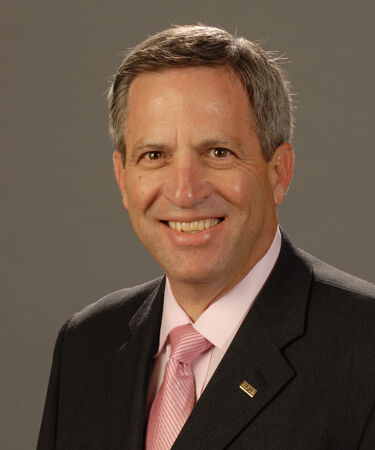
Tony Gagliardi is Colorado state director for NFIB.