







EDITORIAL: Troubling lessons learned from legalization
Colorado’s experiment with legal recreational marijuana — authorized by voters in 2012, with the first storefronts opening in 2014 — continues to charge ahead amid mixed results. At the same time, the question of whether the costs outweigh the presumed benefits continues to nag — at policymakers, even if many don’t care to admit it — as well as at the public at large.
Sure, for state and local governments, there’s arguably a return on the “investment.” Sizable wholesale and retail excise taxes pump pot revenue into public coffers. Meanwhile, for those Coloradans and tourists who had been longing to spend their days in a pot-induced stupor — without inhibition and beyond the reach of the law — well, now they can. So, there’s that.
But on the other side of the ledger are plenty of Coloradans, many of them parents, who, regardless of their views on legalization or their own history with marijuana, are worried about the impact it all could have on their kids. On their schooling and social lives; their mental and physical health; their intellectual and emotional development; their basic safety on the roads.
So, is this brave new reality more problematic than just the annoying skunk odor that engulfs your house every time your next-door neighbor lights up?
The short answer is, yes, and it’s a good thing the national organization Smart Approaches to Marijuana, or SAM, has been assessing and chronicling the collateral damage in Colorado and across the country. Today, SAM released its fourth annual “Lessons Learned” report, a comprehensive review of the wide-ranging effects of legalization in states where it has been tried. As with previous years’ assessments by SAM, the Colorado-specific data is eye-opening and troubling. Among the findings:
• The number of marijuana-related emergency room visits rose 54% from 2013 to 2017. Yearly marijuana-related hospitalizations increased 101% in that period. Calls to the poison control center for marijuana exposures also increased.
• A Colorado Department of Public Health and Environment study found that over 23,000 homes in the state with children ages 1 to 14 years had marijuana products stored unsafely as of 2018.
• Also in 2018, 60% of youth marijuana exposures involved edibles, compared with just 18% in 2016.
• In 2013, marijuana was present in 10.6% of suicide toxicology reports for young people ages 15 to 19 years; in 2017, marijuana was present in over 30% of suicide toxicology reports for young victims ages 15 to 19.
• The state-by-state rates of workers testing positive for pot use on the job, not surprisingly, are led by states like Colorado, where marijuana is legal. The overall increase in pot-positive testing on the job since legalization is especially pronounced in Colorado — 76.5%.
• The percentage of drivers testing THC-only positive in Colorado increased 16.1% from 2016 to 2017. Of those drivers in 2017, 39.4% were under age 18.
• Marijuana retail locations outnumber all McDonald’s and Starbucks locations in the state combined. And those pot outlets are disproportionately located in disadvantaged neighborhood.
• Nationally, there has been a 25% increase in Cannabis Use Disorder among 12- to 17-year-olds since legalization in pot-legal states including Colorado.
In general, SAM finds, “Youth marijuana use has drastically increased over the last few years, with past-month use among teenagers increasing over 72% from 2018 to 2019. An average of 10% of teens reported past-month marijuana vaping in 2019. In 2019, 2.4% of teenagers reported vaping marijuana almost daily, exceeding near-daily cigarette and near-daily alcohol use among this group.”
In a statement released to the media , SAM’s president, Dr. Kevin Sabet, summed up the national state of affairs:
“In pot-legal states, stoned driving is up. Youth use is up. Emergency room admissions are up. We won’t know the full impact of commercialization for years, but these current indicators are discouraging.”
SAM also released a guide on marijuana and legalization-related issues that will be distributed to candidates for office. The report and guide combined, just weeks out from the election, clearly are intended to rouse the public to action in states where pot is still illegal, and to awaken parents and others to pot’s perils in states like Colorado.
Sabet said SAM “aims to break through the narrative being perpetuated by Big Marijuana that legalization is an innocuous policy change.”
Is that narrative muting the misgivings about marijuana in our state? Coloradans and particularly parents ought to read up on the alarming data that is available — and then speak up. For more information, go to SAM’s website at learnaboutsam.org.
The Gazette editorial board


EDITORIAL: Ban on hiring ICE would backfire on Colorado
The Gazette Editorial Board
thegazette-editorial-board@gazette.com
Updated 15 hours ago
We get it — ruling Democrats at Colorado’s state Capitol deplore the Trump administration’s yearlong crackdown on illegal immigration. They’ve gone to just about every length to make that clear, in their rhetoric and in their policymaking. In making their...

The Gazette Editorial Board
Reporter

EDITORIAL: Good intentions, poor accountability at Caring for Denver
The Gazette Editorial Board
thegazette-editorial-board@gazette.com
Updated 2 days ago
In 2018, Denver voters authorized the Caring for Denver Foundation, establishing a 0.25% city sales tax increase for mental health and substance abuse services — and entrusting the foundation with distributing those funds responsibly. A city audit released last week...
The Gazette Editorial Board
Reporter

EDITORIAL: Palantir’s exit is Colorado’s wake-up call
The Gazette Editorial Board
thegazette-editorial-board@gazette.com
Updated 3 days ago
Much already has been written about Palantir Technologies’ abrupt and troubling announcement on X last week it was exiting Colorado. The high-profile artificial intelligence and software company, co-founded by tech and venture capital VIP Peter Thiel, had moved its headquarters...
The Gazette Editorial Board
Reporter

EDITORIAL: A bad bet for the Colorado Lottery
The Gazette Editorial Board
thegazette-editorial-board@gazette.com
Updated 4 days ago
Since its authorization by voters in 1980, the Colorado Lottery has raked in over $4.5 billion in total proceeds for parks, trails, open space and school construction. And because no one is forced to play, it long has been deemed...
The Gazette Editorial Board
Reporter

EDITORIAL: Keep Colorado’s public business public
The Gazette Editorial Board
thegazette-editorial-board@gazette.com
Updated 7 days ago
A statewide ballot initiative to augment Colorado’s constitutional Bill of Rights would overturn a 2024 law passed by the legislature to hide some of its key deliberations from public view. Arguably, that would be reason enough to embrace the pending...
The Gazette Editorial Board
Reporter

EDITORIAL: Legal prostitution? A new legislative low
The Gazette Editorial Board
thegazette-editorial-board@gazette.com
Updated 6 days ago
Colorado Democrats have introduced a bill to decriminalize “commercial sexual activity” — i.e., prostitution. And Senate Bill 26-097 isn’t just legalization. It provides no limits on prostitution, solicitation, businesses, patronizing or public displays. That goes far beyond even Nevada, where...
The Gazette Editorial Board
Reporter

EDITORIAL: Another back-door tax hike on Coloradans?
The Gazette Editorial Board
thegazette-editorial-board@gazette.com
Updated 1 week ago
Ruling Democrats at Colorado’s legislature have a reflexive urge to raise taxes. Think of it as a collective case of obsessive-compulsive disorder. Problem is, they can’t act on their urge without voters’ permission — thanks to the Taxpayer’s Bill of...
The Gazette Editorial Board
Reporter

EDITORIAL: Uncuff Denver’s cops on immigration
The Gazette Editorial Board
thegazette-editorial-board@gazette.com
Updated 1 week ago
Leave it to Denver Mayor Mike Johnston to insist that the city’s sanctuary policies — which restrict local cooperation with federal immigration authorities — actually make the city safer. As The Denver Gazette reported, Colorado’s capital city has signed onto...
The Gazette Editorial Board
Reporter

EDITORIAL: Don’t lower standards for schoolteachers
The Gazette Editorial Board
thegazette-editorial-board@gazette.com
Updated 1 week ago
Not only are most of Colorado’s public schoolteachers committed to the highest standards of conduct in the classroom, but almost all of them also are undoubtedly law-abiding when off duty. For the relative handful who have “made mistakes” earlier in...
The Gazette Editorial Board
Reporter
EDITORIAL: A ray of hope for more highway funding?
The Gazette Editorial Board
thegazette-editorial-board@gazette.com
Updated 2 weeks ago
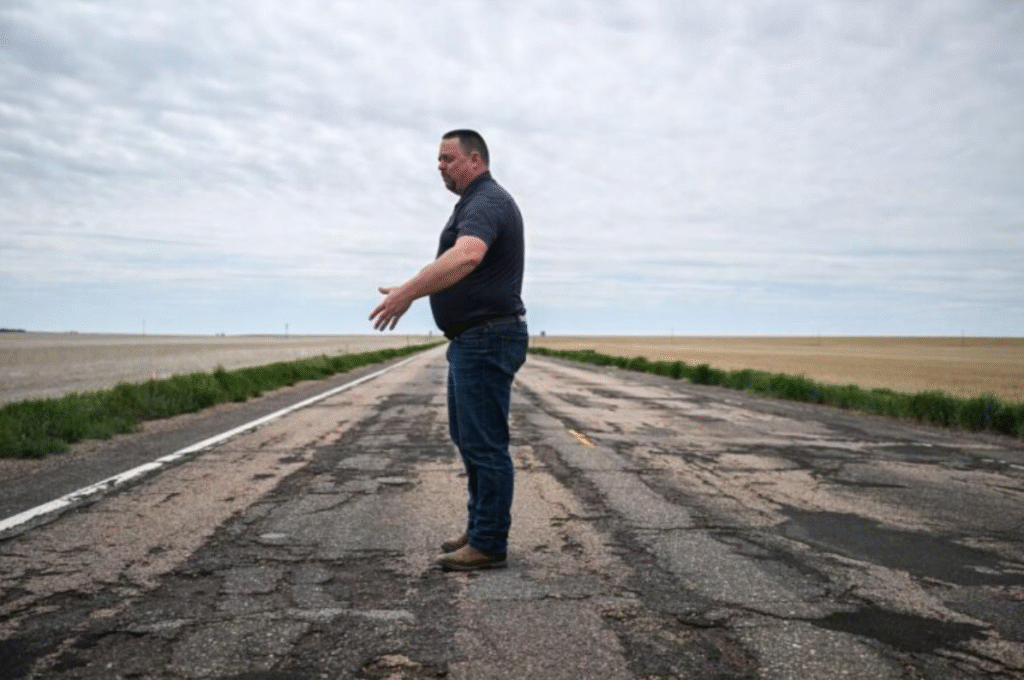
Motorists weary of Colorado’s crumbling and congested highways might appreciate at least a glimmer of hope that our starry-eyed legislature someday will come back down to earth and give our beleaguered transportation grid the funding it needs. That glimmer may...
The Gazette Editorial Board
Reporter