







Climate changes forcing competition between species, increasing extinction risk, CU Boulder study finds
Research led by the University of Colorado Boulder has found that climate change is putting some species at greater risk of extinction by forcing competition between species.
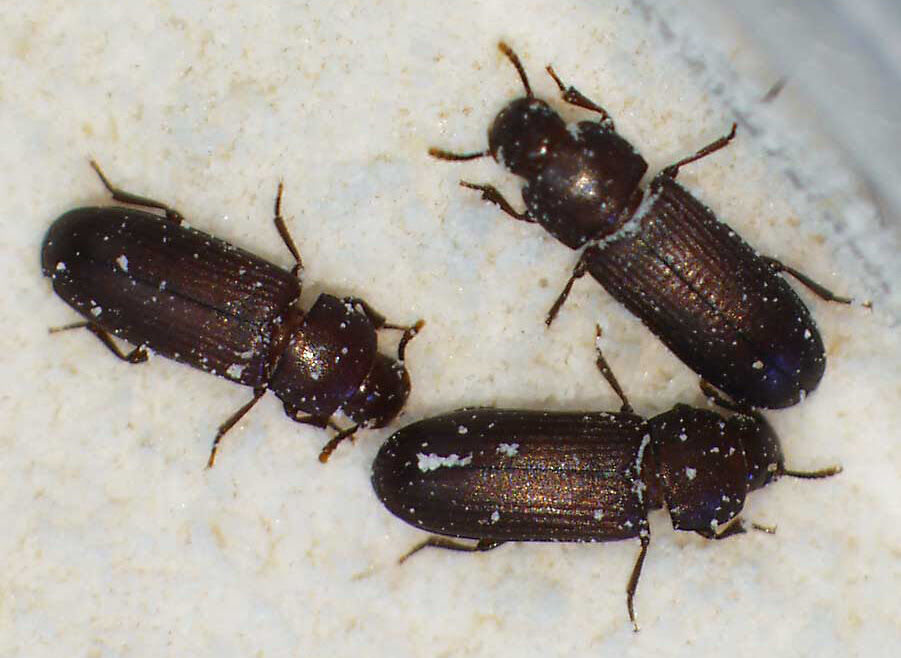
The findings, published last week, confirm that competition slows a species’ expansion into new territories over generations. Researchers used tiny beetles to model these trends in controlled experiments.
Researchers used two species of flour beetles to represent the fundamental ecology of most organisms.
The team observed competition between the two species of beetles by birthing each species on opposite ends of a lineup of plexiglass boxes joined by holes. The populations slowly expanded across the landscape and interacted.
They found that the competition sets the boundaries for where species expand their ranges.
Brett Melbourne, senior author of the study and associate professor of ecology and evolutionary biology, said the researchers’ findings are critical as species face climate change.
“One way that species are experiencing climate change is that their habitat is moving,” Melbourne said. “It’s either going up mountainsides or it’s moving toward the poles.”
Habitats are now moving more than a kilometer per year in many parts of the world, Melbourne said.
Though survival predictions regarding climate change largely focus on individual species, this suggests that migrating species will encounter one another and share resources, meaning the survival of both species is threatened.
The researchers urge future ecological models to include competition between species when forecasting species migration due to climate change.
“These kinds of species interactions could be super important for the long-term persistence or extinction of species in response to moving habitats,” Melbourne said.
The complete findings are available in the Proceedings of the National Academy of Sciences.