







CU Boulder professor led NASA study that discovered water on the moon
For the first time, scientists confirmed the presence of water on the moon’s sunlit surface and found that frozen water is in more places and larger quantities than ever thought.
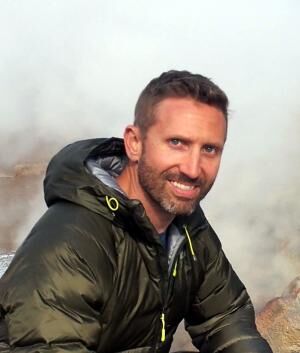
These discoveries were released in a NASA study Monday led by Paul Hayne, a professor from the University of Colorado Boulder.
Hayne is an assistant professor of astrophysical and planetary sciences in CU Boulder’s Laboratory of Atmospheric and Space Physics.
At CU, Hayne’s research focuses on the surfaces and atmospheres of icy planets and moons, developing computational models and using observational data to better understand these planetary bodies.
These most recent findings led by Hayne expand the possibilities for space travel by increasing landing spots on the moon for robots and astronauts and providing a possible increase in resources.
“If we’re right, water is going to be more accessible for drinking water, for rocket fuel, everything that NASA needs water for,” Hayne told CU Boulder Today.
Hayne has worked at CU since 2018. He previously was a research scientist in NASA’s Jet Propulsion Laboratory.
Hayne has served as a co-investigator in several NASA missions, including the Europa Clipper, the Mars Reconnaissance Orbiter and the Lunar Flashlight.
He earned his bachelor’s and master’s degrees in geophysics from Stanford University and his Ph.D. in geophysics and space physics from the University of California.