





Colorado Restaurant Association says nearly 75% of restaurants will close within six months if capacity limits are not raised.

A Colorado Restaurant Association survey found that 73% of Colorado restaurant owners would consider closing their doors permanently if capacity limits are not increased within six months.
The restaurant impact survey showed that if indoor dining was again prohibited due to COVID-19, 24% of more than 175 restaurants would shut down immediately.
“No restaurant small, medium, or large can operate at 25%. It just doesn’t matter, because we build our (businesses) to be at 100%,” said Blake Street Tavern owner Chris Fuselier.
“Even at 50% capacity, 17% of restaurants in Colorado closed, so you can only imagine how difficult it is to restaurant at the current capacity limits.”
In recent weeks, a surge of coronavirus cases have continued to be reported throughout the state, which has shifted 27 of the state’s 64 counties to Safer at Home level orange, according to the states COVID-19 dial.
Level orange restricts indoor dining to 25% capacity or 50 people.
Sonia Riggs, the CEO of CRA says that they estimate hundreds of restaurants have already shut their doors permanently because of the financial hardship the pandemic has caused.
“We estimate that hundreds of restaurants have closed and thousands are on the brink (of closing). Further restricting on capacities or another shutdown would push many more over the edge,” she said in an email statement.
Throughout the summer months, the 175 restaurant owners that competed the survey said on average they lost 40% revenue this summer compared to last.
Seven percent of restaurant owners say revenue has decreased by more than 80% during the same time period, according to the survey.
Fuselier says his restaurant during the warm summer months saw a decrease in 60% of revenue.
As clientele continues to be sporadic and revenue continues to drop, many owners have needed to cut the size of their staff. Nearly 80% of restaurants say their staff is smaller this year than last.
Fifteen percent of restaurants reported that their staff size has decreased to at least half the size it was a year ago.
“I went from a staff of 100 to a staff of 12 to strictly do to-go orders, and when we were allowed to reopen our dining area, it went back up to 30,” Fuselier said.
Currently, the Blake Street Tavern has a staff of 60 people, which is much lower than a year ago, but if restrictions get more strict, Fuselier said he is going to have to let more people go.
“It just kills me to think I need to lay off people during the holidays, and so I’m just hanging on trying to give people some hours, but it’s taking a team effort to have everyone cut down on their hours so all of us can hang in there,” he said.
Riggs says although many restaurant owners are fearful about what might occur over the cold and snowy winter months, there is optimism that expanding and winterizing patio space will keep money coming in.
“Restaurants have consistently told us they need two things to survive: more cash and more capacity. Since no federal cash relief is on the immediate horizon, and indoor capacity is being further restricted, adding seats outdoors is the only option many of these restaurants have. It won’t be a silver bullet, but it will be a key difference for many,” Riggs said.
“In order to make that outdoor space usable for the winter, however, takes considerable resources that many restaurants simply don’t have after such a crushing year.”
Although some are optimistic about winterizing and adding patio space, Fuselier who invested $30,000 adding and winterizing an open tent, is skeptical about diners wanting to sit outside during the winter months.
“We shall see. We’ve never done this before, we have a tent that seats 130 people with plenty of distancing, but we just don’t know. Are people going to want to sit in the tent when it’s 35 degrees outside, but heated, or are they going to want to sit inside?” he said.
“We just don’t know what winter is going to bring us.”

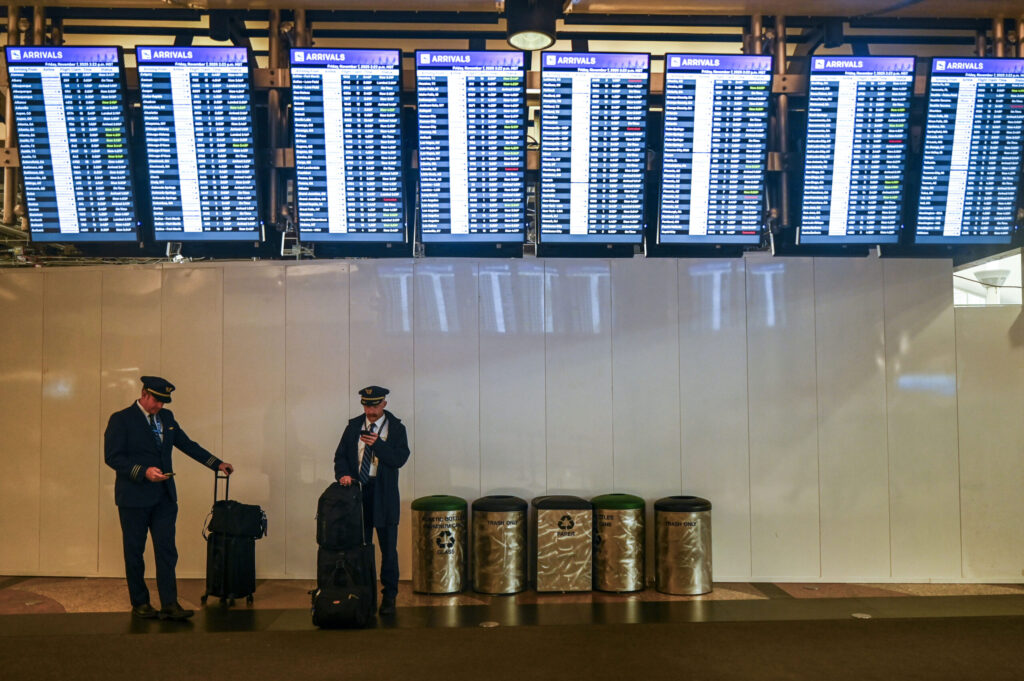
Hundreds of flights delayed out of Denver airport on busiest travel day
Noah Festenstein
noah-festenstein@denvergazette.com
Updated 9 hours ago
Hundreds of flights on Sunday were delayed at Denver International Airport amid freezing temperatures on what officials said was projected to be the busiest travel day of the Thanksgiving holiday season. As of 3 p.m., 482 flights were delayed and...

Noah Festenstein
Reporter

A lost generation of news consumers? Survey shows how teenagers dislike the news media
David Bauder
david-bauder@denvergazette.com
Updated 14 hours ago
NEW YORK (AP) — Cat Murphy, a college student, has wanted to be a journalist since she was 11. Many of her friends don’t understand why. When they engage with the news — if they do — they hear a...

David Bauder
Reporter
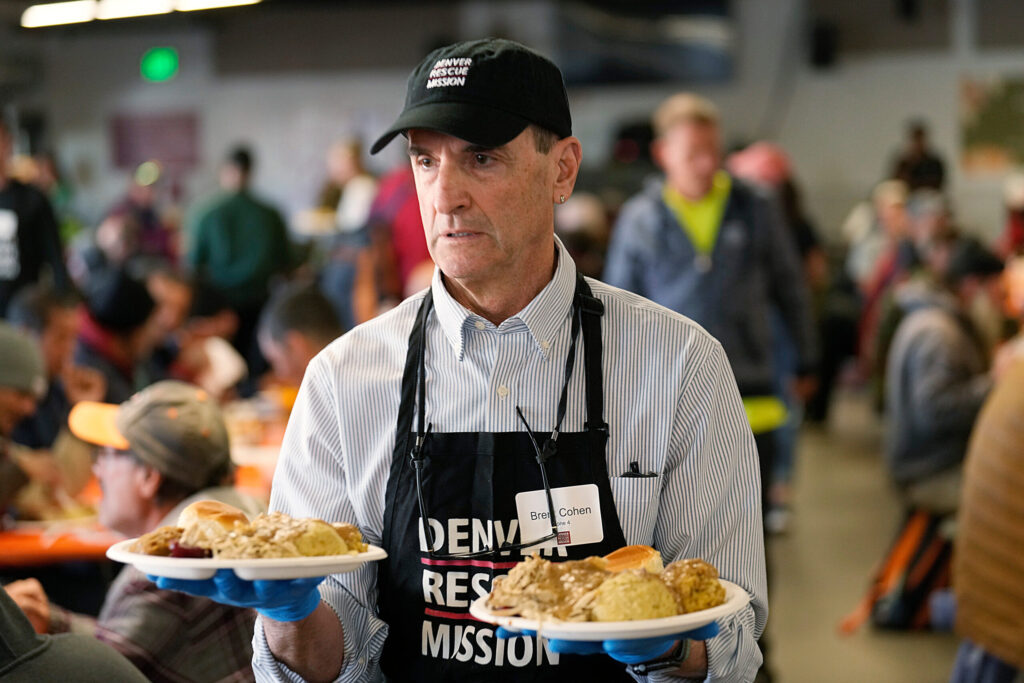
Why doing good also makes us feel good, during the holidays and beyond
Christina Larson
christina.larson@associatedpress.com
Updated 15 hours ago
WASHINGTON (AP) — The holiday season is a time for giving thanks, giving gifts — and for many, a time for giving back. Food banks, services that deliver meals to seniors and other U.S. charities typically see a surge in...

Christina Larson
Reporter

Shoppers spend billions on Black Friday to snag holiday deals, despite wider economic uncertainty
Wyatte Grantham-philips
wyatte.grantham-philips@associatedpress.com
Updated 2 days ago
NEW YORK (AP) — Despite wider economic uncertainty hovering above this year’s holiday season, shoppers turned out in big numbers for Black Friday — spending billions of dollars both in stores and online. Adobe Analytics, which tracks e-commerce, said U.S....

Wyatte Grantham-philips
Reporter

Sometimes feeding the hungry takes a village, and a colonel | Vince Bzdek
Vince Bzdek
vince-bzdek@denvergazette.com
Updated 2 days ago
When Nate Springer, the retired Army colonel who is now head of the Care and Share Food Bank in Colorado Springs, attended the opening ceremony for a new American-led water project in Afghanistan in 2007, he was approached by an...

Vince Bzdek
Reporter

At a Denver holiday market, shops hope December pays off pain of tariffs
Bernadette Berdychowski
bernadette.berdychowski@denvergazette.com
Updated 15 hours ago
Ahead of the Cherry Creek Holiday Market in Denver, food scientist Aleksey Krasovskiy had to find the right recipe to make his health-conscious dessert business work under tariffs. The owner of Flèche Healthy Treats, which specializes in gluten-free and sugar-free...

Bernadette Berdychowski
Reporter

Colorado opens public comment on new disability communication enterprise rules
Scott Weiser
scott-weiser@denvergazette.com
Updated 10 hours ago
Chronic delays in Colorado’s Telecommunications Relay Service have left residents with hearing or speech disabilities waiting hours for emergency calls to connect, state lawmakers found when they ordered a complete overhaul of the system as part of new law passed...

Scott Weiser
Reporter

Horse herpes outbreak could impact National Western Stock Show in January
Kyla Pearce
kyla-pearce@denvergazette.com
Updated 2 days ago
An equine herpes outbreak could impact the National Western Stock Show in January. Stock Show officials said they are monitoring the situation closely. The Colorado State Veterinarian’s Office announced the outbreak on Nov. 21, following barrel racing and rodeo events...

Kyla Pearce
Reporter

Heading into holidays, shoplifting on the rise in Colorado, study says
Mark Samuelson
mark-samuelson@denvergazette.com
Updated 14 hours ago
Shoplifting and other forms of retail crime are seeing a sharp rise as Colorado heads into the holidays, according to a study released this week. After falling from a recent-record 24,975 thefts reported in 2015 to around 18,000 in 2021,...

Mark Samuelson
Reporter

Thieves only need minutes to steal keyless. Here’s how to protect your vehicle
Los Angeles Times
los-angeles-times@denvergazette.com
Updated 11 hours ago
LOS ANGELES — Car thieves are using tablets and antennas to steal keyless or “push to start” vehicles, police warn, but there are steps owners can take to protect their vehicles. Recently, a group of masked individuals forcibly gained access...

Los Angeles Times
Reporter
PREV
PREVIOUS

Colorado’s pandemic unemployment claims highest since June
Colorado’s unemployment rates are rising, with the number of initial pandemic unemployment claims higher than it has been since June, according to data released Friday by the Colorado Department of Labor and Employment. There were 7,281 initial pandemic unemployment claims for the week ending on Nov. 7, more than double the number of initial claims […]

Red Kettle donations are going to be slightly different this year, officials say
During the holiday season as people shop throughout the country, they hear the ringing of the bells at the entrances of grocery stores and retailers. But this year, the Red Kettle Campaign by the Salvation Army will be slightly different than in years past, but it still hopes to raise $850,000 by Dec. 24 […]