








Investment services sector pivots to face pandemic; thrives in metro Denver

It’s a good time to be in investment services in metro Denver: Whether you’re working at one of the estimated 15,200 companies located here; looking for a job at one of them – most all are hiring; or watching the industry sector strengthen the area’s economic development efforts.
After all, it has been one of the sectors that has shined here during turbulent economic times, helping offset the damage from losses in industries that are reeling like tourism and hospitality.
“It’s been a great industry for metro Denver,” said Lisa Hough, Metro Denver Economic Development Corporations’ director of Strategic Initiatives and leader of the Colorado Investment Services Coalition. “These companies’ performance during the downturn has been an absolute highlight. They’re resilient and continue to hire, providing new graduates opportunities for jobs and internships.”
Just look at some of the bigger players in the nine-county metro Denver investment services subcluster:
Fidelity Investments announced a nationwide hiring push last month, including some 300 in coming months in metro Denver, adding to its Greenwood Village-based contact center that employs more than 1,000.
Robinhood Markets Inc., a fintech startup that’s boomed in popularity with millennials during the pandemic, leased office space downtown Denver as it continues with plans to hire 800 locally, as announced last year.
TIAA recently refurbished and expanded its office space in a downtown Denver tower and is holding steady with 1,200 employees here.
Empower Retirement, with 2,800 employees locally, is riding a wave of growth with 2020 acquisitions and increased visibility in the Denver market, starting with its naming rights to Empower Field at Mile High where the Denver Broncos play.
Charles Schwab, with a large campus in Lone Tree, completed its acquisition of TD Ameritrade last month and remains bullish on the Denver employment market.
Company officials attributed investment services’ strong run generally to a combination of a robust – but volatile – stock market performance, increasing customer demand and an ability to pivot quickly during a pandemic, allowing most customer service employees to work remotely.
Locally, Denver continues to be a strong market for these companies’ operations here. The investment services industry, a subcluster off financial services industry, grew 24% to a local employment base of about 31,000, according to the EDC’s 2019 report.
That’s largely because of metro Denver’s highly educated and growing workforce, fueled by an influx of population in recent years.
“At Robinhood, we’re fostering a dynamic culture that brings together the best of the finance and technology industries to make our financial system more inclusive,” said CEO Gretchen Howard when it announced plans to open its fourth location in Denver. “The breadth of highly-skilled and diverse talent in Denver across both of these industries make the city a natural fit for Robinhood.”
Shifting gears during a pandemic
The COVID-19 induced pandemic that’s gripping the world, and severely damaging world economies, forced most all investment services workers out of the office and into their homes to work remotely.
While many companies like Fidelity had been working for years towards allowing employees more flexibility to work remotely as a perk, the March shutdown forced everyone’s hand.
“Overall FINRA (Financial Industry Regulatory Authority) had to make exceptions to the (previously) strict guidelines, for example an employee had to live more than 30 miles away from the office to be allowed to work remotely or a supervisor had to visit every remote workstation,” Hough said.
“We had a strong focus on continuity plans,” said Mark Barlow, Fidelity’s Senior Vice President over the region with Denver operations. “Most of our associates transitioned immediately to working from home” when the shut-down orders came down mid-March.
The Boston-based private company has also continued to hire steadily to meet growing customer demand, announcing some 4,000 new hires nationwide in coming months. Fidelity experienced a 24% increase in year-over-year customer interactions in Q2, Barlow said.
“Increase in demands for information from current clients is typical when the market is volatile like it has been this year, with a unique twist of the pandemic,” Barlow said. “In addition, we’re seeing an increase and adding new clients to Fidelity.”
To help retention efforts, Barlow said company officials also augmented the already-competitive Fidelity benefits package with elder and child care cost assistance, elimination of the telemedicine co-pay, addition of emotional support outlets, a one-time work-from-home stipend and discounts on technology and furniture purchases.
“We’re incredibly grateful for all Fidelity and (CEO) Abby Johnson has done to focus on associates during this unique time,” Barlow said.
Increased benefits also help with attracting talent in what can be described as a mini-talent war among the bigger investment services firms in metro Denver.
“Obviously a really competitive benefits package is key,” said Angie Wesley, head of TIAA’s Talent and Acquisition. “We did a lot to enhance our mobility benefits, and benefits as it relates to childcare this year.”
But TIAA – who handles the retirement benefits many educational institutions like the University of Colorado, Colorado State University and Colorado College – also has what Wesley describes as an “easy button” when it comes to recruiting new graduates.
It has $1.2 trillion in assets under administration for “academic, research, medical, cultural and government fields.”
“One of the things that attracted us to expand in Denver is the institutional clients we have out there,” she said. “It allows us to expand on and build those existing relationships. … While many companies canceled their 2020 summer internship programs, we kept ours and made it virtual. We’re in the process of getting our 2021 internships now.”
TIAA, with six other powerhouse investment services companies including Fidelity, Schwab, Empower, Janus Henderson, Transamerica and T. Rowe Price, formed the Colorado Investment Services Coalition in 2013 to work together to improve the financial services educational criteria and talent pool here.
It launched a new course at CU Denver Business School dubbed “Introduction to Investment Services Industry.”
Hough said CU also started a program for students to take FINRA’s Security Industry Essentials Exam. Previously, students had to be employed by an investment services firm to take it.
“Students who have that test passed on their resume have a leg up on the competition,” Hough said. “It also works for job changers – we’ve seen a lot of ‘return-to-work’ people.”
Market driving companies’ growth
While Empower and Robinhood company officials did not respond to The Denver Gazette’s inquiries about their Denver operations before deadline, their growing investment services market share has been well-documented.
Menlo Park, California-based Robinhood has grown rapidly to become the second most valuable fintech company in the world at $11.7 billion, according to multiple financial trade publications.
The company platform of easy-access, no-commission stock and cryptocurrency trading has been a hit with millennials – especially during the pandemic.
The company grew to 13 million accounts in October – up from 6 million in 2019, according to Investopedia and other press reports.
In late 2019, the company announced it would build a Denver operation, its fourth nationwide, with more than 800 employees.
According to the Denver Business Journal, the company leased 35,000 square feet of new office space at 2375 15th Street in downtown Denver a few months ago.
The last time Robinhood CEO Howard spoke publicly about it was April, when she said there are approximately 60 Denver-based employees with plans to add 100 more in 2020.
Greenwood Village HQ’d Empower Retirement, meanwhile, has grown to the country’s second-largest retirement services company with $714 billion worth of assets under administration and 9.7 million plan participants.
In 2020, the company acquired 476 retirement plans from Fifth Third Bank, registered investment adviser and wealth manager Personal Capital and most recently the MassMutual retirement plan business – expected to close Q4.
The last two deals were valued at $4.3 billion.
Charles Schwab, while completing its monster deal of acquiring TD Ameritrade Holding Corp., will have a combined total of $6 trillion in client assets under administration and 28 million brokerage accounts.
But company officials also confirmed last month it was eliminating some 1,000 positions – some being duplicate roles at TD – which amounts to about 3 percent of both companies’ workforce.
Officials declined to discuss any impacts to Denver employment levels.
“With the highly skilled local talent pool there, we are proud to be part of the Denver community,” a spokesman said via email. He confirmed there’s 4,100 metro Denver Schwab employees.
That’s a considerable drop from 2019, when both company officials and local economic development officials stated the company had 4,500-4,600 employees locally.
In that time, the company announced it would move its headquarters from San Francisco to Westlake, Texas – passing over employment tax incentive offers from Colorado economic development officials to relocate it to Lone Tree.
The company this year had just finished an 1,100-space parking structure with ground-floor retail at its Lone Tree campus.
All of the companies were asked about their metro Denver real estate – a fair question since next to payroll, real estate is often company’s biggest expense.
TIAA, Fidelity and Schwab officials all doubled down on their real estate investments here, but not until it’s safe for employees to return.
“Not too long ago, TIAA made a large investment into our real estate in Denver and did a nice overhaul to it for our associates, expanding and renovating it,” Wesley said. “We are committed to that space for our employees. We are happy and proud about what we’ve done there.”
When the pandemic is over, or when a vaccine is widely available, Fidelity employees are looking forward to working together in the Greenwood Village office that’s next to Fiddler’s Green, Barlow said.
Fidelity declares $8.8 trillion worth of assets under administration, with 32 million household clients and some 22,000 businesses’ benefits adminstration.
“We look forward to a day we return to the site and can work together, but we assume a number of positions will keep the flexibility to work remotely,” Barlow said. “We expect that blended model of office and home work going forward.”


A new year, and metro housing market continues to lose a little steam
Mark Samuelson
mark-samuelson@denvergazette.com
Updated 22 minutes ago
As Denver real estate agents begin working a new year’s market, data from late 2025 show a continued pattern of slightly declining prices, slightly increased inventory, and a little more time required for home listings to sell. But agents are...

Mark Samuelson
Reporter
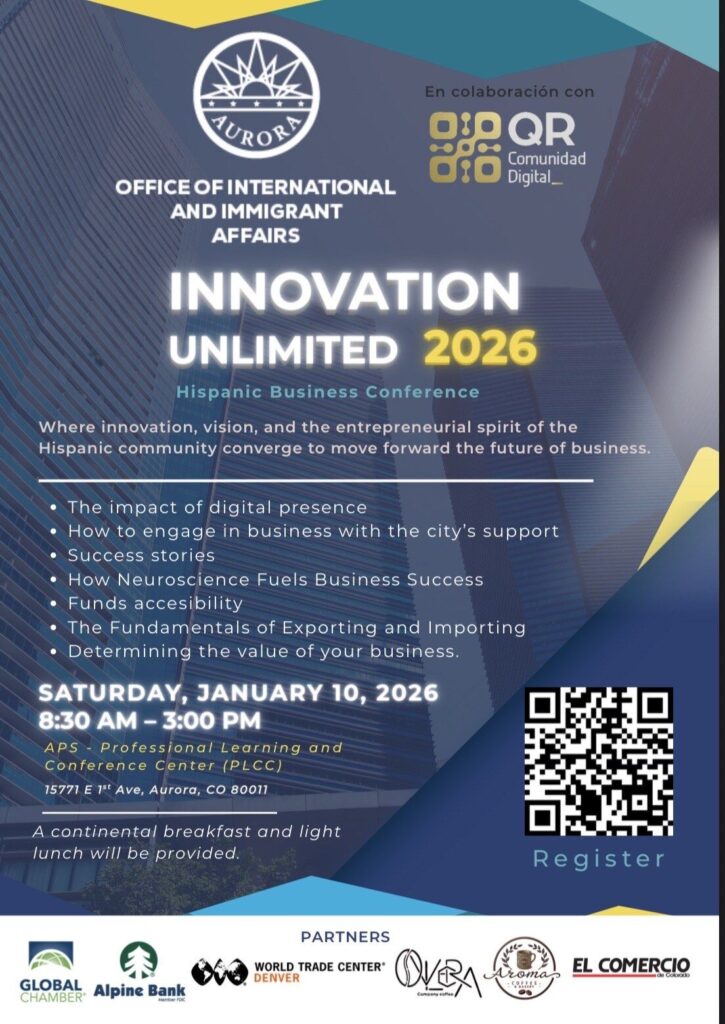
Aurora Immigrant Affairs Office to host Hispanic-focused business conference
Kyla Pearce
kyla-pearce@denvergazette.com
Updated 2 hours ago
The city of Aurora’s Office of International and Immigrant Affairs is hosting the city’s first Hispanic-focused business conference Saturday. The conference, called “Innovation Unlimited 2026,” will take place from 8:30 a.m. to 3 p.m. on Jan. 10 at the Aurora...

Kyla Pearce
Reporter

Mission Ballroom plaza to get Denver’s first alcohol license for common consumption
Bernadette Berdychowski
bernadette.berdychowski@denvergazette.com
Updated 1 hour ago
Guests will soon be able to drink at the outdoor plaza next to Mission Ballroom. The Denver City Council approved a bill in a block vote to designate the area around the concert venue as the North Wynkoop Entertainment District,...

Bernadette Berdychowski
Reporter
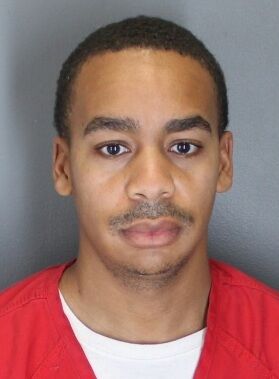
Home remodelers jailed in widespread racketeering scheme
Mark Samuelson
mark-samuelson@denvergazette.com
Updated 1 hour ago
At a moment when slow home sales have owners looking at remodeling, M3 Designs described itself as a design-build firm that “prioritizes sustainability, economic improvement, and efficient construction…advancing urbanism and community development.” But last month, a grand jury charged that...
Mark Samuelson
Reporter
Marvell to buy networking equipment firm XConn in $540 million deal
Reuters
reuters@denvergazette.com
Updated 4 hours ago
Marvell Technology said Tuesday it will buy networking equipment provider XConn Technologies in a deal worth about $540 million, as the chipmaker doubles down on data center hardware amid a race to expand artificial intelligence infrastructure. XConn’s acquisition will help...

Reuters
Reporter

Morgan Stanley files for bitcoin, solana ETFs in digital assets push
Reuters
reuters@denvergazette.com
Updated 4 hours ago
Morgan Stanley is seeking regulatory approval to launch exchange-traded funds tied to the price of cryptocurrency tokens, according to filings with the U.S. Securities and Exchange Commission on Tuesday, the first such move by a big U.S. bank. The bank...
Reuters
Reporter

AB InBev buys back stake in U.S. metal packaging plants for $3 billion
Reuters
reuters@denvergazette.com
Updated 4 hours ago
Anheuser-Busch InBev will buy back a 49.9% stake in its U.S. metal container plants for about $3 billion, the world’s top brewer said Tuesday, at a time of soaring aluminium costs due to tariffs. The maker of Budweiser and Corona...
Reuters
Reporter

NBCUniversal’s ad slots for 2026 Winter Olympics sell out to ‘unprecedented’ demand
Reuters
reuters@denvergazette.com
Updated 4 hours ago
NBCUniversal has sold out advertising spots for the 2026 Winter Olympics in Italy a month before the start of the Games in early February, the Comcast-owned company said Tuesday. More than 100 new advertisers have signed on for the Milano...
Reuters
Reporter
Comerica shareholders approve $10.9B deal with Fifth Third Bancorp
Reuters
reuters@denvergazette.com
Updated 4 hours ago
Comerica shareholders on Tuesday approved a $10.9 billion sale to larger rival Fifth Third Bancorp, the two companies said, ignoring an activist hedge fund’s calls to block the deal after having initially urged the bank to put itself up for...
Reuters
Reporter

The coolest technology so far from CES 2026
The Associated Press
the-associated-press@denvergazette.com
Updated 4 hours ago
LAS VEGAS — Nvidia, AMD and Intel all had important chip and AI platform announcements as CES 2026 got underway this week, but all audiences wanted to see more of was Star Wars and Jensen Huang’s little robot buddies. CES...

The Associated Press
Reporter
PREV
PREVIOUS
Douglas County launches $15 million grant program for restaurants and indoor event venues
Facebook Twitter WhatsApp SMS Email Print Copy article link Save In a response to Douglas County moving to Safer at Home Level Red on Friday, county officials announced a $15 million grant for restaurants and indoor event venues. Due to a recent surge of COVID-19 cases throughout the state, Douglas County transitioned into Level Red […]

Attorney general: State will receive more than $220,000 in breach settlement with The Home Depot
Colorado will receive more than $220,000 in a multistate settlement with The Home Depot after a data breach that exposed payment information for about 40 million shoppers throughout the country. Attorney General Phil Weiser along with attorneys general from 45 other states and the District of Columbia received $17.5 million in the settlement with the […]