




Colorado in a ‘really good place right now’ with COVID-19 — and possibly ahead with the UK variant

Cases of the highly contagious United Kingdom variant of COVID are nearly doubling each week, positioning it to rapidly become the new dominant strain in the U.S. and “requiring immediate and decisive action” to minimize illness and death, according to a new journal article published Sunday on a Yale University-affiliated website.
But state models show that the variant, known as B.1.1.7, may have only a slight impact on infections, hospitalizations and deaths in Colorado, said Dr. Elizabeth Carlton, assistant professor at the Colorado School of Public Health and member of the state’s COVID-19 modeling team. At least that’s what’s shown by the team’s latest models, which assume the variant will comprise half of the state’s COVID cases by early March.
The national study — published Sunday by medRxiv, an online archive for unpublished manuscripts that have not yet been peer-reviewed, co-founded by Yale University and the British Medical Journal — found that the variant has likely been spreading in the U.S. since late last year, although it was first identified nationally in late December, in Colorado.
Think forecasting COVID in Colorado was tough in 2020? It will be tougher in 2021, experts say
The variant is “almost certainly destined” to become the dominant COVID strain in many states by March, the article asserted, citing “significant community transmission.” Its findings are consistent with recent modeling performed by the U.S. Centers for Disease Control and Prevention.
The fact that the variant remains at a relatively low frequency in the U.S. allows for “time to implement the necessary surveillance programs and mitigation efforts in the weeks to come,” the article stated. “Unless decisive and immediate public health action is taken,” the variant “will likely have devastating consequences” in the U.S. within “a few months,” it said.
Colorado officials on Monday did not immediately respond to a request for comment on the study.
According to the state’s COVID-19 dashboard, 37 cases of “variants of concern” had been confirmed in the state as of Monday, with 16 cases under investigation. The dashboard does not distinguish between the highly contagious U.K. variant and others. At least 20 cases of the variant have been identified in Colorado, according to a Friday news release from the state. Less than a third of positive COVID-19 samples statewide are screened for the variant, it added.
The article “does seem to indicate that what happened in the U.K. is potentially going to happen in the U.S., in terms of the spread of the variant,” Carlton said. “What is clear from the emergence of this variant is that (COVID-19) is putting up a good fight to stay with us for a long time.”
The state modeling team is currently working on scenarios that assume the variant — potentially more deadly as well as more contagious — comprises 90% of cases by early March, she added.
Colorado is in a “really good place right now,” Carlton said of COVID-19. “We see this continued decline of hospitalizations, and that’s really encouraging.”
If the variant spreads rapidly in Colorado and the state identifies an approximate 20% drop in transmission control — a measure that monitors how well Coloradans are adhering to pandemic-related behavior and policy changes — it could end up seeing its largest COVID peak yet, Carlton said about the team’s latest report, published Feb. 3 and posted online Monday.
Under such a scenario, the state could have 8,370 cumulative COVID-19 deaths through the end of the year — just over 1,000 more than it might have with the same loss of transmission control, but without the variant.
“It probably wouldn’t exceed hospital capacity, but it would be really uncomfortable and result in a lot of deaths,” Carlton said.
However, “at the moment, it doesn’t look likely to happen,” she said. “I think this is concerning, but not the time for full-blown panic in Colorado.”
Get OutThere
Signup today for free and be the first to get notified on new updates.
PREV
PREVIOUS
Ground search for missing hiker, dog suspended in Colorado
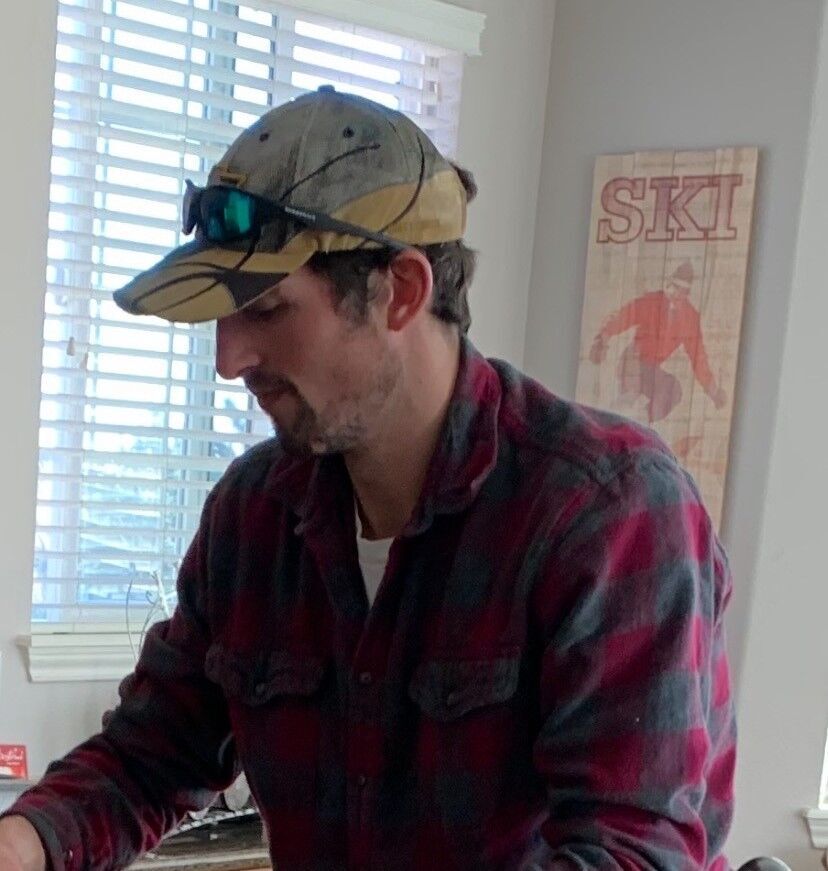
According to a press release from the Boulder County Sheriff’s Office, the ground search for missing hiker, 27-year-old Josh Hall, has been suspended. The suspension has been put in place until further notice pending new information or melting snow that will make the search effort safer and more feasible. Aviation efforts will continue if weather […]
Denver weather: Bitter temperatures with Arctic front coming for weekend
Chances of flurries with bitter cold temperatures are forecast in Denver on Tuesday before 11 a.m., the National Weather Service in Boulder said. The rest of Tuesday is expected to be partly sunny with a high of 33 degrees with winds around 6 mph, according to the weather service. Overnight temperatures are expected to drop […]