





Denver City Council to consider social equity plan for marijuana delivery, hospitality

AP Photo/David Zalubowski
The Denver City Council Finance & Governance Committee discussed a series of bills Tuesday to establish marijuana delivery and hospitality businesses with a social equity plan.
Ashley Kilroy, executive director of Denver’s Excise and Licensing division, presented the bills during the committee meeting.
“Together we can foster an opportunity to create new businesses, to create wealth for social equity applicants and to move forward with economic relief and recovery in our city,” Kilroy said.
Kilroy said the bills are a result of two years of national, state and community outreach, in addition to workshopping the bills within the Finance & Governance Committee.
The two bills would allow for marijuana delivery and hospitality within Denver; however, for the first few years, the businesses would only be allowed to be owned by residents who are “social equity applicants.”
“The (marijuana) industry has seen, since the pandemic, over $2 billion in sales,” Kilroy said. “It’s time to open this up to more individuals to benefit from the full promise of legalization.”
Marijuana hospitality
One of the bills would establish a marijuana hospitality program in Denver. In these hospitality establishments, patrons could legally consume marijuana on the premises, including options for smoking and vaping.
This bill would align Denver with the state regulations as the Colorado General Assembly established Marijuana Hospitality Licenses in 2019.
There would be three types of hospitality establishments: permanent, mobile and sales.
Permanent hospitality establishments would allow for marijuana consumption within permanent licensed premises. The establishment would not be allowed to provide marijuana, users must bring it to the establishment themselves.
Mobile hospitality establishments would allow for marijuana consumption within a moving vehicle, like a shuttle or bus. The vehicle would require GPS tracking, a recorded route and would also not be allowed to provide marijuana.
Hospitality and sales establishments would allow marijuana consumption within the premises and allow for limited marijuana sales. Patrons would not be allowed to bring their own marijuana.
All three types of hospitality establishments would not be allowed to overlap with premises that have liquor licenses or medical or retail marijuana licenses. However, they could exist within retail food establishments as long as they do not add marijuana to the food.
The establishments would be limited to patrons age 21 and over, could only operate between 7 a.m. and 2 a.m. and must adhere to city odor control and ventilation requirements.
The hospitality establishments must be at least 1,000 feet away from schools, childcare facilities, city pools, recreation centers, alcohol or drug treatment facilities and other similar license types.
Aligning with state limits, the hospitality and sales establishments would only be allowed to sell 2 grams of marijuana, 1/2 gram of marijuana concentrate and products with 20 milligrams of THC or less.
New marijuana regulations go into effect Friday
Marijuana delivery
A second bill would create a Marijuana Delivery Program in Denver, allowing residents to order marijuana products from licensed providers within the city.
The program would allow those age 21 and older to receive deliveries directly to private residences. Delivery drivers would be required to check the receiver’s ID using an ID scanner before giving them the marijuana.
Delivery vehicles must be owned or leased by the licensee and delivery drivers must be employees of the licensee.
The delivery vehicles must have a locked storage compartment secured to the vehicle to store the marijuana. There must be constant video surveillance of the compartment and the front view of the vehicle and the video must be stored for at least 40 days.
Enclosed delivery vehicles like cars, trucks and vans could only carry up to $5,000 in retail value of marijuana, half the amount allowed by state law. Non-enclosed vehicles like motorcycles could carry up to $2,000.
Deliveries would only be permitted to private residences within Denver or other Colorado jurisdictions that allow for marijuana delivery. This does not include schools, college campuses, drug or alcohol treatment facilities or public property.
Deliveries would be available from 8 a.m. to 12 a.m. and limited to the same amount of retail product that can be purchased in stores: 1 ounce of marijuana, 8 grams of marijuana concentrate and products with 800 milligrams of THC.
Deliveries could not be made to residences that had already received a delivery that same day.
Marijuana business has license revoked after owner allegedly sold product illegally
Social equity
Social equity applicants are defined as Colorado residents who have never had a marijuana license revoked and meet one of the following social equity criteria:
- Applicant lived in an opportunity zone or a disproportionately impacted area between 1980 and 2010
- Applicant or immediate family was arrested, convicted or suffered civil asset forfeiture due to a marijuana offense
- Applicant’s household income didn’t exceed 50% of the state median income
Only businesses that are 51% owned by social equity applicants would be able to obtain marijuana delivery permits from 2021 to 2024. The businesses must remain under the ownership of a social equity applicant until at least 2027.
In addition, the bill would get rid of Denver’s current lottery system for marijuana licenses and instead open applications year-round exclusively to social equity applicants for the next six years.
This would include licenses for stores, transporters, cultivations, manufacturing and all three forms of the newly-introduced hospitality establishments.
By providing exclusivity to social equity applicants, Denver officials are trying to make up for the damage caused by the War on Drugs and the unequal persecution of disadvantaged communities for marijuana.
“We give (them) a fighting chance to get a real foothold in this industry without being edged out by more established, well-funded competitors,” said Abbey Borchers with Denver’s Excise and Licensing division.
The bill would also remove the current cap on stores and cultivations. However, new marijuana businesses would not be allowed within the top five neighborhoods in Denver with the highest number of current marijuana stores.
As of February, those neighborhoods are Overland, Northeast Park Hill, Baker, Five Points, Valverde and Elyria-Swansea, with the latter four neighborhoods tied for third place.
Marijuana delivery to begin in Aurora in 2021; City Council passes final vote
The bill would maintain current advertising and proximity restrictions, allow marijuana stores to operate from 8 a.m. to 12 a.m. and require stores to secure products in a safe or vault overnight.
Finally, the bill would also prohibit drive-up, walk-up and curbside delivery for marijuana stores outside of emergency rules like those established during the COVID-19 pandemic.
Sgt. Aaron Kafer said the prohibition was a recommendation from Denver police to prevent theft and fake ID use since outdoor transactions don’t have the same surveillance, security and double ID check that stores implement.
However, Councilman Chris Hinds expressed his intention Tuesday to create an amendment removing the prohibition since he argued concerns about security and ID checking contradict the bill allowing for marijuana delivery.
Multiple council members and numerous members of the public also expressed interest in changing the zoning and distancing requirements for marijuana businesses.
Members of the public who called in argued that current restrictions – like the 1,000-foot gap between schools, recreation centers and other license types – would place too many limits on location and hurt the chances of new businesses becoming successful.
“How realistic is it that anybody is going to be able to open?” said Councilwoman Robin Kniech. “They are making it more difficult for this group of applicants to open businesses.”
The Finance & Governance Committee will continue to discuss the bills during its meeting on March 16. If the committee passes the bills, they will have to move to the full Denver City Council for approval.


Clash of the titans: Democratic race for governor pits two candidates similar in focus, but very different in style | Vince Bzdek
Vince Bzdek
vince-bzdek@denvergazette.com
Updated 14 hours ago
By Vince Bzdek The race for governor is shaping up to be a clash of Democratic titans, U.S. Sen. Michael Bennet and Attorney General Phil Weiser. They are two of Colorado’s highest profile politicians with deep track records who...

Vince Bzdek
Reporter
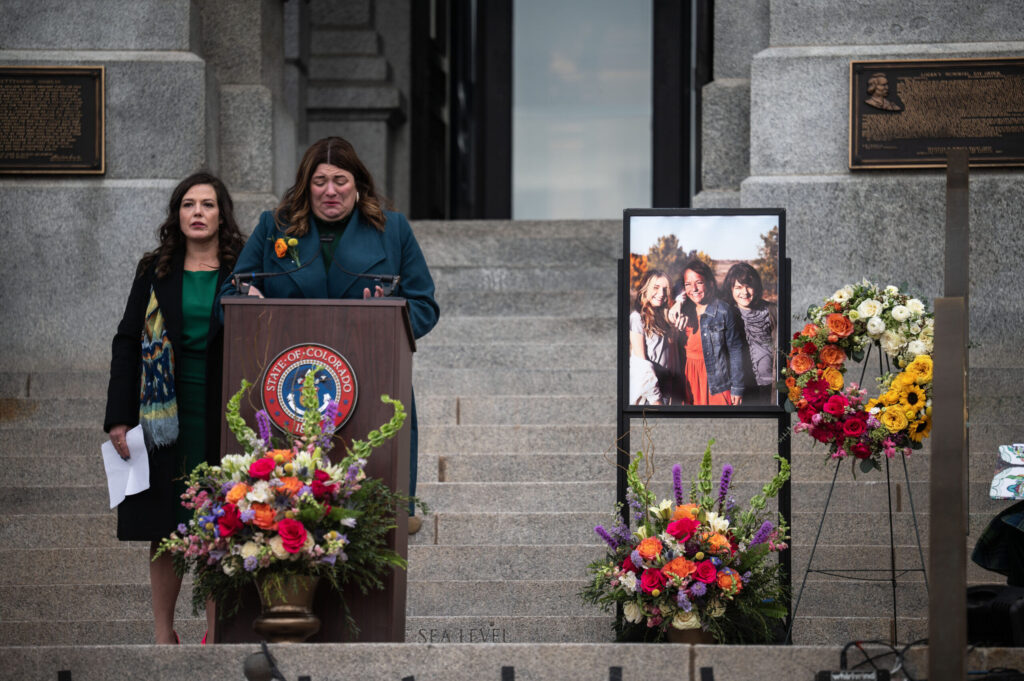
Flags lowered, colors raised: Colorado leaders and friends celebrate Sen. Faith Winter’s life
Marianne Goodland
marianne-goodland@denvergazette.com
Updated 2 days ago
It was the colors that stood out as hundreds braved the cold on Friday to celebrate the life of Sen. Faith Winter, who died in a two-car crash on Nov. 26. Flags at the state Capitol flew at half-staff at...

Marianne Goodland
Reporter

Denver to consider $27 million body camera contract, DPD overtime
Deborah Grigsby
deborah.smith@denvergazette.com
Updated 2 days ago
The Denver City Council will meet Monday afternoon to consider a handful of resolutions postponed from Dec. 1 and two resolutions involving the Denver Police Department. First up is a resolution from the Department of Public Safety seeking approval of...

Deborah Grigsby
Reporter
Denver mayor’s legal bill for sanctuary city hearing tops $1 million
Deborah Grigsby
deborah.smith@denvergazette.com
Updated 2 days ago
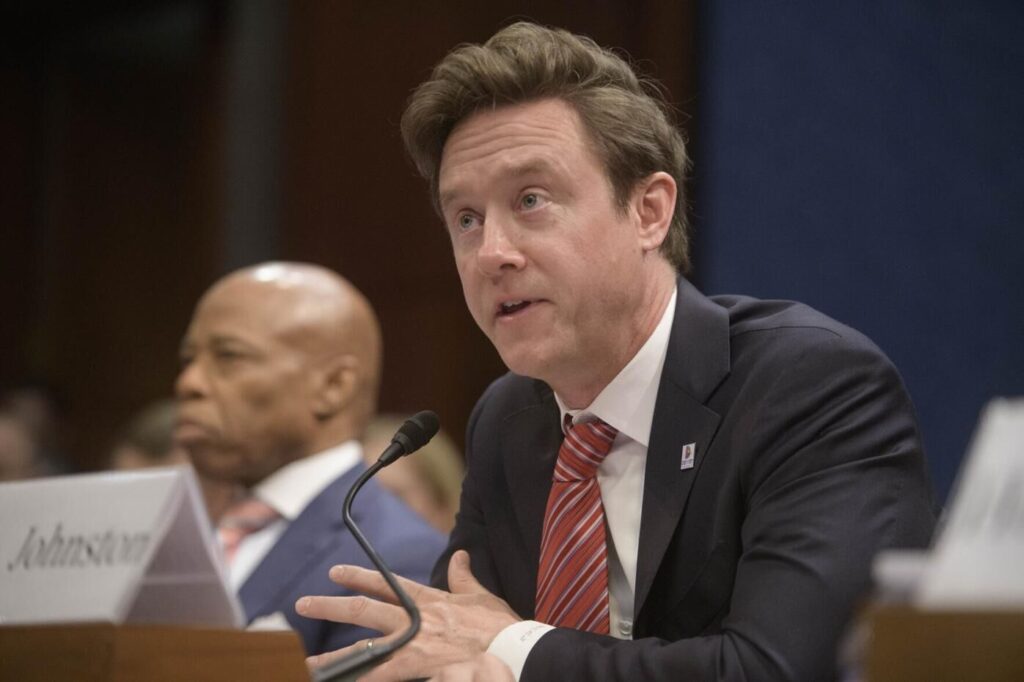
The bill for Denver Mayor Mike Johnston’s legal defense for a March 5 hearing before the U.S. House Oversight and Government Reform Committee on “sanctuary” cities just crossed the $1 million mark. City financial records show that a fourth payment...
Deborah Grigsby
Reporter

Outgoing CPW director Jeff Davis lands new role, same salary amid Colorado hiring freeze
Marianne Goodland
marianne-goodland@denvergazette.com
Updated 13 hours ago
Jeff Davis, who resigned as director of Colorado Parks and Wildlife late last month, will continue to receive the same salary in his new role as a senior policy adviser to the Department of Natural Resources, according to the department....
Marianne Goodland
Reporter

Judge denies motion from Gov. Jared Polis to dismiss ICE lawsuit from former state employee
Marianne Goodland
marianne-goodland@denvergazette.com
Updated 3 days ago
A Denver District Court judge has denied a request by Gov. Jared Polis to dismiss a lawsuit filed by a former state employee over disclosure of information to federal immigration authorities. The lawsuit filed against the governor by Scott Moss,...
Marianne Goodland
Reporter

Coal-fired generator at Pueblo’s Comanche Power Plant gets a one-year extension on life
Alexander Edwards
alexander-edwards@denvergazette.com
Updated 2 days ago
The Comanche Power Plant in Pueblo will continue to operate a coal-powered electrical generating unit that was slated for retirement this month for one more year. The move comes after Xcel Energy, the state’s largest utility company, petitioned in November...

Alexander Edwards
Reporter

Trump calls Jared Polis a ‘sleazebag’ for keeping ‘elderly woman’ Tina Peters in jail, governor responds
The Washington Examiner
the-washington-examiner@denvergazette.com
Updated 3 days ago
President Donald Trump took to Truth Social on Wednesday to lambast Colorado Gov. Jared Polis over the case involving former Mesa County Clerk Tina Peters, who was sentenced to nine years in prison in 2024 for charges of giving unauthorized...

The Washington Examiner
Reporter

Disaster drill tests Denver’s response to widespread power outage
Deborah Grigsby
deborah.smith@denvergazette.com
Updated 3 days ago
What if, on a hot summer morning, a powerful tornado were to touch down in central Denver, leaving a widespread path of damage, creating a prolonged power outage across most of the city, and possibly the airport? That’s exactly what...
Deborah Grigsby
Reporter

Once a step ahead, Colorado’s economy cools, burdened by rising costs and regulations | FISCAL ROCKIES
Thelma Grimes
thelma.grimes@coloradopolitics.com
Updated 3 days ago
Editor’s Note: Once among the nation’s fastest-growing economies, Colorado today confronts mounting challenges that threaten its momentum. This series reveals how a state once defined by prosperity is navigating economic cliffs and ridges. We explore the impact of increased regulations, tariffs,...

Thelma Grimes
Reporter
PREV
PREVIOUS

Reaction to Colorado Health Care Option draft bill: Industry groups hate it, consumer health advocates love it
Facebook Twitter WhatsApp SMS Email Print Copy article link Save Reaction to the first draft of the Colorado Health Care Option bill, sponsored by Rep. Dylan Roberts, D-Eagle, and Sen. Kerry Donovan, D-Vail, runs the gamut. The draft bill, first reported by Colorado Politics, sets a two-year timeline for the health industry to reduce premiums […]

House committee advances bill on child porn, would overturn Supreme Court decision
Facebook Twitter WhatsApp SMS Email Print Copy article link Save Facebook Twitter WhatsApp SMS Email Print Copy article link Save The House Judiciary Committee on Tuesday advanced a bill to overturn a state Supreme Court decision and give blessing to prosecutors to charge for each item of child pornography in a person’s possession. House Bill […]