







Year-Round Gardening: A guide to shrub-pruning techniques

Pruning deciduous shrubs is essential to keep them looking their best. Pruning is done to maintain or reduce plant size, remove undesirable growth, remove dead, diseased or broken branches, stimulate flowering, and rejuvenate and restore old plants and shape.
The best time to prune depends on the type of shrub. Summer-flowering shrubs bloom on the current year’s growth. Prune these shrubs in late winter or early spring. Spring-flowering shrubs bloom on last year’s growth and should be pruned immediately after flowering. Those that are healthy and well-maintained should require only light to moderate pruning. Shrubs with insignificant flowers can be pruned in late winter or early spring.
There are a variety of shrub-pruning techniques used depending on the condition of the shrub or desired results.
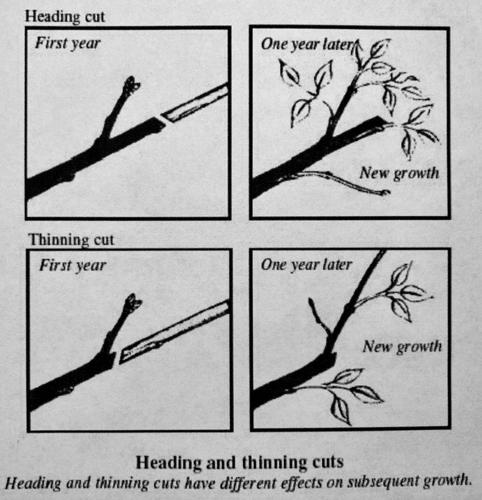
Selective heading cuts involve removing the terminal part of a stem back to a bud from one-third of the younger stems. This helps to control the size while still maintaining a natural shape.
Selective thinning refers to removing branches back to the point of attachment to another branch, or to the ground. This type of pruning opens the plant canopy, increasing light and air movement. When light can penetrate the canopy, entire branches can maintain leaves. Selective thinning is suitable for all plants and is generally the most desirable type of pruning cut.
Renewal pruning occurs over a three-year period. In the first year, cut the oldest one-third of stems to ground level in March to early April. The following year, cut half of the remaining old wood to ground level. The third year, remove all remaining old wood to ground level. At the end of three years, the shrub consists of all new or young wood, renewed for future growth.
Rejuvenation pruning is a severe form of pruning used to revitalize unhealthy, overgrown shrubs. During March to early April, trim all stems back to approximately 4 inches above the ground.
This will result in vigorous sprouting that growing season. In late winter, retain several strong shoots based on preferred size and shape and remove all other shoots to ground level. This is a great method to turn an overgrown shrub into a trainable young shrub.
Shearing is a technique used only when a formal hedge is desired. Remove new shoots by using hedge shears, leaving 1 inch of previous growth to allow for the plant to regrow. Maintain the base of formal hedges wider than the top to insure adequate light penetration to the bottom.
Keep your pruning and lopping shears clean, sharp, and in good working order. It’s a good practice to disinfect shears with alcohol or chlorine bleach diluted in water (1:9) so as not to spread disease from one shrub to another.
Make clean cuts at a 45-degree angle and avoid bark tears.
The El Paso County Extension is operating remotely due to COVID-19. Submit questions to [email protected]. Follow on Facebook at Colorado Master Gardeners — El Paso County.