







‘Snake moms’ show off the growing acceptance and popularity of snakes as pets
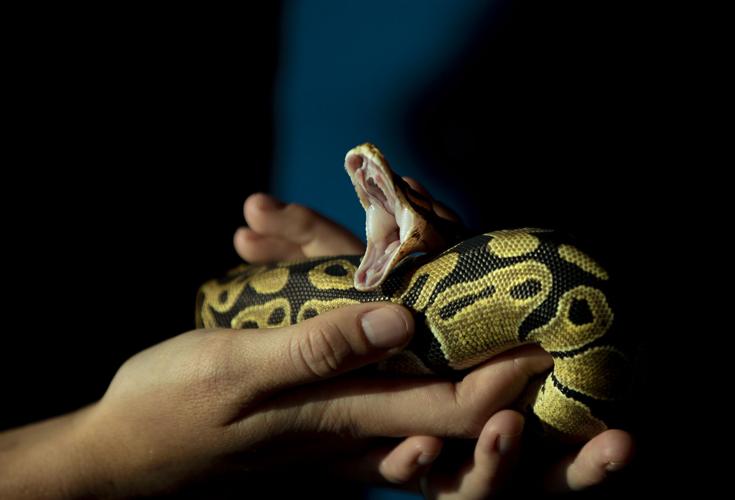
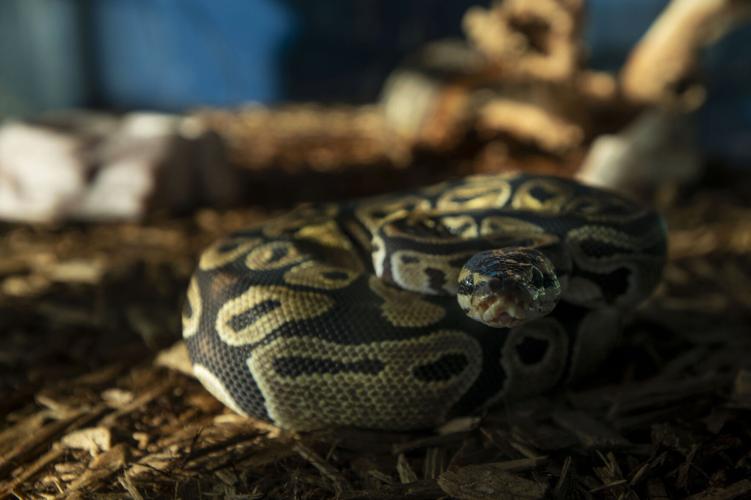
Pancho, the ball python, yawns as his owner Caitlyn Concklin holds him at her home in Colorado Springs. Concklin has owned Pancho for nine months.
Chancey Bush, The Gazette
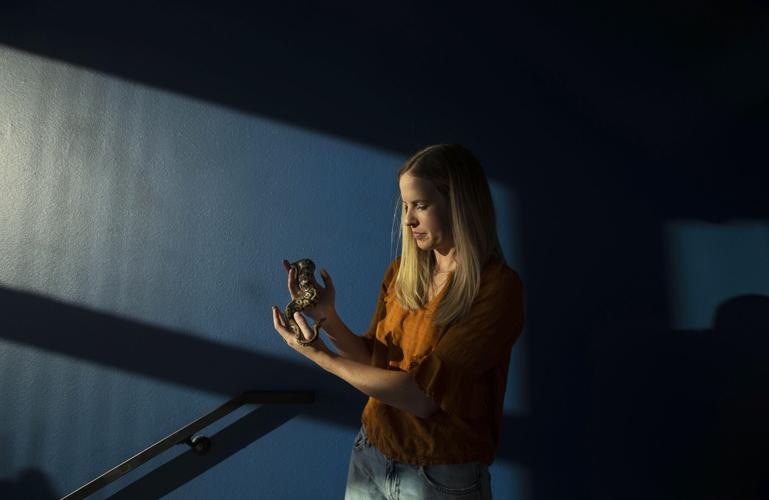
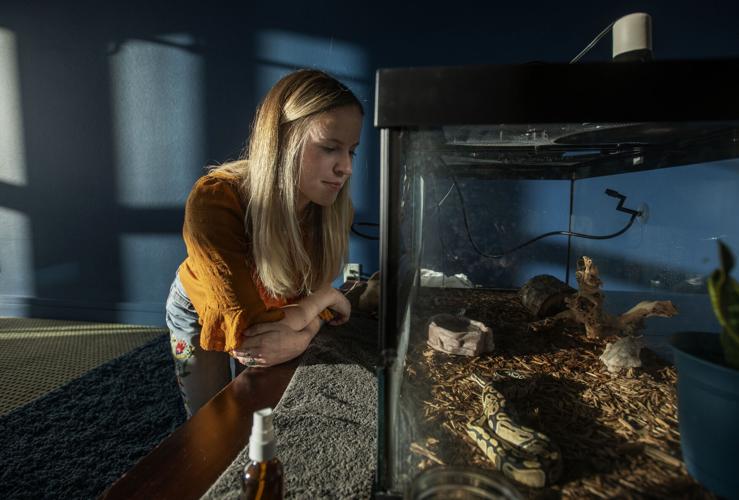
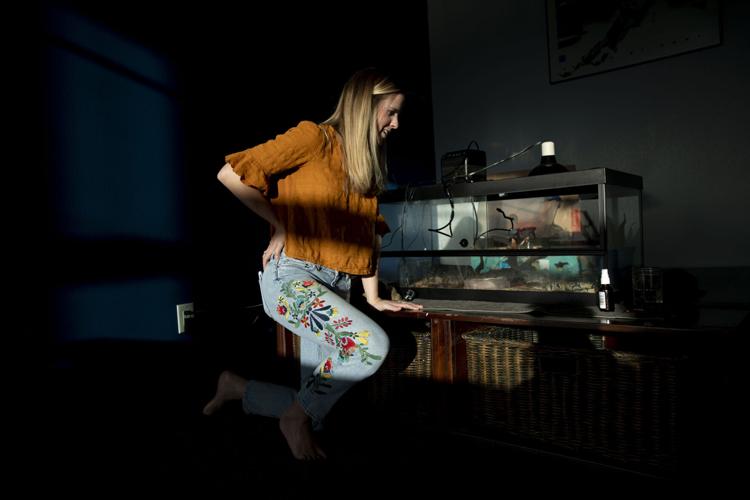
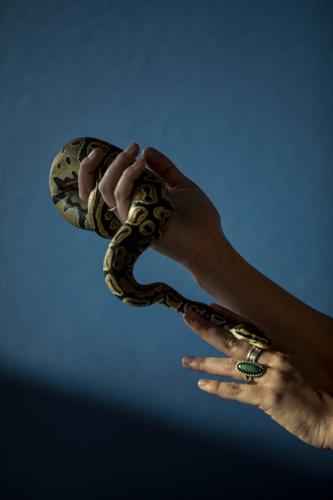

We’ve all seen the bumper stickers and hashtags for “dog moms.” But Stacey Barbalinardo is more likely to identify another way. She’s a proud “snake mom.”
On Instagram, she shares photos of her chickens, dogs, cat and plants. The photos that get the most attention show Barbalinardo with her four pet snakes, who are often wrapped around her shoulder or hands as if to almost resemble a wardrobe accessory. She swoons over how cute they are and updates followers on their behaviors. She recently announced another snake was joining her crew and attributed the addition to her own “foster fail.”
“I just can’t get over how beautiful she is,” she might say. “Everyone should have a boa.”
Barbalinardo, who lives in Colorado Springs, is also out to set some things straight about owning a snake, like that snakes are out to “kill everything and everyone” or that they’re unpredictable and aggressive.
In her experience, snakes can offer just as much love as any other pet. Barbalinardo says her days are better if they involve play time and “love boops” from her reptiles.
“I think it’s extremely important to do research and learn snake body language when handling any snake,” she said. “In general, my snakes are sweet, gentle, calm beings that would rather be left alone than even strike at anything besides a rodent.”
And, she says, they pass on life lessons.
“Hanging out with a snake can teach you a lot,” she said. “About them, about yourself, about life.”
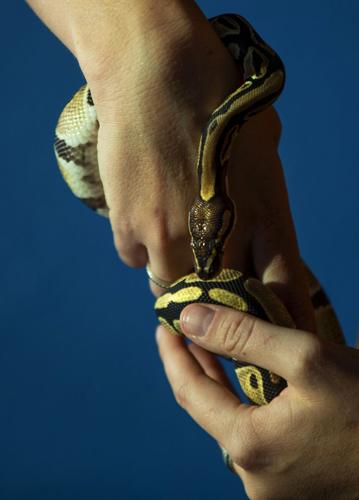
Another “snake mom,” Caitlyn Concklin, often spends relaxing evenings with her ball python named Pancho, who likes to cuddle up in Concklin’s hair.
After coming across a pet python at a party, Concklin thought a snake would be the perfect low-maintenance pet. Nine months later, she’s realized how sweet her snake can be. One night, for example, she and Pancho were hanging on the couch watching a movie. And she accidentally fell asleep.
“He could have easily slithered away, but I woke up two hours later and he hadn’t moved,” she said. “I thought that was emotionally supportive of him.”
Of course, not everyone shares the love. Comments on a photo of Pancho include: “I hate this” and “Terrible and amazing at the same time” and, simply, “Cool!”
Snakes have come a long way in terms of being accepted as household pets, says Ann-Elizabeth Nash, the executive director and founder of the Colorado Reptile Humane Society.
She says the trend started in the 1970s, when having a snake as a pet was extremely taboo.
“It was so radically different,” Nash said. “It was like, Who has a snake as a pet? How can you love a snake as a pet?”
Back then, there was a stigma that all snakes were creepy or gross or deadly.
While that still exists today, the bigger problem is getting people to care about snakes and reptiles on the same level as cats and dogs.
For Nash, that journey started in the late 1990s.
At the time, she was working at the National Center for Atmospheric Research in Boulder, a field that had nothing to do with reptiles. Then a co-worker asked Nash to babysit their pet iguana.
When she thinks about her first day with the iguana, Nash brings up a magnet on her refrigerator that reads, “One day can bend your life.”
“And it really did,” Nash said.
She was instantly fascinated by the animal, which led her to do some online research the next day at her office.
“To be reading how poorly these animals were treated, I was just stunned,” she said. “They were seen as a throwaway animal, like a goldfish. Nobody cared.”
There wasn’t support for reptiles via a humane society like there was for cats and dogs.
So Nash started one.
“It just clicked for me and I have no idea why,” she said. “It spurred me into some kind of action. And here we are 22 years later.”
The Colorado Reptile Humane Society in Longmont has adoptable pets ranging from aquatic turtles to bearded dragons to geckos. While all categories have seen rising interest, Nash continues to see more interest in snakes. Perhaps that’s because they require a little less work as a pet owner.
“A lot of reptile people really enjoy having a pet that’s a little different,” she said. “It’s not just the cool factor.”
For snake moms like Concklin, there’s a bonus. Having a snake fits her lifestyle as a “weekend warrior” who likes to travel, go camping and skiing.
“Having a snake makes that incredibly doable without the guilt of leaving them,” she said.
“They only eat twice a month and their water will last for about four days, so it makes it easy.”
Sharing things like that has helped her convert five people to being “snake people.”
Barbalinardo is also out to educate friends and strangers about the benefits of owning snakes.
“A lot of people think that snakes are just derpy dumb dumbs,” she said. “They’re actually extremely intelligent creatures. You just have to think more on their level. Get more in tune with them.”
Those kinds of conversations are helping to remove the stigma, says Nash.
“Reptile ownership is not unusual anymore,” she said, adding that 10% of families in the U.S. own a pet reptile.
“Like all animals in our communities, we want to pay attention and make sure they’re cared for,” she said. “Part of that comes from normalizing them.”