







Some Palisade farmers say this year’s peach crop could be best yet
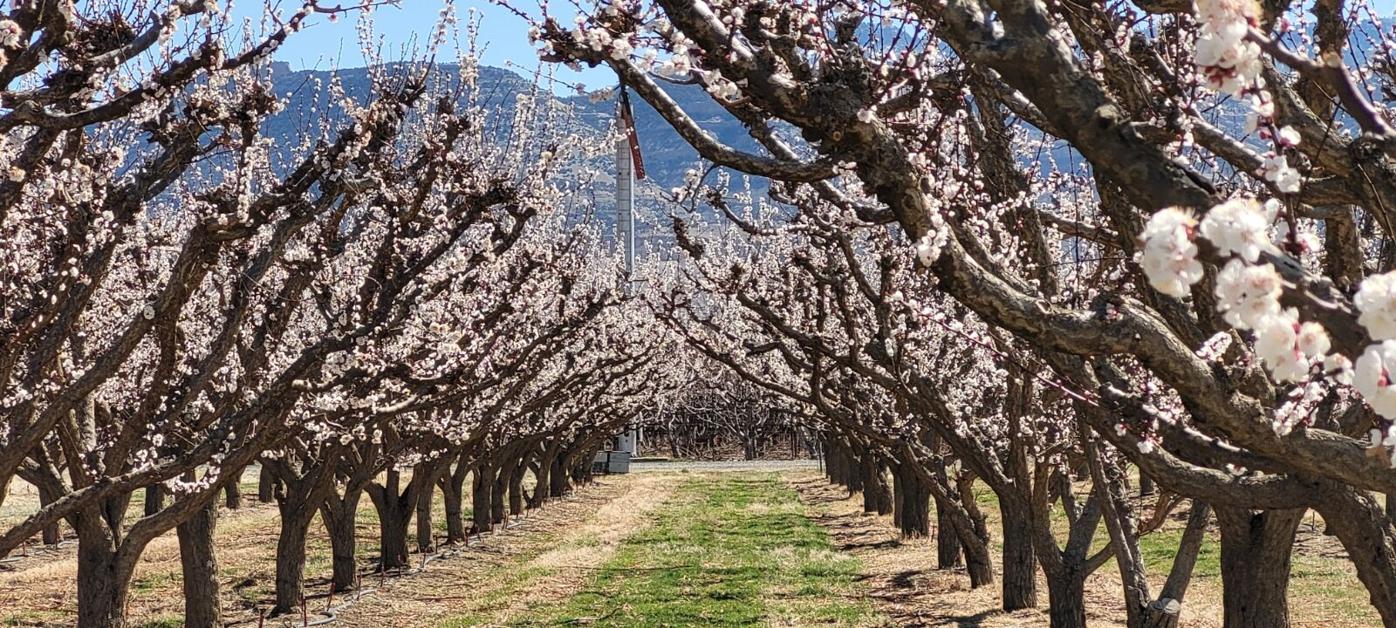
Courtesy of Clare Talbott
Just over one year ago, a record low temperature sent chills down the backs of the farmers throughout the Grand Valley region.
The National Weather Service recorded its coldest temperature in the area since 1933 on April 14, 2020, at 19 degrees, which devastated many of the crops in the region, including the famous Palisade peaches.
However, Mother Nature has been a little kinder this year to the farmers of the region as temperatures have not dropped below 27 degrees — which would ruin the crops — and they believe this year’s crop might be the best yet.
“We anticipate an incredible quality of peaches this year, possibly the best ever,” said Scott High, the owner of High County Orchards and Colterris Vineyard in Palisade.
“The reason being, when the trees suffer like it did last year, Mother Nature tries to adapt itself into producing fruit with more sugar and flavors.”
Which is a good thing for the farmers of the region as many of them lost the majority of their crop last year, or barely had enough for a single pie.
C&R Farms, which has 120 acres dedicated to peaches and produces about 65,000 boxes each year, was left with only 5% of its annual crop, said owner Clare Talbott.
Phillip Patton, the owner of Peachfork Orchards, said traditionally they grow around 200,000 peaches, but last year were only able to harvest around 20. So to him, this year’s harvest means even more.
“The maintenance, the pruning, the spring and everything continues regardless of how your crop does, and it sure makes it harder when there is no revenue from the year before,” Patton said. “We really need the revenue and I’m not going to go bankrupt or anything, but it’s completely devastating to not have any revenue.”
Farmers and growers try to avoid these types of circumstances at all costs and use a plethora of methods to protect their crops. Many farmers in the Grand Valley Region utilize wind machines and irrigation systems that are supposed to protect the crops.
The irrigation system will run water between 40 and 50 degrees across the crop fields and is supposed to either warm, or keep everything warm, during a cool down, Patton said.
The wind machines, meanwhile, are designed to “pull warm air down and pull it down over our vineyards and orchards,” Patton said.
Traditionally, each farmer will begin to utilize these crop- saving methods at the first sign of a cool forecast.
Unfortunately for the farmers in the region, peaches were not the only things destroyed by Mother Nature in 2020. Both Patton and High grow grapes and said a sudden cool down in October likely killed the crop.
“We don’t anticipate having the 280 tons of wine grapes we traditionally harvest this year, and we are anticipating that number to actually be zero,” High said.
Each year grape vines are traditionally active from the late spring into the fall months.
National Weather Service Grand Junction technician Dan Cuevas said the sudden cool down began on Oct. 24 and continued through Oct. 28. The NWS recorded record lows between Oct. 25 and Oct. 28, as temperatures dropped as low as 11 degrees.
“Peaches were lost last year and the grapes are lost this year,” High said.
Other farmers across the state, like Tony Ferrara, the owner of Happy Apple Farms in Penrose, said their crops appear to be fine so far this year amid a recent cool down.
“We don’t know what kind of damage we’ll have because it doesn’t show immediately, but I anticipate that our crop will be all right,” Ferrara said.
But for now the forecast across the Grand Valley Region looks favorable for the farmers whose crops were devastated a year ago. Temperatures are expected to stay well above freezing in the high 30s and 40s for at least the next week, which is a big relief, said Talbott.
“May 10 is generally our last freeze day, so we still have a little ways to go yet, but it’s supposed to be warm the next week, so we’re really excited about that,” she said.
“We’ll have to pray a lot and Mother Nature will decide whether we have a good crop or not. You know, farming is a big gamble and it’s like going to Vegas, but only worse.”