







Denver officials consider 112 task force recommendations for policing reform
City officials are beginning the process of vetting 112 recommendations on how Denver’s policing should change following a report released by the Reimagine Policing and Public Safety task force Friday.
The recommendations are split into five categories: helping the community provide its own public safety, minimizing unnecessary interaction with law enforcement, supporting those released from prison, rebuilding trust between the public and police and establishing proper oversight for law enforcement.
“We need to begin to move beyond looking at various policing practices, and looking at more comprehensively on how we improve every aspect of community life,” said Dr. Robert Davis, head of the task force.
The recommendations were officially submitted for consideration to the Denver City Council Monday – the day before the one-year anniversary of the death of George Floyd, a Black man killed by Minneapolis police after an officer knelt on his neck for over nine minutes.
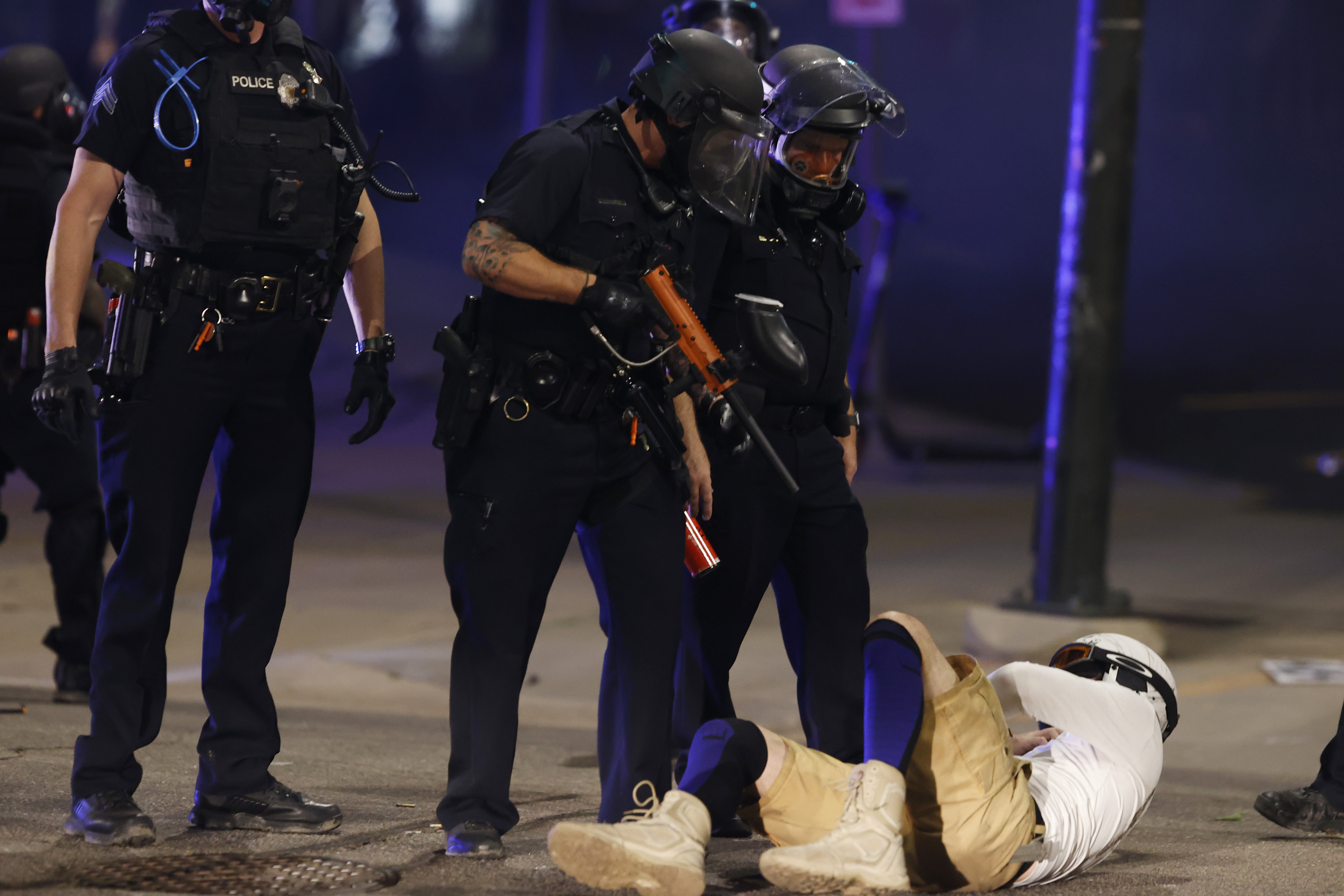
Floyd’s death, and the Denver police’s response to resulting protests in the city, inspired the establishment of the Reimagine Policing and Public Safety task force last June.
“We’ve heard from and support our Denver community’s desire to reframe public safety from an anti-racist lens,” said Council President Stacie Gilmore. “I look forward to working together as we move forward in reimagining policing.”
Gilmore said she will soon appoint a City Council working group to review the recommendations and determine the council’s next steps.
Councilwoman Candi CdeBaca called the recommendations “the most comprehensive thing I’ve ever seen come from community.”
“I hope we can implement some of them,” CdeBaca said. “I look forward to working with my colleagues to implement these research-based recommendations that will improve community safety and well-being while reducing mass incarceration.”
The task force is comprised of civil rights organizations, activists, social services providers, faith-based organizations, policy advocacy and youth services.
Government bodies such as the Denver City Council, the Denver District Attorney’s Office, the Office of the Independent Monitor and public defender’s offices have also participated in the task force’s work.
Denver Police Chief Paul Pazen said the police department and the Department of Public Safety’s transformation policy team is still working through the recommendations and determining which could be implemented, saying they need to “strike a balance.”
“We need to see what makes the most sense on how we can look at recommendations, as well as how we can keep our city safe,” Pazen said.
“(The priority is) making sure that, as we implement strategies, we understand the unintended consequences before we do so,” said Public Safety Director Murphy Robinson. “Everything we do can be life or death so the last thing I want to do is authorize the implementation of a policy that causes more harm.”
While the report was being developed, Robinson withdrew DOS and law enforcement from the task force last winter, saying members of his team were asked to not actively participate in meetings and instead only answer questions.
Davis has disputed this, telling The Denver Gazette safety officials were only asked to skip one meeting so that ideas from the community about public safety and policing could be freely shared. He said he believes the law enforcement agencies were uncomfortable with not being able to set the task force’s agenda.
Though Denver Mayor Michael Hancock has not yet expressed support or opposition for any individual recommendations, he said Monday he “will never starve our police department of the training and the resources our officers need to combat crime.”
Hancock’s new collaborative policing strategy announced Monday seems to go against some of the task force recommendations by increasing community interactions with law enforcement, instead of minimizing them like one of the report’s five core recommendations suggests.
“Even with supplemental training in de-escalation tactics, the presence of armed police officers inherently escalates interactions,” the report reads. “Safety is not a function of armed paramilitary forces with a proven track record of racism and violence. Public safety prevents, reduces, and heals harm.”
A summary of the 112 recommendations broken up by category are as follows:
Empower the community with resources to adequately address socioeconomic needs and provide for their own public safety:
- Support and create community-led, non-law enforcement institutions, workshops, mental health training and harm reduction training to enable communities to help each other
- Prevent and eliminate homelessness, devote housing funding, create permanently affordable housing options, eliminate racist zoning laws and end homeless sweeps
- Track and correct disproportionate impacts of police searches and arrests based on race, ethnicity, color, gender, economic status and disability status
- Increase the number of co-responder and STAR teams citywide
- Remove limits to and expand employment opportunities for long-term health, mental health and substance abuse services
Minimize unnecessary interaction of law enforcement and the criminal legal system with the community:
- Decriminalize sex workers who are victims of human trafficking, quality-of-life offenses, survival crimes, drug use, public intoxication and traffic offenses often used for pre-textual stops
- Prohibit police from conducting searches for petty offenses or traffic violations, remove police from routine traffic stops/crash reporting and eliminate the need for traffic enforcement by investing in the built environment
- Eliminate all school-based public safety contracts, diverting budget savings to social and emotional learning, behavioral monitoring and reinforcement, counseling and peace-able school programs
- End cash bail for all defendants accused of serious crimes unless it is proven by clear and convincing evidence that the defendant is a flight risk or violent threat to the community
- Create and support unarmed community-based non-law enforcement response teams to complement STAR and co-responders
Support successful community re-entry of formerly incarcerated people and remove systemic barriers to reintegration:
- Remove barriers that bar formerly incarcerated people from obtaining certifications, government employment, public housing, financial aid and public benefits
- Create and support a re-entry department, free post-conviction legal assistance, free post-conviction financial assistance, orders of relief and fee waivers
- Connect those re-entering society with county-funded community-based advocates
- Provide pre-release services to stabilize people with mental illness before releasing them and create community-based treatment facilities to accept patients from jail
- Prioritize permanent supportive housing prior to release for chronically homeless people with co-occurring disorders
Heal the community from harm created by policing and the criminal legal system:
- Implement new standards for police interactions with the community that are determined by community members via an open, transparent and collaborative process
- Prohibit the use of handcuffs, pepper spray or physical restraints of any kind on minors
- Provide mandatory routine mental health supports for officers to address the trauma associated with witnessing and intervening in violence
- Provide mandatory training for officers on anti-racism, community development, public health, human services, community engagement and housing approaches
- Change the DPD internal investigation process and ensure procedural justice and accountability for officers who experience discrimination, targeting, bullying or silencing for speaking against injustice
Expand the role of the community in establishing oversight, improving accountability, training law enforcement and creating public safety policy:
- Conduct deeper background checks of law enforcement applicants to eliminate those with known histories of racism and discrimination, and terminate all current officers with racist body markings or paraphernalia
- Automatically terminate officers who kill an unarmed victim and mandate “duty to intervene” in use of force cases that extends liability to officers who fail to intervene
- Prohibit no-knock warrants and the use of riot gear, weapons and militarized approaches or responses during peaceful protests or demonstrations
- Establish clear discipline processes for homophobic, transphobic and misogynistic harassment or assaults by law enforcement and investigate allegations with an independent body outside of the police department
- Change the Office of the Independent Monitor in the following ways: transfer appointment authority to the City Council and Citizen Oversight Board, implement a four-year term, grant subpoena power, guarantee Career Service status for non-managerial staff and guarantee a budget of at least 2% of the budgets of the entities the office investigates