




Pikes Peak area outdoor recreation leaders discuss wildfire mitigation, priorities with U.S. Sen. Michael Bennet

Outdoor industry leaders expect a boom in outdoor recreation across the Pikes Peak region this summer as the nation comes out of the pandemic. But they’re concerned about the toll increased usage of local parks, trails and open spaces could take on the environment, particularly without sufficient funds to combat it, they told U.S. Sen. Michael Bennet (D-Colo.) Thursday.
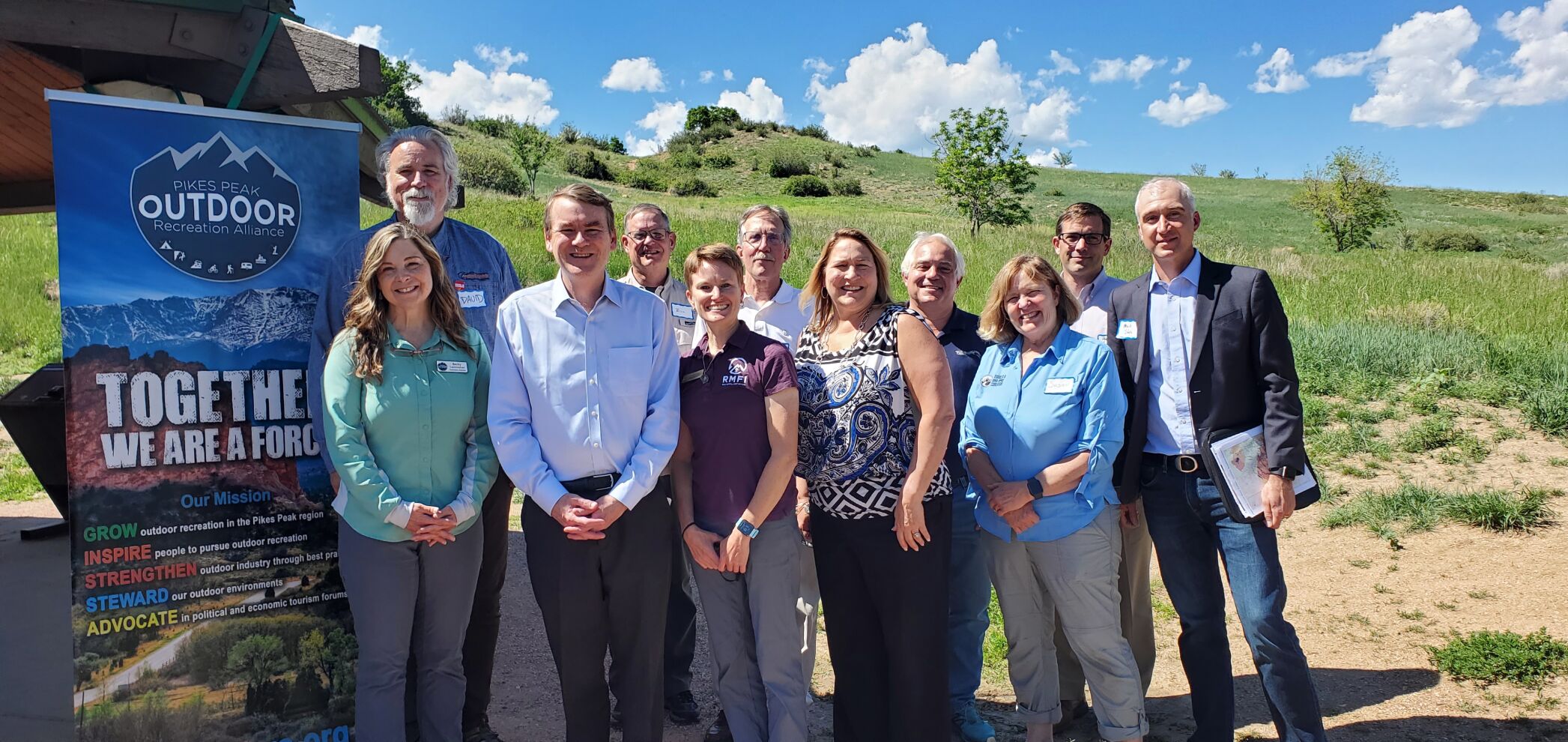
As local coalitions come together to mitigate wildfire danger, restore watersheds and maintain parks and open spaces across the region, they face challenges when it comes to funding and mitigation planning, Pikes Peak Outdoor Recreation Alliance members said during a meeting with the senator at Bear Creek Regional Park in Colorado Springs.
“Our challenge here (is that we have) almost too much of a good thing,” said Susan Davies, executive director of the Trails and Open Space Coalition and a member of the alliance. “We have so many beautiful places to hike, to explore, where we can recreate. Everybody out there wants what we have, so they’re coming from Kansas and Oklahoma and Texas. I think, once again, we’re going to see record numbers this summer, which is great for the economy. But it does take its toll on the environment.”
With more federal funding, outdoor recreation organizations could better mitigate environmental hazards and take some of the strain off the national Forest Service, which is understaffed and until recently was forced to use more than half of its budget to fund the cost of fighting wildfires rather than mitigation, Bennet said.
100 years ago Pueblo’s great flood reshaped the state
He discussed how his bipartisan Outdoor Restoration Partnership Act could help. Co-sponsored by U.S. Reps. Jason Crow (D-Colo.) and Mike Simpson (R-Idaho) and included in President Joe Biden’s $2.3 trillion American Jobs Plan, the bill would create millions of jobs in forest and watershed restoration projects across the country, lowering the risk of catastrophic wildfire to protect Colorado’s watersheds and boost the economy, Bennet said.
“There’s been such a profound underinvestment in our national forests for so many decades,” he said. “With climate change we see the devastation that is occurring because of the wildfires that we’re having. Their duration, their intensity is nothing like we’ve seen before.”
Bennet’s $60 billion bill would provide funds to federal and local agencies to collaborate on mitigation projects rather than “paying the incredibly expensive cost” of fighting fires across the state, he said. It costs about $1,500 — a figure outdoor industry leaders said Thursday was likely conservative — to treat an acre of national forest, but $50,000 to fight a fire on that same acre, Bennet said.
“Fire doesn’t know any political jurisdiction and it needs all this cooperating together to get the work done,” he said.
While $60 billion is a significant amount of money, it’s what is needed for the country to catch up on a decades-long backlog of fire mitigation and watershed restoration projects, Bennet said. It’s also about the same amount of money spent every four or five years to fight the wildfires, he said.
Wildfire mitigation in national forests requires a “proper investment” from the federal government, he added. National forests are critical infrastructure just as freeways and tunnels are, and when forests are damaged or degraded everyone is affected, he said.
“Everybody who’s downstream from Colorado needs to care about this, and there are a lot of people downstream from Colorado,” Bennet said.
While Pikes Peak Outdoor Recreation Alliance members applauded the bill, they were concerned that it does not fund treatment of roadless areas or wilderness.
Colorado Springs parks system falls in annual ranking, trailing other major Colorado cities
“That’s a concern to many of us because so much of our wildlife and so many of our watershed and recreation assets are there. They’re also the areas where many fires start,” Pikes Peak Outdoor Recreation Alliance Executive Director Becky Leinweber said.
Additionally, sometimes federal funding has significant restrictions, including that it cannot be used to feed or house members of the organizations who are doing the mitigation work, alliance members said. Those restrictions make it difficult for mitigators to complete their work and they must come up with other sources of funding to fill in the gaps, they said.
Bennet said the feedback he received from the group was helpful, and he took notes throughout the meeting to refine the bill.
“These are bills that are not written in Washington, D.C. They’re written around picnic tables like this one,” he said.
Get OutThere
Signup today for free and be the first to get notified on new updates.
PREV
PREVIOUS

Pedestrian lying in parking spot ran over in City Park
A pedestrian was ran over in a City Park alley-way Thursday afternoon and police are investigating. The incident happened near East Colfax Avenue and North Fillmore Street at 5:15 p.m., when a motorist pulled into a parking spot and ran over a person lying on the ground, said Kurt Barnes, a public information officer for […]
Denver Public Schools board confirms Dr. Alex Marrero as the next district superintendent
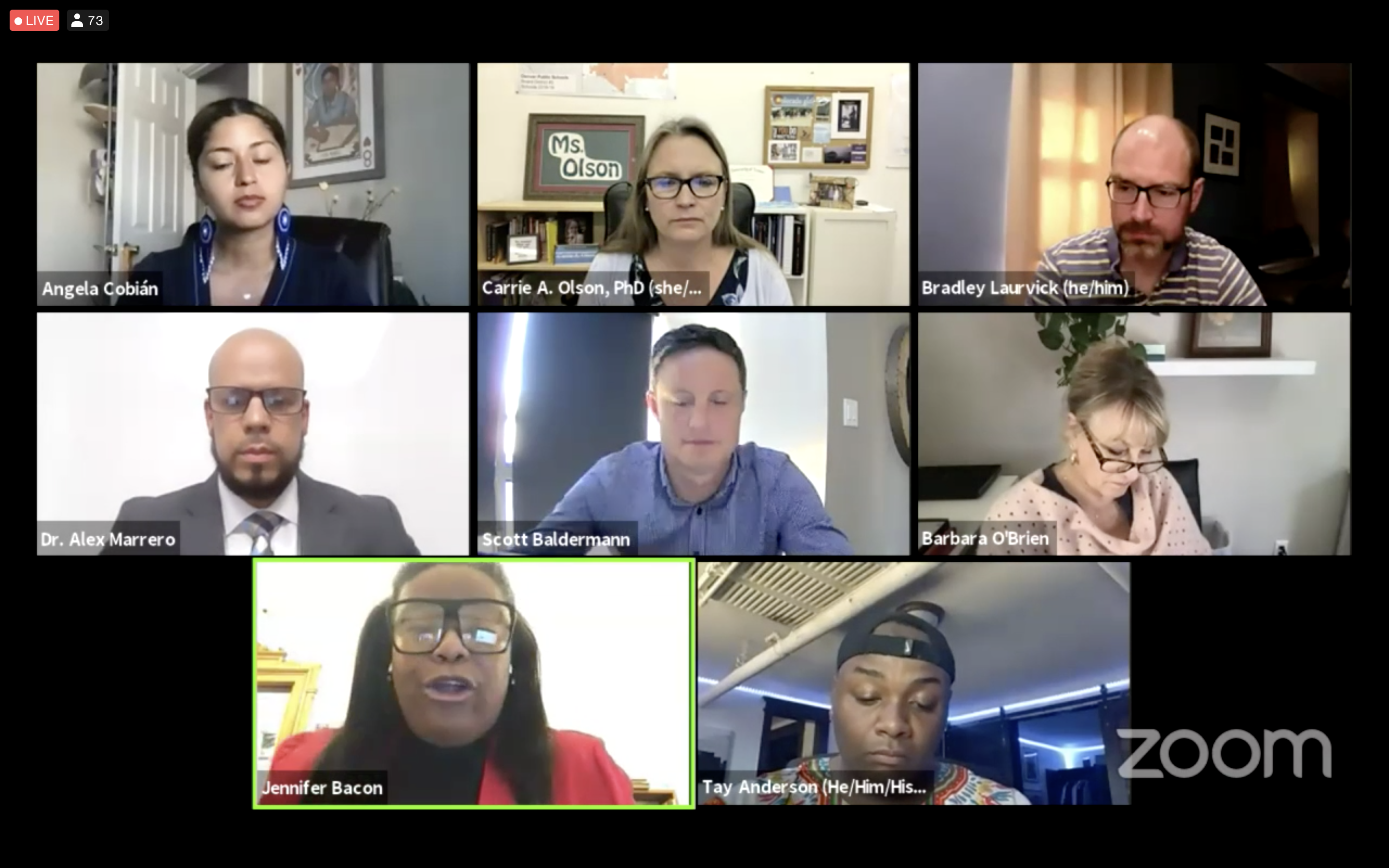
Denver’s Board of Education voted 6-1 Thursday to select an interim superintendent from New York to helm Denver Public Schools. The board confirmed Dr. Alex Marrero, who since last October helped oversee the City School District of New Rochelle that serves nearly 11,000 students. He was selected over 31 other applicants in a nationwide search. “Never […]