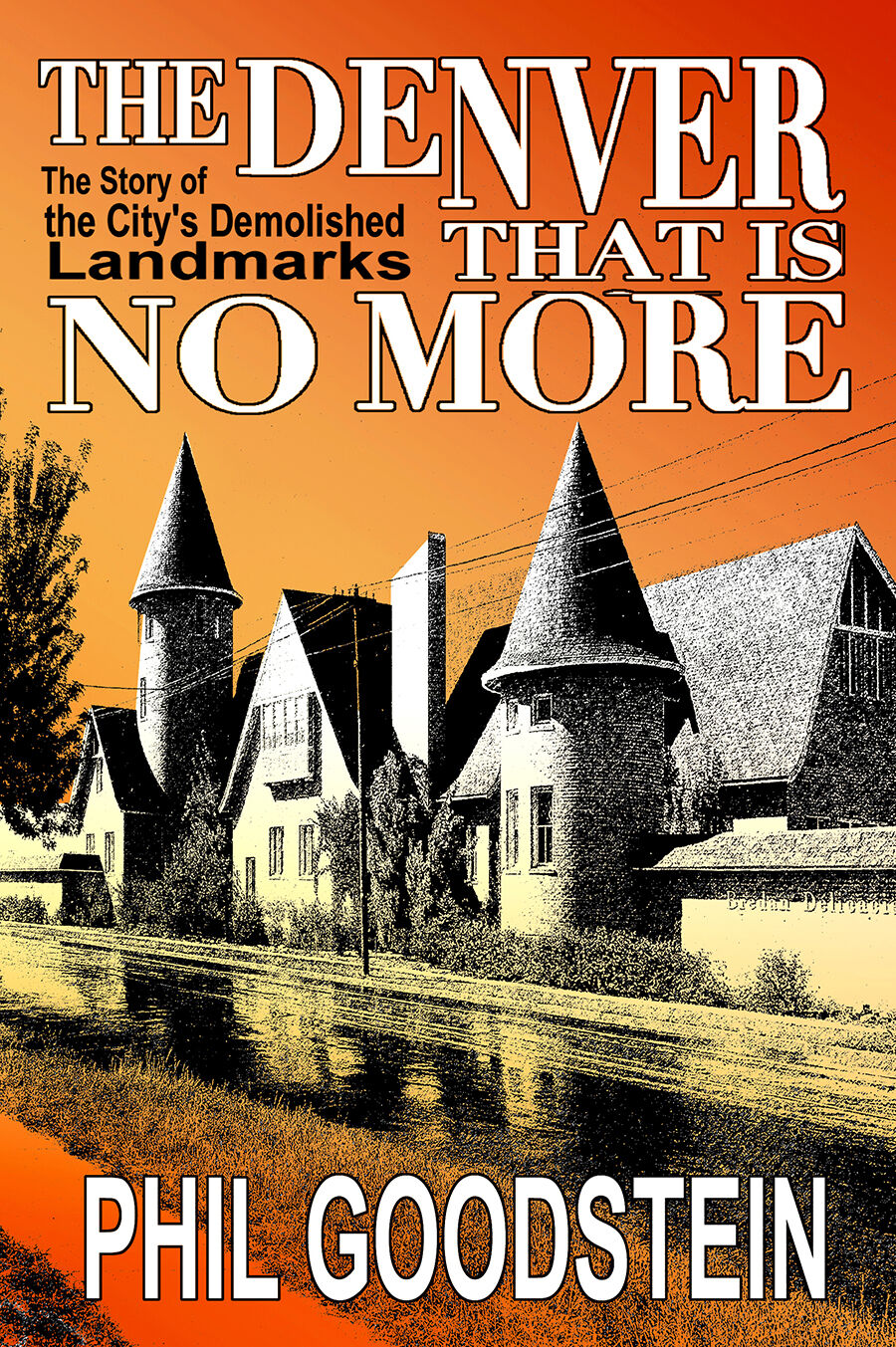
“The Denver That Is No More”
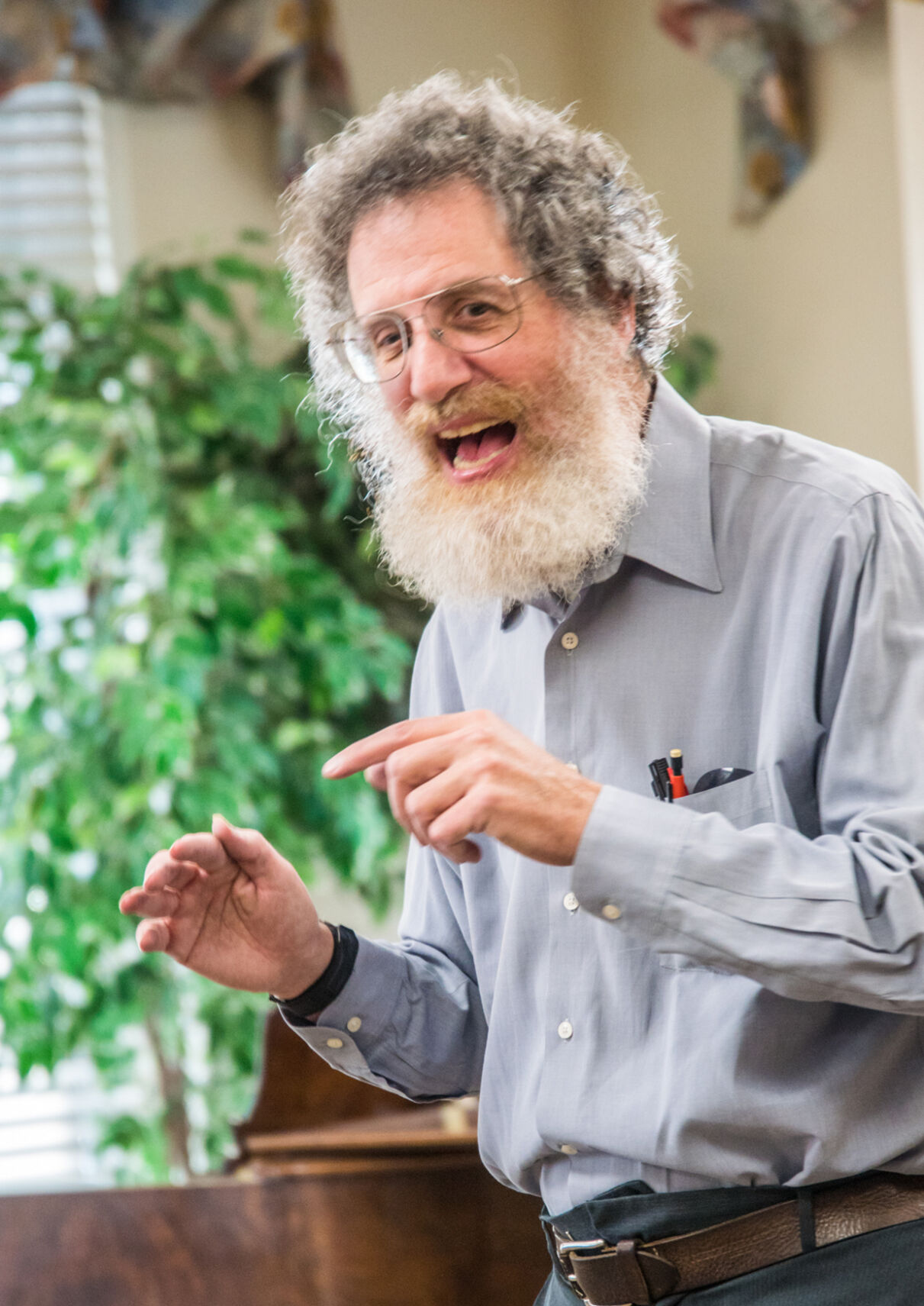
If you think of Denver as a rose and Phil Goodstein as the thorn in its side, well then, you have a pretty good idea of the prickly relationship between the prolific Denver historian and the city he loves … when he doesn’t hate it.
Goodstein, author of 28 books on his hometown, has told plenty of scary stories about Denver over the past 35 years, both in his books and leading his popular ghost tours. But none scarier than the tales he’s telling about the city right now during this period of unchecked and – even worse, he says – unplanned growth.
“Denver is as schizophrenic as ever on this issue,” Goodstein says demonstrably. “On the one hand, it makes token gestures and even concrete commitments to cultural preservation – and then on the other hand, it gives a green light to developers to do whatever they want.”
At a time when Denver’s mayor and every member of city council is vociferously pro-growth, anything goes. Century-old neighborhoods are being rezoned to allow not just for secondary dwelling units, but Denver’s city leaders seem to be encouraging property owners to build on every square inch. Single-family homes are being scraped in favor of block-style apartment complexes. All of which has Denver’s ghost-leading town crier crying, “Boo!”
“We do need to fill in our backyards with secondary residences,” Goodstein says. “But gee whiz, why don’t you preserve what you already have first? Especially in North Denver – it has just been so devastating there. It’s not just the destruction of these very modest housing areas, but those stackhouses they are putting up in their places don’t even come close to fitting into the historic fabric of the area.”
And the cost to any cow town that kowtows to developers, Goodstein said, is sterility and blandness. “In fact, that has been part of the curse of Denver for years,” he said. “There is a lack of historical memory in this city. And when you don’t know anything, you don’t care about the culture and fabric and traditions of the community that we have lost – and that’s what allows the hucksters to do whatever they wish.”
Goodstein’s latest book, “The Denver That Is No More,” is, in its own way, a ghost tour that guides the reader around the city highlighting landmarks that have been left in the dust of progress. It is the story, Goodstein says, of a city that’s been in a continual state of transformation – and ideological confusion – from its very beginnings.
In short: When Denver booms, its history goes boom.
“This book is a miniature capsule history of the city starting with the Pikes Peak gold rush of 1858-59,” said Goldstein, a graduate of Denver East High School with a PhD in history. “It glances into the destruction of the Indian civilization in the area and the earliest construction of the city. But beginning in the 1950s, City Hall, once so proud of its central business district, becomes its own worst critic. There is this constant refrain from the political, corporate elite that
Denver is a crummy, old-fashioned place that has to be basically destroyed and rebuilt in the image of someplace else.”
In the book, Goodstein also looks back at Denver’s old movie palaces, churches, parks and sporting venues. “Even Invesco Field and the Pepsi Center – those are already part of ‘Lost Denver’ as well,” he said. “That’s how rapidly these facilities are changing names and identities.”
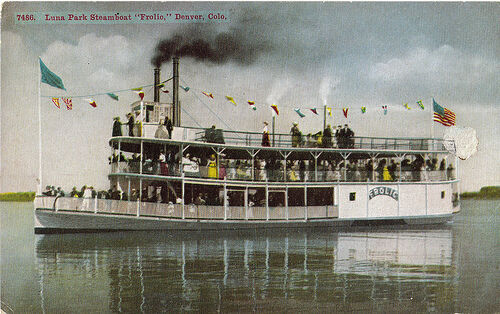
He also shares the sometimes controversial origin stories of neighborhoods such as Auraria, Capitol Hill and Northside. Even lifelong residents might be learning for the first time of long-lost icons such as Columbus Park and Manhattan Beach. That was built on the shore of Sloan’s Lake as the first amusement park west of the Mississippi River.
Attention is also paid to the old Elitch Gardens in northwest Denver and the new Elitch ‘Gardens’ in the Central Platte Valley that is itself slated to soon become part of old Denver.
“In some ways, old Elitch’s is a reflection of Denver’s self-hatred,” Goodstein said of the former wonderland that opened as a zoo in 1890 and grew to incorporate a ballroom, world-class theatre and botanic garden. “At one time, Elitch’s was this multigenerational retreat,” he said. “And the summer theatre was a cultural keynote of the entire city.”
But in the 1950s, ownership had a choice: To be a garden – or an amusement park. They chose a little of this, and a little of that. “They ripped out a good deal of their historic arboretum to put in a miniature golf course,” Goodstein said. “They tore down the Trocadero Ballroom. And this is part of a pattern that we see over and over in Denver history – this idea that we have to destroy something to put something else there.”
In 1985, Elitch Gardens opened downtown – sans gardens – and soon that will be cleared away to make way for a modern new “second downtown.” “And if you think Denver has seen enough bad development proposals over the years,” Goodstein said with an exasperated laugh, “you should look at what they have planned for there.”
Goodstein’s deep catalog includes provocatively titled books such as “DIA and Other Scams,” “Denver School Busing Wars” and “Big Money in the Big City.” He publishes a monthly newsletter called “The Naysayer” that is nothing if not truth in advertising. But he’s lived much of what we now consider to be Denver’s history. And his frank assessment of Denver in 2021 is bleak.
“Actually, we’re in terrible shape,” he said. “There really is no organized opposition to ‘business as usual.’ Right now, there are a couple of groups trying to overturn plans for the redevelopment of the old Park Hill Golf Course, but there is no dynamism to it. In terms of resistance, I just don’t see any forces emerging. So right now, I am not at all optimistic about what’s going on here. The forces of development are more in control of the city than ever.”
With COVID restrictions relaxing, Denverites soon will see Goodstein again pounding the pavement with his walking tours, beginning at 6 p.m. Monday (June 7) with “The Seamy Side of
Denver” starting outside Union Station. In addition to ghosts, upcoming tour topics will include “The Legacy of the 1965 Platte Flood,” “The Oil Boom and Bust” and a book-related “The North Denver That Is No More” scheduled for July 23.
“The difference between my tours and everybody else’s is that I am not afraid to make critical comments when I’m talking about Denver’s history, politics, traditions and urban folklore,” Goodstein said. “And should someone on a tour ask me the source of my information, I tell them there just happens to be a very good book on the subject – and I flash them a copy of my book.”
Denver Gazette contributing arts columnist John Moore is an award-winning journalist who was named one of the 10 most influential theatre critics by American Theatre Magazine. He is now producing independent journalism as part of his own company, Moore Media.
This is in content box under Related assets
‘The Denver That Is No More: The Story of the City’s Demolished Landmarks’
● Book by Phil Goldstein
● New Social Publications
● List price $24.95
● Available at the Tattered Cover (2526 E. Colfax Ave.) and other independent book dealers including Capitol Hill Books (300 E. Colfax Ave.); West Side Books (3434 W. 32nd Ave.); Book Bar (4280 Tennyson St.); Broadway Book Mall (200 S. Broadway); and The Molly Brown House gift shop (1340 Pennsylvania St.). Online: CapitolHillBooks.com
● Information on tours: leonardleonard.com/walking-tours