







Hancock announces new efforts to support homeless, says unsanctioned camps ‘not an option’
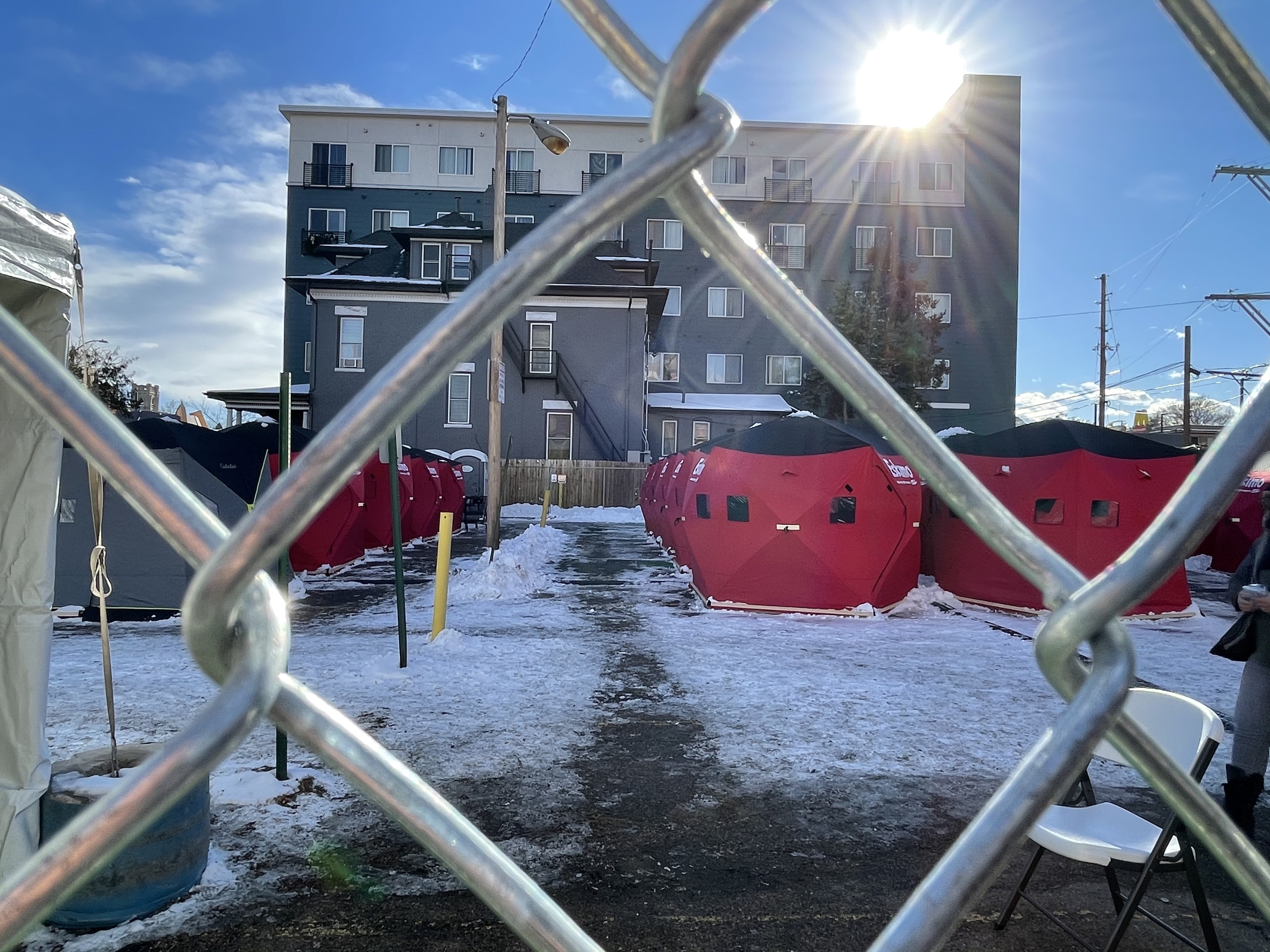
Denver Mayor Michael Hancock announced Wednesday plans for the city to buy more hotels and expand safe outdoor spaces to aid the city’s homeless population, while also reiterating his opposition to unsanctioned transient camps and his commitment to continue sweeping them.
Hancock unveiled the latest multi-pronged approach to tackling homelessness at a new shelter Wednesday afternoon. He stressed his commitment to addressing the problem, which officials have said worsened during the pandemic. His plan would involve buying more hotels and motels, “extending innovative solutions” such as safe and sanctioned outdoor encampments, and using partnerships to “more quickly connect unhoused residents to available apartments.”
He also saids the city would extend programs that grew in prominence during the pandemic: eviction protection, and rental and utility assistance. But Hancock also reiterated the city’s commitment to clearing unsanctioned encampments and his support for Denver’s anti-camping ordinance.
“I want to be very clear,” he told reporters Wednesday. “Unsanctioned encampments are not an option. While we must show compassion to our unhoused neighbors and provide them with dignified options, I stand here today to confirm my support for the city’s unauthorized camping ordinance.”
More than 4,000 people are homeless in Denver, according to a 2020 count.
Hancock promised to deploy a “civilian team” to address the encampments, as well as other minor ordinance infractions, including parking in bike lanes. That team is still being hired, city officials subsequently told reporters. Members of the group will have the ability to issue citations.
Evan Dreyer, Hancock’s deputy chief of staff, likened the new effort to park rangers and said it was intended, in part, to free Denver law enforcement from responding to minor incidents.
The promise of a continued crackdown on unsanctioned encampments comes nearly a year after the controversial practice restarted in July 2020; officials had paused sweeps for the first four months of the COVID-19 pandemic. Denver Homeless Out Loud sued the city last year over the sweeps, and a federal judge has ordered the city to provide seven days’ notice prior to removing the camps.
Hancock said the continued commitment to sweeping encampments is “not connected to the (Major League Baseball) All Star Game,” which is coming to Denver this summer.
The announcement that the city will buy more hotels and motels follows Denver’s utilization of more than $100 million in federal money to, among other things, put homeless residents who were particularly at risk from the pandemic into hotels and motels. City officials have already announced the the purchase of another motel to turn it into housing.
It’s unclear how many buildings the city will ultimately buy. Nor is it clear how much the city will spend or on what timeline. Hancock couched the future acquisitions as a way to step homeless residents into permanent or transitional housing, while also providing on-site services.
He indicated that more sanctioned camps would be created, but said it was still unclear the extent and scale of the new sites.
The need for additional housing is significant: Britta Fisher, who runs the city’s Department of Housing Stability, said more than 2,200 people use Denver’s shelters each night, “a more than 54% increase from last March to March 2021,” she said.
“That’s a significant increase in just one year,” she told reporters. In addition to the new shelter that Hancock, Fisher and others celebrated Wednesday, another facility up the street, which had already been used as a shelter for men, can now accommodate up to 500 women.
“We know that shelter is not a permanent solution,” Fisher continued. “Housing is the solution.”
Hancock announces new efforts to support homeless, says unsanctioned camps ‘not an option’
Denver Mayor Michael Hancock announced Wednesday plans for the city to buy more hotels and expand safe outdoor spaces to aid the city’s homeless population, while also reiterating his opposition to unsanctioned transient camps and his commitment to continue sweeping them.
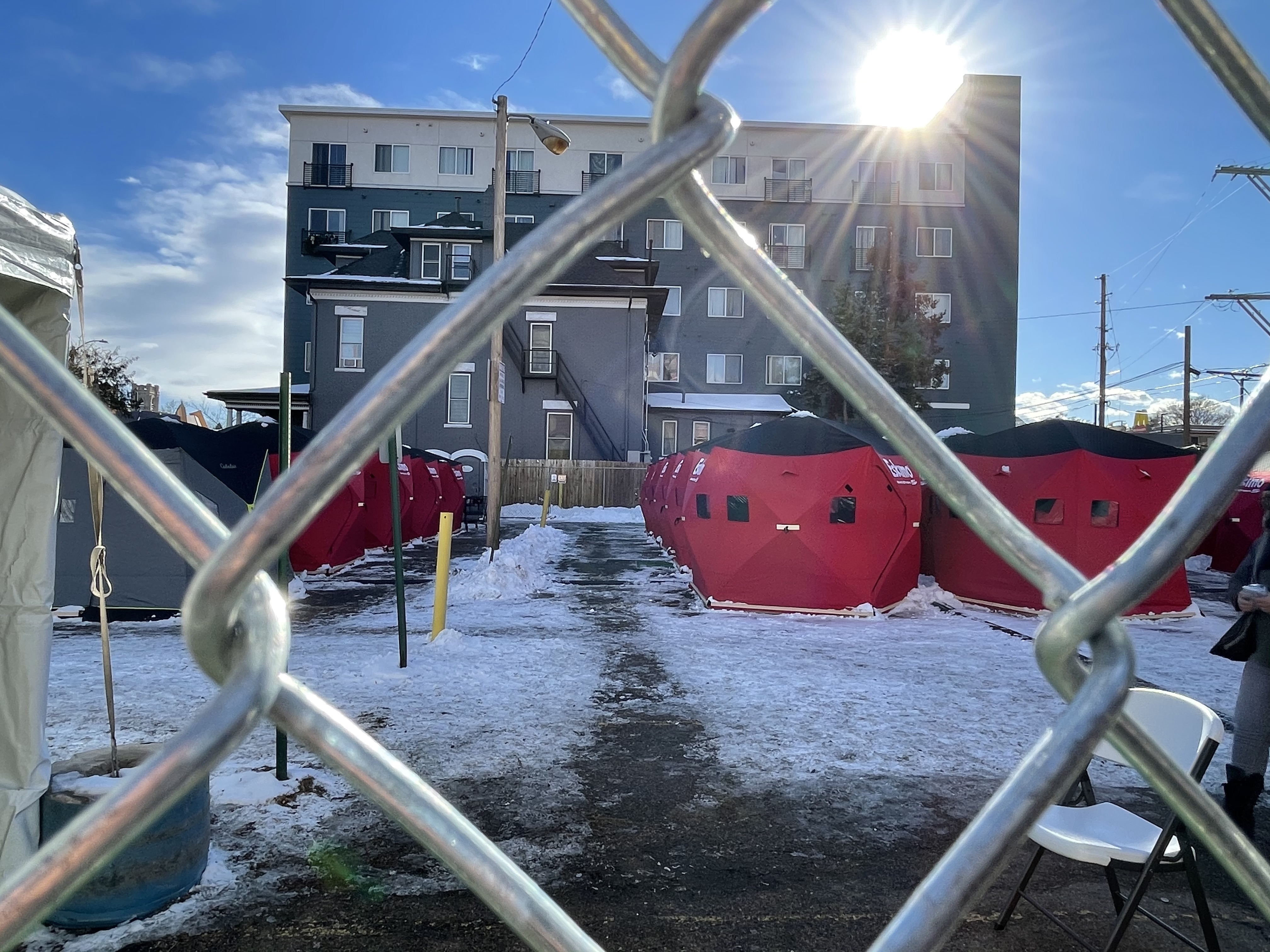
Hancock unveiled the latest multi-pronged approach to tackling homelessness at a new shelter Wednesday afternoon. He stressed his commitment to addressing the problem, which officials have said worsened during the pandemic. His plan would involve buying more hotels and motels, “extending innovative solutions” such as safe and sanctioned outdoor encampments, and using partnerships to “more quickly connect unhoused residents to available apartments.”
He also saids the city would extend programs that grew in prominence during the pandemic: eviction protection, and rental and utility assistance. But Hancock also reiterated the city’s commitment to clearing unsanctioned encampments and his support for Denver’s anti-camping ordinance.
“I want to be very clear,” he told reporters Wednesday. “Unsanctioned encampments are not an option. While we must show compassion to our unhoused neighbors and provide them with dignified options, I stand here today to confirm my support for the city’s unauthorized camping ordinance.”
More than 4,000 people are homeless in Denver, according to a 2020 count.
Hancock promised to deploy a “civilian team” to address the encampments, as well as other minor ordinance infractions, including parking in bike lanes. That team is still being hired, city officials subsequently told reporters. Members of the group will have the ability to issue citations.
Evan Dreyer, Hancock’s deputy chief of staff, likened the new effort to park rangers and said it was intended, in part, to free Denver law enforcement from responding to minor incidents.
The promise of a continued crackdown on unsanctioned encampments comes nearly a year after the controversial practice restarted in July 2020; officials had paused sweeps for the first four months of the COVID-19 pandemic. Denver Homeless Out Loud sued the city last year over the sweeps, and a federal judge has ordered the city to provide seven days’ notice prior to removing the camps.
Hancock said the continued commitment to sweeping encampments is “not connected to the (Major League Baseball) All Star Game,” which is coming to Denver this summer.
The announcement that the city will buy more hotels and motels follows Denver’s utilization of more than $100 million in federal money to, among other things, put homeless residents who were particularly at risk from the pandemic into hotels and motels. City officials have already announced the the purchase of another motel to turn it into housing.
It’s unclear how many buildings the city will ultimately buy. Nor is it clear how much the city will spend or on what timeline. Hancock couched the future acquisitions as a way to step homeless residents into permanent or transitional housing, while also providing on-site services.
He indicated that more sanctioned camps would be created, but said it was still unclear the extent and scale of the new sites.
The need for additional housing is significant: Britta Fisher, who runs the city’s Department of Housing Stability, said more than 2,200 people use Denver’s shelters each night, “a more than 54% increase from last March to March 2021,” she said.
“That’s a significant increase in just one year,” she told reporters. In addition to the new shelter that Hancock, Fisher and others celebrated Wednesday, another facility up the street, which had already been used as a shelter for men, can now accommodate up to 500 women.
“We know that shelter is not a permanent solution,” Fisher continued. “Housing is the solution.”