







Should armed civilians intervene as ‘good Samaritans’ in active shootings? The issue divides experts
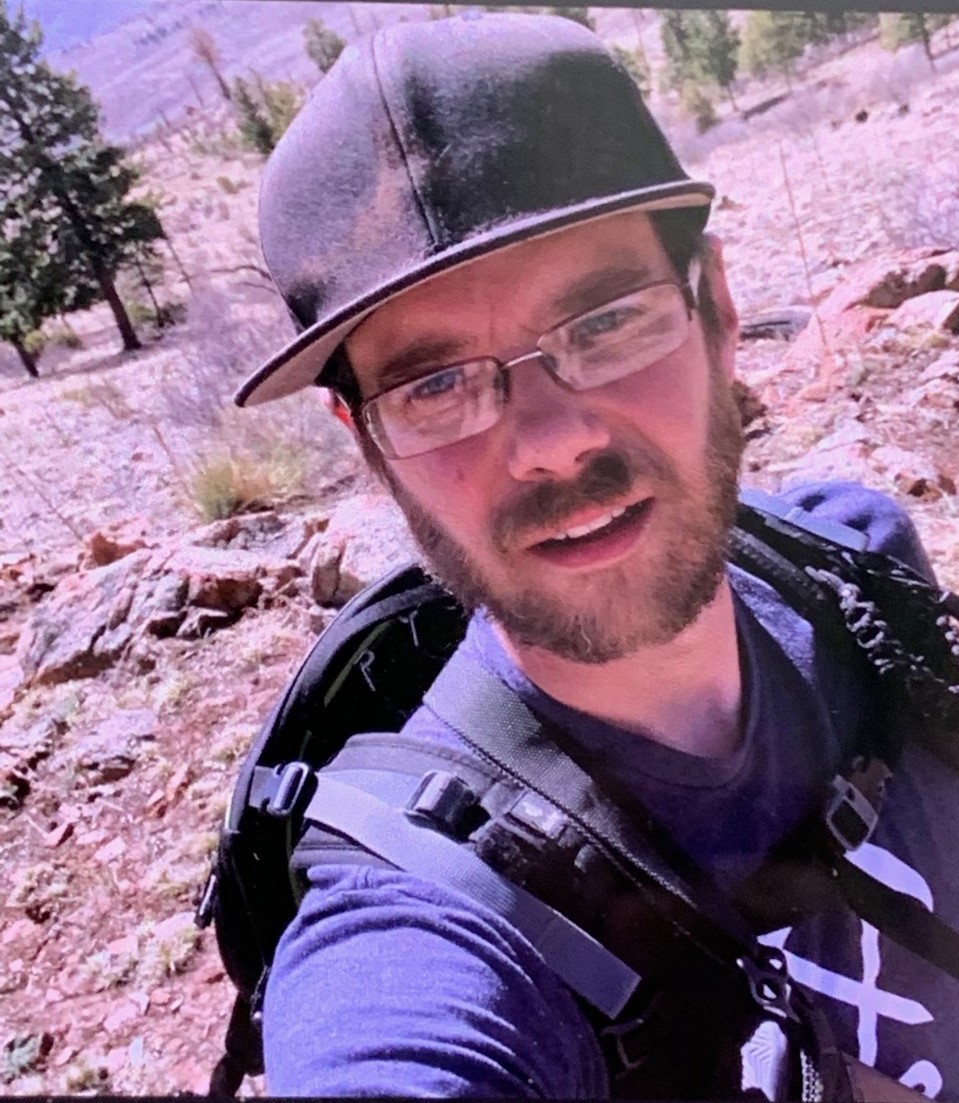
The death of Johnny Hurley, who police say shot an Arvada gunman before falling to mistaken police gunfire, has divided experts on how and when civilians should intervene in crisis situations.
Police in Arvada call Hurley a hero, saying he undoubtedly saved other lives.
But his death also raises questions about the challenges police or civilians face in determining who is a good guy and who is a bad guy when they have split seconds to make decisions in a chaotic situation.
Hundred of thousands of gun owners in Colorado carry weapons for just such circumstances, when they might be called on to defend themselves or others.
After a gunman ambushed and killed Arvada police officer Gordon Beesley, Hurley shot at the attacker with a handgun he carried. After Hurley struck the gunman, he picked up the rifle the shooter had. Hurley was shot moments later with the rifle still in hand when responding police officers arrived.
“The initial responding officers are arriving with the belief that you’re a criminal suspect, and it creates the potential for absolute tragedy to occur,” said Dave Kleiber, owner of Kleiber Investigations and Training in Steamboat Springs, who trains military and law enforcement.
Kleiber said there isn’t “an absolute answer either direction” for whether officers who carry weapons when they are off duty should intervene in an active shooting and was careful to say he wasn’t commenting specifically on the Arvada shooting. But he said his training provides the generalized advice that when officers choose to carry while off duty, they should use their gun to defend themselves and their families.
Beyond that, he said, they should know that choosing to intervene creates “a strong likelihood that you’re going to make the situation worse versus making the situation better.”
His instruction stresses to academy trainees that officers responding to a scene will likely view them as a suspect if they try to intervene with their weapons, because witnesses will be giving 911 dispatchers a description of anyone they see who has a gun.
But to some experts, the minutes it takes for law enforcement to get to the scene of an active shooting even with the quickest of response times are crucial in the risk-benefit analysis of an armed civilian intervening. They say intervention by a “good Samaritan” who’s on scene can provide valuable help before law enforcement arrive, since even when officers are close by they will likely take a precious minutes to get to a scene.
Jimmy Graham, the director and lead instructor of Able Shepherd, which provides firearms training to civilians, used the hypothetical example of a shooting in his daughter’s school, and he happens to still be in the parking lot after having just dropped her off. He said choosing to intervene does mean a certain assumption of risk, and though he said people should feel comfortable making that choice based on their level of training and capability with firearms, he personally wouldn’t be willing to wait for what could be several minutes for police to arrive.
“If I get shot by a police officer doing their job, that’s an assumed risk, but I can’t sit in the parking lot when it might be 15 minutes and I hear gunshots.”
Hurley’s death last week has left his friends and family reeling with grief. But his decision to intervene — what they have called a “selfless act” — didn’t surprise them. In the days since the shooting, those who knew Hurley have described him as someone who cared about doing the right thing and who would have wanted to be a hero in that type of situation.
George Brauchler intimately understands the possibility that bystanders can stop an active shooting. The former elected district attorney of the 18th Judicial District, he just wrapped up the trial of the second gunman responsible for the 2019 mass shooting at STEM School Highlands Ranch, which killed one student and resulted in eight others wounded. When Devon Erickson first pulled out a gun, three classmates immediately rushed to disarm him, and a security guard disarmed the other gunman — all before responding officers arrived at the school.
In the thick of the chaos, many witnesses didn’t realize there were two gunmen until after the shooting was over. Brauchler acknowledged that an armed bystander choosing to intervene isn’t without risks, since the security guard also mistakenly shot two students. But to him, the potential good outweighs the potential bad.
“What happens if he’s not armed? And the 16-year-old who mercifully didn’t know how to take the same job does, and they have another fully loaded, nine-millimeter handgun, how many other lives get sacrificed because we want to have a risk-free environment by saying nobody should ever have firearms except law enforcement in these situations?” Brauchler said.
Emma Fridel is an assistant professor at Florida State University who published a 2020 study in Justice Quarterly. She focused her research on how levels of gun ownership, as well as concealed carry laws, seemed to affect incidences of mass shootings and whether the effects were generalizable to all gun homicides.
She found the strictness of concealed carry laws didn’t appear to affect the likelihood of mass shootings, though Fridel was careful to point out the rarity of mass shootings compared with gun homicides overall. For that reason, she cautions against legislating around mass shootings.
Fridel stopped short in her study of making a sweeping statement that a “good guy with a gun won’t stop a mass shooting” because it’s hyperbolic to declare a definitive conclusion from one study, she said. But from a researcher’s perspective, Fridel takes issue with the opposite hypothetical: That “if someone had had a gun, they could have stopped this mass shooting” because it’s not possible to prove or disprove the claim.
“So in an incident, for example, there wasn’t an armed bystander, so I have no idea what would have happened, right? So you can always argue, well, if someone had a gun, then this would have happened. But we don’t know that for sure,” Fridel said. “We only can see situations when there was someone there and they either didn’t act, or … they did act, but it actually maybe escalated the situation in a negative way.”
Daniel Fenlason, a board member with the Colorado Shooting Sports Association — an affiliate of the National Rifle Association — said it’s hard to say with any certainty what should have happened or what kind of training would be needed in these situations. “We still don’t know exactly what happened,” other than the statements made by law enforcement that Hurley likely saved lives.
This was a good person defending law enforcement against an evil person, Fenlason said. “A good guy with a gun did save lives that day.”
As a concealed weapons permit holder, “I know when I conceal carry, there’s a higher chance I will be put in harm’s way, and will run toward threat and to save lives rather than run away. That probability exists whether I’m armed or not,” he said.
Could there be more training both for police officers and for concealed carry permit holders? David Kopel of the Independence Institute, who is a certified National Rifle Association instructor on handguns, favors it for police and on a voluntary basis for private citizens.
Police officers go into active shooter situations aggressively and rapidly, part of the lessons learned from Columbine, Kopel explained. Though law enforcement responded early, they received many conflicting or inaccurate details about the shooting and by the time officers found the gunmen, it had been over for hours.
That kind of response cuts a police officer’s decision-making time, and Kopel questioned whether there was anything different that could have been done in the Arvada shooting.
Hurley knew he was taking a risk going into the situation, Kopel said. There are gaps, Kopel said. Some exist because violent crimes, such as active shooters, create chaotic situations. But when you think about the number of people with concealed carry permits, likely hundreds of thousands, the knowledge is diverse. Many people would only use the gun for a direct attack and wouldn’t run toward gunfire to help people they’ve never met before.
The policy question is how far will you go to do more training, to optimize the skills of people with concealed carry permits, versus raising the bar so high that you reduce the number of people who can carry and will never need this advanced training, Kopel said.
Fenlason said there are training exercises and programs for concealed weapons permit holders, available from the shooting sports association and other pro-Second Amendment groups, that advocates that anyone get the training necessary so they can be a good part of the solution. These are voluntary programs, not mandated by the government, he explained.
What that training looks like: after firing the gun, the threat is neutralized, Fenlason said. “I make sure myself and those around me are not in an immediate threat, reholster the firearm and assume a defensive posture.” He also would make sure the firearm is away from the bad guy. Then wait for law enforcement to arrive and do exactly what they tell me to do, he said.
“Everyone’s training is different,” Fenlason said. He got his from a retired law enforcement officer in Colorado Springs.
Kopel said that in general, police training hasn’t fully caught up with the fact that in almost everywhere in the country, people do exercise their right to bear arms.
“A report of a person with a gun (in a holster, for example) and nothing more is an indication of lawful activity, not a reason to go in and shoot someone…law enforcement training in some jurisdictions hasn’t caught up with that social fact.”