







Disrupting a false narrative? Denver supportive housing program decreases arrests, emergency room visits

Mayor Michael Hancock laughs during a COVID-19 press conference on Feb. 11, 2021, discussing the city's progress in lowering infections and increasing vaccinations.
Screengrab

A program that offers housing and supportive services to more than 300 homeless Denver residents resulted in long-term housing, lower arrest rates and fewer emergency room visits by participants, according to an independent evaluation.
The Supportive Housing Social Impact Bond program was announced by Mayor Michael Hancock in 2014 and launched in 2016. It provides a group of people experiencing chronic homelessness with free housing, healthcare, mental health services and case managers.
“The program’s results disrupt the false narrative that homelessness is an unsolvable problem and that people who experience chronic homelessness choose to live on the street,” Hancock said. “With the offer of housing first and the right supports in place, people can and did exit homelessness.”
The evaluation, led by researchers from the Urban Institute, was released Thursday and described the program as a “remarkable success.” The evaluation was based on a trial from January 2016 to December 2020, comparing the 363 program participants with 361 other homeless residents.
The trial found that most homeless residents who were offered housing took it and stayed for the long-term. Of those housed, 86% remained in stable housing after one year, 81% after two years and 77% after three years. Compared to the control group, the average program participant also visited shelters 40% less and was housed for 560 more days.
This resulted in a significant decrease in interaction with the criminal justice system. Participants had 34% fewer contacts with police, 40% fewer arrests and 30% fewer jail stays. Participants who were arrested spent 27% fewer days in jail than the control group.
Participants also made 40% fewer emergency room visits, 155% more office-based visits, 29% more prescription medication use and 65% fewer stays at detoxification facilities.
Several participants spoke at a panel Thursday, discussing the influence the program has had on their lives.
Walter, a participant since October 2020, said the program set him up with free housing in Lakewood and treatment for his scoliosis.
“I was able to build up my physical health and my spirit,” Walter said. “It is the greatest thing that has ever happened in my life.”
After receiving housing and medical care, Walter’s case manager helped him to get a job and, later, connected him with mental health services after his mother passed away.
“If I was still on the street, I would have never been able to get on my feet,” Walter said. “I just believe that if people had compassion, like in the Social Impact Bond, a lot more people in Denver would be off the streets.”
Denver opens 132 income-restricted condos in Central Park neighborhood
All Social Impact Bond housing units have a housing first philosophy, meaning there are no requirements for residents to move in like maintaining sobriety, finding employment or seeking treatment. But once housed, residents have access to a wide range of services to address their needs.
The Social Impact Bond program was started after Denver estimated that it spent $7 million a year on 250 chronic homeless residents through sheltering, criminal justice enforcement, detoxification facilities and emergency healthcare services, officials said.
By providing participants with housing and supportive services, the program prevented their needs for these emergency services. This resulted in more than half of the per-person cost of the program being offset by reductions in city costs, the evaluation found.
“Rather than paying for the consequences of leaving people in homelessness, communities could learn from Denver and invest in housing and supportive services that end the harmful homelessness-jail cycle,” said Mary Cunningham, with the Urban Institute.
The $8.6-million program was paid for by eight private investors: the Denver Foundation, Piton Foundation, Walton Family Foundation, Laura and John Arnold Foundation, Living Cities Blended Catalyst Fund LLC, Nonprofit Finance Fund, Colorado Health Foundation and Northern Trust Company.
The program used a “pay for success” arrangement, which meant Denver would only pay the investors back if the program met its goals of keeping people housed and reducing their number of days in jail.
House subcommittee approves $6.5 million for Denver homelessness projects
Because of the program’s success, all investors will be fully compensated for their original investment, plus an additional $1 million split among them, Hancock said.
Though the formal program has now come to an end, officials said Denver is continuing to invest in and support the supportive housing implemented through the Social Impact Bond program using the city’s General Fund.
Denver recently extended contracts with providers and evaluators to continue to deliver supportive housing for all current participants through 2021.
“Now, we just need more scale,” said Britta Fisher, Denver’s chief housing officer. “We have proven this works.”
Partners involved in the program included Colorado Coalition for the Homeless, Corporation for Supportive Housing, Enterprise Community Partners Inc., Mental Health Center for Denver, Social Impact Solutions, the University of Colorado Denver and Colorado Access.


Federal judge recommends dismissing trans athletics lawsuit by area school districts
Eric Young
eric-young@denvergazette.com
Updated 48 minutes ago
A judge has recommended dismissing a federal lawsuit filed by multiple school districts against the Colorado Attorney General’s and Civil Rights Offices over their policies dictating students’ participation in athletics and activities based on their biological sex rather than gender...

Eric Young
Reporter

Another wolf dies, brought from Canada to Colorado in 2025
Spencer McKee
spencer@outtherecolorado.com
Updated 52 minutes ago
Another wolf that was translocated to Colorado last year has died, according to Colorado Parks and Wildlife. Not many details have been released aside from that the death was that of female gray wolf 2504 and that the mortality took...

Spencer McKee
Reporter

Vice President JD Vance and his wife Usha Vance say they are expecting their fourth child
Ali Swenson
ali.swenson@associatedpress.com
Updated 51 minutes ago
WASHINGTON (AP) — Vice President JD Vance and his wife, second lady Usha Vance, are expecting a son in late July, they announced in a social media post on Tuesday. The couple said they were excited to share the news...

Ali Swenson
Reporter

Colorado business filings rose by 4.5% in a year, report says
Bernadette Berdychowski
bernadette.berdychowski@denvergazette.com
Updated 1 hour ago
Colorado business filings saw an uptick year-over-year at the end of last year, a new report shows. There were nearly 43,000 new business registrations across the state in the fourth quarter of 2025, according to the Quarterly Business and Economic...

Bernadette Berdychowski
Reporter

Second slopesport death of month reported at Colorado resort
Spencer McKee
spencer@outtherecolorado.com
Updated 1 hour ago
The Summit County Sheriff’s Office is investigating another winter slopesport death that occurred at Keystone Resort – the second this month. According to the sheriff’s office, a snowboarder died at the resort on January 19 related to a crash that...
Spencer McKee
Reporter

Active duty soldiers convicted of poaching multiple mule deer in Colorado
Spencer McKee
spencer@outtherecolorado.com
Updated 2 hours ago
More than a year after initial evidence of poaching was discovered near Colorado Springs, soldiers have been convicted of related criminal charges. According to a press release from Colorado Parks and Wildlife, the investigation into the poaching case started in...
Spencer McKee
Reporter
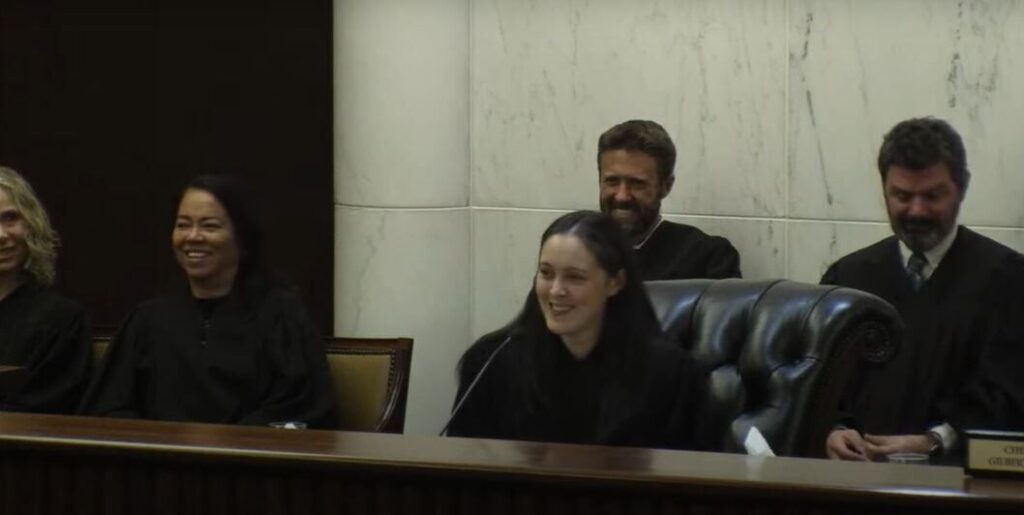
Appeals judge asks Colorado Supreme Court to once again clarify magistrate rules
Michael Karlik
michael-karlik@denvergazette.com
Updated 1 hour ago
A member of Colorado’s second-highest court urged the state Supreme Court last week to revise confusing language in the rules governing magistrates, less than two weeks after an attempted cleanup of the rules took effect. Magistrates are judicial employees who are...

Michael Karlik
Reporter
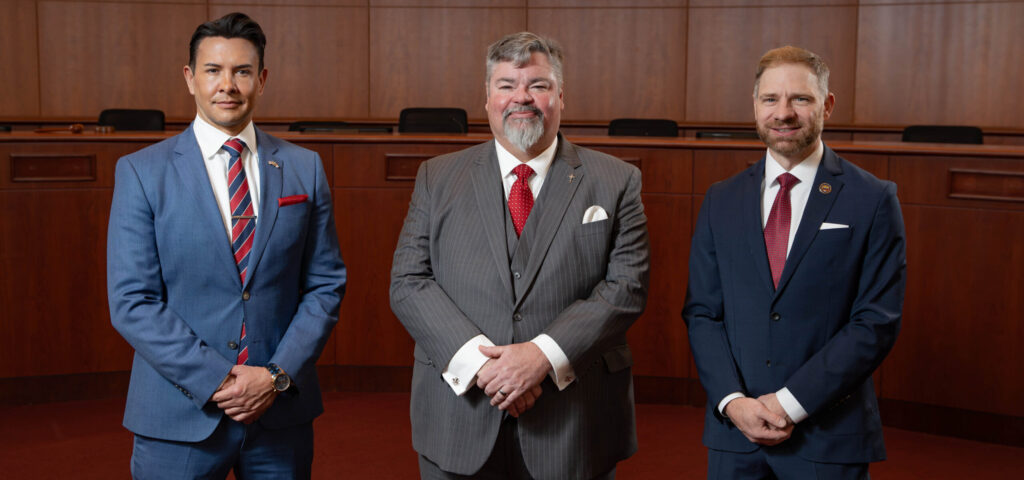
Douglas County Board of Commissioners selects new chairman
Sage Kelley
sage.kelley@denvergazette.com
Updated 2 hours ago
The Douglas County Board of Commissioners will have a new chairman in 2026, but not a new face. Commissioner George Teal was chosen to serve as chairman on Jan. 13 after serving on the board since 2021, according to a...

Sage Kelley
Reporter

How to find and reserve a stay at a backcountry hut in Colorado
Piper Russell
piper.russell@outtherecolorado.com
Updated 2 hours ago
Staying at a backcountry hut in Colorado is a unique and exciting experience, regardless of the season your adventure is taking place. In the summer, these huts allow for an escape into the wild with more than a tent over...

Piper Russell
Reporter

PUC to hold public meeting on El Paso County rejection of Power Pathway permits
Scott Weiser
scott-weiser@denvergazette.com
Updated 41 minutes ago
Colorado regulators plan a public hearing next week on Xcel Energy’s appeal to override El Paso County’s rejection of permits for a major transmission line segment. The hearing renews debate over a statewide renewable energy project that rural residents argue...

Scott Weiser
Reporter