







RIVER TOWNS: FORT COLLINS | Sizing up the arguments on Glade Reservoir
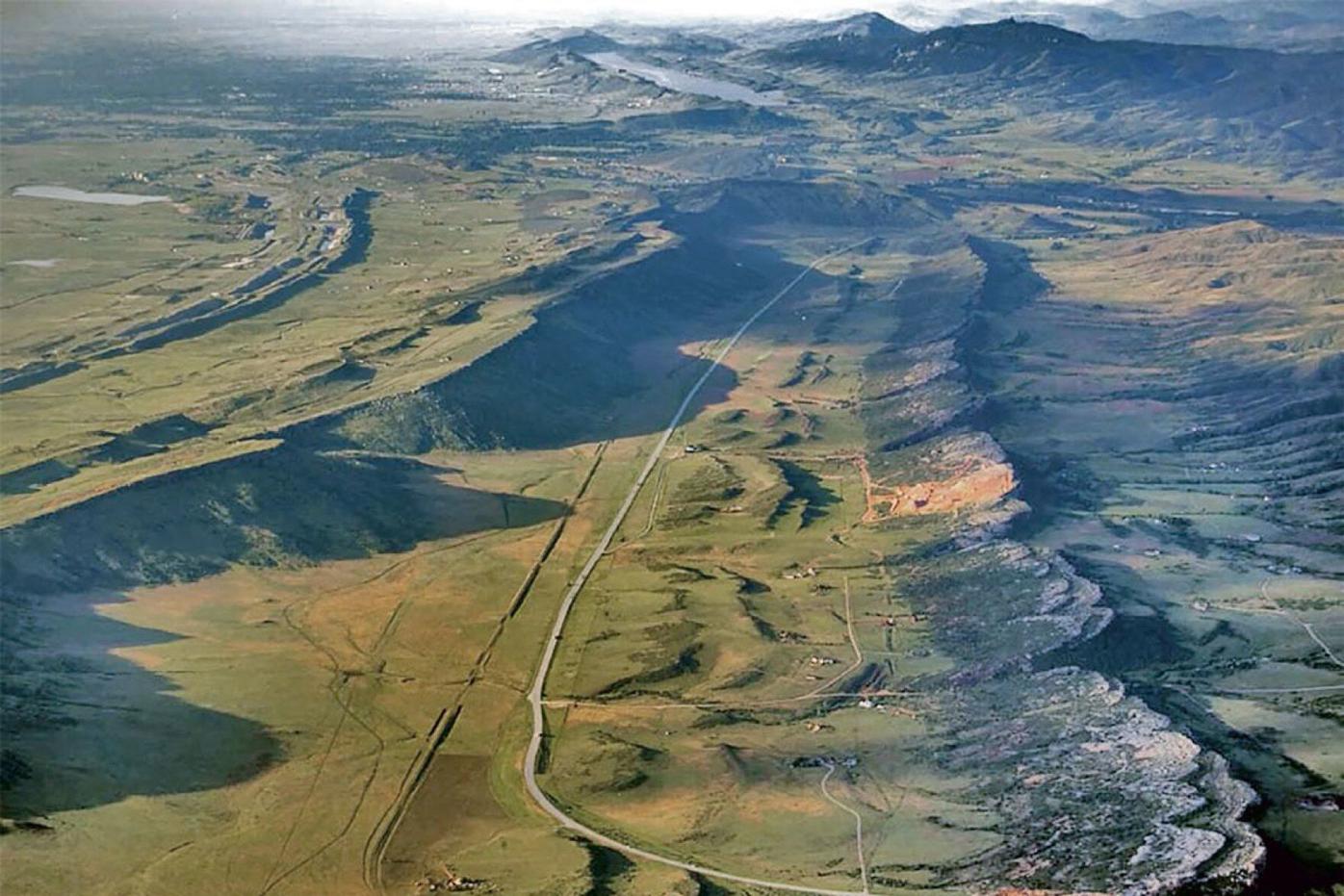
courtesy Army Corps of Engineers
When viewing the Northern Integrated Supply Project through the prism of Fort Collins, the downstream effects on the Poudre River are nearly all-encompassing.
But zooming out to view the project more broadly brings the water storage element into sharper focus. It’s crucial to maintaining the region’s agricultural economy, Fort Collins Mayor Jeni Arndt said.
“I always think of storage as a re-timing of water, and to me, the name of the game in the water world is getting water where you want it when you want it,” she said.
Northern Water spokesman Jeff Stahla sees other benefits springing from the reservoir, like recreation. Just look at Horsetooth Reservoir, which he said is often filled up to capacity with boaters.
“If you show up on a weekend day to go take your boat, there are times where they’ll tell you it is faster to drive two hours east to Jackson Reservoir in Morgan County or up to Lake McConaughy (in Nebraska) than it is to sit in line,” he said. “The development of a new reservoir actually will create as a side benefit a lot more recreation capacity.”
But project opponents who cite the ecological effects they say it will have on the Poudre are just as skeptical about Glade Reservoir. Take Save the Poudre’s Gina Janet, a former Fort Collins mayor pro tem.
“These giant reservoirs are very inefficient in that they evaporate tons of water, and when you add in a warming climate and winds and everything else, they’re leaky,” she said, instead advocating for underground aquifer storage, more aggressive conservation measures and water reuse efforts.
Former U.S. Sen. Hank Brown, a Republican who represented the northern Front Range during his time in the House of Representatives as well the state Senate, said a storage project on the Poudre has been in the cards since the early 1980s.
And he would know. He carried legislation during his time in Congress that designated a stretch of the Poudre northwest of Fort Collins as Colorado’s only Wild and Scenic River under the National Wild and Scenic Rivers System.
Brown said in an interview that designation came as part of a compromise between water users and 1980s-era environmentalists to allow a storage project using Poudre water. But Brown sees this generation’s corps of environmentalists turning their backs on a bargain struck by the last generation because, according to Brown, “the whole controversy really revolves around people not understanding Colorado water.”
“A lot of people opposed [Glade Reservoir] because they think they can stop growth if they stop the water storage,” he said. “It’s factually not correct; simply because all you have to do to provide water for growth is to buy up water that’s now used for irrigation of farm ground.”
For Jenett, that’s OK. She noted that “it’s not like these cities are going out and condemning these farms to get their water.”
“It’s a willing seller, a willing buyer who buys the water builds houses so that is a natural economic, capitalistic, market-based solution,” she said.
But for Brown, the consequences of trading growth for agriculture in terms of water would be disastrous economically.
“These farms provide a base for the economy in the area,” Brown said. “It’s not just that you reduce the crop yields but you take jobs away from everybody ranging from those who drive a truck, to people who process the grain, to people who feed livestock, to people at the university that teach agriculture.”
/** slide box */
#slidepanel {
border-top: 3px solid #ff0000;
}