







Bird Call: What to do about backyard thugs?
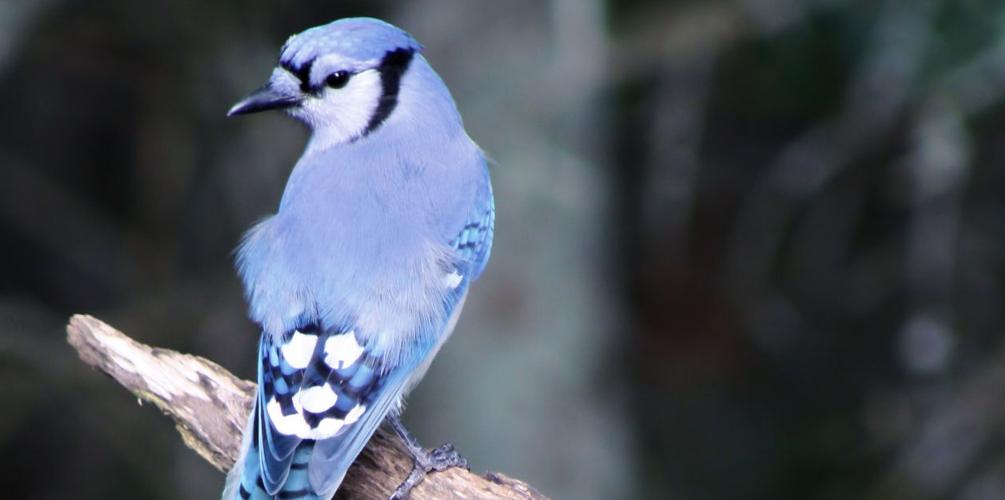
A blue jay perched on a dead branch. Blue jays are considered bully birds by many.
getty images
I have loved birds. I have been traumatized by birds.
The animal kingdom can be a cold and cruel world. I know this, but I often prefer to delude myself into believing it’s not true. My birds all sweetly twitter in the morning hours, fly here and there, dip into a cold bird bath, nibble at suet and feed each other.
But then the inevitable happens. A murderer sneaks into the midst of my Snow White scenario. It happened this summer when I learned that blue jays are jerks. And not simply jerks. Cold-blooded killers.
If you accused me of anthropomorphizing, you would not be off base.
So there I was, sitting at my kitchen table, happily working away, while occasionally peeking out the window every few minutes at my work companions, all perched at my numerous bird feeders, chitting and chatting, squabbling and loving, when what did my heretofore innocent eyes observe?
A blue jay on the ground pecking away at a much smaller sparrow. I cried out in horror. I couldn’t tell if the jay was pinning the other bird down, but it certainly appeared as if it was trying to pull a King Henry VIII and decapitate the creature.
Bird Call: Colorado Springs 20-year-old is already remarkable birder
I ran out to the backyard, screaming like a banshee to shoo off the jay. Had I witnessed a bird assassination? Would there be a bloody corpse? Would I spend my afternoon digging a grave and holding a service? Thank the bird gods, the yard was empty. No bodies to mourn.
Deeply disturbed, I went back inside, wondering what just happened. I turned to Google, started to type in “blue jay,” and winced as the Google gods auto-filled “pecking at other bird” for me. Clearly, what I witnessed was not an unusual phenomenon.
From Wikipedia: “Blue jays can be very aggressive to other birds; they sometimes raid nests, and have decapitated other birds.”
The horror! Yes, I know it’s the circle of life. But does the circle of life have to involve so much gore?
I reached out to a local birder to learn more, and though he was aware of the behavior, he didn’t want to call it bullying or label it as bad.
OK, fair enough.
I, however, am not as politically correct. I have no problem describing what I saw as bullying, and I’ll go one step further. It wasn’t bad, it was heartbreaking.
The National Wildlife Federation freely calls jays, European starlings, pigeons, blackbirds and crows bully birds, and provides ways to prevent those schoolyard thugs from beating up less aggressive birds at backyard feeders. One suggestion: catch the seed that falls from feeders. Bigger birds like to forage on the ground for food, but if seed falls into something like a garbage can, the birds are reluctant to fly inside.
Also, try selective feeding. The larger bully birds don’t like safflower or nyjer (thistle) seeds, reports the National Wildlife Federation, and by offering those seeds, you’ll attract finches, chickadees, nuthatches and grosbeaks.
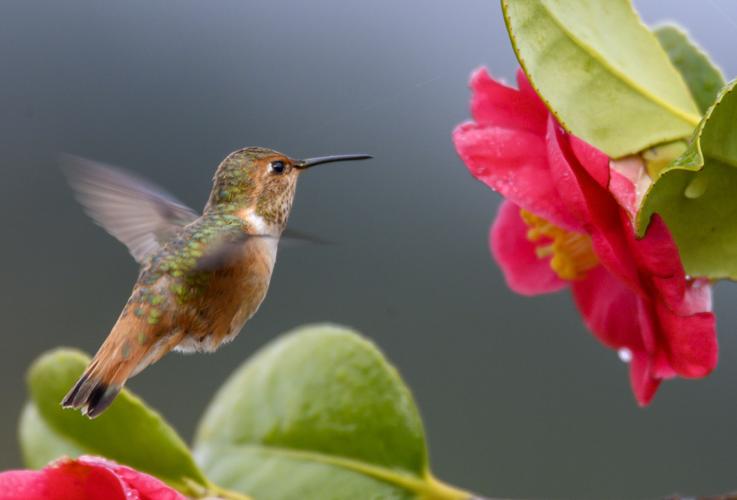
It’s not only big birds who are bullies. Word on the street is hummingbirds can be tormentors, too, according to a fellow birdwatcher, who has two rufous hummers at his feeders that don’t play nice.
Bird Call: Checking out the water birds at Colorado Springs’ Prospect Lake
Unsurprising, say the folks at the National Wildlife Federation: “A male hummingbird is often aggressive and protective of a sugar-water feeder that he considers his own. Only ‘his females’ and their young are allowed to feed undisturbed. The simple solution is to set up an additional sugar water feeder on another side of your house, out of sight of the other male’s domain. He can’t guard a feeder that he can’t see.”
I also see sparrows come up as smaller versions of bully birds. This is a surprise. Could there have been some greater warfare that was happening in my backyard and invisible to my human eye? I don’t care. It was still a deplorable attack.
“Smaller bully birds, such as house sparrows, often feed in flocks and can crowd out other birds so more species cannot access the seed. Some bully birds will even guard a feeder they perceive as theirs and will attack or chase away any other birds that try to feed,” reports the home and garden website The Spruce.
But perhaps I ought to cut these birds a bit of slack. They’re only trying to survive and thrive like the rest of us. They can’t help being territorial; it’s baked into their tiny bones.
Bird Call: New club for bird lovers in Colorado Springs
“No bird is intentionally cruel, but bully bird species are naturally more aggressive and territorial about their feeding areas, protecting food sources exclusively for their own use,” according to The Spruce.
And there’s no denying jays are gorgeous creatures with surely some positive attributes. Half a dozen of them alighted in my yard the other day, post-attempted murder, and while I wanted to run out and scare them off, I also wanted to sit and inhale their beauty. What I did is keep my eyes trained on them, ready to snuff out impending death, now that I’ve witnessed their dark side.
Contact the writer: 636-0270
Contact the writer: 636-0270