








Census data reveals population adjustments needed in draft maps
Colorado’s redistricting commissioners decided earlier this year to use incomplete and out-of-date data to draw the preliminary draft maps that are being toured around the state for public input.
The commissioners knew at the time that their maps would end up needing adjustments, because the official data was bound to be different in some parts of the state.

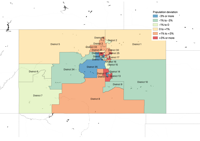
A Colorado Independent Redistricting Commission preliminary draft of a Senate map.
With the release of the official census data, it’s possible to see exactly where the commissions’ maps have districts with too many people or too few people.
The preliminary draft congressional map has smaller deviations than the preliminary draft state House and Senate district maps, but congressional districts are required to be equal, down to the person. They can deviate by only one person where necessary.


A Colorado Independent Redistricting Commission preliminary draft of a House map.
The preliminary draft legislative maps have bigger deviations, but a small amount of deviation away from the ideal population is legally acceptable, according to U.S. Supreme Court rulings, particularly if the deviations help achieve Voting Rights Act protections for minority voters.


A Colorado Independent Redistricting Commission preliminary draft of a congressional map.
In the coming weeks, the state’s independent redistricting commissioners will adjust their preliminary draft maps, based on public input they’ve received throughout the summer.
They’re expected to finish in early October.

Former Rep. Rose Pugliese vies for Mesa County Treasurer
Marianne Goodland
marianne-goodland@denvergazette.com
Updated 4 days ago
Former Republican Leader Rose Pugliese has jumped into the 2026 primary for Mesa County Treasurer. Pugliese moved to Grand Junction after resigning from the Colorado House in September, citing a “collapse of integrity” within the Colorado House. She previously served...

Marianne Goodland
Reporter
Colorado Republican Mark Baisley exits gubernatorial race, launches U.S. Senate campaign
Ernest Luning
ernest-luning@denvergazette.com
Updated 4 days ago
Republican state Sen. Mark Baisley on Monday withdrew from the Colorado gubernatorial race and announced his candidacy for the U.S. Senate seat held by Democrat John Hickenlooper. His departure leaves 20 Republicans running for the office held by term-limited Democratic...

Ernest Luning
Reporter

Independent Crank challenger Matt Cavanaugh joins Democratic primary in Colorado’s 5th CD
Ernest Luning
ernest-luning@denvergazette.com
Updated 1 week ago
Matt Cavanaugh, the Army combat veteran and author who has been running an independent campaign to unseat first-term Republican U.S. Rep. Jeff Crank in Colorado’s 5th Congressional District, registered this week as a Democrat and will seek the party’s nomination...
Ernest Luning
Reporter

Ben Campbell, former US senator from Colorado and advocate for Native American rights, dies at age 92
Ernest Luning
ernest-luning@denvergazette.com
Updated 2 weeks ago
Former U.S. Sen. Ben Nighthorse Campbell, who represented Colorado for two terms beginning in 1993 and was the first Native American elected to the chamber since the 1920s, died Tuesday, his family and close associates confirmed. He was 92. Campbell,...
Ernest Luning
Reporter

Gabe Evans, Colorado Republican incumbent, CD8 race
Thelma Grimes
thelma.grimes@coloradopolitics.com
Updated 2 weeks ago
In what is quickly becoming one of the most-watched congressional races in 2026, Evans looks to continue serving in a second term in Colorado’s Congressional District 8. Evans served 12 years in the U.S. military and was an Arvada police...

Thelma Grimes
Reporter
Shannon Bird, Colorado Democratic primary CD8 candidate
Thelma Grimes
thelma.grimes@coloradopolitics.com
Updated 2 weeks ago
Shannon Bird looks to win the Democratic nomination for a chance to face incumbent U.S. Rep. Gabe Evans next year for Congressional District 8, which is being called one of the most vulnerable seats in Congress and could decide which...
Thelma Grimes
Reporter

Evan Munsing, Colorado Democratic primary CD8 candidate
Thelma Grimes
thelma.grimes@coloradopolitics.com
Updated 2 weeks ago
Evan Munsing looks to win the Democratic nomination for a chance to face incumbent U.S. Rep. Gabe Evans next year for Congressional District 8, which is being called one of the most vulnerable seats in Congress and could decide which...
Thelma Grimes
Reporter
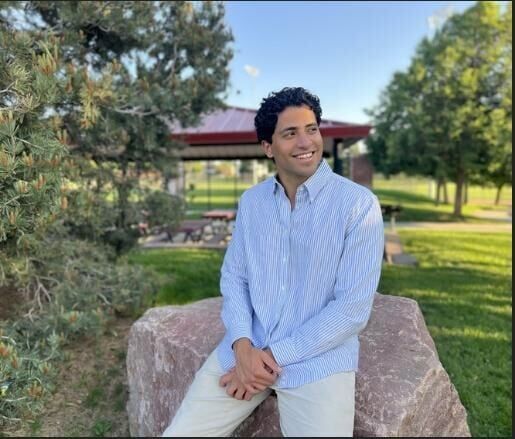
Manny Rutinel, Colorado Democratic primary CD8 candidate
Thelma Grimes
thelma.grimes@coloradopolitics.com
Updated 2 weeks ago
Manny Rutinel is an attorney, entrepreneur, and currently serves in the Colorado House of Representatives for District 32, representing parts of Adams County after being appointed in 2023 and subsequently elected to a full term.
Thelma Grimes
Reporter

Mark Baisley, Republican candidate for Colorado governor
Thelma Grimes
thelma.grimes@coloradopolitics.com
Updated 2 weeks ago
Mark Baisley joins a crowded field of Republican candidates for governor. With Gov. Jared Polis being term-limited, Colorado will elect a new leader in 2026. Baisley is a Republican state senator representing Colorado’s 4th Senate District, which covers parts of...
Thelma Grimes
Reporter
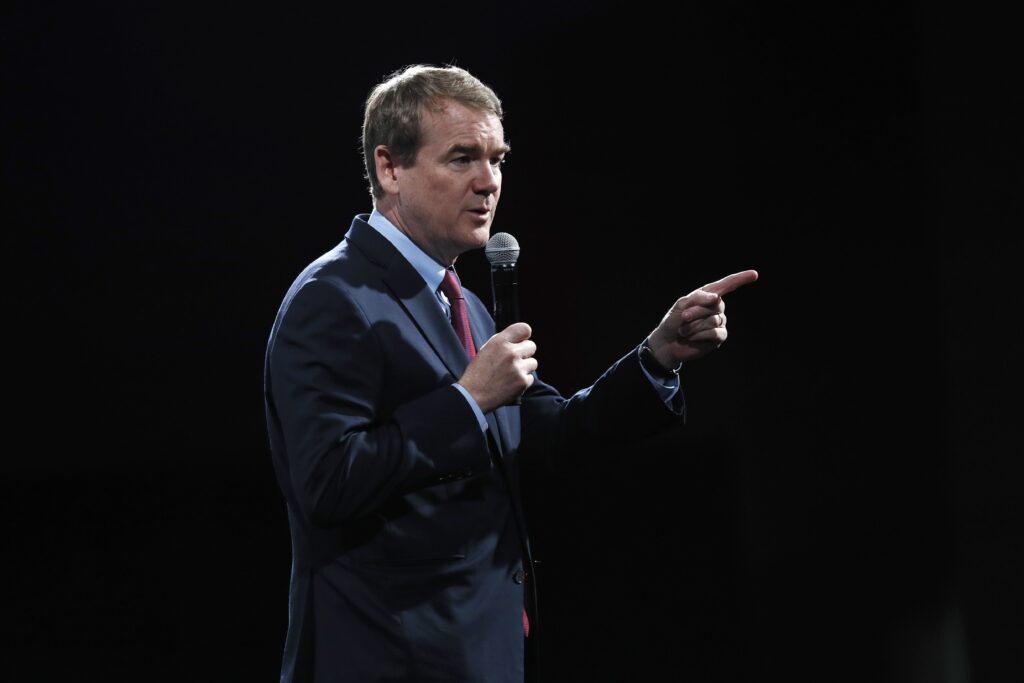
Michael Bennet, Democratic candidate for Colorado governor
Thelma Grimes
thelma.grimes@coloradopolitics.com
Updated 2 weeks ago
U.S. Sen. Michael Bennet has joined a crowded field of candidates vying for the state’s top spot as governor with Gov. Jared Polis reaching term limits in 2026. Bennet is a longtime Colorado public servant and attorney, having served more...
Thelma Grimes
Reporter
PREV
PREVIOUS
Colorado's next legislative map will count prisoners at their homes, not where they're jailed
Facebook Twitter WhatsApp SMS Email Print Copy article link Save Colorado’s legislative redistricting commissioners voted Friday to reallocate prisoners for the next decade’s state House and Senate districts, meaning they’ll be counted at their home residence and not where they were jailed during the census. Colorado’s congressional redistricting commissioners voted Thursday to not reallocate state […]
Incumbent Colorado lawmaker coached public testimony for redistricting hearings
Facebook Twitter WhatsApp SMS Email Print Copy article link Save A state lawmaker looking to protect the fortunes of his Republican caucus as Colorado’s political maps are redrawn this year held a video training earlier this summer to coach people on how to provide testimony intended to keep the incumbent legislators in power after the […]