







Biden backs end to wolf protections but hunting worries grow

FARIBAULT, Minn. (AP) — President Joe Biden’s administration is sticking by the decision under former President Donald Trump to lift protections for gray wolves across most of the U.S. But a top federal wildlife official on Friday told The Associated Press there is growing concern over aggressive wolf hunting seasons adopted for the predators in the western Great Lakes and northern Rocky Mountains.
Wolves under federal protection made a remarkable rebound in parts of the U.S. over the past several decades, after being driven from the landscape by excessive hunting and trapping in the early 1900s.
States took over wolf management last decade in the Northern Rockies and in January for the remainder of the Lower 48 states, including the Great Lakes and Pacific Northwest.
The removal of protections had been in the works for years and was the right thing to do when finalized in Trump’s last days, U.S. Fish and Wildlife Service Assistant Director for Ecological Services Gary Frazer told AP. On Friday, attorneys for the administration asked a federal judge in California to dismiss a lawsuit from wildlife advocates that seeks to restore protections, signaling the conclusion of Biden’s promise on his first day in office to review the Trump move.
But wolf management policies in place at the state level have shifted dramatically since protections were lifted, and Frazer suggested the federal government could take steps to restore protections if it sees population declines that put them on the path to extinction.
“Certainly some of the things we’re seeing are concerning,” he said.
Wisconsin moved quickly to reduce the state’s wolf numbers, after a pro-hunting group with close ties to conservative Republicans won a court order that allowed hunters — some using hounds — to kill 218 wolves in four days.
Meanwhile, Republican-dominated legislatures in Idaho and Montana loosened hunting rules to allow tactics shunned by many wildlife managers, including hunting wolves at night and from the air and payments for dead wolves reminiscent of bounties that drove them to near-extinction.
Frazer said the different states showed a common approach: legislatures and politically appointed wildlife commissions taking determined steps to reduce populations.
“We’re aware that circumstances have changed and we’ll be watching closely to see how the population responds,” he added.
The lead attorney in a lawsuit that seeks to restore protections for wolves outside of the Northern Rockies said he was disappointed in the Biden administration for not responding immediately to the push by states to cull more packs.
“Why should we hammer the population back down and lose all the gains that have been made before any kind of remedial action?” asked Tim Preso with the environmental law firm Earthjustice. “The writing’s on the wall. Montana and Idaho are clear on what they’re intending and Wisconsin is right behind them.”
The policies adopted by the states reflect an increasingly partisan approach to predator management in state houses dominated by Republicans.
The wolf population in the Midwest has grown to some 4,400 wolves. There’s been growing frustration in recent years among livestock producers and hunters over attacks on cattle and big game. In Wisconsin, a Republican-controlled board set the state’s fall hunt quota at 300 animals, rejecting a 130-animal limit recommended by state wildlife managers.
Wisconsin’s Democratic attorney general is seeking a court order to oust the board’s chairman, whose term expired in May. Democratic Gov. Tony Evers has appointed a successor, but the incumbent is refusing to step down until the Senate confirms the appointment. The Senate, dominated by Republicans, hasn’t held a hearing on the appointment.
Hundreds of wolves are now killed annually by hunters and trappers in Montana, Idaho and Wyoming. The population has remained strong — more than 3,000 animals, according to wildlife officials — because the wolves breed so successfully and can roam huge areas of wild land in the sparsely populated Northern Rockies.
Some officials in the states are intent on reducing those numbers to curb livestock attacks and protect the big game herds that wolves prey upon. Supporters of restoring protections say the changes will tip the scales and drive down wolf numbers to unsustainable levels, while also threatening packs in nearby states that have interconnected populations.
___
This story has been corrected to reflect the name of a U.S. Fish and Wildlife Service official. He is Gary Frazer, not Frazier.
___
Brown reported from Billings, Montana.


Denver area events for March 11
Carlotta Olson
carlotta.olson@gazette.com
Updated 12 hours ago
If you have an event taking place in the Denver area, email information to carlotta.olson@gazette.com at least two weeks in advance. All events are listed in the calendar on space availability. Wednesday Siamese — 6:30 p.m., Marquis Theater, 2009 Larimer St., Denver,...

Carlotta Olson
Reporter

Federal judge hears ICE agents’ confusion about law, injunction on warrantless arrests
Michael Karlik
michael.karlik@coloradopolitics.com
Updated 2 hours ago
A federal judge heard testimony on Tuesday from U.S. Customs and Immigration Enforcement agents in Colorado, who had trouble describing the requirements of his recent injunction and the training they received on making warrantless arrests pursuant to the law. On...

Michael Karlik
Reporter

U.S., Israeli forces pound targets in Iran
Wire Services
wire-services@denvergazette.com
Updated 5 hours ago
Tel Aviv • The United States and Israel pounded Iran on Tuesday with what the Pentagon and Iranians on the ground called the most intense airstrikes of the war. Raising the stakes for the global economy, Iran’s Revolutionary Guards said...

Wire Services
Reporter

Denver schools’ legal chief appears unsure about ICE warrants as board weighs new immigration policy
Nicole C. Brambila nico.brambila@denvergazette.com
nico.brambila@denvergazette.com
Updated 8 hours ago
Denver’s school board is considering a major policy amendment that would consider all district properties “safe zones” by requiring a judicial warrant for federal immigration agents to interact with students. If passed by the board, Denver Public Schools General Counsel...


Aurora mayor calls settlement in First Amendment lawsuit against city ‘unfortunate’
Kyla Pearce
kyla-pearce@denvergazette.com
Updated 8 hours ago
Aurora Mayor Mike Coffman spoke against a lawsuit settlement made between the City of Aurora and activist MiDian Holmes (Shofner) in a City Council meeting Monday night, saying the decision to settle was “unfortunate.” Aurora officials and Holmes announced the...

Kyla Pearce
Reporter

Know Before You Go: Denver St. Patrick’s Day Parade
Emily Bejarano
emily-bejarano@gazette.com
Updated 8 hours ago
Denver turns green this weekend, and it’s not just luck that will ensure a perfect day downtown. Plan your St. Patty’s Day with this guide that includes parade routes, restaurants, parties and more. Lean into green this weekend with St. Patrick’s Day events...

Emily Bejarano
Reporter
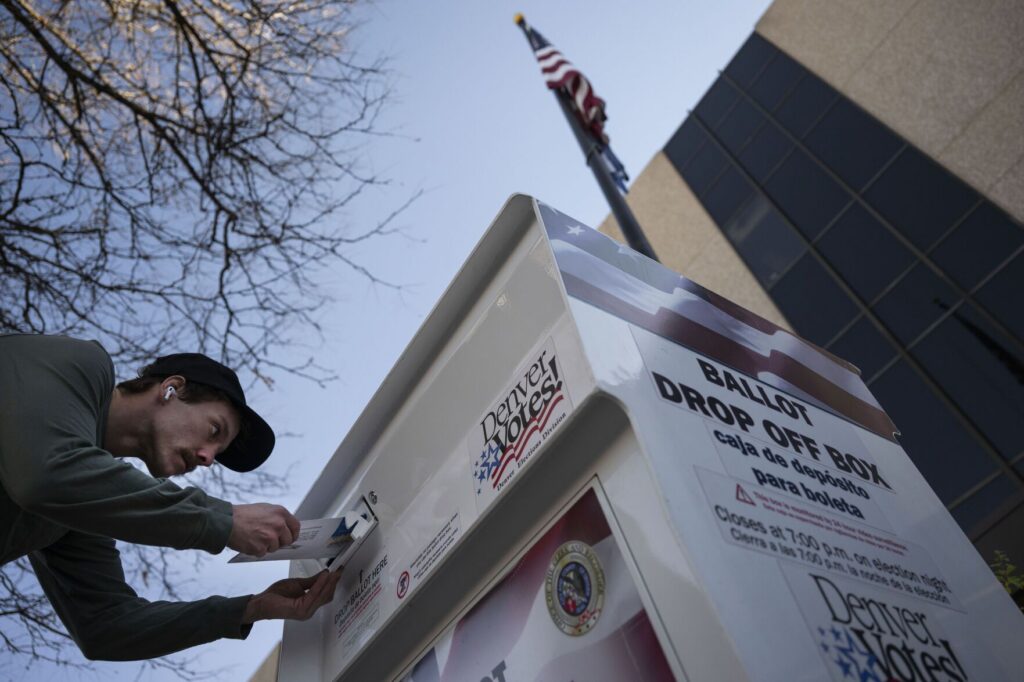
Douglas County woman sentenced for voter fraud
Nicholas Fogleman
nicholas.fogleman@denvergazette.com
Updated 9 hours ago
A judge sentenced a Castle Rock woman to three years in prison for voter fraud on Monday. Elizabeth Ann Davis, 62, was convicted on two counts of forgery and one count of “personating an elector,” stemming from the 2022 General...

Nicholas Fogleman
Reporter
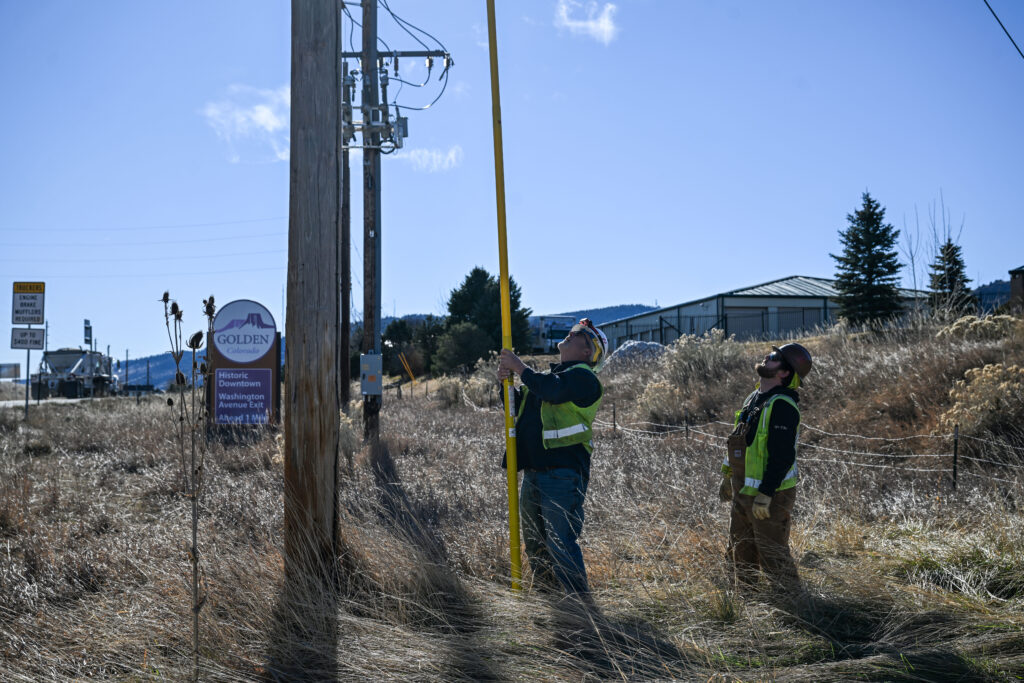
With high winds, fire danger in Denver, Xcel says outages possible
Matt Kyle
matt.kyle@denvergazette.com
Updated 9 hours ago
With a red flag warning issued for the northern Interstate 25 corridor Tuesday by the National Weather Service’s Boulder office, Xcel Energy is warning of possible power outages later in the week as critical conditions are expected to continue. Xcel...

Matt Kyle
Reporter

U.S. energy secretary warns Colorado’s energy policies could drive up prices, deter businesses
Scott Weiser
scott.weiser@gazette.com
Updated 7 hours ago
U.S. Energy Secretary Chris Wright on Monday warned that Colorado’s energy policies could lead to higher electricity prices and deter businesses, such as data centers, from locating in the state. Wright, a former executive of a Colorado-based energy company tapped...

Scott Weiser
Reporter

Former Jeffco high school security guard sentenced for child sex assault
Sage Kelley
sage.kelley@denvergazette.com
Updated 9 hours ago
A former Jeffco Public Schools security guard and pastor will spend at least 18 years in prison after assaulting a student for more than two years. Jefferson County District Court Judge Christopher Rhamey sentenced 68-year-old Rubel Tim Martinez to a...

Sage Kelley
Reporter
PREV
PREVIOUS

Colorado family escapes after being trapped in Afghanistan
Facebook Twitter WhatsApp SMS Email Print Copy article link Save Facebook Twitter WhatsApp SMS Email Print Copy article link Save A Colorado family trapped in Afghanistan made a safe escape out of the country thanks to retired Special Forces Colonel Patrick Allen. A report from Fox News says the Taliban took over Afghanistan when the […]
More mountain snow on tap this weekend in Colorado
Facebook Twitter WhatsApp SMS Email Print Copy article link Save Facebook Twitter WhatsApp SMS Email Print Copy article link Save A cold front moved into Colorado Thursday bringing “heavy snow” over parts of the state’s highest peaks. It may seem a little bit early for snow-capped peaks in August, but more flakes are expected to […]