




EDITORIAL: License should be required to climb Colorado’s dangerous peaks

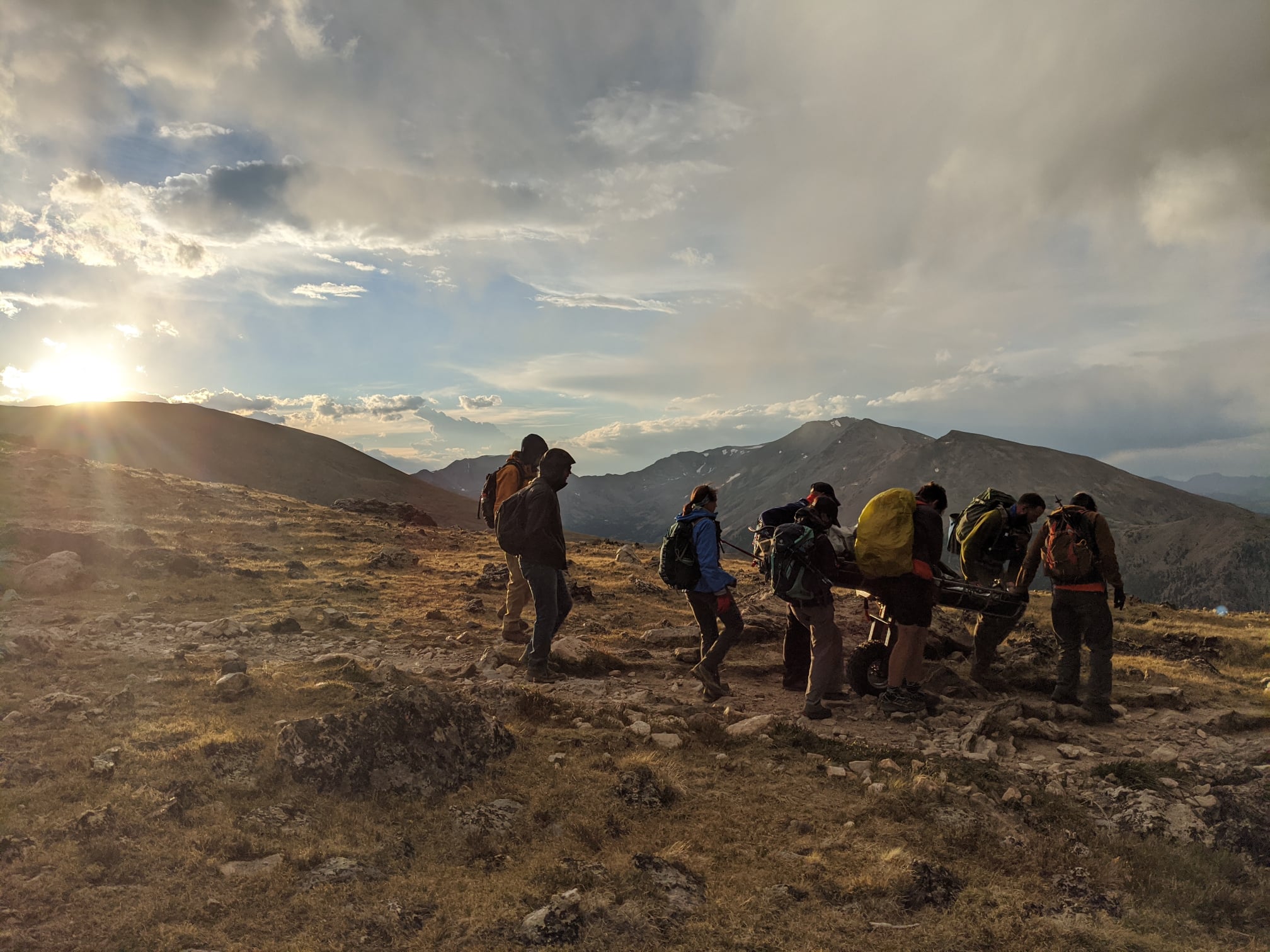
An increase in trail use in Colorado has created an increase in demand for search and rescue efforts, straining an already-strained and mostly volunteer-based operation. While hikers and climbers account for the lion’s share of missions, their contribution to the search and rescue fund in Colorado is minimal. Requiring those seeking to access some of the state’s most dangerous peaks to pay annual and affordable license fee, like that paid by hunters and fishers, could help bring more money to search and rescue crews, while also increasing awareness of best practices on the trail.
The most recent 2019 annual report from the Colorado Search and Rescue Fund indicated that approximately 70 percent of search and rescue fund revenue came from hunting and fishing licenses. Another 14 percent came from those on OHVs, snowmobiles, and boats. Meanwhile, no funds came directly from hikers, with just 15 percent coming from CORSAR card purchases and sticker sales – likely the most common ways that hikers donate to the effort.
Though hiker contributions to the fund were minimal, approximately 51 percent of all rescue missions involved hikers or climbers, with another 11 percent involving bikers and skiers. Only 6 percent of missions involved hunters and fishers, while just 15 percent involved snowmobiles, OHVs, and boats.
As people have flooded the outdoor recreation scene amid the COVID-19 pandemic, the demand for search and rescue has shot up. According to an article from Snowbrains, Lake County Search and Rescue saw a 300 percent increase in demand between 2019 and 2020. An article from Summit Daily indicates that Summit County Rescue Group went from a 88 calls per year from 2014 to 2017 to 185 in 2020 – a new record. Other search and rescue groups around the state report a similar uptick.
With an increase in demand for search and rescue, mostly driven by hikers and climbers, more funds are needed to keep resources and gear up-to-date and to cover expenses of crews during their time in the field.
One possible solution for better funding Colorado’s search and rescue effort would be to require some hikers and climbers to make a contribution in the form of a license fee.
Let’s start simple. Take the aforementioned CORSAR card, for example.
The CORSAR card costs just three dollars a year and is a common way that hikers contribute to the search and rescue fund. In 2019, this, along with sticker sales, drove $84,276 in revenue for search and rescue. If we pretend that this dollar amount only consists of CORSAR card purchases, that means that roughly 42,000 people helped fund search and rescue this way ($2 of the $3 purchase goes directly to the fund).
While 42,000 people might seem like a lot, consider that approximately 50,000 people climbed Quandary Peak last year – one of the easiest fourteen-thousand-foot mountains in the state to summit, but also one that accounts for a high share of search and rescue calls.
Let’s consider another number – in 2020, 415,000 total hiker days were tracked on 54 fourteeners around the state of Colorado. This broke a previous record set in 2018 of 353,000 hiker days on the same peaks. It’s easy to see how this massive uptick in popularity means that more accidents are likely to happen and more calls for help are made.
With all of these numbers I’ve mentioned in mind, here’s my proposal:
Everyone climbing Colorado’s fourteeners should be required to purchase a license similar to the $3 CORSAR card each year. Plain and simple.
For the sake of crunching numbers, let’s pretend that the average fourteener climber summits two peaks each year, meaning around 200,000 people would be purchasing a $3 CORSAR card-equivalent each year – $400,000 in total revenue (again, only $2 of the $3 goes to search and rescue).
To put that in perspective, the 70 percent of Search and Rescue Fund revenue that fishers and hunters contributed in 2019 was around $400,000. In total, the Search and Rescue Fund revenue in 2019 was $564,500. Adding on another $400,000 thanks to a minimal contribution from the state’s hikers could bring that revenue to nearly a million dollars annually.
EDITOR’S NOTE: SB-249 was recently passed by the Colorado legislature which will direct funds associated with a new pass and vehicle registrations to SAR efforts in Colorado. This could generate up to $2.5 million per year, starting in 2023
In addition to the mere purchase of a CORSAR card-equivalent license, people purchasing a permit to climb could also be required to take a brief online safety course – even if it’s something that only takes 15 minutes. Safety basics could be included in this lesson, along with information about how to better preserve Colorado’s trails.
Maybe we add an extra $2 to the cost, too, to help support trail maintenance. Better yet, why not make it five extra bucks.
Not only could a licensing program like this bring more money into search and rescue, it could also help educate the public on how to use Colorado’s trails more responsibly – something that would hopefully prevent many search and rescue scenarios from happening in the first place.
Remember, a key aspect of a program like this would be keeping fees minimal. Something like this wouldn’t be designed to limit access, it would be meant to take care of those that take care of us in the backcountry, while also pushing Colorado’s hikers to be better trailgoers – stewards of the trail that can have a positive influence in the outdoor recreation space.
I’m sure there are plenty of holes to be punched in this opinion and many arguments to be had, but that’s my two cents. Let’s start the conversation.
Want to support search and rescue without waiting for some sort of mandatory license? YOU CAN! Purchase a $3 CORSAR card here and help support Colorado’s search and rescue effort before you leave for your next adventure.
Looking to learn more about safety and best practices in Colorado’s mountains? Check out the many resources made available by the Colorado Mountain Club and Leave No Trace .
Get OutThere
Signup today for free and be the first to get notified on new updates.
PREV
PREVIOUS

"Dangerous" sex offender captured, once believed to be traveling Colorado parks
A convicted sex offender who walked out of Larned State Hospital in Kansas in June has been recaptured in Utah, the U.S. Marshal’s Service said Tuesday. OTC Editor’s Note: This is a follow-up to a story we published last week titled “Dangerous” sex offender thought to be traveling through Colorado state and national parks John […]
First snows spotted throughout Colorado this week
As a fall chill settled over much of Colorado, winter thrill-seekers got their first taste of the coming ski season. Many of the the state’s ski areas saw flakes this week. While not enough to ski, snowboard, sled, or slide down, the snow is enough to get restless winter athletes excited for the coming season. […]