“Lion King” completes pandemic circle of life
The performing arts never went away during the pandemic shutdown — not fully, anyway. Resilient dancers took to rooftops, theater companies to golf courses and bands to the internet.
Still, the arts were never going to feel “all the way back” in a city like Denver until the big dogs at the Denver Center for the Performing Arts finally got back to producing its own plays and hosting Broadway touring productions at the downtown arts complex that COVID had turned into an eerie ghost town.
Now, after 18 months dark, “A Christmas Carol” is again unhardening hardened hearts in the newly christened Wolf Theatre, just as it has for most of the past 30 Decembers. The Colorado Symphony is filling the Boettcher Concert Hall with the orchestral sounds of “A Colorado Christmas.” The Colorado Ballet’s Sugar Plum Fairy is ruling the Land of the Sweets in the Ellie Caulkins Opera House.
And completing its own circle of life is the meaningful pageantry of “The Lion King,” now ushering live theater back to the same Buell Theatre where the landmark national touring production was birthed back in 2002.
The drought (like the pandemic) is far from over. It’s going to take Denver arts organizations a decade to make up for the economic devastation from the shutdown, according to a study by the Colorado Business Committee for the Arts.
But for a few magical hours on opening night, when the house lights dimmed, the side doors swung open and the now iconic “Circle of Life” opening procession of human puppets dressed as jungle animals began, it felt like life beginning anew.
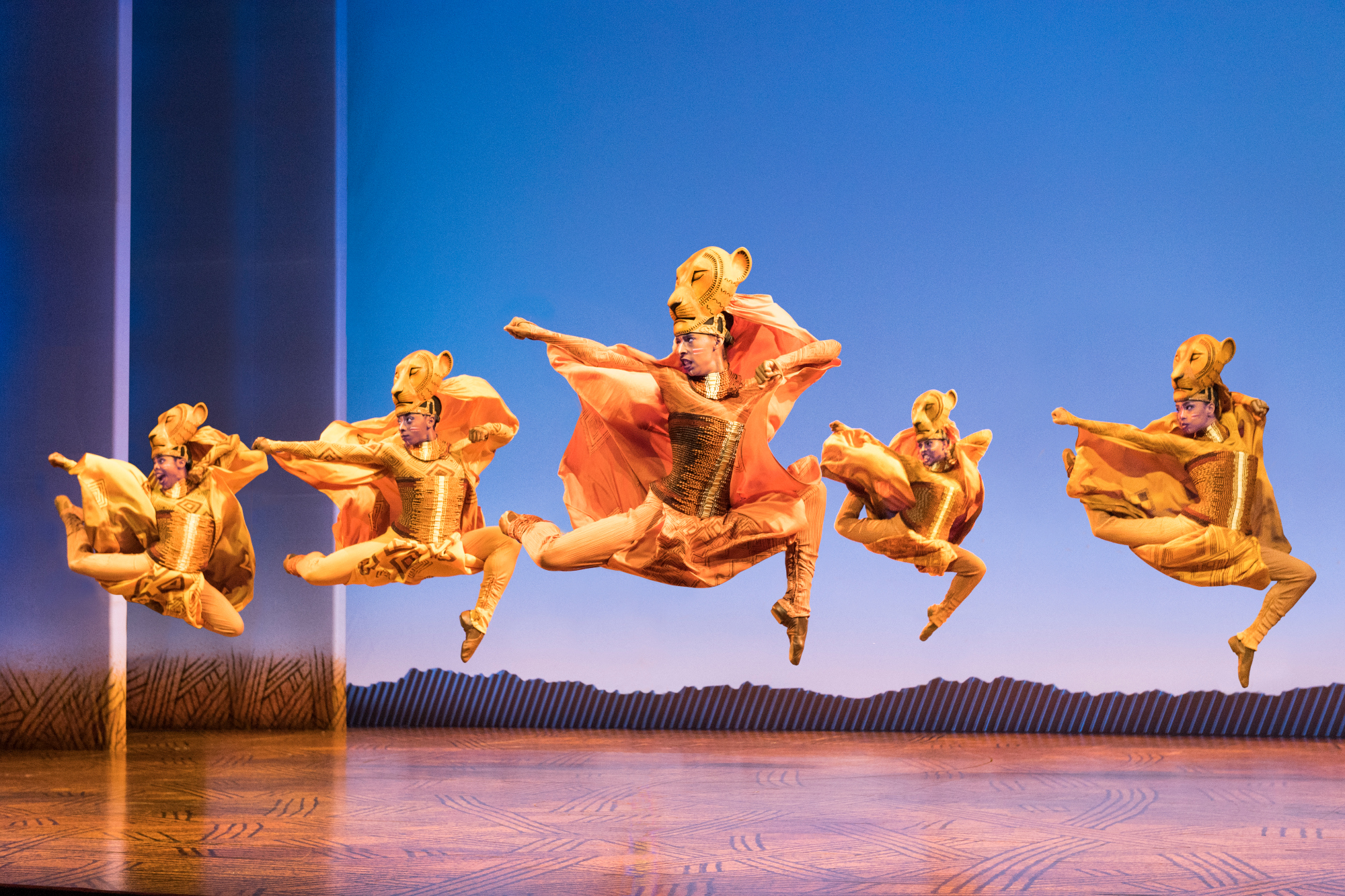
The majesty began with 12-foot giraffes crossing the stage, baboons howling from up in the box seats, four-person elephants lumbering down the aisles, followed by lithe cheetahs and flocks of birds fluttering overhead. The number culminates in the birth of the royal lion cub Simba and the rising of that signature saffron sun, as if to signal a brand new day for all of us.
This was the moment longtime theatergoers had waited for — longed for — to emphatically end this protracted cultural drought. Live theater was back pumping the rejuvenating blood of storytelling through our collective veins again.
From the moment the Denver Center announced that “The Lion King” would be the first Broadway touring production to visit Denver after the shutdown ended, I imagined how this moment would go down. Accompanied by 2,800 of the most eager-to-return theatergoers in Colorado, I envisioned the crowd standing on its feet, tears openly flowing, cheers that could drown out a football game.
OK, so it wasn’t quite like that. The sellout crowd was fully engaged but somewhat subdued, perhaps even reverent. Every neck craned to take in those opening moments fully. But it was as if they needed to absorb it all quietly, just to make sure it was all real.
It was real.
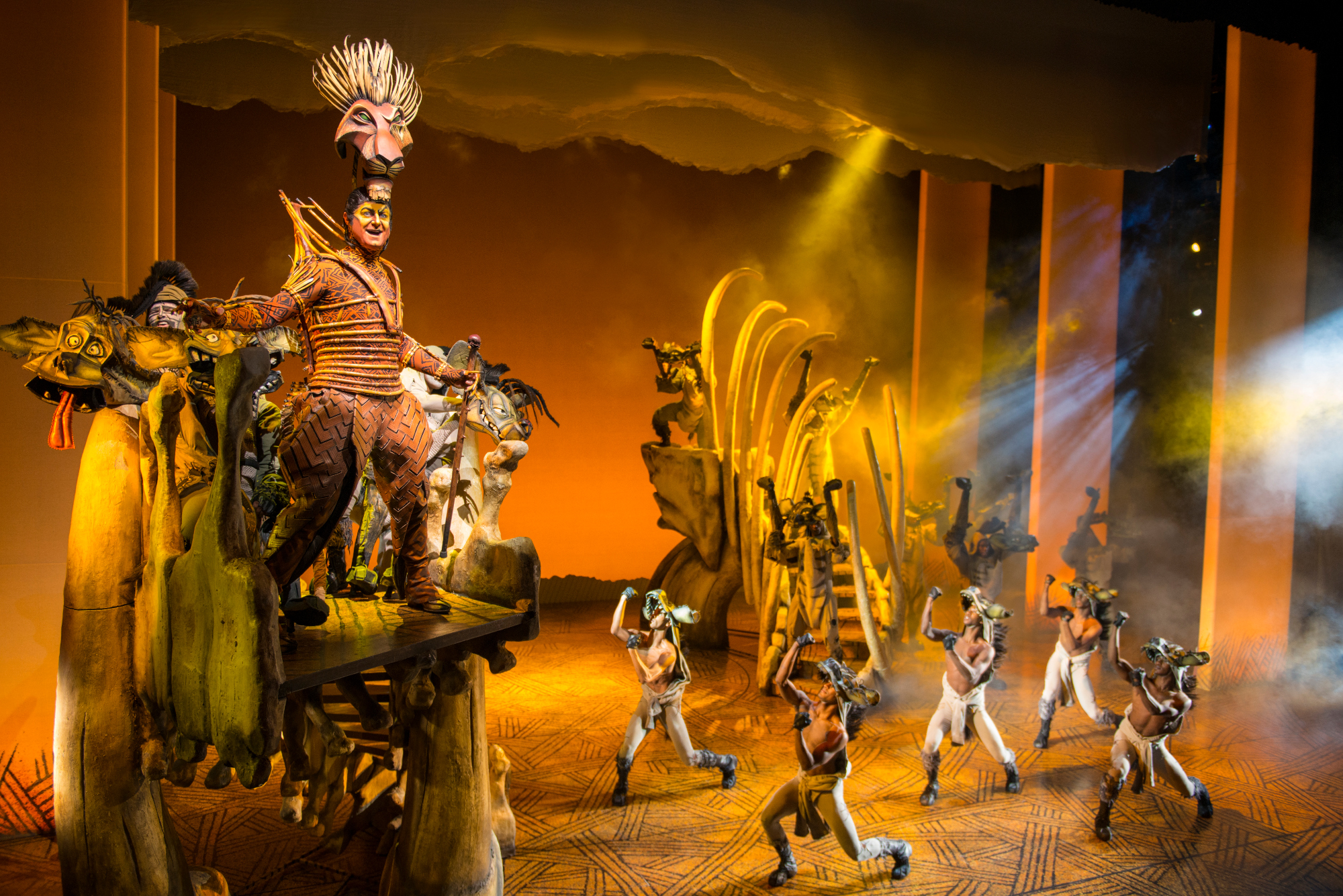
There could not be a more meaningful story of rebirth to bring Broadway back to Denver than “The Lion King.” It’s part “Hamlet,” part Cain and Abel, set in the African jungle. For the young or those who have willfully ignored the Disney franchise for decades: This is the story of Mufasa the lion king, who is put to death by his evil brother, Scar. Mufasa’s son, Simba, is led to believe he is responsible for his father’s death, but after a period of self-imposed exile, he of course returns to claim his rightful place on the throne.
While “The Lion King” is very much a Disney musical to its core, it is, creatively speaking, the gold standard. Because this is the one Disney hired true visionary artists in Julie Taymor and Lebo M. to bring a level of imagination and cultural authenticity to the telling that elevates “The Lion King” to something beautiful, meaningful, entertaining and not just groundbreaking — ground-shattering. This really is the journey to the heart of Taymor’s unparalleled imagination.
Whether you are seeing “The Lion King” for the first time or the fifth time here in Denver, there is so much to “see” anew: The 232 human puppets dressed as jungle animals. The elephant’s graveyard. The wildebeest stampede. The miniature puppetry. The simple shadows projected by flashlight against a cave wall. The detailed masks that emphasize the duality of the animals and their human conductors. Some of these techniques are as old as human communication itself, but are largely forgotten in modern storytelling.
But with all due credit to the more than 100 actors and artisans who bring this story to life, it is Lebo M who makes “The Lion King” an incredible emotional experience. The South African composer’s chants, expressed in seven dialects, are what give the production its powerful percussive spirit. More than anyone, Lebo M exemplifies theater’s power to topple borders. When Rafiki the baboon shaman cries in mourning over the death of Mufasa, you don’t have to be South African to understand the language of her words. You feel them:
“Spilled blood. Try courage so the beasts may fall. Those who defy mountains are in truth cowards.”
It’s a tale as old as time. And a tale for these very times we find ourselves in. There’s even a song that now seems in retrospect to have been written for the pandemic: “When will the dawn break? Oh, endless night.”
The COVID night is far from over. But at the end of this night, anyway, audiences walked out seeming not so much ebullient as … replenished. A girl no more than 12 quietly told her mother in the immediate aftermath: “I have no words for what I just saw.”
Steven Burge, himself a prominent local actor, said he already had a lump in his throat riding to the theater. When those house lights came down at the start, he said, “I exhaled for the first time in a year and nine months.” He said this night was not only about returning to the theater.
“It felt like I was being welcomed back to church,” he said. “My spirit needed that more than I even realized.”
“The Lion King” plays the Buell Theatre through Jan. 2. For ticket information, call 303-893-4100 or go to denvercenter.org.
Denver Gazette contributing arts columnist John Moore is an award-winning journalist who was named one of the 10 most influential theater critics by American Theatre Magazine.