GUEST COLUMN: Refugees need Coloradans’ sustained support

Colorado will soon be welcoming our latest crop of refugees; these from Afghanistan. The Afghans who risked their lives working with Americans during the two-decade Afghanistan war are, for most of us, welcome guests. But between the flashing, welcome smile, and the first blush of “newness,” a day comes when we are reduced to the quotidian grind of living side by side with distinctly different people from far away. It has its own inherent problems that we can overcome if we make an effort to name them and to find ways to cope with them. It might actually be a joyful and fulfilling endeavor, given open minds and hearts.
I have over time observed consecutive groups of foreign arrivals. The one observation that stands out clearly for me is, we are overjoyed to rescue tortured, abused and starving Somalis, Congolese or Hmongs. It feels good to bring them here. Unfortunately, many of the organizations I have followed are also very good at washing their hands of their charges. Often this happens before they are able to navigate through the difficulties a life in America entails.
For the current group of refugees, like others from similar situations — suddenly uprooted from their homes, often with only the clothes on their backs — their stay in the U.S. will be particularly difficult. They and their children are traumatized in ways many of us cannot comprehend. They may never heal from their psychic wounds and some of their pathologies may manifest in a variety of ways, some of them not pleasant. A comprehensive understanding — on our part as well as theirs — of the hurdles they will encounter in their resettlement in the U.S. is necessary if they are to become healthy and fully engaged citizens.
I say this because I am keenly aware of the difficulties of settling in an American moment of disagreement and conflict; nothing makes sense; and to most citizens nothing is certain any more. It is also an America where one is free to succeed, but also free to fail. These people, given their country of origin, are resilient, but their resilience must be augmented with therapy and material assistance and sustenance.
For most agencies and religious groups who sponsor refugees, six months of rather haphazard support is standard. I know they do this because of the exigencies of limited resources for a large group without much. I have however always felt that the Lutheran, Catholic and other groups could more actively seek funding for extension of the time in which support is given to refugees. Adequate training and education to obtain gainful employment is imperative; so is their children’s education. If there’s a Maslow’s hierarchy of needs, I think for our refugee immigrants, support until they are on their feet is at the very apex.
A few groups supporting some refugees to America do a good job and we should learn from them. Colorado groups that support Russian Jewish immigrants do a great job creating educational opportunities, helping start businesses and to navigate the intricate health-care maze. New arrivals are never left alone but are supported through their early struggles. Other refugee-support groups should replicate a fraction of what the Jewish groups do. Certainly, calling upon other members of the Afghan diaspora to support the new immigrant arrivals would be a rewarding gambit.
Past refugee arrivals’ experiences offer us important lessons on how to approach our Afghan arrivals. The advantage they have is they are members of the Afghan middle class, and they still have American friends. But their religion and country of origin are a problem to a part of America. These are issues and difficulties we can overcome — by naming and by willing to solve them.
Far too often Americans think of refugees and immigrants as a drain on our economy. Yes, there is an initial cost, but everything shows that immigrants bring us new talent and ideas. Think then, those of us who have a desire to learn a new language — Pashto, Arabic, Amharic, Swahili — or about other cultures have a ready resource right here. Our immigrant population has so much to offer; we should fully utilize that resource.
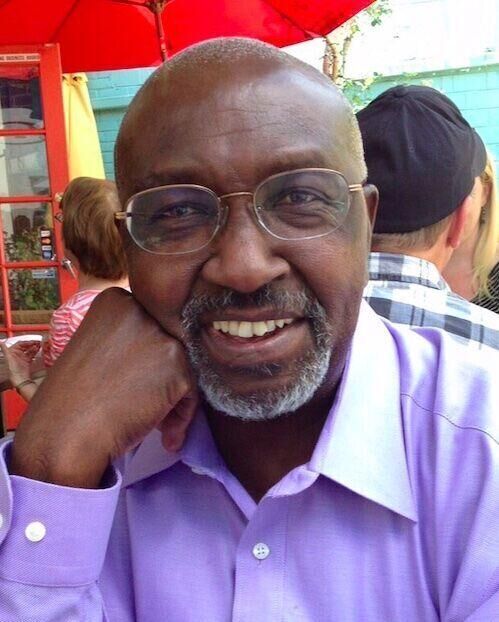
Pius Kamau, M.D., general surgery, is president of the Aurora-based Africa America Higher Education Partnerships; co-founder of the Africa Enterprise Group and president of the Consortium of African Diasporas in the U.S.A. He has been a National Public Radio commentator and a blogger, and is author of “The Doctor’s Date with Death.”