







Colorado sets single-day COVID-19 case record as Polis activates National Guard to help testing

Colorado reported more COVID-19 cases on Wednesday than it has on any single day of the pandemic thus far, newly updated data shows.
The state is facing a shortage of rapid tests and monoclonal antibodies, and Gov. Jared Polis has activated more than 200 National Guardsmen to help support testing operations.
The state reported 6,949 positive tests Wednesday, four more than the previous record, set in November 2020. Wednesday’s total will likely grow in the coming days as data as backfilled. Cases statewide have rocketed upward in recent days as the highly transmissible omicron variant surges across the state; it now accounts for more than 90% of cases here.
On Dec. 16, Colorado had roughly 1,635 new COVID-19 cases in the previous seven days. Two weeks later, that number has tripled, to 4,960. The state’s positivity rate over the past week is nearly 18%, up from 6.24% two weeks ago. Some areas of the state are being hit particularly hard: According to The New York Times, Pitkin and Summit counties have the highest per-100,000 case rates in the country. Eagle County is fourth highest.
Supply shortages are compounding the situation. Two of the three monoclonal antibody treatments, used to help blunt hospitalizations during the delta wave, are not effective against omicron. Though omicron is believed to be less severe than delta, the monoclonal antibody findings mean that only one antibody treatment course is effective, putting a strain on national supply.
Scott Bookman, the state’s COVID-19 incident commander, told reporters Thursday that Colorado previously received between 4,000 and 5,000 doses of monoclonal antibodies each week. Now, the state’s share of the national allotment is between 300 and 400 doses per week. Bookman described the available supply of antibodies as “incredibly limited.”
Messages seeking more information on monoclonal antibody availability sent to the state Department of Public Health and Environment were not returned this week. Hospitalizations nudged upward again Thursday, continuing a recent reversal of weeks of downturn. COVID-19 patient load still remains well below the peak of mid-November.
Colorado, like the rest of the nation, is also facing a shortage of rapid tests. Bookman said Abbott, the rapid test makers that Colorado has contracted with, “simply don’t know if they have any available.” The state is looking at other options.
The state had previously set up a program to ship rapid tests to residents’ homes for free. But in emails to newly registered participants, the state wrote that it would fill orders “when inventory becomes available. We appreciate your patience as we are experiencing increased demand.”
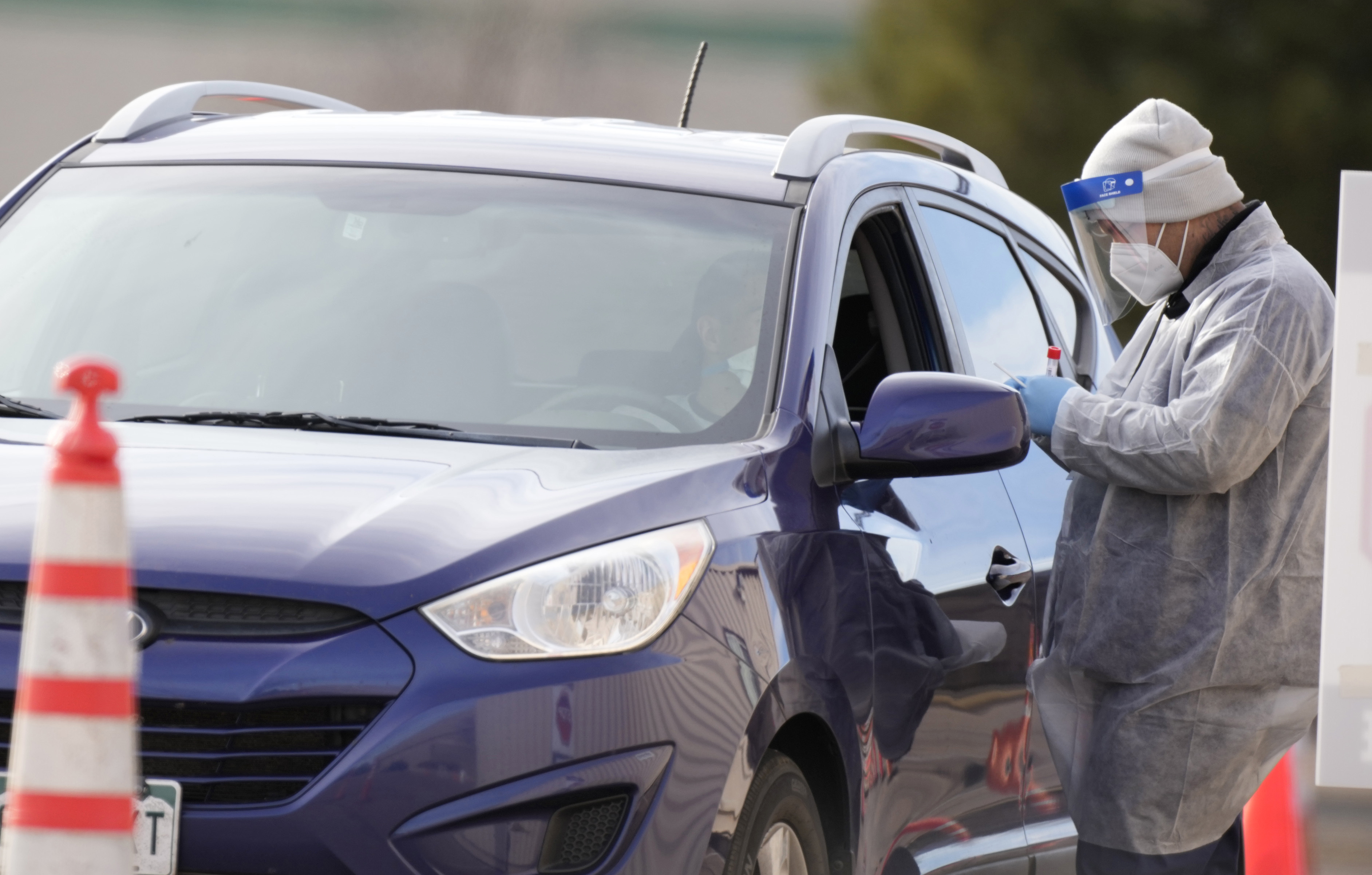
Testing at state sites has increased in recent days, and a spokesman for the state health agency said the department was anticipating its largest testing week of the pandemic after the New Year.
To help alleviate the surge, Polis announced Thursday that he was activating more than 200 guardsmen “to support testing sites and other COVID-19 response and recovery activities in Colorado.” The guardsmen will be deployed across the state beginning Jan. 1; there are more than 150 such sites across Colorado.
“With high prevalence of omicron in Colorado, we need to ensure Coloradans can access testing without long waits, enabling them to isolate, notify contacts, and keep from spreading the virus to their loved ones,” Polis said in a statement.
Eric France, the state’s chief medical officer, said Wednesday that the average turnaround time from the state lab to process a test is one to two days.
Despite its remarkable surge into prominence, omicron is still a new variant, and questions remain about what its dominance will bring to Colorado. Bookman said it was too early to predict when this latest wave will peak; health officials have said that generally, the faster waves surge, the faster they decline.
He said it was similarly unclear how omicron would impact hospitalizations statewide. The state is gathering data from places elsewhere in the country and world where omicron surged earlier. Early evidence indicates omicron is less severe and causes fewer hospitalizations than delta. But health officials have also cautioned that even a less severe but more transmissible variant can still hammer an already strained health care system.
Colorado sets single-day COVID-19 case record as Polis activates National Guard to help testing
Colorado reported more COVID-19 cases on Wednesday than it has on any single day of the pandemic thus far, newly updated data shows.
The state is facing a shortage of rapid tests and monoclonal antibodies, and Gov. Jared Polis has activated more than 200 National Guardsmen to help support testing operations.
The state reported 6,949 positive tests Wednesday, four more than the previous record, set in November 2020. Wednesday’s total will likely grow in the coming days as data as backfilled. Cases statewide have rocketed upward in recent days as the highly transmissible omicron variant surges across the state; it now accounts for more than 90% of cases here.
On Dec. 16, Colorado had roughly 1,635 new COVID-19 cases in the previous seven days. Two weeks later, that number has tripled, to 4,960. The state’s positivity rate over the past week is nearly 18%, up from 6.24% two weeks ago. Some areas of the state are being hit particularly hard: According to The New York Times, Pitkin and Summit counties have the highest per-100,000 case rates in the country. Eagle County is fourth highest.
Supply shortages are compounding the situation. Two of the three monoclonal antibody treatments, used to help blunt hospitalizations during the delta wave, are not effective against omicron. Though omicron is believed to be less severe than delta, the monoclonal antibody findings mean that only one antibody treatment course is effective, putting a strain on national supply.
Scott Bookman, the state’s COVID-19 incident commander, told reporters Thursday that Colorado previously received between 4,000 and 5,000 doses of monoclonal antibodies each week. Now, the state’s share of the national allotment is between 300 and 400 doses per week. Bookman described the available supply of antibodies as “incredibly limited.”
Messages seeking more information on monoclonal antibody availability sent to the state Department of Public Health and Environment were not returned this week. Hospitalizations nudged upward again Thursday, continuing a recent reversal of weeks of downturn. COVID-19 patient load still remains well below the peak of mid-November.
Colorado, like the rest of the nation, is also facing a shortage of rapid tests. Bookman said Abbott, the rapid test makers that Colorado has contracted with, “simply don’t know if they have any available.” The state is looking at other options.
The state had previously set up a program to ship rapid tests to residents’ homes for free. But in emails to newly registered participants, the state wrote that it would fill orders “when inventory becomes available. We appreciate your patience as we are experiencing increased demand.”
Testing at state sites has increased in recent days, and a spokesman for the state health agency said the department was anticipating its largest testing week of the pandemic after the New Year.
To help alleviate the surge, Polis announced Thursday that he was activating more than 200 guardsmen “to support testing sites and other COVID-19 response and recovery activities in Colorado.” The guardsmen will be deployed across the state beginning Jan. 1; there are more than 150 such sites across Colorado.
“With high prevalence of omicron in Colorado, we need to ensure Coloradans can access testing without long waits, enabling them to isolate, notify contacts, and keep from spreading the virus to their loved ones,” Polis said in a statement.
Eric France, the state’s chief medical officer, said Wednesday that the average turnaround time from the state lab to process a test is one to two days.
Despite its remarkable surge into prominence, omicron is still a new variant, and questions remain about what its dominance will bring to Colorado. Bookman said it was too early to predict when this latest wave will peak; health officials have said that generally, the faster waves surge, the faster they decline.
He said it was similarly unclear how omicron would impact hospitalizations statewide. The state is gathering data from places elsewhere in the country and world where omicron surged earlier. Early evidence indicates omicron is less severe and causes fewer hospitalizations than delta. But health officials have also cautioned that even a less severe but more transmissible variant can still hammer an already strained health care system.