







The chapel in a desert built by Sidney Poitier and a Colorado author | Vince Bzdek
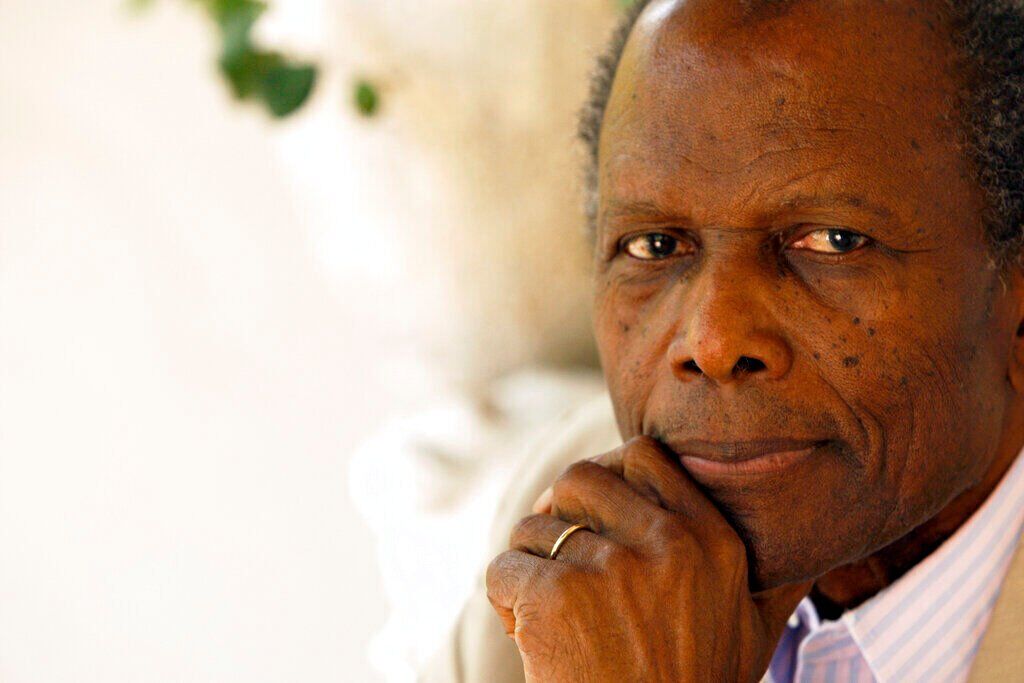
The recent passing of the great Sidney Poitier prompted my family to rewatch his Best Actor Oscar-winning performance — the first ever for a Black man — in “Lilies of the Field.”
Poitier plays an itinerant handyman who happens upon a group of destitute nuns in the Arizona desert. They see his arrival as an answer to their prayers, and somehow cajole him into building them a chapel. A kind of communion of souls emerges as they break bread together, he teaches them English, they share their Catholic chants, he shares his Baptist hymns, and they build that chapel.
Some people say the award for this gentle movie was more a matter of timing than about honoring a great performance. The film came out two months after the March on Washington and Martin Luther King’s “I Have a Dream” speech, and the spotlight on civil rights might have helped propel Poitier to stardom.
But I’m not sure it wasn’t the other way around — that Poitier’s performance and Oscar didn’t help raise the visibility and stress the nobility of those fighting for their rights. The low-budget black and white movie became an unexpected hit that year.
“Lilies of the Field” might be an easy-going, laid-back movie, but I see it as a kind of modern parable, brought to life by Poitier’s quiet dignity and effervescence. Parables are often more powerful in their simplicity than the most elaborate sermons or treatises or speeches are.
And I don’t think it’s any accident that this parable was written by a Coloradan.
The author William Barrett is a writer whom I fear Colorado has forgotten. It might be a very good time to remember him. He wrote over 20 books, three of which were made into popular films, including “The Left Hand of God,” starring Humphrey Bogart, “The Lilies of the Field,” and “Pieces of Dreams,” which was adapted from the novel “The Wine and the Music.”
Born in 1900 in New York, Barrett moved to Denver as a teenager and spent most of his life in Colorado.
His faith and his values were the cornerstone of his writing.
Funny, but Sidney Poitier said the same thing once upon a time in defense of the innate decency of the characters he played: “I had chosen to use my work as a reflection of my values.”
I knew Barrett as a child, and he made a lasting impression, to be sure.
He used to take up the collection every Sunday in our church, St. John’s, now known as Good Shepard Catholic Church in East Denver. With his perfect suit, silver hair and Cheshire smile, the man simply radiated benevolence as he came down the aisle with his basket to gather our tithes. Every Sunday, our priest used to lead us in singing the come-to-meeting-house spiritual that Poitier’s character teaches the nuns in “Lilies:” “A-a-a-men. A-a-a-men. A-a-men. Amen. Amen.”
I remember seeing Barret’s gentleness and humbleness as a kind of power, and that same emphasis on the power of goodness radiates from his books as well. It may have been his great theme.
Barrett believed “that life produces more happy endings than unhappy endings, regardless of the physical appearances to the contrary. Happiness is always cheated in the census because people count their miseries carefully and catalogue them, accepting their blessings without thought.”
A belief in the eventuality of happy endings — that’s a creed us Westerners still subscribe to, I think.
The simple parable of building an unlikely chapel out in the middle of the desert hit a chord back in 1962, a time of similar and maybe even greater strife, because I think it suggested that, hey, we actual need each other to build our country’s future: a Black handyman, a group of East German nuns who escaped over the Berlin Wall, and a community of Latino parishioners. The chapel in “Lilies” is a lot like this country itself: our common project.
“That was the spirit of the time; in spite of the anxiety of the Cold War, the struggles of the Civil Rights Movement, the growing tensions in Vietnam, the idealists — and particularly the Catholic idealists — really believed we could nurture our collective essential decency to achieve the greater good,” wrote David A. King, Ph.D., an associate professor of English and film studies at Kennesaw State University, in the Georgia Bulletin.
Nurture our collective essential decency. Who even talks like that anymore? It’s all about asserting our individual identities and personal liberties and airing grievances and tearing down statues now, rather than building chapels in the desert.
Feels like we are missing that animating spirit of decency. We are drowning in our miseries and differences and could really use a Sidney Poitier or a William Barrett to remind us that we will get through this and maybe even build something better.
You watch “Lilies,” you see how the values of Barrett, a Catholic, white Westerner, and the values of Poitier, with his lifelong emphasis on the dignity of Black men, match up so beautifully in this tale, and it makes you long to build something bigger than ourselves like that chapel again, to reach for the stars rather than snipe at each other’s shoes.
I know exactly what Sidney Poitier and William Barrett would both say to that notion.
“A-a-a-amen.”