





10th Circuit reinstates MSU Denver student’s lawsuit alleging First Amendment violation

Google Maps Street View
Calling the issue an “easy one,” the federal appeals court based in Colorado reinstated a lawsuit by a Metropolitan State University of Denver student who claims an administrator violated her First Amendment rights when he prohibited her from speaking about a professor to other students.
A three-judge panel of the U.S. Court of Appeals for the 10th Circuit reversed a lower court judge who previously determined that Thomas Ragland, a director in MSU Denver’s Dean of Students Office, deserved immunity for telling Rowan Thompson that she was “restricted from discussing” a university professor with people enrolled in that professor’s classes. The 10th Circuit cited a line of free speech cases that suggested Ragland’s directive was unreasonable.
“Indeed, this case is, at least at the present stage of the proceedings, an easy one,” wrote Judge Harris L Hartz in the panel’s Jan. 26 opinion. “Thompson’s speech was restricted. And there is no apparent legitimate basis for this restriction.”
The government argued that no prior court decisions had held the type of prohibition Ragland imposed on Thompson’s speech to be unconstitutional. While deciding in Thompson’s favor, the 10th Circuit acknowledged that that the university could introduce evidence justifying Ragland’s actions later in the lawsuit.
Igor Raykin, the attorney representing Thompson, said there would have been no objection if MSU Denver had only told his client she could not speak to her professor. Instead, he suspected the university was attempting to curtail criticism of its faculty.
“What we have is the federal appeals court clearly slapping down these arrogant administrators and putting some limits on their power,” he said.
As she outlined in her federal lawsuit, Thompson was a student in Megan Lazorski’s chemistry class. Due to an eye condition, Thompson needed to sit in the front of the classroom to see the white board. On Feb. 4, 2019, Thompson arrived late to class and all of the seats near the front of the room were occupied.
Thompson sat on the floor, allegedly prompting Lazorski to tell Thompson to take a seat. After Thompson explained her eye condition, Lazorski reportedly had students vacate the front row for Thompson.
The next week, Thompson again arrived late, similarly taking her place on the floor in the absence of empty seats. Lazorski again told Thompson to sit in a chair. If Thompson did not do so, the professor reportedly said, she could leave. Thompson opted to leave the class.
Thompson subsequently decided to drop Lazorski’s course, for which she received a refund. She also complained to various MSU Denver officials and spoke with a mediator. Thompson received encouragement to fill out a professor evaluation to address her concerns about Lazorski.
When Thompson realized she could not write an evaluation because she was no longer enrolled, she sent an email to the students still in the class.
“I have heard so many of you say how horrible a time you’re having in this class, that there are some bits that are ridiculous or downright unreasonable,” she wrote sometime after the mediation. “You don’t need to keep your complaints and troubles private; this is what the evaluations are for. … Every issue you’ve had, every complaint? This is when the faculty and university is listening and wants to hear them.”
She added that she could not speak out herself through an evaluation, but asked her classmates to “take the few minutes to review this chemistry class and be honest — make the faculty listen to you so that this class can change for the better. If not for yourself, than for those who have had to drop the class, feeling worthless and stupid, or for students who will have to take this class after you.”
On April 25, 2019, Thompson received a letter from Ragland. Due to the “persistent communication and disruption your communication is [sic] about Dr. Lazorski,” Ragland wrote, “you are restricted from discussing Dr. Lazorski with any student in the CHE 1800 course or any of Dr. Lazorski’s classes, as this would be a violation of [this] No Contact Directive.”
Later that year, Thompson filed a lawsuit asking for monetary damages stemming from her alleged First Amendment violation. In March 2021, U.S. District Court Chief Judge Philip A. Brimmer tossed the complaint, finding Ragland was entitled to qualified immunity.
Qualified immunity shields government officials from liability unless they violate a clearly-established legal right, and Brimmer found no prior court decisions that would have put Ragland on notice that it was unconstitutional to discipline Thompson for speaking with her fellow students.
Thompson appealed, citing multiple relevant decisions to her case.
In the landmark 1969 decision of Tinker v. Des Moines Independent Community School District, the U.S. Supreme Court found that students retain their free speech rights at school, unless their conduct is disruptive or infringes on the rights of others. The 10th Circuit, in the 1996 case of Seamons v. Snow, denied qualified immunity to a coach who booted one student from the football team after the student reported his own hazing to administrators. That report, the court concluded, was protected speech because it was neither disruptive nor an infringement on anyone’s rights.
Raykin, arguing before the 10th Circuit’s panel last year, believed the same logic applied to Thompson’s case. He pointed out that his client had simply asked students to write an “honest” evaluation of Lazorski.
“I think if the school were asked, ‘Would you rather have honest or dishonest evaluations of your professors,’ of course the school would say we want honest evaluations,” Raykin said. “It seems to me like what MSU is trying to do is really restrict criticism of its professors.”
The Colorado Attorney General’s Office, which defended MSU Denver, attempted to argue Ragland acted appropriately toward Thompson, but the panel was skeptical.
“Her communications about the professor were persistent and disruptive,” contended Natalie Powell on behalf of Ragland.
“But how? How is it disruptive?” Hartz asked.
“I think the persistency of the communications — “
“What’s wrong with being persistent about exercising your rights?” Hartz interrupted. “If you’re allowed to say something, why can’t you say it multiple times?”
He added that Thompson’s email seemed “perfectly appropriate.”
“I just couldn’t see what’s wrong with that letter unless you’re worried the faculty are criticized, and then you won’t be able to get faculty or something,” he said. “Then that’s too bad.
The government argued the law was not clearly-established, and Hartz acknowledged in the panel’s opinion that there was no previous case exactly like Thompson’s. Still, he wrote, it is “clear that discipline cannot be imposed on student speech without good reason.”
Following the panel’s decision, Raykin said he does not believe it would be detrimental if students are encouraged to persuade their classmates to leave professors favorable or unfavorable reviews for classes.
“With these evaluations, especially because they’re anonymous, I think students are going to give their honest impression. With respect to ‘campaigning’,” he said, “this is what we do in a free society. We exchange ideas.”
An MSU Denver spokesperson said he could not comment on the active lawsuit.
The case is Thompson v. Ragland.


EDITORIAL: Misplaced blame for Colorado’s ozone woes
The Gazette Editorial Board
thegazette-editorial-board@gazette.com
Updated 1 day ago
Colorado’s Front Range air quality problem is real. The smog often obstructs our view of the state’s natural beauty while impacting health conditions. Yet even as regulators target oil and gas development as the presumed source, the real ozone culprits...

The Gazette Editorial Board
Reporter

Perspective: Closing the hemp loophole
Diane Carlson
diane-carlson@denvergazette.com
Updated 3 days ago
For years, gas stations, convenience stores, and online shops advertised “hemp” or “CBD” candies and vapes packaged in rainbow colors and marketed with words like “calming” and “natural.” They looked harmless — even healthy — and were readily available to...

Diane Carlson
Reporter
We need more affordable housing in existing neighborhoods
Jill Gaebler
jgaebler@cscedc.com
Updated 4 days ago
By Jill Gaebler Special to the Gazette Colorado Springs is growing. That is not news and is not debatable. We live in a beautiful region, adjacent to the easternmost 14er, our own Pikes Peak, which has drawn settlers here for...

Jill Gaebler
Reporter
No. 6 Denver hockey sweeps No. 19 Miami (Ohio), retains NCHC lead
Tyler King
tyler-king@denvergazette.com
Updated 8 hours ago
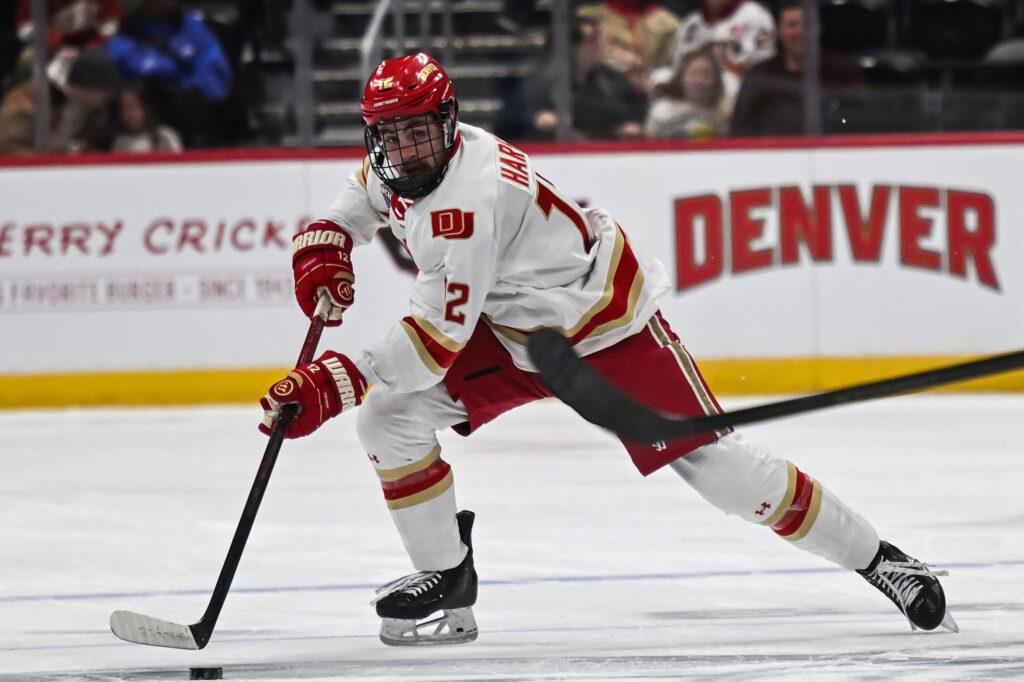
David Carle’s team knows how to bounce back. After suffering an overtime loss in a thrilling game against Minnesota last Saturday at Ball Arena, No. 6 Denver (11-5-1, 7-1-0 NCHC) rebounded with a weekend sweep over No. 19 Miami (Ohio)...

Tyler King
Reporter
Loaded Cherry Creek surges past Ralson Valley for 5th title in 6 years
Brent Briggeman
brent-briggeman@denvergazette.com
Updated 8 hours ago
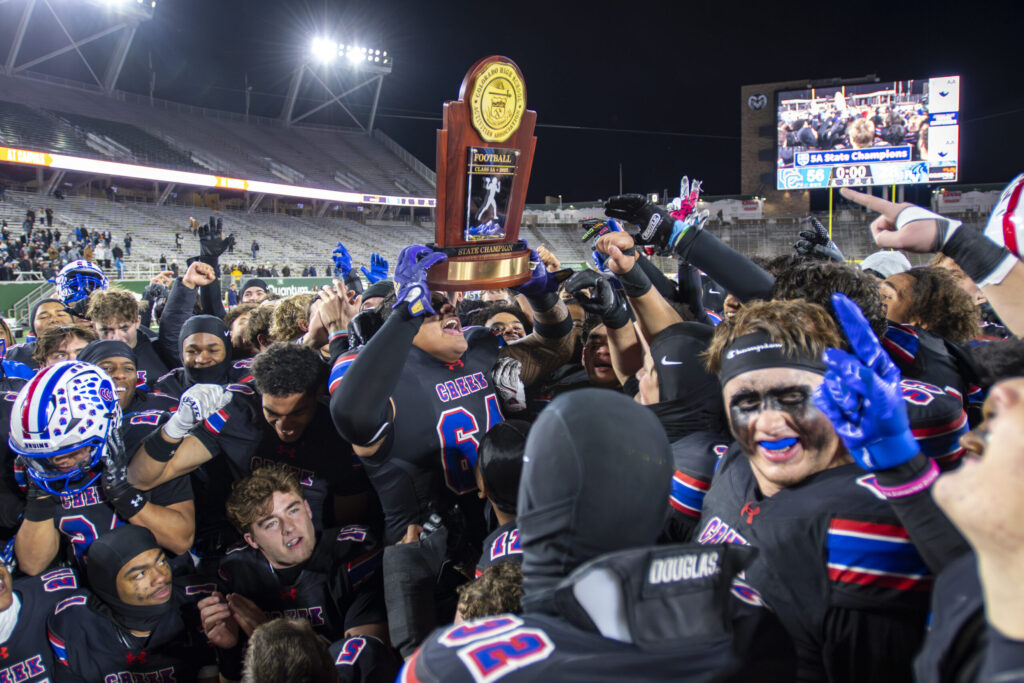
FORT COLLINS – The cherry was neatly placed on top. Again. Capping a week when many on Cherry Creek’s loaded roster signed with colleges and a season of dominant perfection, the Bruins handled Ralston Valley 56-28 in the 5A state...

Brent Briggeman
Reporter

Family traditions highlight annual Parade of Lights in downtown Denver
Noah Festenstein
noah-festenstein@denvergazette.com
Updated 8 hours ago
Thousands of spectators cheered as giant balloon characters and floats decorated with holiday lights paraded through downtown Denver on Saturday night. For many, though, it wasn’t just about watching the 51st annual 9NEWS Parade of Lights. Rather, it’s about celebrating...

Noah Festenstein
Reporter
Palmer Ridge loses to Dakota Ridge in title game, first loss of the season
Marcus Hill
marcus.hill@gazette.com
Updated 7 hours ago
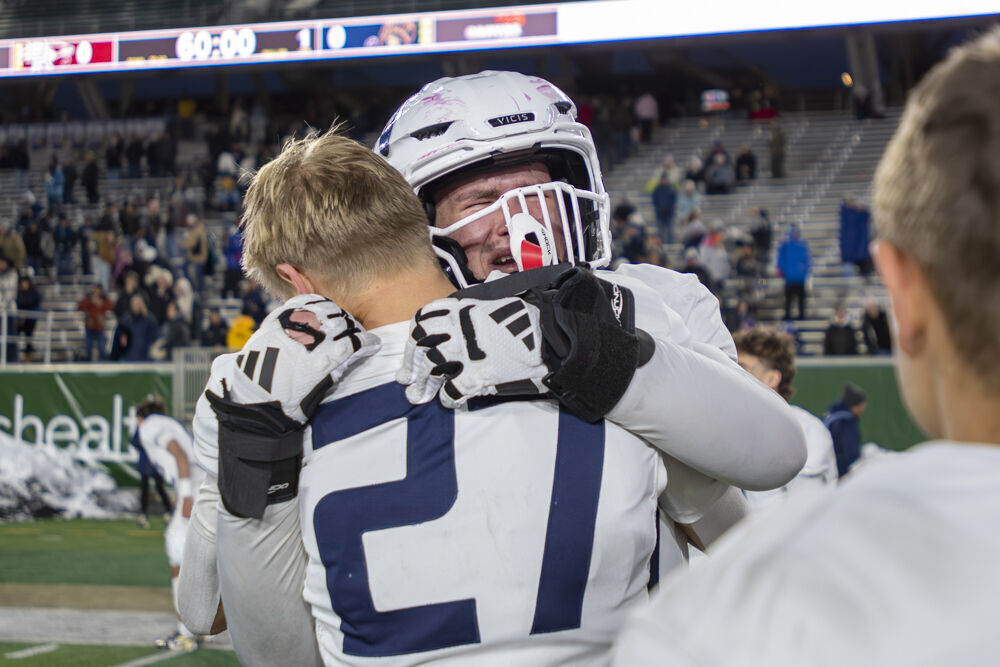
FORT COLLINS – Palmer Ridge hoped the tears left behind at Canvas Stadium would be those of joy. They were not. As the final horn sounded, Dakota Ridge, 4A’s No. 1 seed, bolted to the sideline to celebrate with teammates,...

Marcus Hill
Reporter
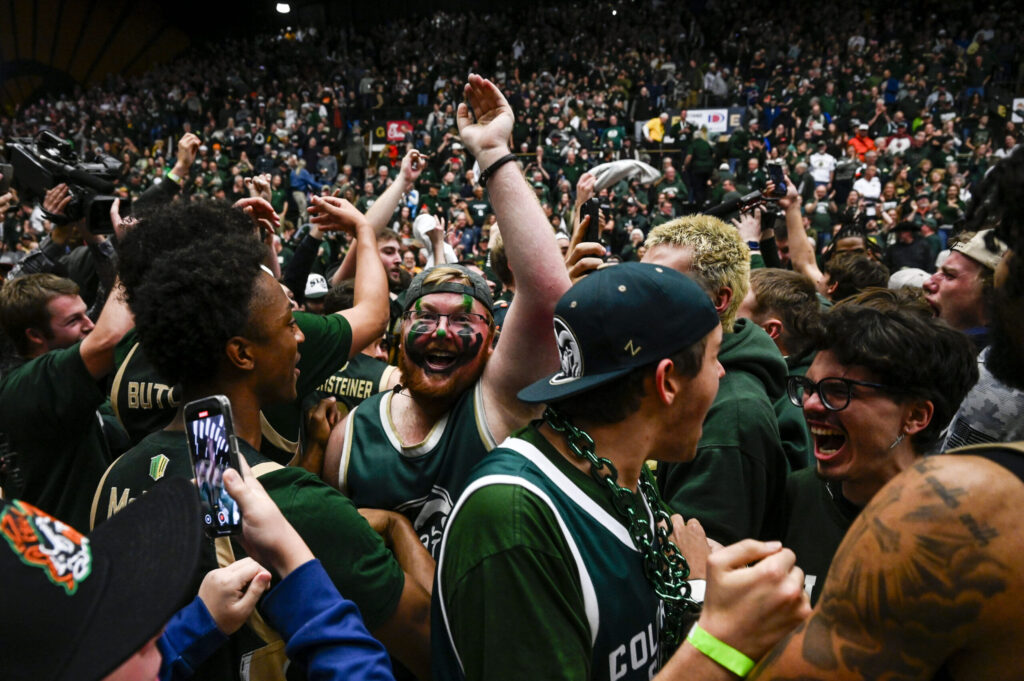
Hot-shooting Colorado State holds on for thrilling win over rival Colorado
Tyler King
tyler-king@denvergazette.com
Updated 10 hours ago
FORT COLLINS — Score one for the Colorado State math department and professor Ali Farokhmanesh. Just about every statistic suggested Colorado should have won Saturday afternoon. The previously unbeaten Buffaloes (8-1) were the more physical team, dominating in the paint....
Tyler King
Reporter
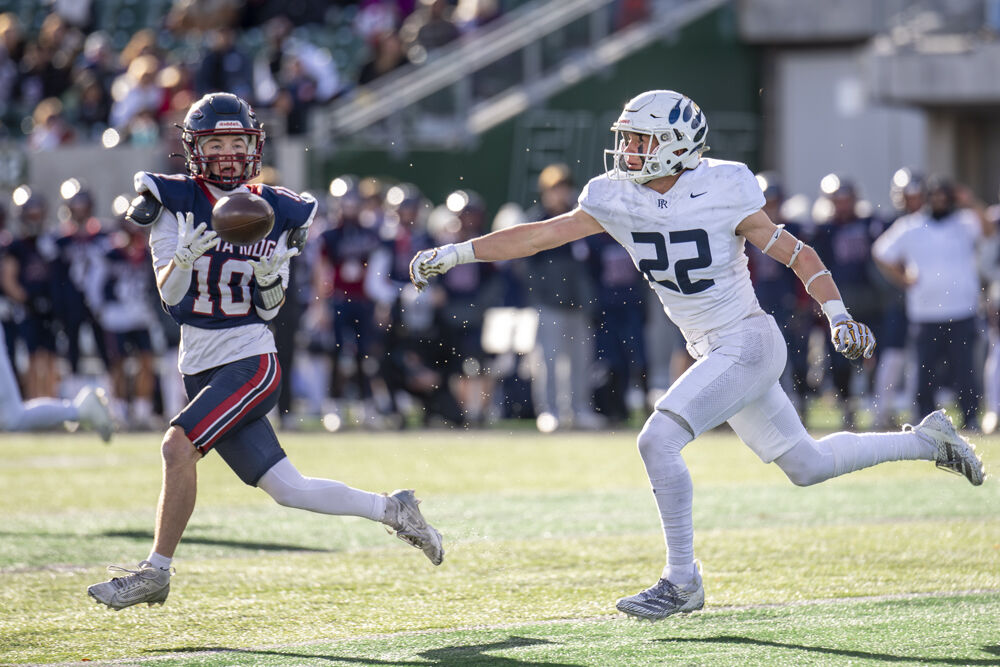
Dakota Ridge’s hot start puts Palmer Ridge in quick 3-touchdown hole during 4A title game
Brent Briggeman
brent-briggeman@denvergazette.com
Updated 11 hours ago
FORT COLLINS – The opening minutes inside a pressure cooker can spit out some extreme results. Dakota Ridge and Palmer Ridge found themselves on opposite ends of that spectrum in Saturday’s 4A football championship game, which the top-seeded Eagles won,...
Brent Briggeman
Reporter

Clash of the titans: Democratic race for governor pits two candidates similar in focus, but very different in style | Vince Bzdek
Vince Bzdek
vince-bzdek@denvergazette.com
Updated 11 hours ago
By Vince Bzdek The race for governor is shaping up to be a clash of Democratic titans, U.S. Sen. Michael Bennet and Attorney General Phil Weiser. They are two of Colorado’s highest profile politicians with deep track records who...

Vince Bzdek
Reporter