







Boulder County Commissioners to discuss removing debris from Marshall fire
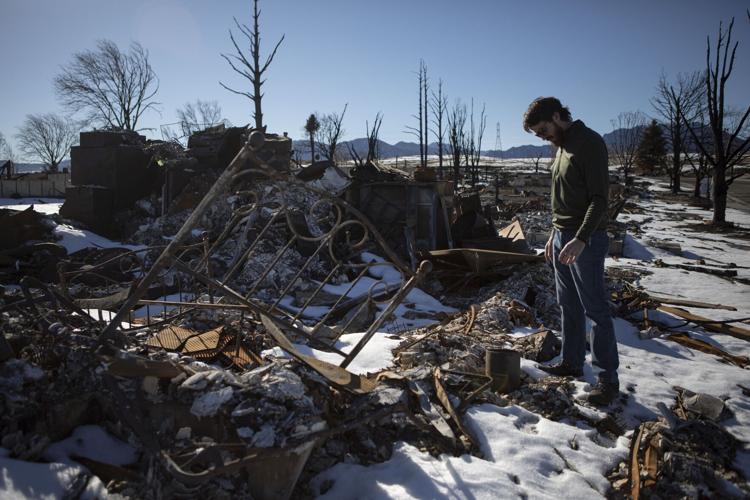
Wayne Shelnutt, the owner of Wayne's Smoke Shack, looks over the charred remains of his home, including the metal bed frame from his 5-year-old daughter's room that was on the third floor of the home, on Monday, Jan. 31, 2022, in Superior, Colo.
Timothy Hurst/The Denver Gazette

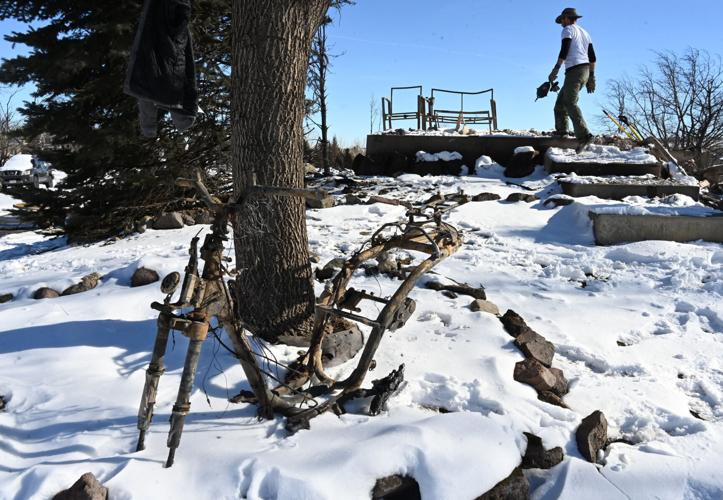

Boulder County Commissioners on Tuesday are expected to receive a recommendation from a team of experts on which disaster cleanup company should get a coveted debris removal contract.
The bid is worth tens of millions of taxpayer dollars and once the removal stage is complete, residents who lost their homes in the Marshall fire can start to rebuild.
Eleven national disaster recovery outfits are in a heated competition for the contract. The county will pick one of them to haul off the remains of at least 1,084 residential properties and seven businesses from Colorado’s most destructive wildfire.
The company chosen for the debris removal will also be responsible for hiring asbestos crews; procuring arborists to assess the health of trees that survived the fire; monitoring air, traffic, dust and spill control; doing independent property assessments; and capping utilities, according to Boulder County’s Marshall Fire Debris Removal Program website.
An observer from another state impacted by massive wildfires had two pieces of advice as the contract deadline for disaster cleanup looms: Don’t go cheap and do your homework.
“We ended up swimming with sharks,” former state Rep. Betsy Johnson told The Denver Gazette from her home in Oregon, where she is launching a run for governor.
Johnson wishes she would have known how intense the race for Oregon’s $622 million in recovery aid was in the aftermath of its 2020 wildfires, which killed at least nine people, wiped out entire towns and burned a million acres.
“We were unaware of how competitive, litigious and sophisticated these debris cleanup companies were,” she said.
As co-chair of the Joint Ways and Means Committee in Oregon, Johnson appropriated much of the money for property debris cleanup.
“My urgent (advice) to Boulder County Commissioners prior to signing any contracts is do your due diligence with officials in Northern California and Oregon to get a full picture of what it means to deal with these national disaster recovery companies. Check their performance records, references and change orders,” she said.
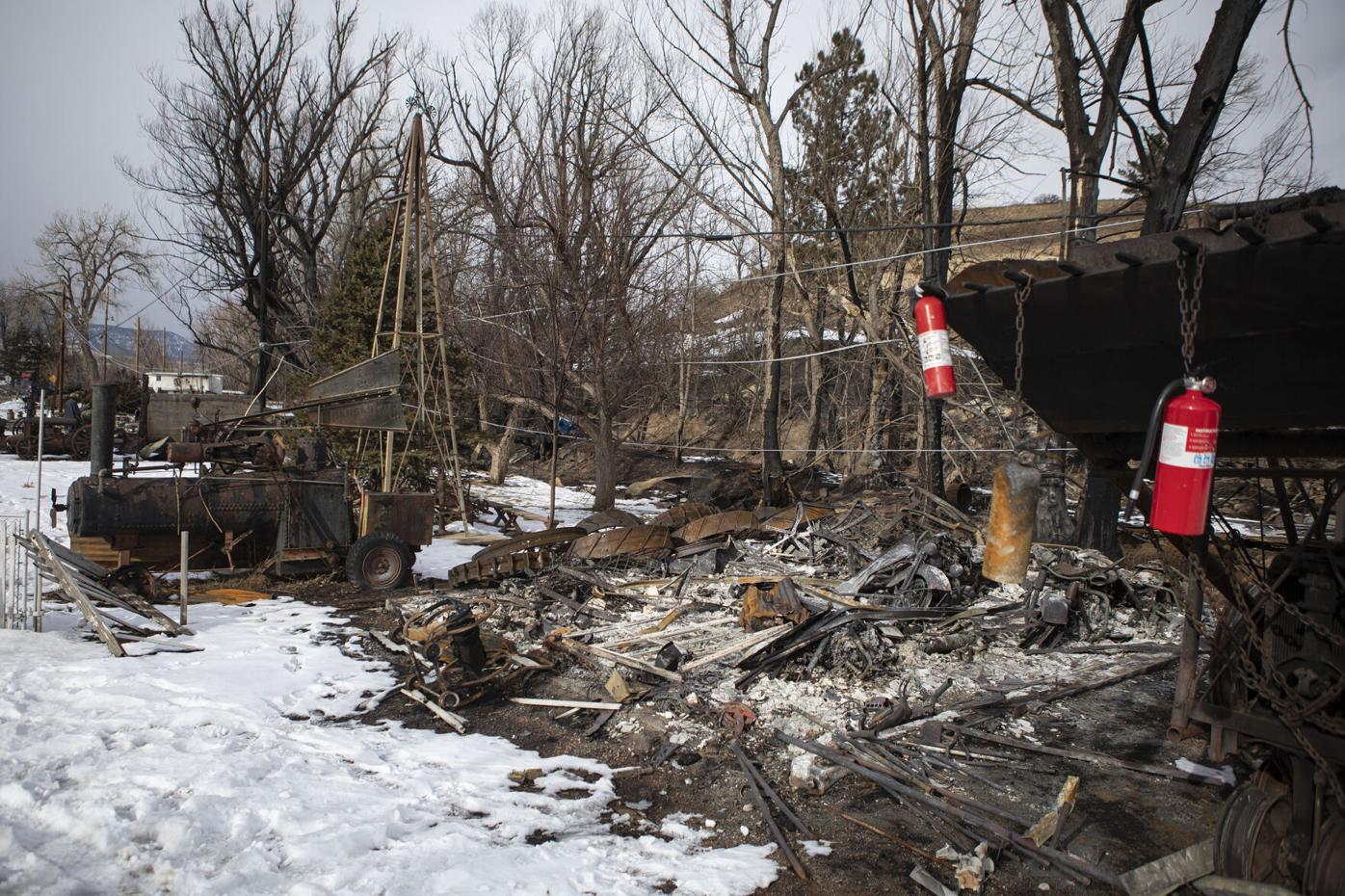
The charred remains of motorcycles that were in The Marshall Barn can be seen off Marshall Road on Wednesday, Jan. 5, 2022, in unincorporated Boulder County, Colo. (Timothy Hurst/The Gazette)
Timothy Hurst


The charred remains of motorcycles that were in The Marshall Barn can be seen off Marshall Road on Wednesday, Jan. 5, 2022, in unincorporated Boulder County, Colo. (Timothy Hurst/The Gazette)
Boulder County spokesman Andrew Barth said officials are aware of the intense competition for Marshall fire cleanup dollars.
“Normally, we would go with the lowest bid, but this is disaster recovery,” Barth said. “It’s going to take a skilled and dedicated company to finish this project and we have good eyes on it to make sure we get the right people for the job.”
Barth is not new to disaster relief. Almost a decade after Boulder County’s 2013 floods, he is just now finishing up management of the $120 million road and bridge cleanup.
Some of the companies that entered bids for the Marshall fire cleanup are a who’s who in disaster recovery debris removal. Ceres Environmental was a prime contractor in California’s Paradise fires. ECC cleared out trees and did debris cleanup after Northern California’s 2017 wildfires and also worked on Oregon’s fire-devastated counties in 2020. AshBritt removed wildfire-damaged homes in Northern California in 2017 and did damage cleanup after hurricanes Katrina, Harvey and Ike. It also erected shelters and removed debris after the 2010 Haiti earthquake.
Also on the list are several local companies, Barth said, as well as DRC Emergency Services, which holds the on-call contract with the county to remove various type of debris from rights of way.
Already, DRC crews have begun curbside collection in what county officials call “phase 2B.” Phase 3 is property debris and phase 4 is rebuilding.
Observers suspect that Boulder County is leaning toward giving DRC the debris removal contract since it already has trucks doing right of way cleanup.
“It is a highly, highly competitive business because of the amount of money that’s involved spent in a very short period of time,” Michael Brown, former director of the Federal Emergency Management Agency, told The Denver Gazette.
Brown, now a conservative morning radio talk show host, said he does not have ties to any of the companies bidding for the job. He estimated that the project could cost taxpayers as much as $100 million.
On Saturday, Brown, sent a cautionary letter to the Boulder County Commissioners warning them not to cut costs by choosing the lowest bid because, as he told The Denver Gazette, “You get what you pay for.”
Brown said he has seen his share of fraud with national disaster relief companies, some of which find ways to bid low and then add change orders later that amount to millions of extra dollars. If the bids are based on the weight of debris being removed, companies have been known to scrape extra feet of good dirt into a load to make it heavier. And if the bids are based on price per property, there are cases of crews doing a quick job without monitoring soil and air for toxins.
FEMA has the right to recoup money it has allocated to local governments should the company hauling off things like leftover ash and concrete fail to comply with the federal government’s strict requirements.
“In every substantial bidding process, there are certain bidders that lack meaningful qualifications, skill, sophistication and/or size to conduct the needed work,” Brown wrote in his letter to county officials. “For the sake of the taxpayers of Colorado … do not be ‘penny wise and dollar foolish’ to the grave detriment of the victims, the citizens of Boulder County.”
FEMA is funding 75% of the Marshall fire debris removal. The remaining 25% of cleanup funds will come from state and local governments.
Last week, U.S. Sens. John Hickenlooper and Michael Bennet wrote to FEMA and President Joe Biden asking the agency to provide 100% of the funding “because of the staggering scale of destruction.”
In a Jan. 20 online community meeting, Darla Arians, who manages Boulder County’s Resource Conservation Division, told residents that phase 3 is expected to start in mid-February once county commissioners award the multimillion dollar debris removal contract.
“We’ll be ready boots-on-the-ground within the time that contract is executed,” said Arians, who added that she is “leading the charge for debris removal.”
The community had myriad concerns during the online meeting, including soil contamination, coverage of federal and state debris cleanup money and worries over insurance liability once crews start working. The most pressing questions appeared to center on the timeline for rebuilding.
“That’s the million dollar question,” said Arians. “Each property takes 3-4 days to clean up. We plan to work with more than one contractor in order to expedite it as quickly as possible.”
Brown predicted that the principal contractor will hire subcontractors to deal with environmental or foundation stability issues.
“They will get into some of the residences and find out basements aren’t salvageable. It will be a huge contract and I’m absolutely certain that as they get into the work, they will have to expand the contract even further,” Brown said.
Brown, who led FEMA during Hurricane Katrina, used to live in Boulder County.
“I want to make sure that who they hire is not going to cause problems down the road,” he said. “That would mean that the citizens who are already victimized are victimized again. The entire state of Colorado would be on the hook for the money.”
/** slide box */
#slidepanel {
border-top: 3px solid #ff0000;
}