







Year-round gardening: Right-sizing plants for your Colorado landscape
Fredricka Bogardus
Before buying a tree, shrub or perennial, homeowners should research the plant’s mature size to allow enough space for that plant to grow in a healthy environment. Plant tags frequently include suggested spacing. Choosing plants that are too large for the intended site can have negative — and even disastrous — consequences.
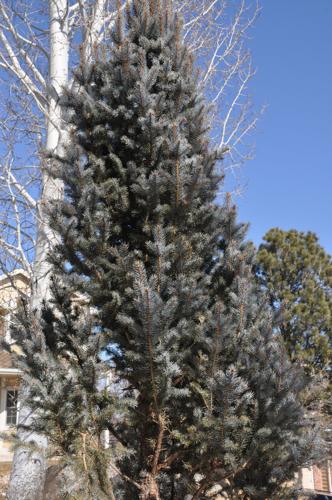
Let’s consider trees first. That Honeylocust tree at the local nursery that is 10 feet tall at the time of purchase might eventually reach 60 feet tall and wide. When selecting a tree, ensure that it will fit into the available growing space without pruning. Allow your tree enough root space so sufficient water and oxygen are available for the tree throughout its life. A mature tree should not obstruct a desirable view from inside the house, prevent access to the front door, interfere with a driver’s visibility at an intersection or touch overhead power lines. Tree roots can damage underground utility lines, septic tanks and foundations, and can push up concrete sidewalks and driveways, if planted too closely. To estimate the impact of the mature width of a tree canopy, lay out hoses, strings, or stakes in a circle at half of the mature width of the tree. This will give you insight into whether the tree will be right-sized at maturity.
The mature size of a tree is also important for fire mitigation. Will that tree you are planting eventually have branches that overhang the house in 20 years? To avoid this, plant the tree farther away from the house or select a smaller tree for the site.
Homeowners also commonly underestimate the size of a shrub at maturity. Shrubs can grow 20 feet tall and can spread up to 15 feet. Shrubs planted too densely may receive more shade or require more frequent pruning. If the shrubs in your landscape are too close, consider removing one or more to allow more space for the others. If planting shrubs for a hedge, you can place them closer together to provide a denser screen for privacy or a windbreak. Hedge plants that will reach 3 to 4 feet high at maturity should be spaced about 18 inches apart, while larger hedge plants should be planted 3 to 4 feet apart.
Allowing enough room between your perennials is also important. Although you may be tempted to place plants close together so your beds look fuller, doing so can result in the plants crowding each other when they reach maturity. Overcrowding plants can lead to poor air circulation between the plants, making them more susceptible to diseases such as powdery mildew. While waiting for your perennials to mature, plant annuals for the first few growing seasons in the bare spots.
By designing your landscape with the mature size of your trees, shrubs and perennials in mind, you can provide a healthy environment for your plants and avoid costly mistakes in the future.
Email gardening questions to [email protected]. For more information, visit facebook.com/ ColoradoMasterGardeners.EPC. To sign up for classes, go to epcextension.eventbrite.com.