74-year-old Superior man first to put a for sale sign up after DIY Marshall Fire cleanup

Two straight months of tossing out the ruins of your life’s work will consume a man. That’s why the total gravity of the Marshall Fire’s destruction didn’t sink in for Paul Williams until he saw the wrecked landscape of Original Town Superior from a high mountain trail.
“I’ll miss the open space and I’ll miss the people; but I’m filing it away and moving on. It’s not rocket science,” said the scientist.
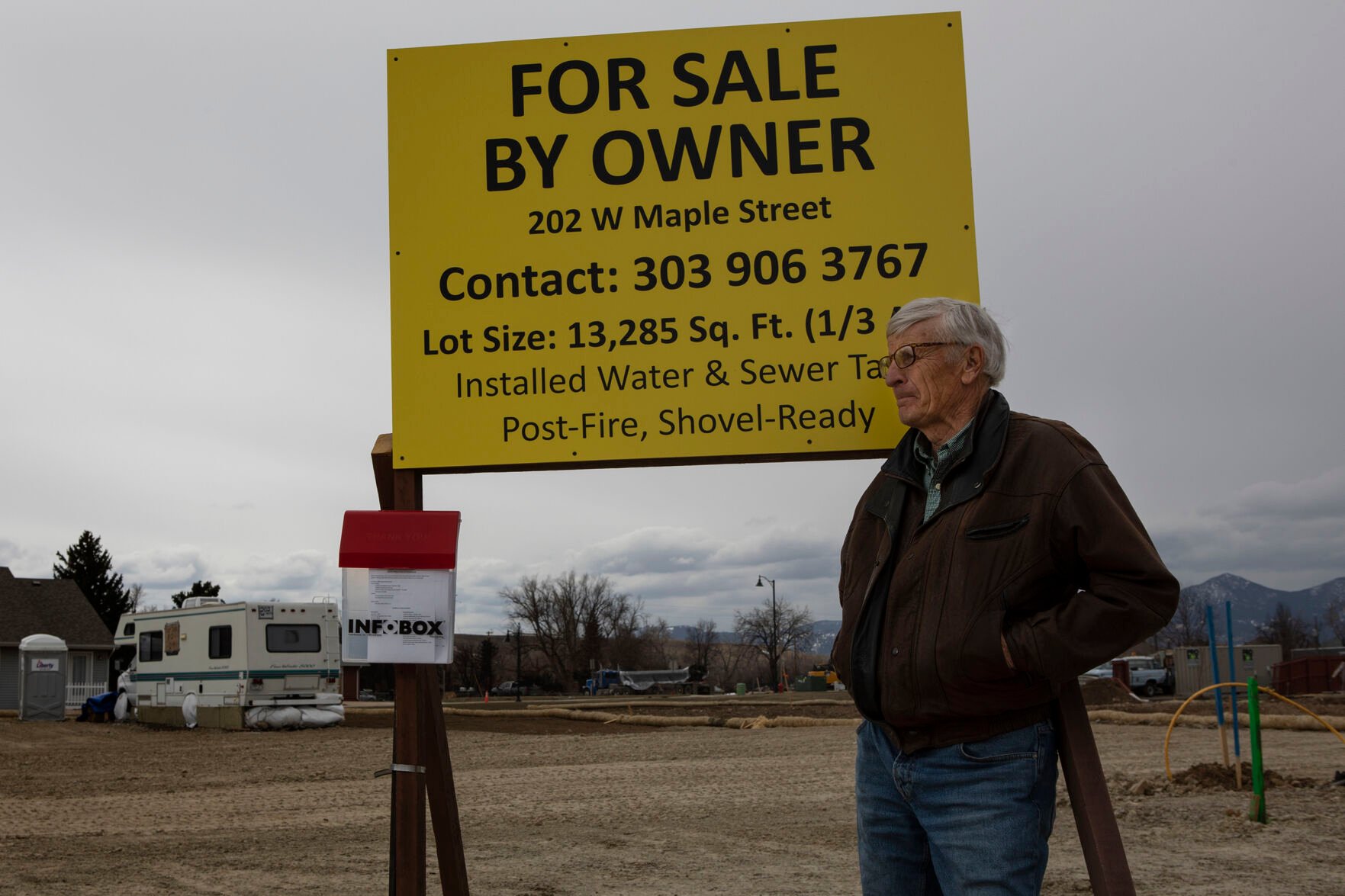
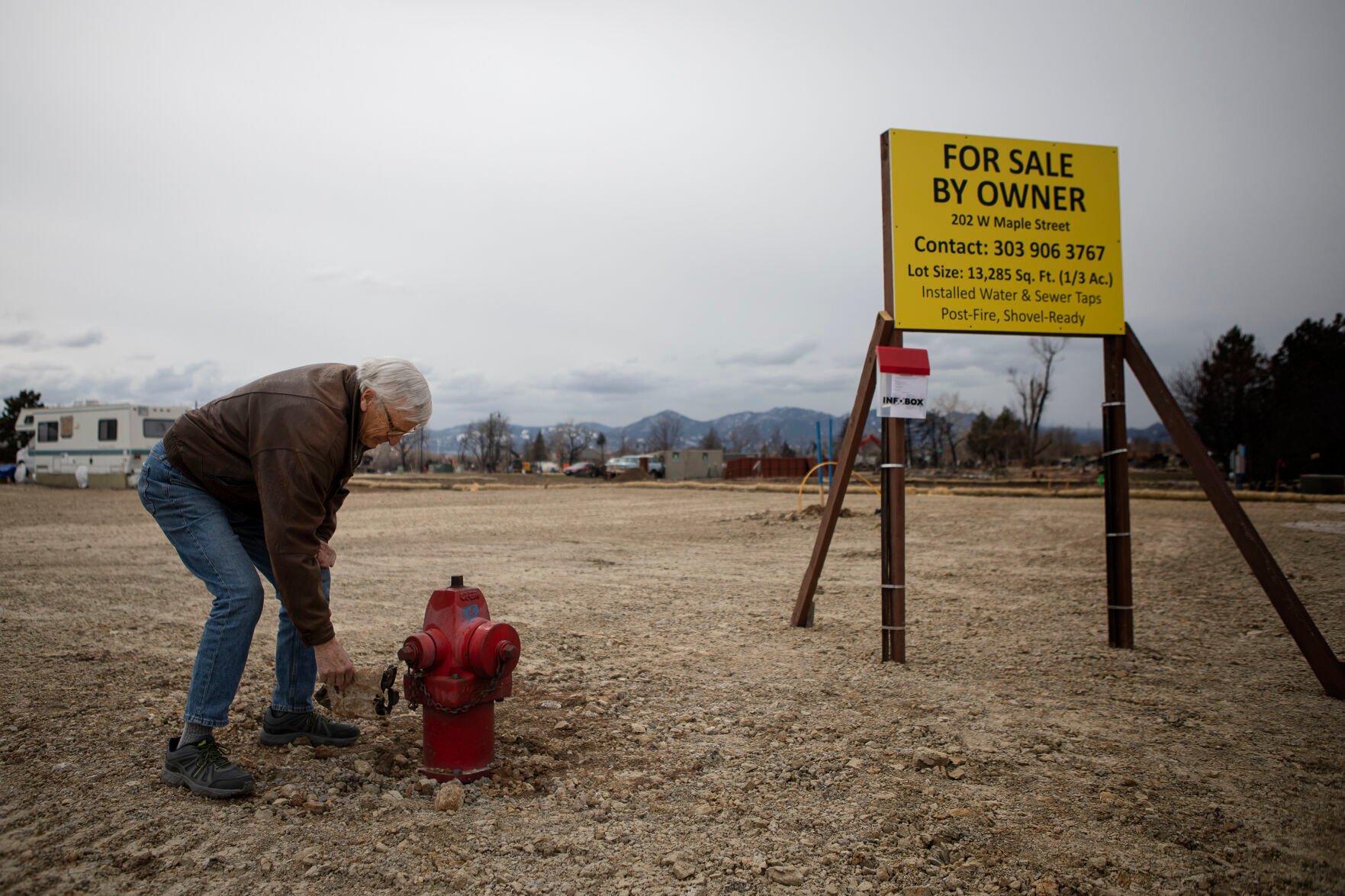
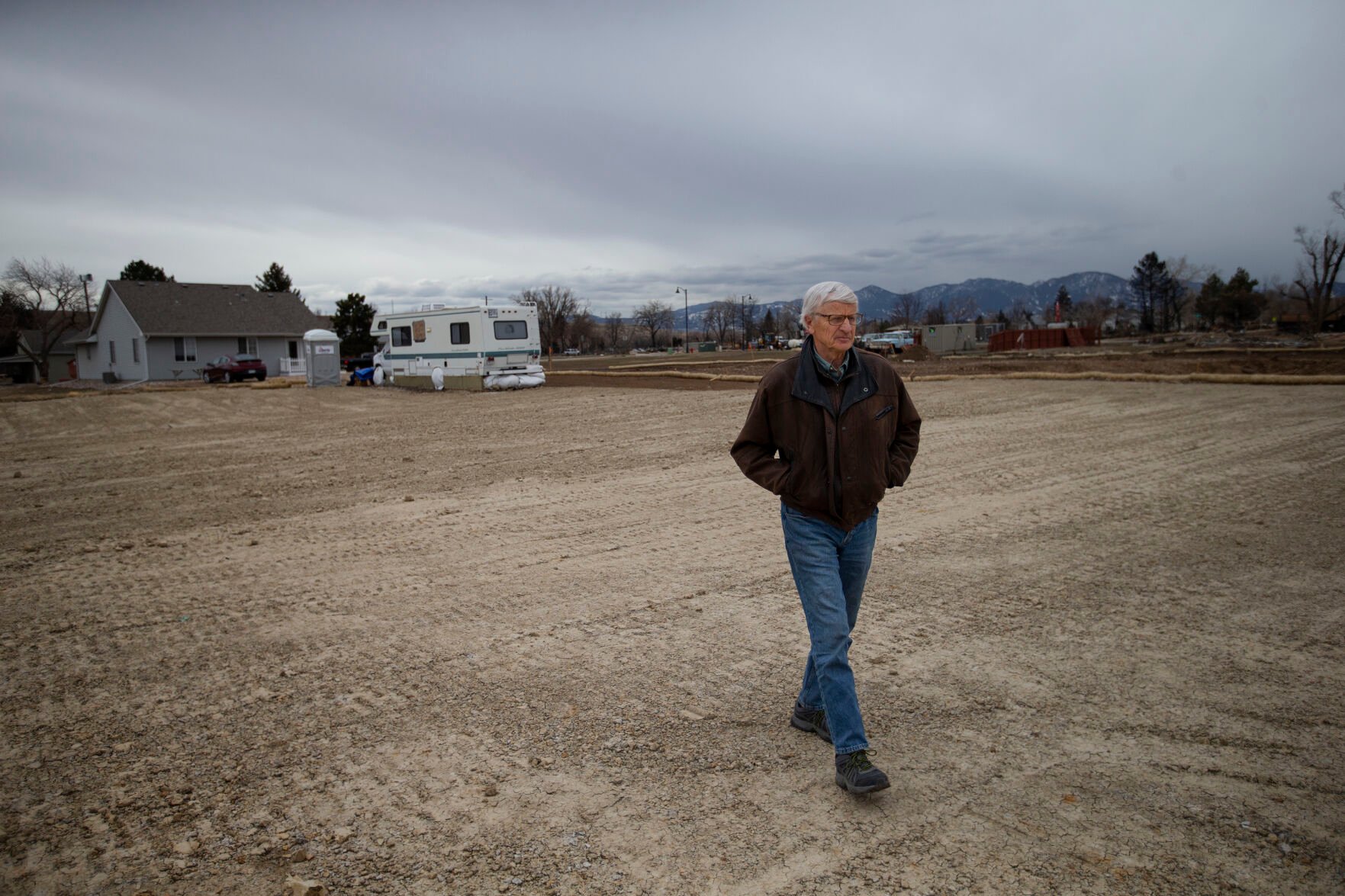
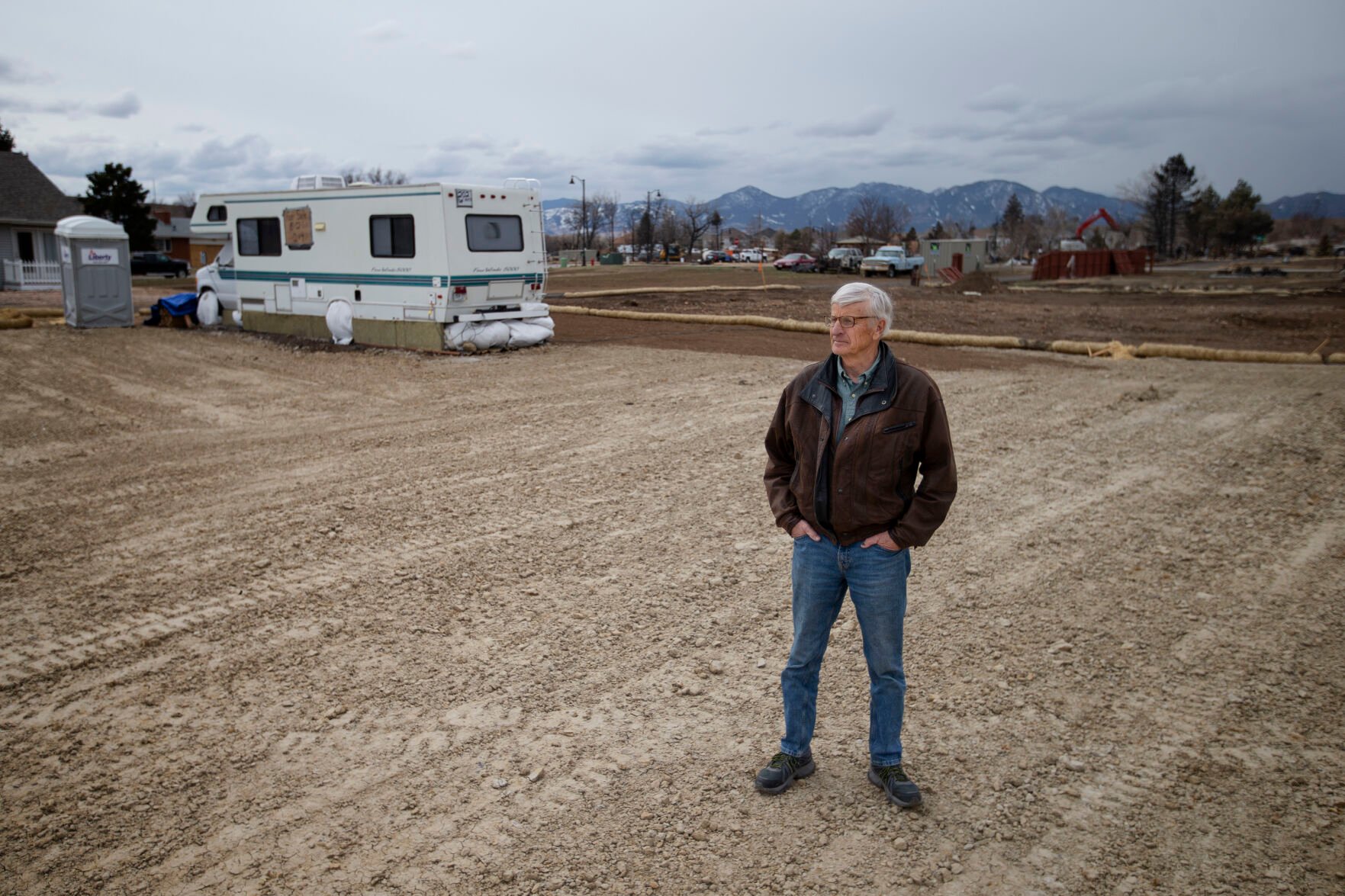
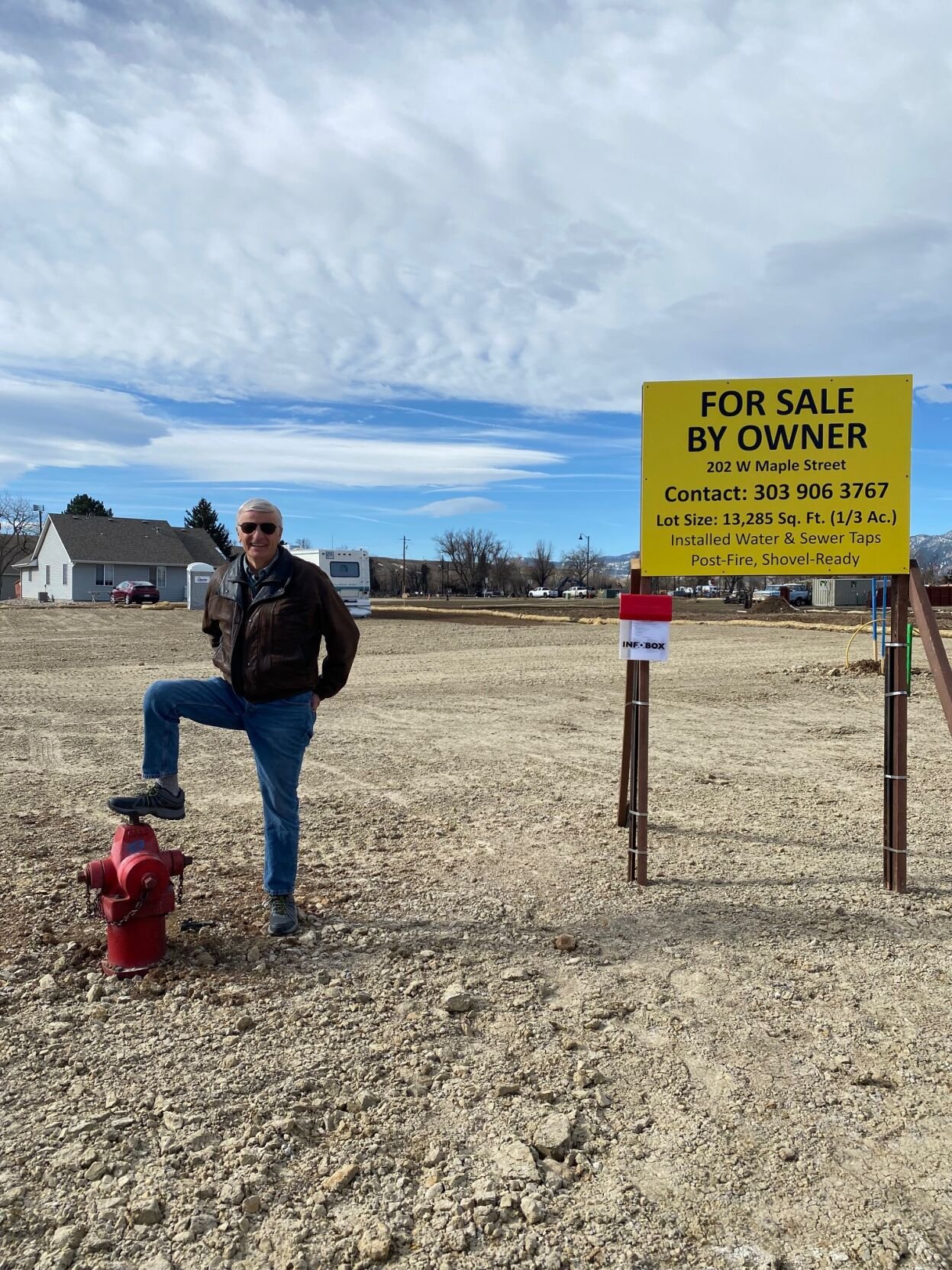
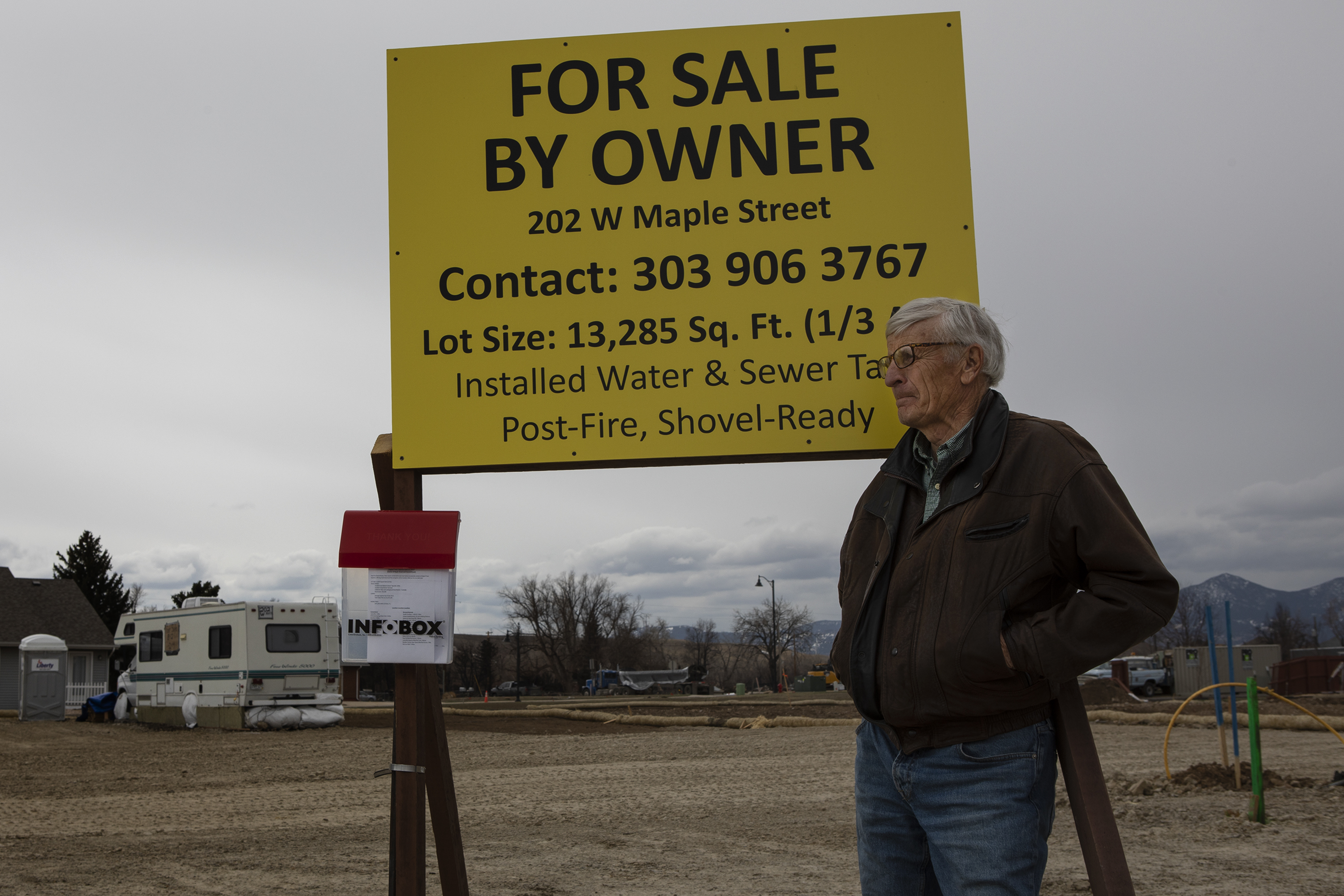
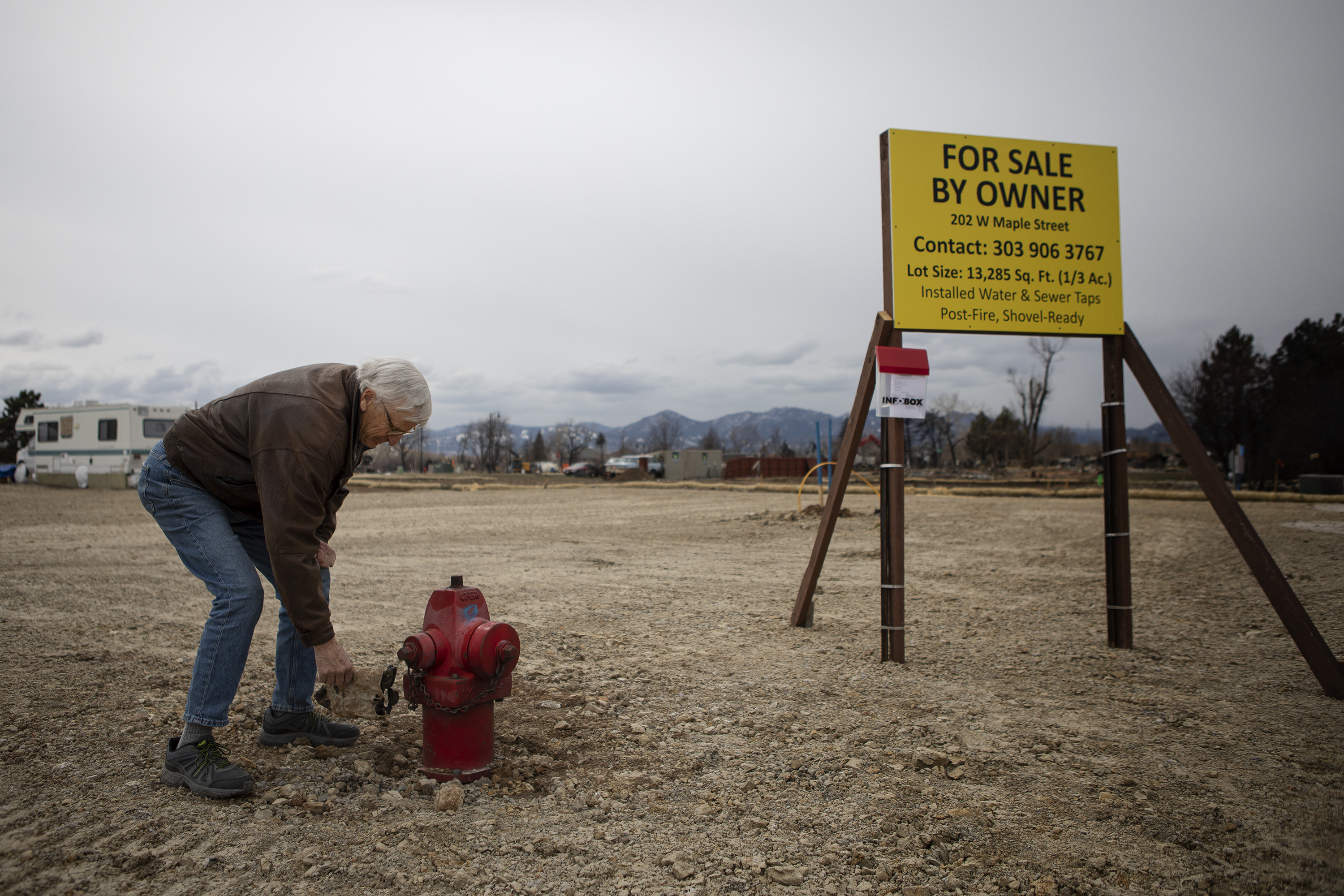
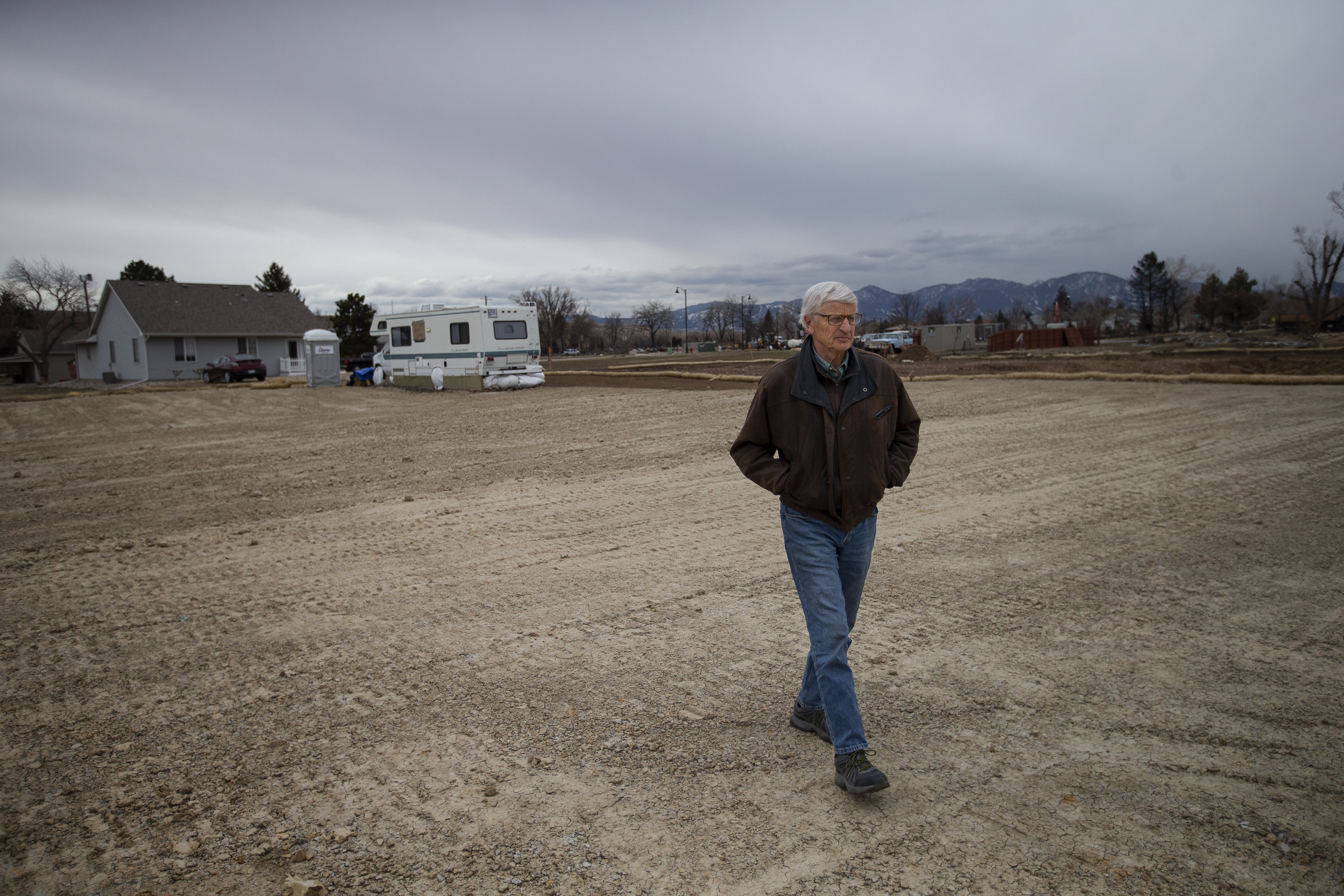
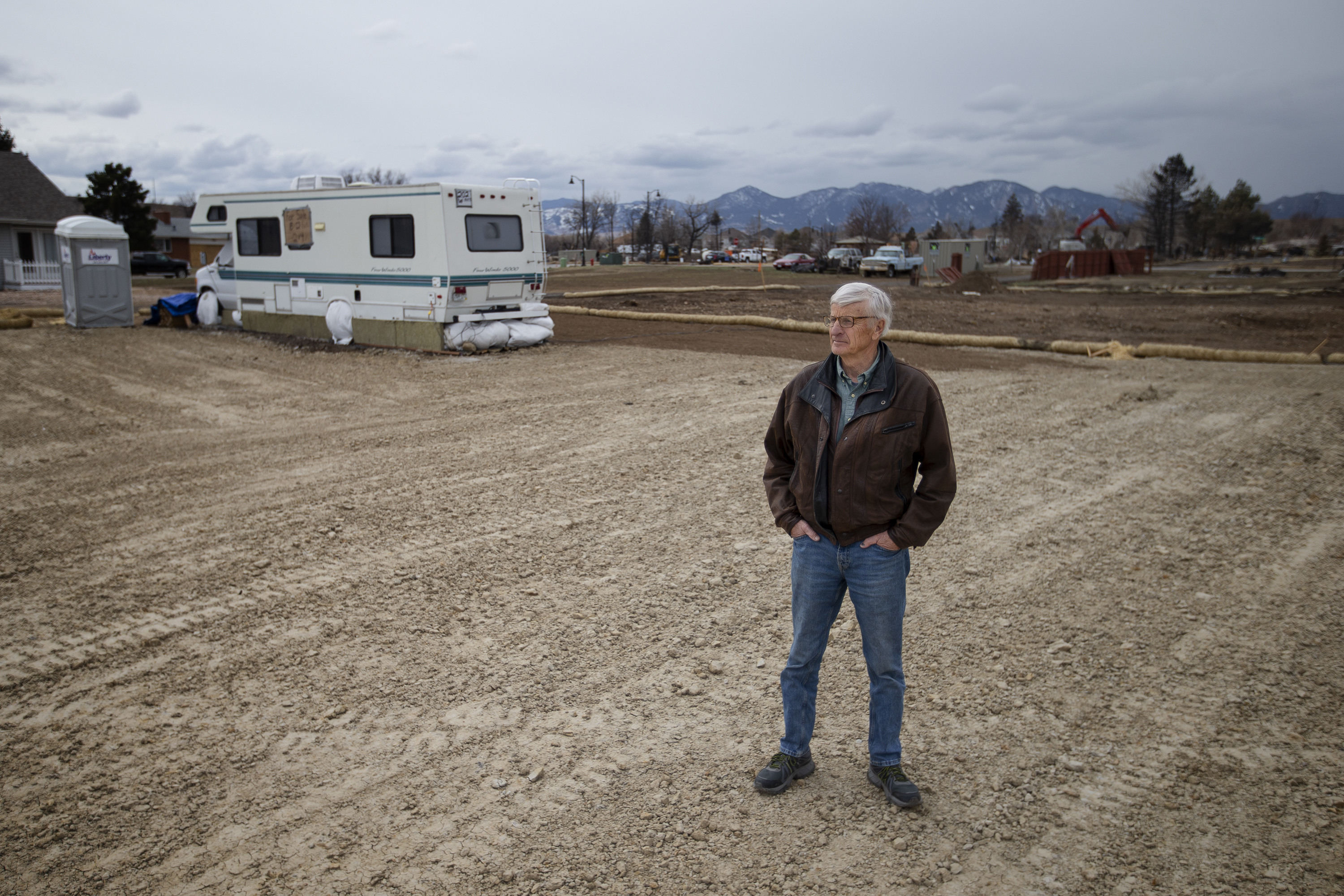
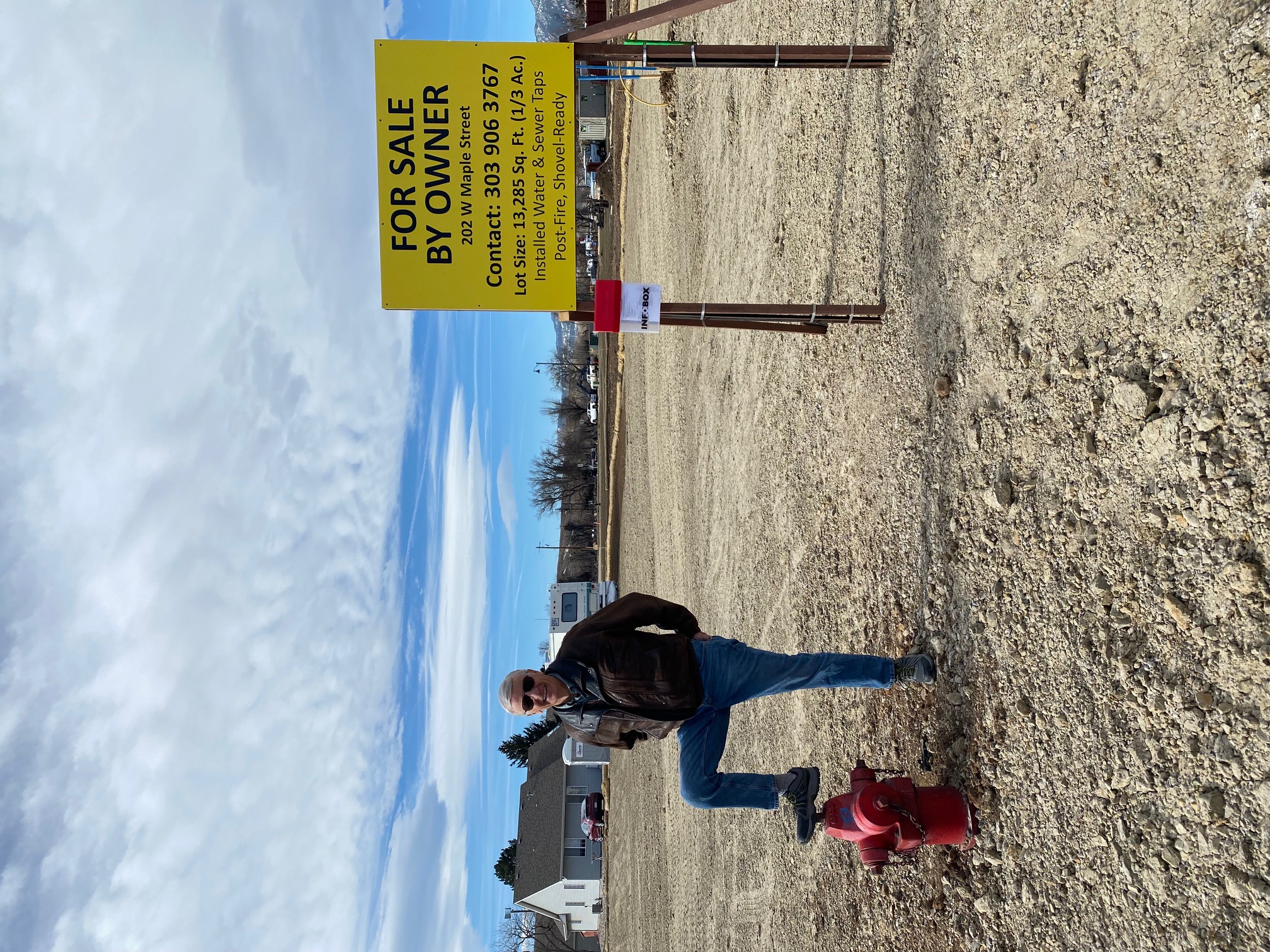
It appears he’s now wiped his hands of the despair. Williamson is the first fire victim to clear out the fire debris from his property in Original Town Superior and may be the first in all of Boulder County. His lot is now a tidy square of dirt and gravel, so smooth, it’s as if a giant dragged a rake over it. A homemade yellow for sale sign stands where his mailbox used to be, ironically, next to a useless red fire hydrant. “There are some of us bull-headed people who moved ahead,” said Williamson, who started slicing up his metal roof four days after the smoke cleared. “I said I will do this myself and so I did.”
Today there’s nothing left of the house he built and lived in for seven years he named the Sustainable Smart Home Living Learning Center. It began as a sketch in 1971 complete with solar panels and a vertical access wind turbine. All of the materials in the efficient home were local including floors made of beetle-kill pine, insulated panels from Ft. Collins and tile from Boulder. Most of the windows faced south and the foundation was lined with pipes which kept the home at 54 degrees, which is the temperature of the ground. Scores of people have seen the home because Williamson opened it up for tours twice a month.
The only possessions he found that survived the Marshall Fire were a pottery bust of Abraham Lincoln and the change belt he used to disperse coins to his customers when he was a newspaper delivery boy in De Smet, South Dakota, aka Laura Ingalls Wilder’s Little Town on the Prairie.
Boulder County announced last week that official cleanup for 862 people who opted into the Private Property Debris Removal Program could begin as early as March 22 now that a non-profit dropped its request for a redo of the bidding process; but those Marshall Fire victims are uncertain as to whether that date will hold.
In the meantime, Williamson and around 70 other Superior residents are forging ahead with the backbreaking journey all by themselves. “We’re up to several dozen people having started the permit process,” said Superior Assistant Town Manager Martin Toth. “In terms of having a bladed site, Paul was the first to finish cleaning off his property.”
Keeping up with Williamson
Williamson started a trend in Original Town Superior, a coal mining community that was founded in 1896. Neighbors who saw the energetic 70+ year old tackling cleanup next door, decided they would bypass the town’s timetable and join him. This week, excavators were doing private work, plowing through a handful of mangled foundations dotting the area of West Maple Street and Coal Creek Drive.
One of those is on a large three-lot property Ross Morgan and his new bride bought in 1982. The couple enveloped their new home around a 1910 miner’s cabin, eventually adding extensive gardens and a workshop.
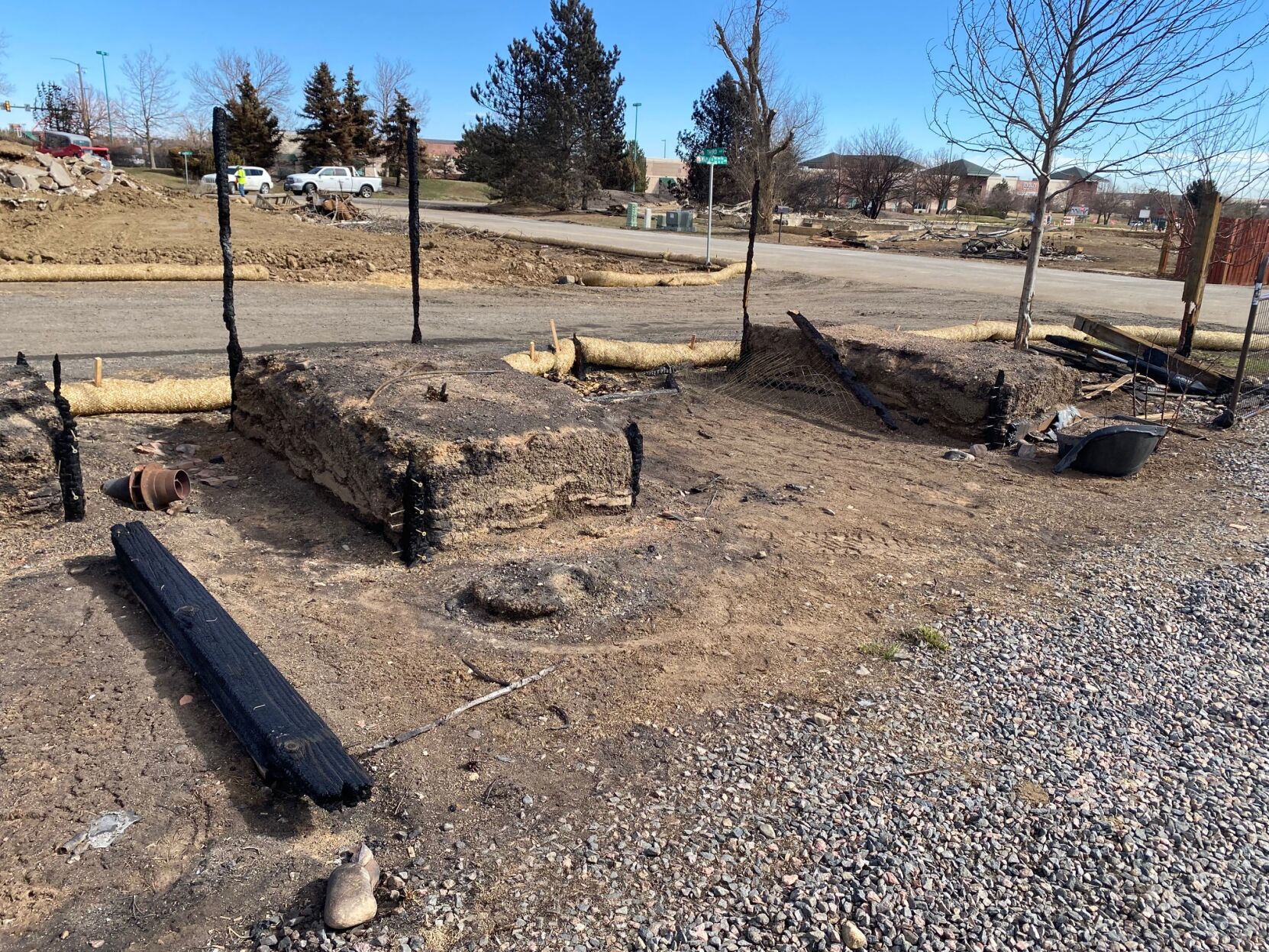
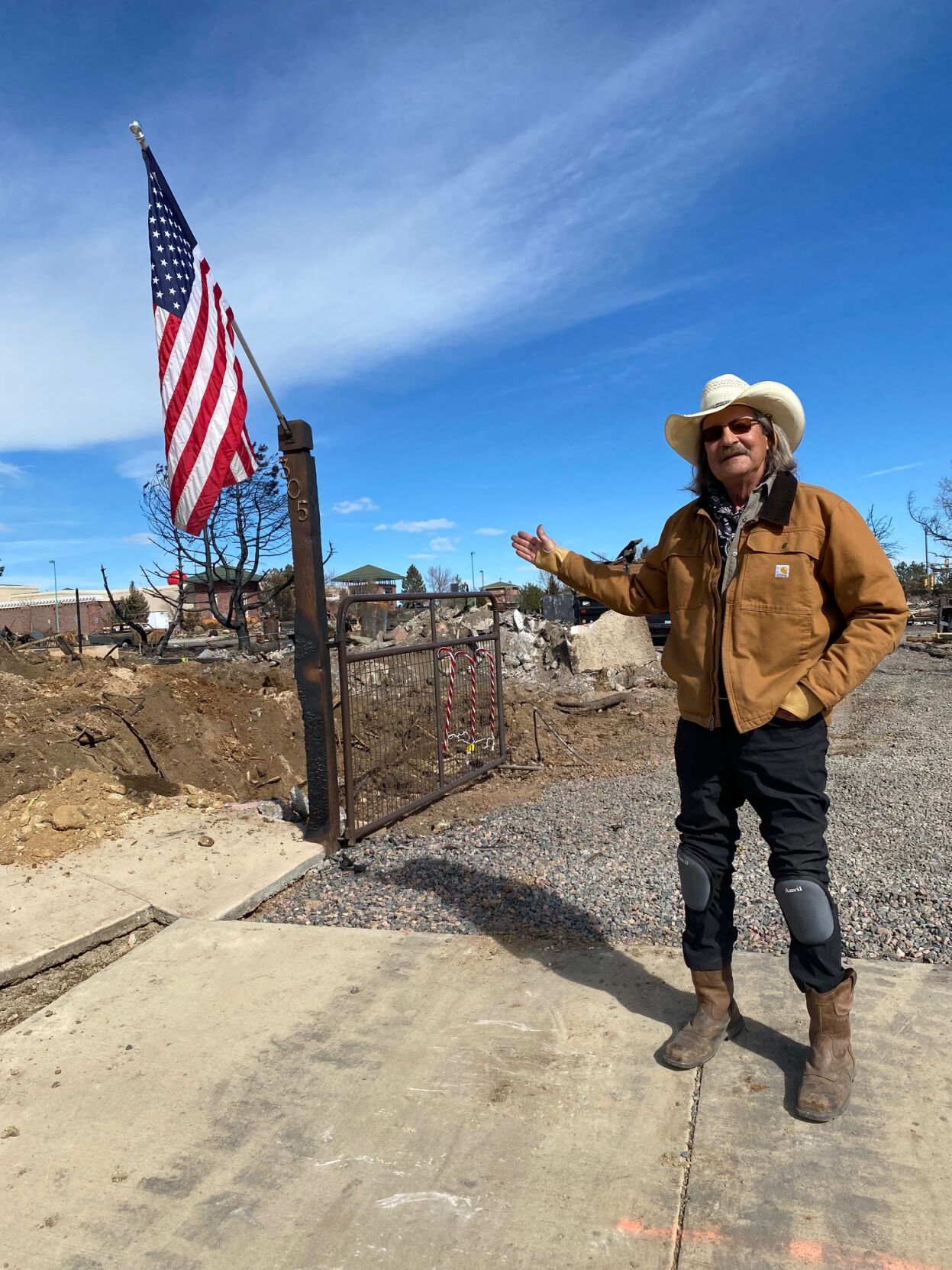
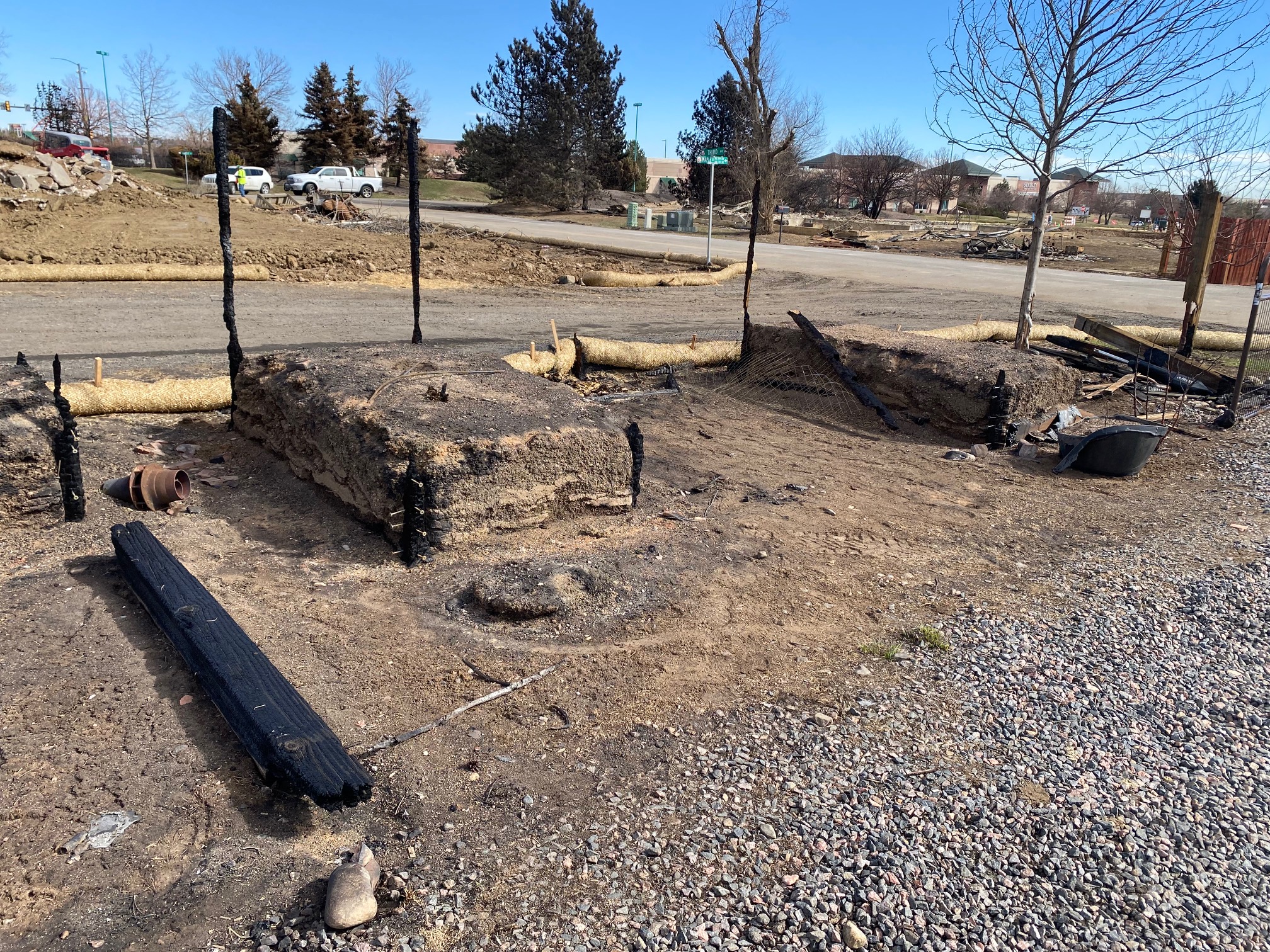
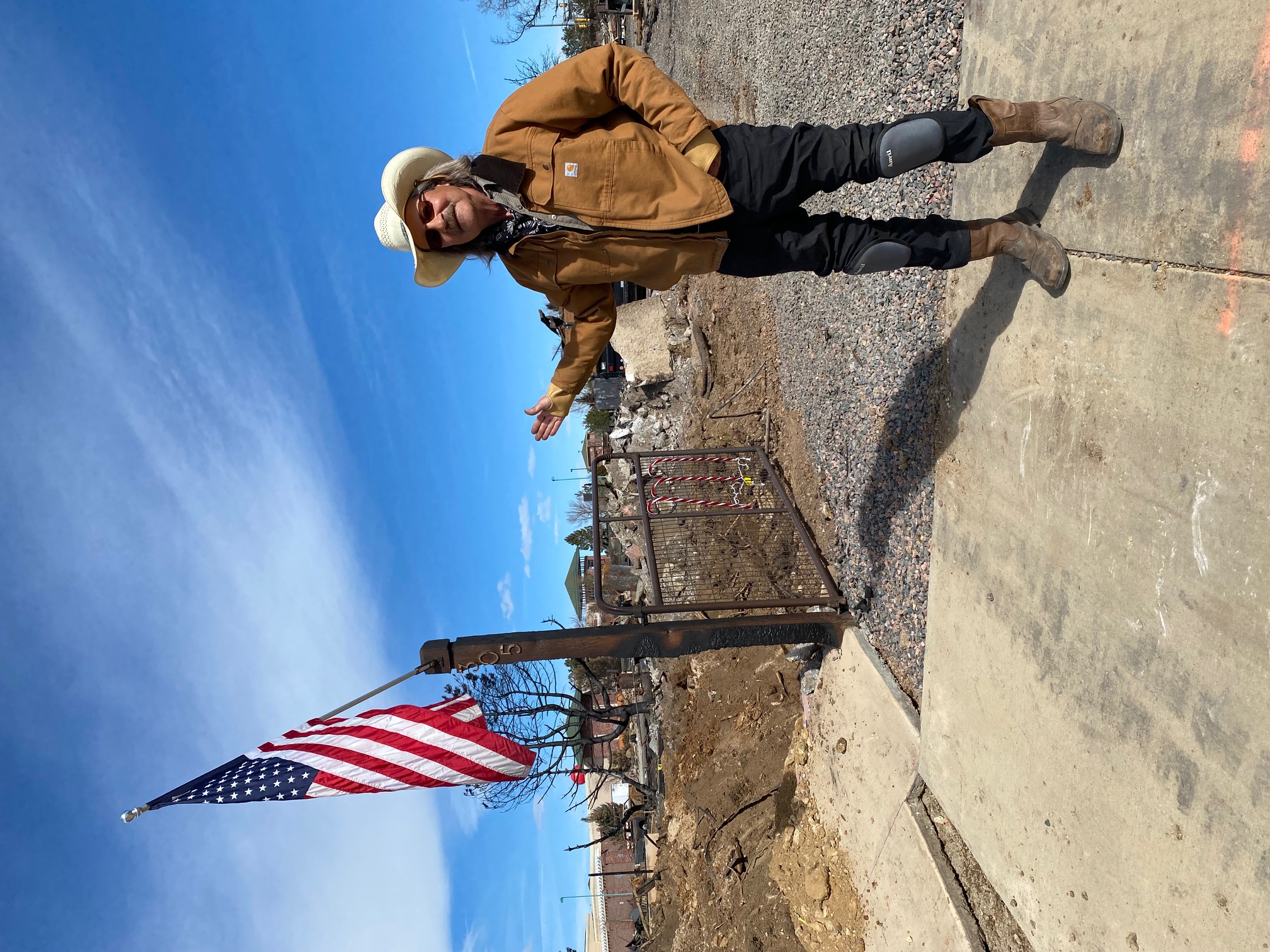
When Morgan evacuated his property at 12:18 pm on Dec. 30, he took his computer with him so that he wouldn’t miss work while he waited things out, but he was shocked at how quickly the day took a turn for the worse. In just a half an hour, flames fueled by 100 mile per hour winds reached his fence, and not long after that, there was nothing left of honeymoon home. Today, stiff rectangles of sod which were once framed by wooden planter boxes line what was the back yard and the workshop is a mess of melted metal. Christmas candy canes that somehow survived the heat are hooked on his fence and he attached a crisp American flag to the gate.
The quicker Morgan clears off his land, the faster he can rebuild before next winter, so he hired an architect and kissed government assistance goodbye. “We’ve got the town of Superior, the city of Louisville, Boulder County and FEMA. That’s four bureaucracies and they all want to be the boss,” said Morgan. “It slows down progress.”
But disaster cleanup can be a minefield of unforeseen homeowner headaches if one decides to abandon Boulder County’s support. FEMA was created in 1979 by President Jimmy Carter to help people recover from a crippling natural disaster. For example, as Superior’s self-debris-cleanup-pioneer, Williamson had to overcome several stumbles. For one thing, he started work without the proper permits.
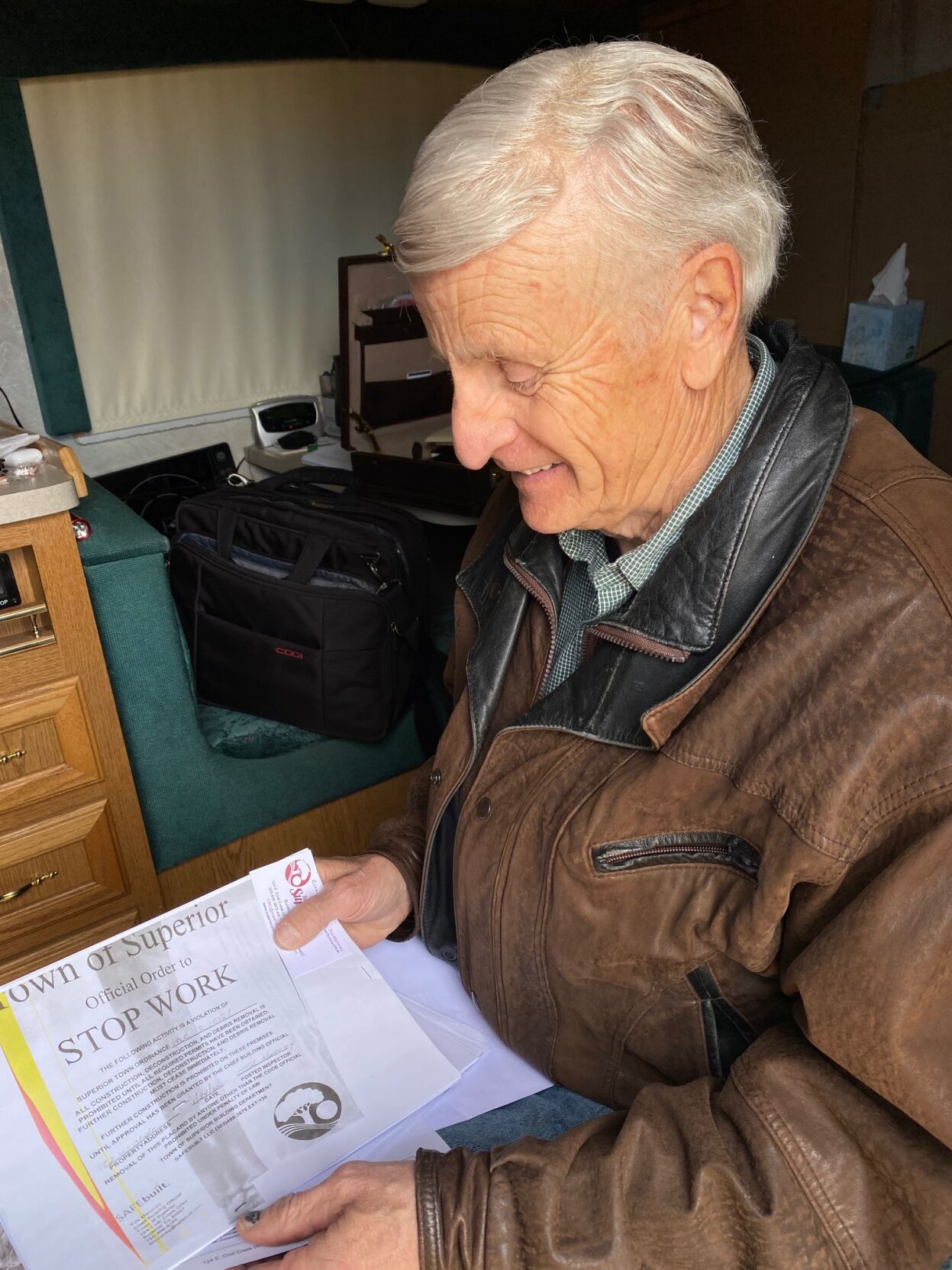
On Jan. 24, just three weeks into his project, town inspectors posted a “Stop Work” sign on his property.” Williamson marched down to the city and started the arduous permitting process, which delayed him two weeks. “Get the town out of our way!” he said at a community center meeting a month after the fire tore through.
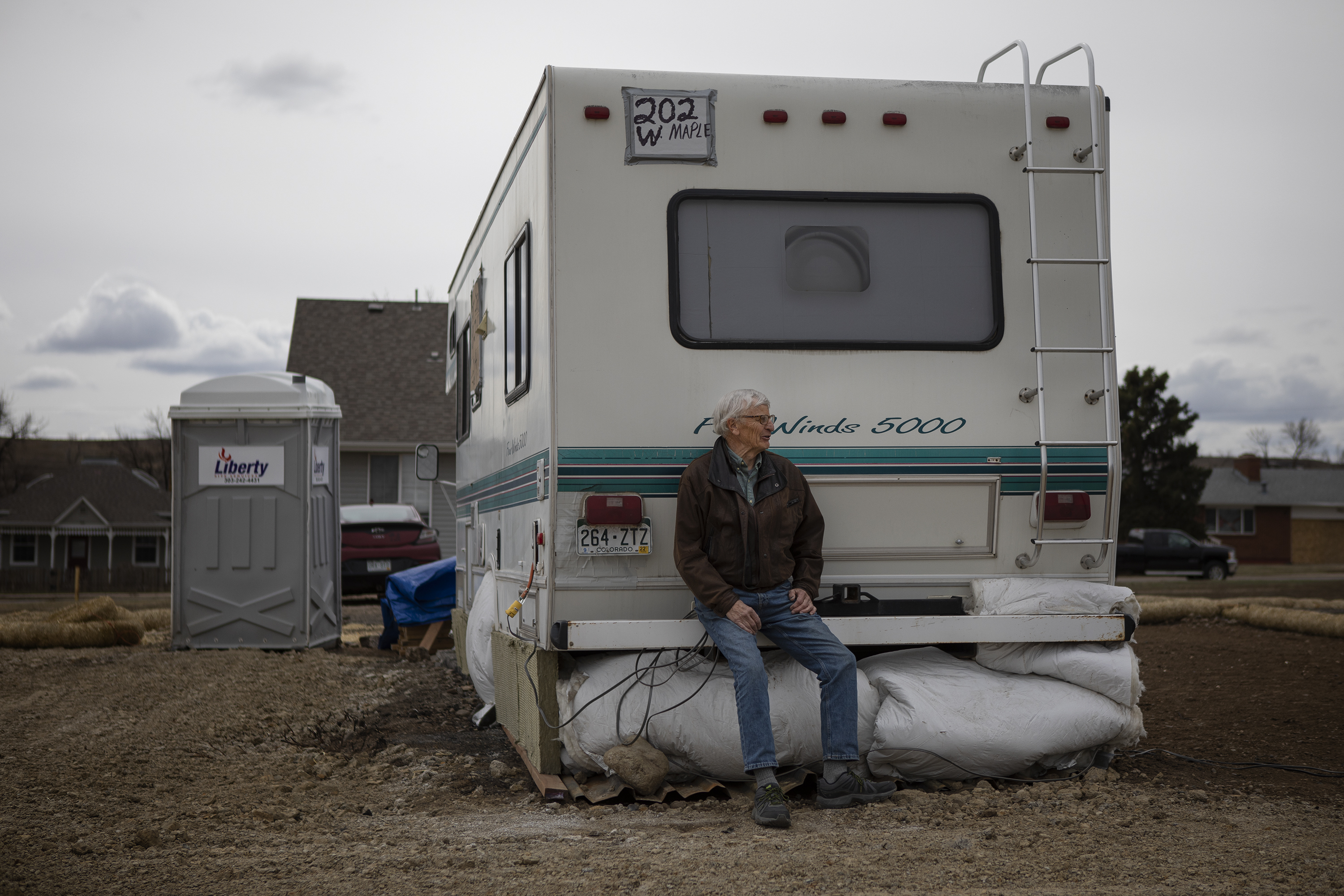
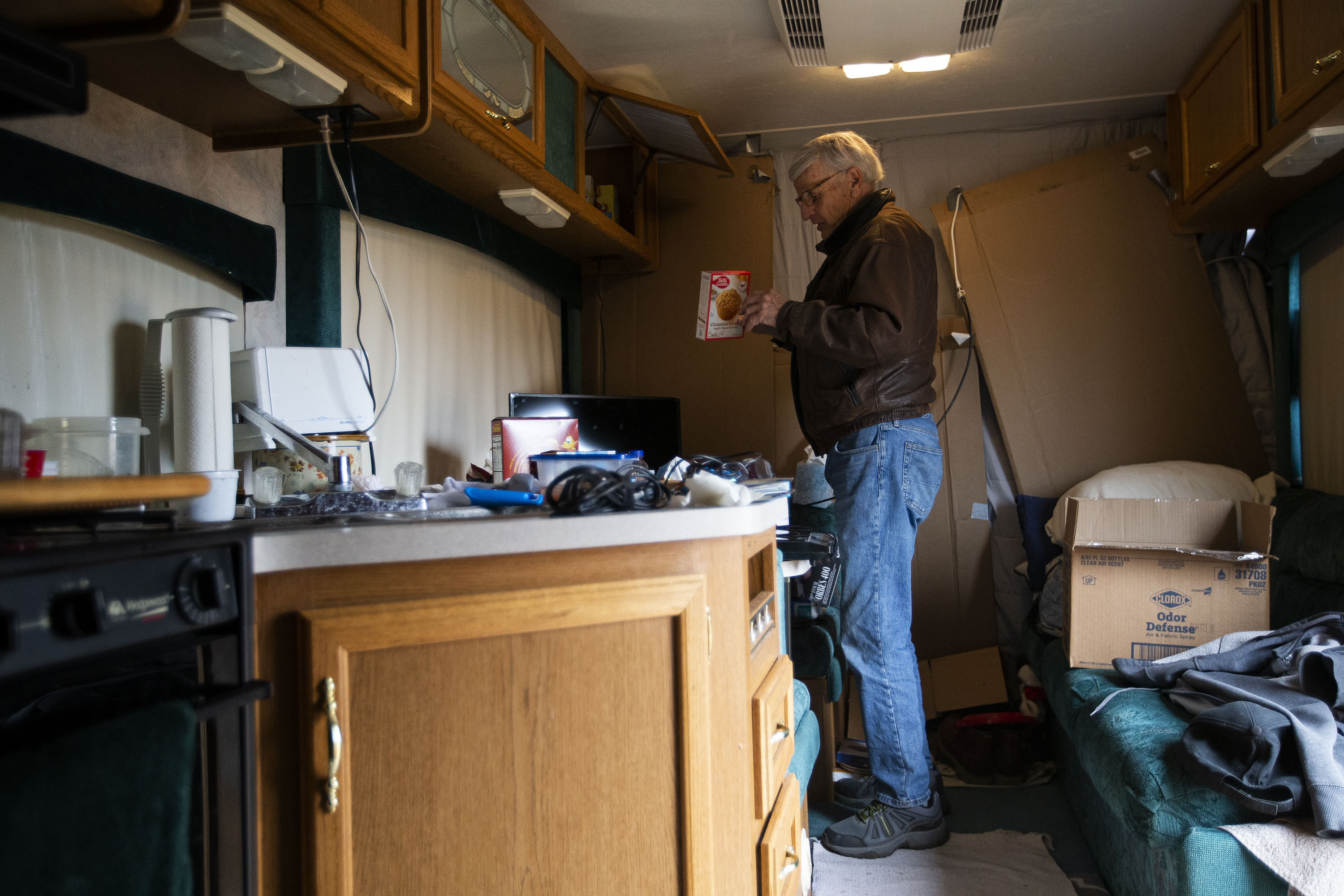
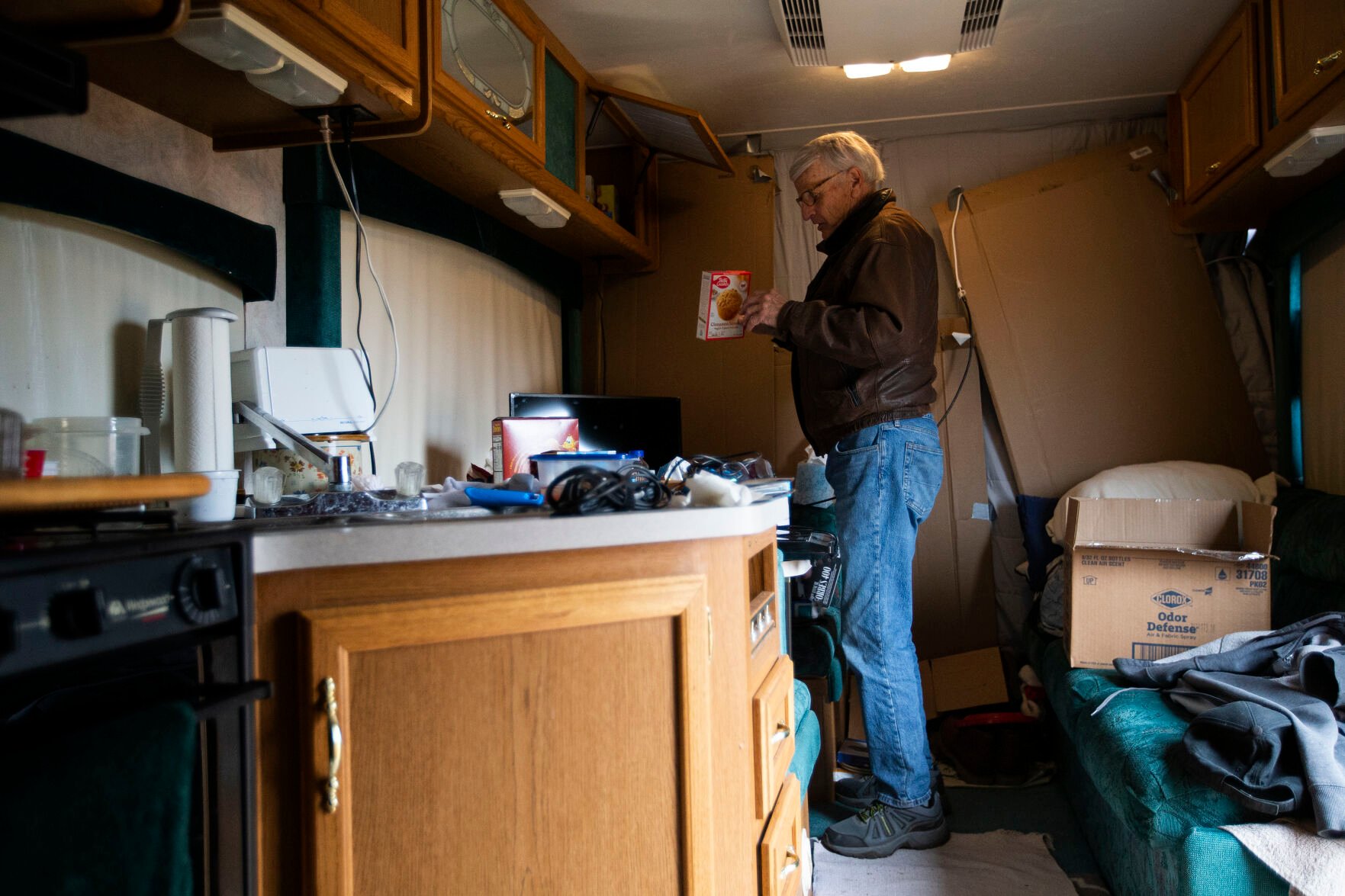
That wasn’t the last time he heard from the town of Superior. Feb 28, when code enforcers saw that Williamson was living out of his RV, they slapped him with a parking violation. “I had a target on my back. The city was watching every move,” said Williams, who is an inventor, college academic, and author.
Since that time the town of Superior now allows RV’s on burned out land once the property is clear.
Williamson’s contractor, Jeremy Myers, said nothing broke his spirit. “He just smiled and kept going through it,” Myers said.
The first time he saw Williamson, he was a man on a mission. “I was driving my truck with the emergency lights on and saw Paul all by himself with a sawzal cutting up an IBeam. It was like a war zone.” The first order of work for Myers was to cap off the water and sewer line.
A mountain of paperwork
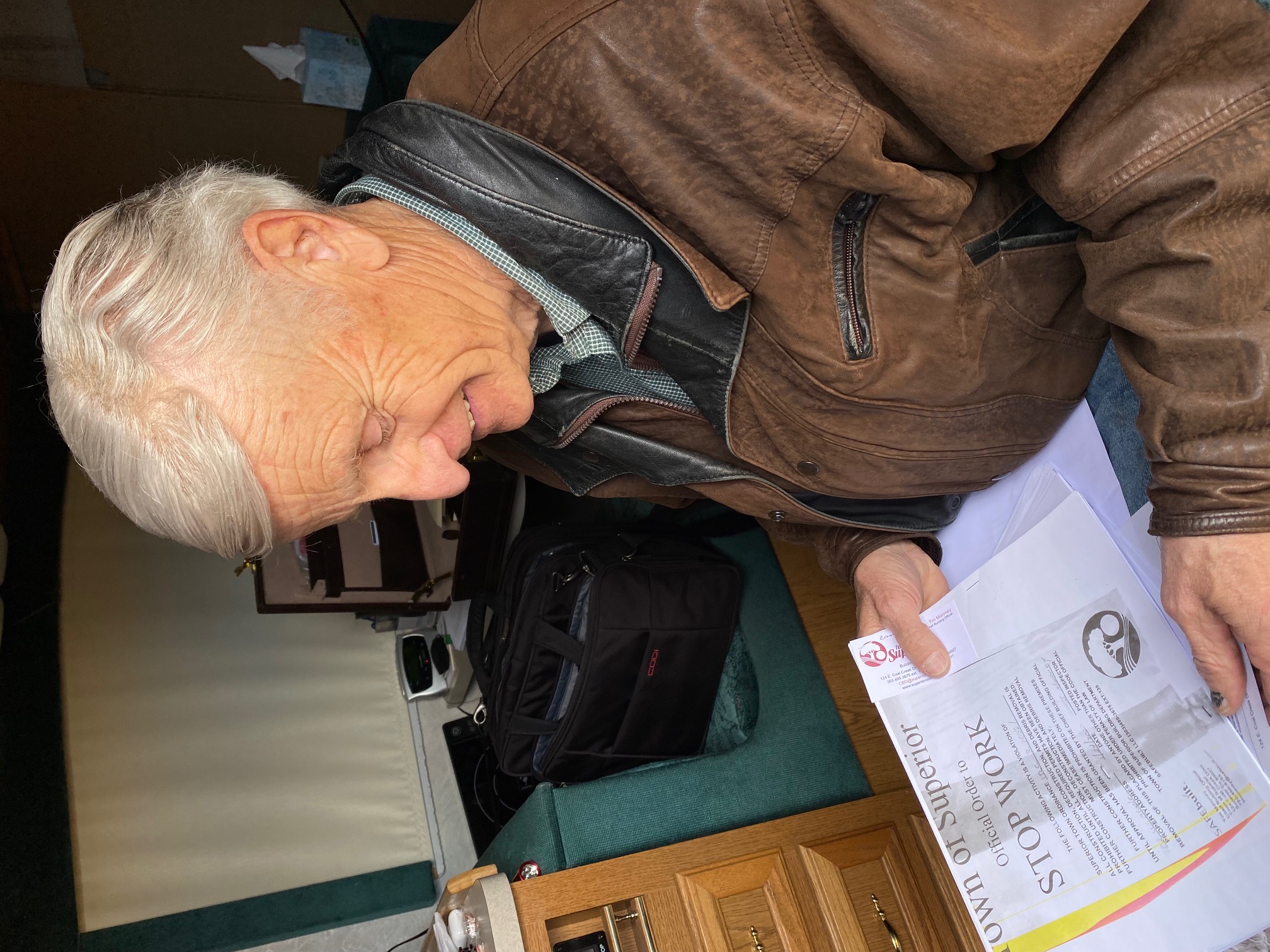
Fire victims face a mountain of paperwork before they can rebuild. There are demolition permits and right of entry forms, disposal notification forms, stormwater quality permits, and city approval for right of way. Water and sewer service lines must be capped, and once you think you can take a breath, the city requires on-site inspections and possible air testing. Any recycling must be free of ash.
Other fire ravaged debris must be wet and tucked inside a container with at least 6 millimeters of double plastic sheeting before it starts its trip to the landfill.
Toth, who is one of forty town staff, has been on the phone every hour of the day helping residents plow through a tangle of city ordinances. “Debris has to be collected in the right way and taken to a state-approved landfill. It’s different because this is a community-wide disaster,” said Toth. “This is a marathon not a sprint.”
Myers said the snow fell just in time to wet down the ash from Williamson’s property, although the town does supply water just in case. It’s the little things. “Paul was incredibly sweet, making jokes and smiling the whole way through it,” said Myers.
One downside to DIY debris cleanup is the cost. FEMA will not reimburse fire victims who break with the government system. “This is due to the legal responsibility, cost reasonableness, and procurement requirements,” spokesperson Anthony Mayne told The Gazette in an email.
The price tag for Williamson’s project was $54,000. A portion of that will be paid by his veterans insurance on top of an extra $14,500 in cash from a GoFundMe started by his granddaughter. “My grandfather is not a fancy guy and never asks for anything,” wrote Arielle Williamson in her donation post.
On the other hand, Williamson is not shy about asking for one thing: Advice on what to do next. “Should I spend three years rebuilding or find a pretty woman and move to the beach?” he asked friends.
Guess which one they recommended.

74-year-old Superior man first to put a for sale sign up after DIY Marshall Fire cleanup

Two straight months of tossing out the ruins of your life’s work will consume a man. That’s why the total gravity of the Marshall Fire’s destruction didn’t sink in for Paul Williams until he saw the wrecked landscape of Original Town Superior from a high mountain trail.
“I’ll miss the open space and I’ll miss the people; but I’m filing it away and moving on. It’s not rocket science,” said the scientist.
It appears he’s now wiped his hands of the despair. Williamson is the first fire victim to clear out the fire debris from his property in Original Town Superior and may be the first in all of Boulder County. His lot is now a tidy square of dirt and gravel, so smooth, it’s as if a giant dragged a rake over it. A homemade yellow for sale sign stands where his mailbox used to be, ironically, next to a useless red fire hydrant. “There are some of us bull-headed people who moved ahead,” said Williamson, who started slicing up his metal roof four days after the smoke cleared. “I said I will do this myself and so I did.”
Superior considers breaking from Boulder County’s debris cleanup plans over delays
Today there’s nothing left of the house he built and lived in for seven years he named the Sustainable Smart Home Living Learning Center. It began as a sketch in 1971 complete with solar panels and a vertical access wind turbine. All of the materials in the efficient home were local including floors made of beetle-kill pine, insulated panels from Ft. Collins and tile from Boulder. Most of the windows faced south and the foundation was lined with pipes which kept the home at 54 degrees, which is the temperature of the ground. Scores of people have seen the home because Williamson opened it up for tours twice a month.
The only possessions he found that survived the Marshall Fire were a pottery bust of Abraham Lincoln and the change belt he used to disperse coins to his customers when he was a newspaper delivery boy in De Smet, South Dakota, aka Laura Ingalls Wilder’s Little Town on the Prairie.
Boulder County announced last week that official cleanup for 862 people who opted into the Private Property Debris Removal Program could begin as early as March 22 now that a non-profit dropped its request for a redo of the bidding process; but those Marshall Fire victims are uncertain as to whether that date will hold.
Boulder County asks judge to dismiss lawsuit so Marshall fire victims can move forward
In the meantime, Williamson and around 70 other Superior residents are forging ahead with the backbreaking journey all by themselves. “We’re up to several dozen people having started the permit process,” said Superior Assistant Town Manager Martin Toth. “In terms of having a bladed site, Paul was the first to finish cleaning off his property.”
Keeping up with Williamson
Williamson started a trend in Original Town Superior, a coal mining community that was founded in 1896. Neighbors who saw the energetic 70+ year old tackling cleanup next door, decided they would bypass the town’s timetable and join him. This week, excavators were doing private work, plowing through a handful of mangled foundations dotting the area of West Maple Street and Coal Creek Drive.
One of those is on a large three-lot property Ross Morgan and his new bride bought in 1982. The couple enveloped their new home around a 1910 miner’s cabin, eventually adding extensive gardens and a workshop.
When Morgan evacuated his property at 12:18 pm on Dec. 30, he took his computer with him so that he wouldn’t miss work while he waited things out, but he was shocked at how quickly the day took a turn for the worse. In just a half an hour, flames fueled by 100 mile per hour winds reached his fence, and not long after that, there was nothing left of honeymoon home. Today, stiff rectangles of sod which were once framed by wooden planter boxes line what was the back yard and the workshop is a mess of melted metal. Christmas candy canes that somehow survived the heat are hooked on his fence and he attached a crisp American flag to the gate.
The quicker Morgan clears off his land, the faster he can rebuild before next winter, so he hired an architect and kissed government assistance goodbye. “We’ve got the town of Superior, the city of Louisville, Boulder County and FEMA. That’s four bureaucracies and they all want to be the boss,” said Morgan. “It slows down progress.”
But disaster cleanup can be a minefield of unforeseen homeowner headaches if one decides to abandon Boulder County’s support. FEMA was created in 1979 by President Jimmy Carter to help people recover from a crippling natural disaster. For example, as Superior’s self-debris-cleanup-pioneer, Williamson had to overcome several stumbles. For one thing, he started work without the proper permits.
On Jan. 24, just three weeks into his project, town inspectors posted a “Stop Work” sign on his property.” Williamson marched down to the city and started the arduous permitting process, which delayed him two weeks. “Get the town out of our way!” he said at a community center meeting a month after the fire tore through.
That wasn’t the last time he heard from the town of Superior. Feb 28, when code enforcers saw that Williamson was living out of his RV, they slapped him with a parking violation. “I had a target on my back. The city was watching every move,” said Williams, who is an inventor, college academic, and author.
Since that time the town of Superior now allows RV’s on burned out land once the property is clear.
Williamson’s contractor, Jeremy Myers, said nothing broke his spirit. “He just smiled and kept going through it,” Myers said.
The first time he saw Williamson, he was a man on a mission. “I was driving my truck with the emergency lights on and saw Paul all by himself with a sawzal cutting up an IBeam. It was like a war zone.” The first order of work for Myers was to cap off the water and sewer line.
A mountain of paperwork
Fire victims face a mountain of paperwork before they can rebuild. There are demolition permits and right of entry forms, disposal notification forms, stormwater quality permits, and city approval for right of way. Water and sewer service lines must be capped, and once you think you can take a breath, the city requires on-site inspections and possible air testing. Any recycling must be free of ash.
Other fire ravaged debris must be wet and tucked inside a container with at least 6 millimeters of double plastic sheeting before it starts its trip to the landfill.
Toth, who is one of forty town staff, has been on the phone every hour of the day helping residents plow through a tangle of city ordinances. “Debris has to be collected in the right way and taken to a state-approved landfill. It’s different because this is a community-wide disaster,” said Toth. “This is a marathon not a sprint.”
Myers said the snow fell just in time to wet down the ash from Williamson’s property, although the town does supply water just in case. It’s the little things. “Paul was incredibly sweet, making jokes and smiling the whole way through it,” said Myers.
One downside to DIY debris cleanup is the cost. FEMA will not reimburse fire victims who break with the government system. “This is due to the legal responsibility, cost reasonableness, and procurement requirements,” spokesperson Anthony Mayne told The Gazette in an email.
The price tag for Williamson’s project was $54,000. A portion of that will be paid by his veterans insurance on top of an extra $14,500 in cash from a GoFundMe started by his granddaughter. “My grandfather is not a fancy guy and never asks for anything,” wrote Arielle Williamson in her donation post.
On the other hand, Williamson is not shy about asking for one thing: Advice on what to do next. “Should I spend three years rebuilding or find a pretty woman and move to the beach?” he asked friends.
Guess which one they recommended.