







RTD announces plans to make Union Station bus terminal safer
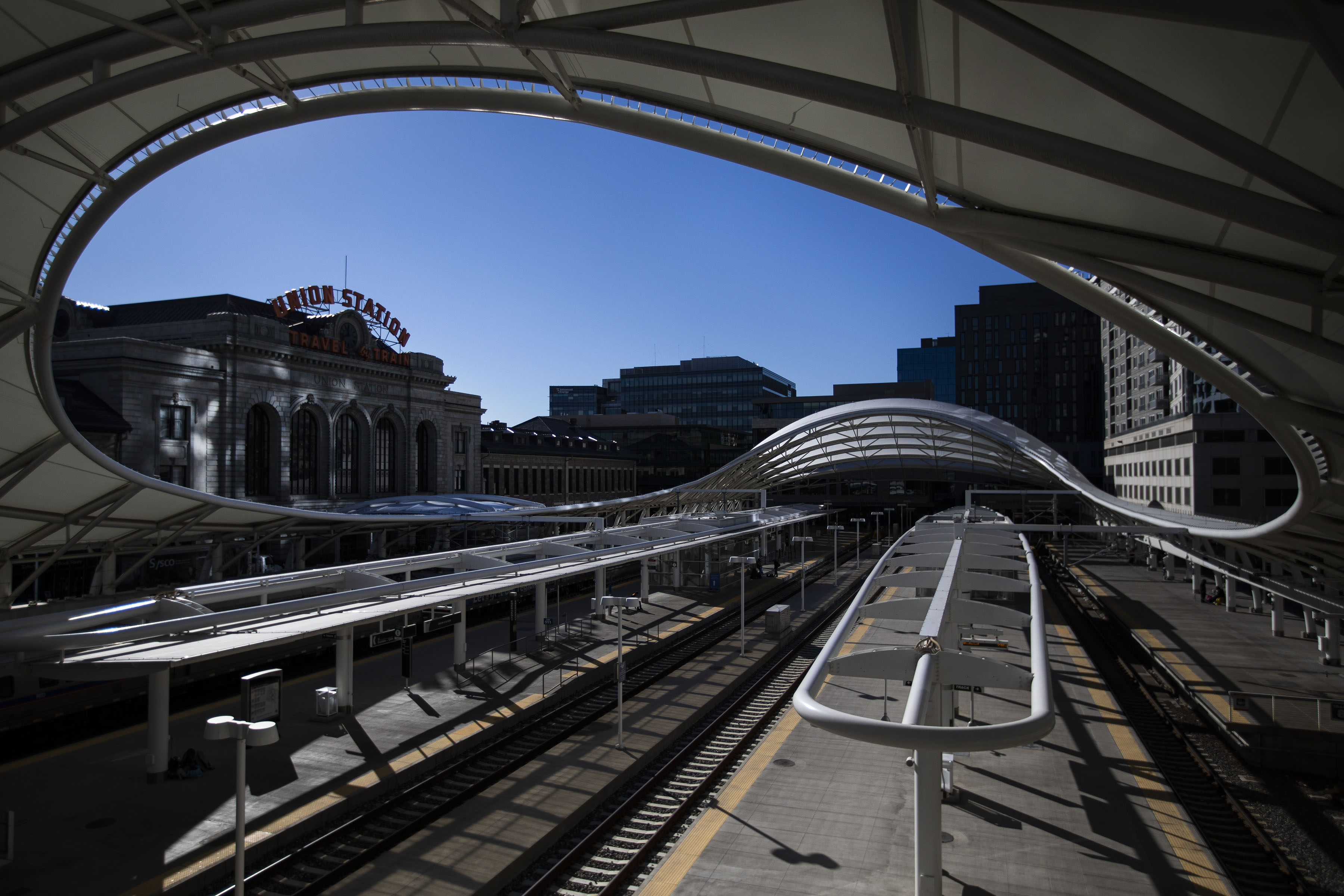
The Regional Transportation District is planning to spend millions of dollars on modifications at its Union Station bus terminal that could potentially be ready by September 2023.
The modifications are the next steps in the agency’s and city’s effort to reduce open drug use and crime in the area.
“Restoring a welcoming environment and ensuring the safety and security for our employees, our customers and everyone who visits and lives or works near Denver Union Station is a top priority,” Debra Johnson, the agency’s general manager and CEO, told reporters on Thursday morning.
The modifications will cost between $10 million and $15 million based on conceptual designs, Johnson said, with the biggest enhancement being the implementation of fare paid areas.
Other security measures will be added such as improved lighting and providing security personnel access to televisions that will broadcast the security camera feed.
Johnson said some of the enhancements such as replacement of lights, disconnecting or covering outlets and more increased regular cleaning have already begun in the terminal. Future modifications at the terminal could take up to 18 months to fully implement, she said.
Mayor Michael Hancock said on Thursday that the changes being made by RTD are much needed.
“These are welcomed and needed changes coming to the Union Station bus terminal by RTD and they follow recommendations from the Denver Police Department to strengthen security in the area,” Hancock said in a statement.
Johnson announced these changes earlier this week during the agency’s monthly board meeting. The scheduled timeline could be affected by things such as supply chain shortages.
Now and within the next six months, these changes will be made:
- Inoperative lighting will be replaced throughout the bus concourse and cleaning will be increased
- Pre-recorded audio announcements in English and Spanish will be played and include information regarding services, fares and public safety
- Enter and exit labels will be added to the terminal’s sliding doors to facilitate customer flow.
- Electrical outlets in walkway areas will be deactivated or covered.
Within the next six to 12 months, these changes will be made:
- Lighting will be upgraded
- TV monitors displaying security camera feeds will be installed at the main entrances to allow security personnel to observe activities in the facility
- Commuter rail platform stairs will be converted to exit only
- Barriers will be installed to prevent access to areas between the elevators and glass walls at the Wewatta and Chestnut pavilions
- Floor decals and signage will be installed to encourage movement and discourage loitering
- Smoke detectors will be installed in the restrooms.
Johnson said the longer-term goal is to implement the paid fare area, which will take more time than the rest of the modifications because the agency will need to change how customers purchase their tickets and align their current tickets with the exit turnstiles.
The Denver Police Department ramped up its officer presence in the area last December after a rise in calls for service to the area.
Since Nov. 1, officers have made more than 1,000 arrests and recovered 17 guns from the area. Many of these arrests were related to outstanding warrants, drug offenses and trespassing, according to the Denver Police Department.
Last month, police conducted a “large-scale enforcement operation” in the area that resulted in 42 arrests, including 10 felonies.
Johnson said to curtail the unwanted activities throughout the entire campus, the increased security and police presence will continue. She also urged riders or nearby residents to download the TransitWatch app, which allows people to report suspicious activity.
“There’s no way we can have enough security personnel to cover every rail car on a train or a bus,” Johnson said. “If somebody sees something, they can say something.”
Johnson added that the problem is a “byproduct of complex societal issues” and that the transit agency needs continued support from the city, county, police and legislators.