







Aerospace companies explain Orbital Reef, ‘business park in space’
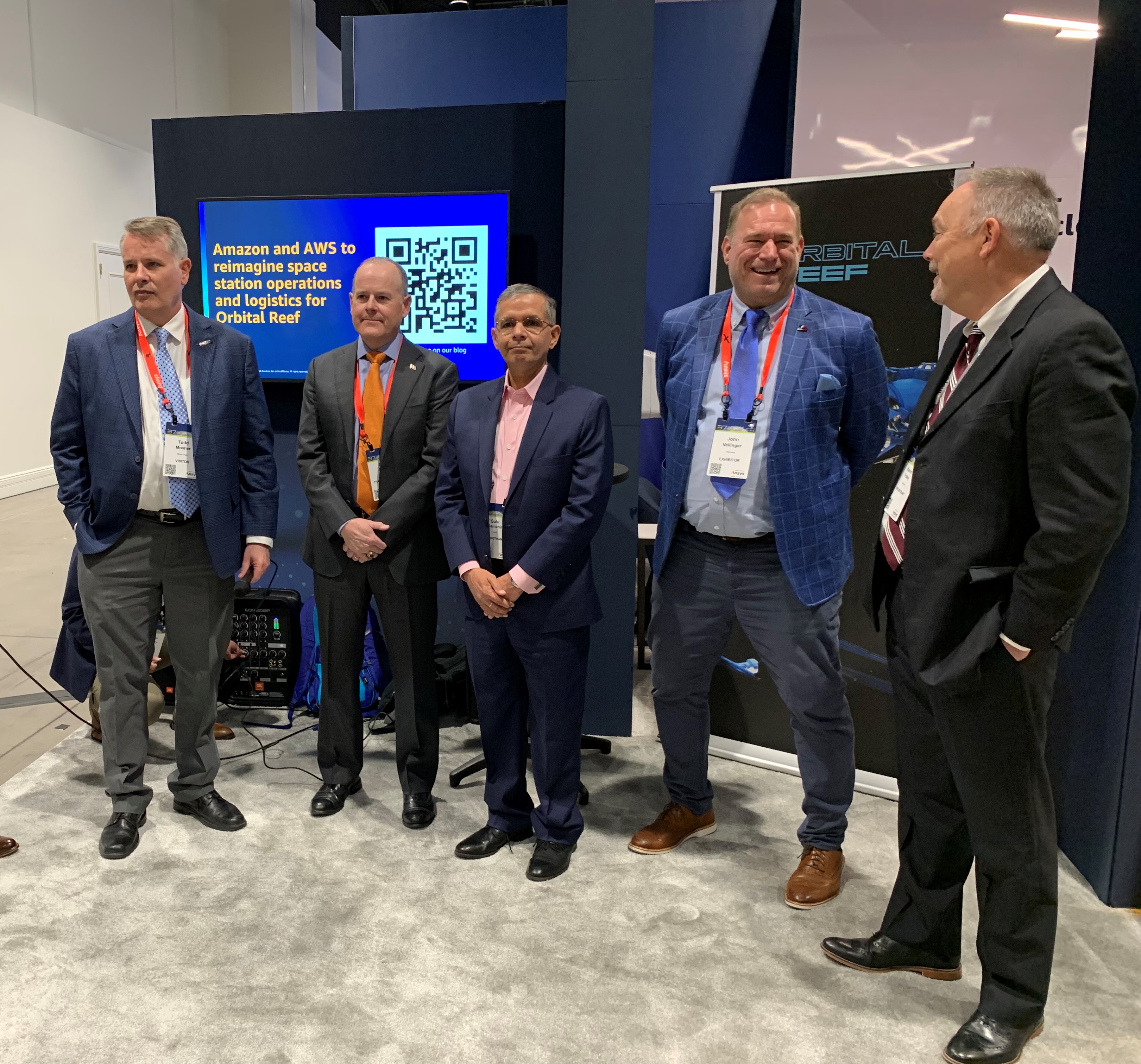
Right on the heels of the news Sierra Space and Blue Origin successfully completed a key review stage for the Orbital Reef space station project Tuesday, company representatives talked at length about what’s been described as a “business park in space” at the 37th Space Symposium in Colorado Springs.
It took just three months to complete the Systems Requirement Review (SRR) for the massive undertaking of replacing the International Space Station.
“The SRR is an important program milestone marking the baselining of the requirements for the mission and design of Orbital Reef, a commercially developed, owned, and operated space station to be built in low Earth orbit,” officials announced Tuesday.
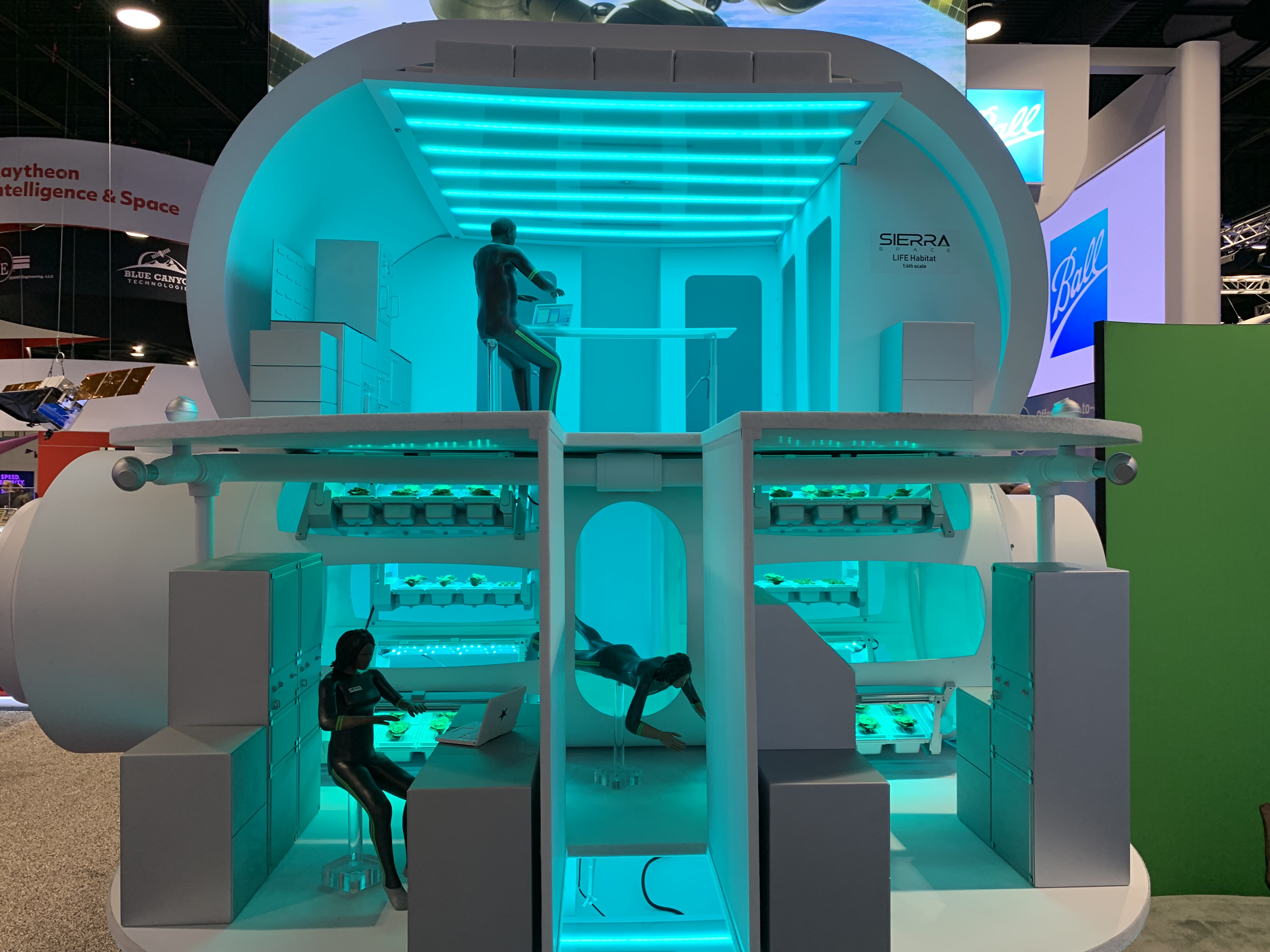
Scott Asbury, Sierra Space’s senior director of Space Destinations, told the crowd gathered for the TED Talk at the AWS (Amazon Web Services) booth about the “life module” the company is developing for the project.
The inflatable module will end up being almost three stories high, Asbury said.
“It’s large and configurable, with lots of room for research and science experiments,” he said. “It’s going to be like a three-story building, where you can go between floors. It’s going to be super cool.”
Sierra is also finishing work on a cargo version of its Dream Chaser ship — which can fly in space and land at any runway that can accommodate a 737. There’s also a version to take passengers.
Gulu Gambhir, AWS director of professional services, talked about bringing the innovation Amazon has brought to retailing to space.
“You know how Amazon seems to know what you want before you realize, and it gets there the next day? We want to use that same artificial intelligence Amazon has perfected in its worldwide operations to space,” Gambhir said.
Aerospace company Redwire Space is bringing its SpectraTRAC Star Tracker — a unit that’s “self-contained and features Lost in Space star identification.”
“This is the second golden age of space,” said John Vellinger, Redwire executive vice president of in-space manufacturing. “We finally have a market driven by commercial output in space.”
Another company that’s part of the Orbital Reef team, Boeing, will also provide a transport ship and is working to make the project sustainable, as well as providing engineering, logistics and support, said Kevin Foley, Boeing’s International Space Station and low Earth orbit commercialization program director.
“Research is going to be a really important thing,” he said, noting that Orbital Reef will be available to teachers and academic researchers.
“For the first time, we’ll actually have a lab in space that mimics what you can accomplish on the ground,” said Redwire’s Vellinger. “And in a cost-effective way.”
Results can be analyzed in real time, rather than waiting to get shipped back to Earth, as it now works with the ISS.
Officials also talked about research being done on the Orbital Reef being used to make life better on Earth.
Blue Origin’s Todd Mosher, customer experience leader, said everyone will be welcome at the new station.
“We want to take up tourists, scientists, astronauts,” Mosher said. “We want to make it a destination where you want to go to enjoy — and not just the view — but all aspects of the mission.”
Researchers will enjoy “virtual participation” from those on the Earth, he said.
Other members of the Orbital Reef team include Genesis Engineering Solutions, Amazon Distribution & Fulfillment Solutions, Arizona State University and NASA’s Commercial Low-Earth Orbit Development program.
“This SRR is a significant milestone toward commercializing low-Earth orbit,” Brent Sherwood, senior vice president of advanced development programs for Blue Origin, said in a release. “What’s especially exciting is how the Orbital Reef team is combining NASA’s goals with the needs of others to promote new commercial markets.”
