







NOAA administrator: Everyone is an end user for space
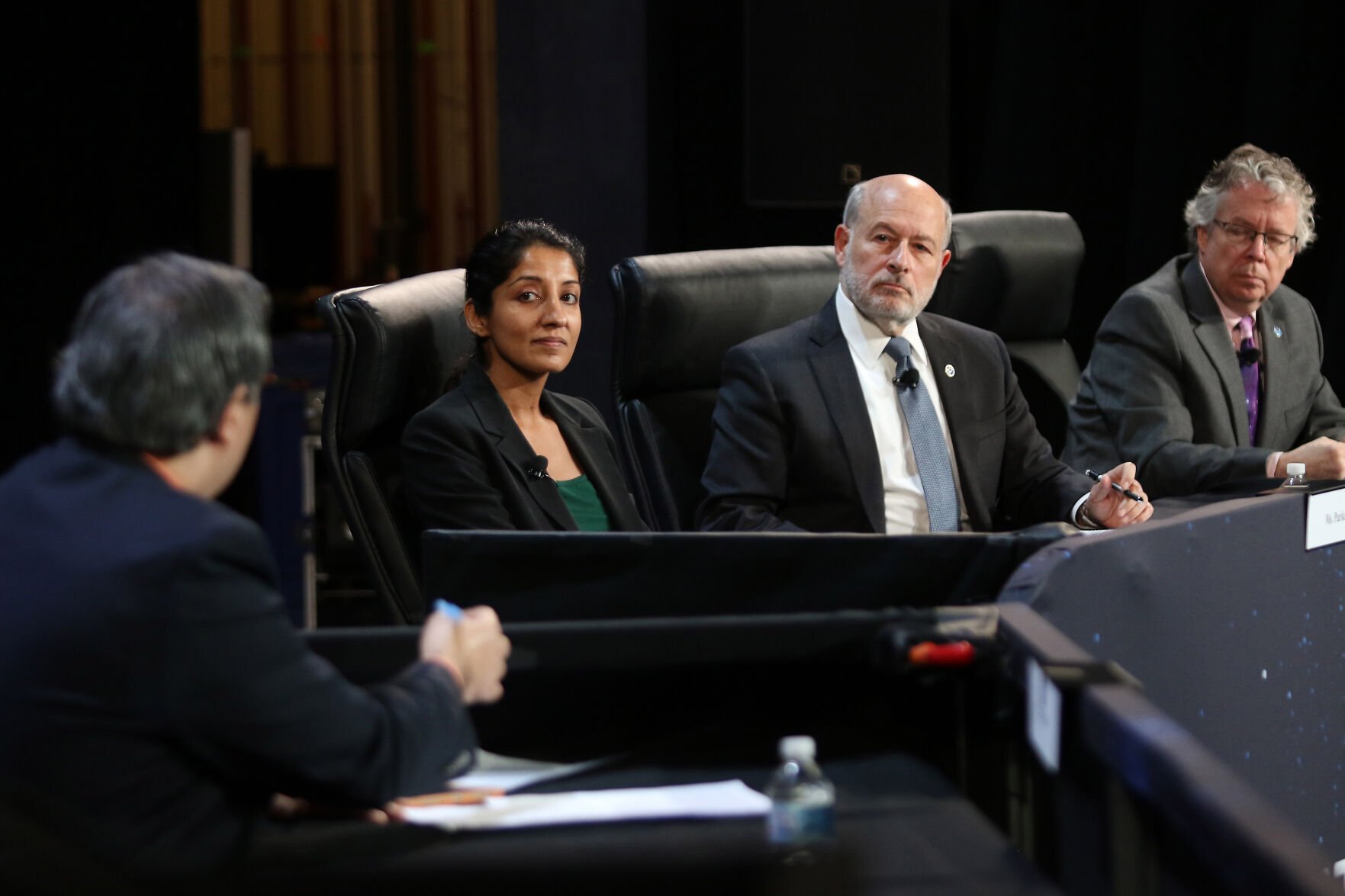
Everyone on Earth “is an end user for space,” the top official with the National Oceanic and Atmospheric Administration said Thursday during a panel discussion at the Space Symposium in Colorado Springs.
Richard Spinrad, who took over the agency that includes the National Weather Service and eight other related services, said anyone who gets weather warnings or uses GPS-enabled maps on their mobile devices is using satellites in space.
The agency is in the early stages of collecting commercial data on objects in space for when it takes over traffic management in space in 2024 from the Department of Defense.
The future of space exploration depends on private companies, Space Symposium speakers say
The agency has created a prototype for a database of government and commercial data on space objects with three months of such data and is planning on how a much larger system will be developed, Spinrad said. The project would merge Department of Defense and commercial space data that would give a better and more accurate picture of the more than 20,000 objects orbiting the Earth.
U.S. Mint unveils Sally Ride quarter at Space Symposium in Colorado Springs
Potential users for weather, climate and other data collected by the agency is “everyone in this room and everyone globally,” said Irene Parker, NOAA’s deputy administrator for systems. The potential market for just climate data totals more than $100 billion a year for use across industries ranging from agriculture and energy to space and transportation, since the agency monitors not only weather on Earth but also weather in space.
Gov. Polis touts new aerospace branding campaign at Space Symposium
“I see commercial (potential) in many areas for data as a service,” Parker said. “It won’t be just a business we can build on; we will be in partnership with commercial providers.” She said NOAA is working with Google to develop climate data tools and products using artificial intelligence and machine learning.
Ukraine invasion tests international space cooperation with Russia
Stephen Volz, NOAA’s assistant administrator for satellite and information services, said the agency faces a challenge in “figuring out how to provide (data) services at the scale of usability worldwide.” That means providing data that can be combined and work together “in harmony” by using a common format and letting potential users know that such products and services are available.
Agency officials found at a recent conference with those who fight or prevent wildfires that most potential users aren’t aware of NOAA’s products or capabilities that could help them. That data and imagery include photos from several sets of satellites that can help pinpoint fires before they grow larger and possibly require hundreds of firefighters to bring under control.
Aerospace companies at Space Symposium explain Orbital Reef, ‘business park in space’