







Deputy secretary of education visits Aurora
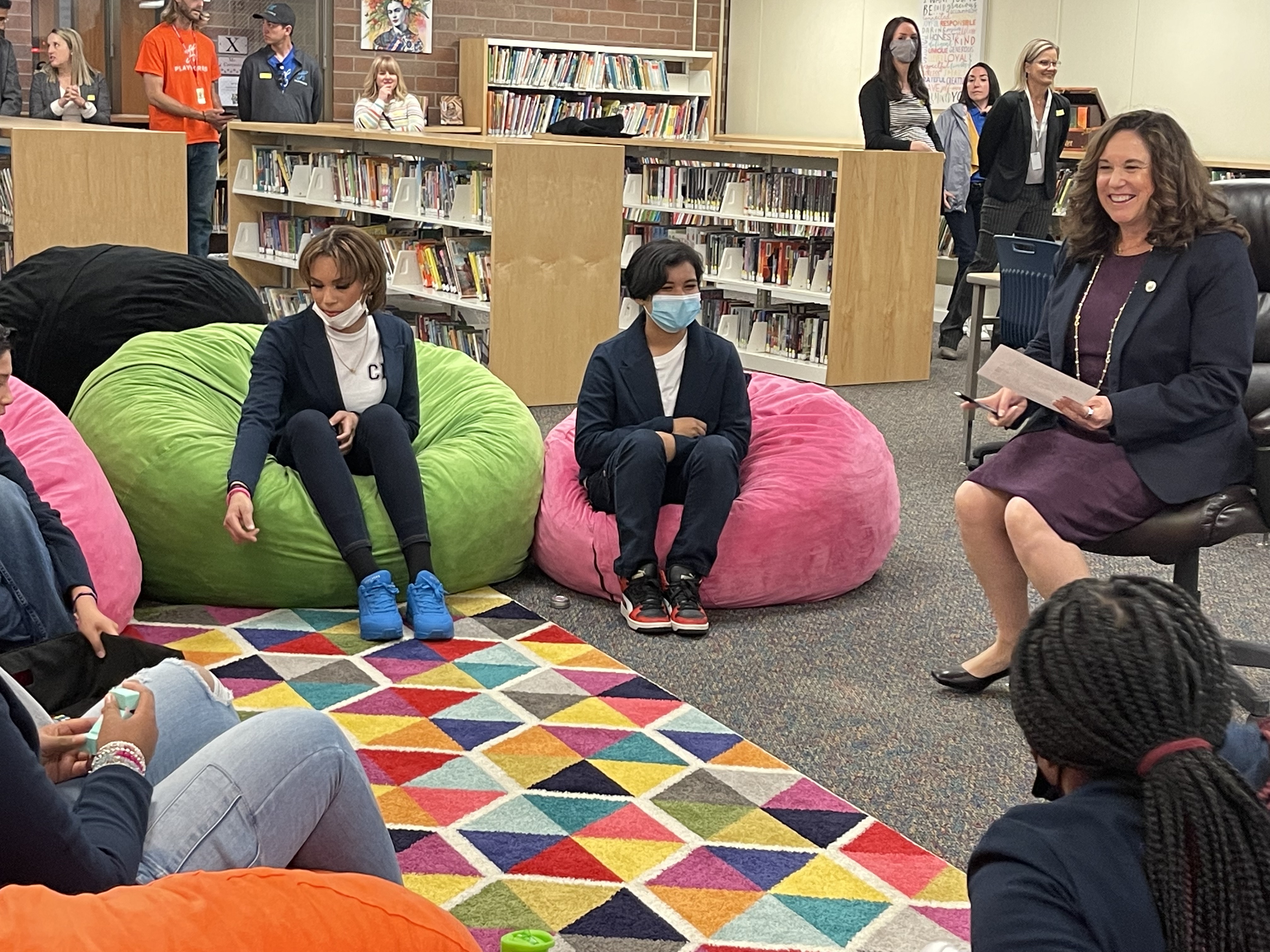
U.S. Deputy Secretary of Education Cindy Marten concluded her trip to Colorado by visiting two schools in Aurora on Wednesday.
Seven Clyde Miller P-8 students told Marten about the challenges they have faced during the pandemic and how programs implemented with emergency relief funds have helped them.
The district received $77 million in emergency funds, said Rico Munn, superintendent of Aurora Public Schools.
“Students are very wise and they’re very clear on who they are and what they need,” said Marten. “They’re not just a recipient of this grace (investment), but they understand why they are being made.”
Marten has traveled across the country and visited over 20 schools to see how districts have implemented emergency funds.
Students told Marten that the district’s implementation of Hazel Health, a pediatric telehealth service, has helped their classmates get the mental health services they need during the pandemic.
Kelly Forrest, the principal at Clyde Miller, said that before Hazel Health was implemented this fall, their partners at Aurora Mental Health, HealthOne and their local services had been overwhelmed and took weeks for students to get the attention they needed.
“We really needed someone to talk to because some people didn’t have anyone to talk to during quarantine,” a student told Marten. “Sometimes you need someone else outside of the family … and these counselors, teachers and even Ms. Forrest has helped us greatly.”
Hazel Health has been implemented in each of the district’s schools. In some cases, it’s a bridge for students who are waiting to be connected with long-term services, while for others it gets them the immediate attention they need, said Lauren Dunn, director of education partnerships with the company.
“We help them understand what mental health is and how they can be advocated for themselves,” Dunn said.
Several students told Marten that many of their classmates didn’t realize they needed mental health services before the pandemic, but as COVID took hold, they realized they needed help as coping mechanisms such as school or sports were taken away.
“They didn’t pay too much attention to it because they could go to school and talk to friends, but when we were in quarantine, I think that’s when people started to realize I needed more help,” one student said.
Following Marten’s discussion with the seven middle school students, she was given a demonstration of how the services work with one of the therapists, Brittany Zamora.
Zamora told Marten their sessions are around 45 minutes and give them an opportunity to see “so many more students” than before.
“Before, they were wait listed. That could be as long as six months to a year sometimes,” Zamora said. “By the time we actually got to our students or kids or families, they weren’t needing services anymore or things had transpired and they needed more (services).”
Munn said Hazel Health was a no-brainer.
“We wanted to get (students) in a better regulated, better place to be in so they’re in a better (situation) to learn,” Munn said.
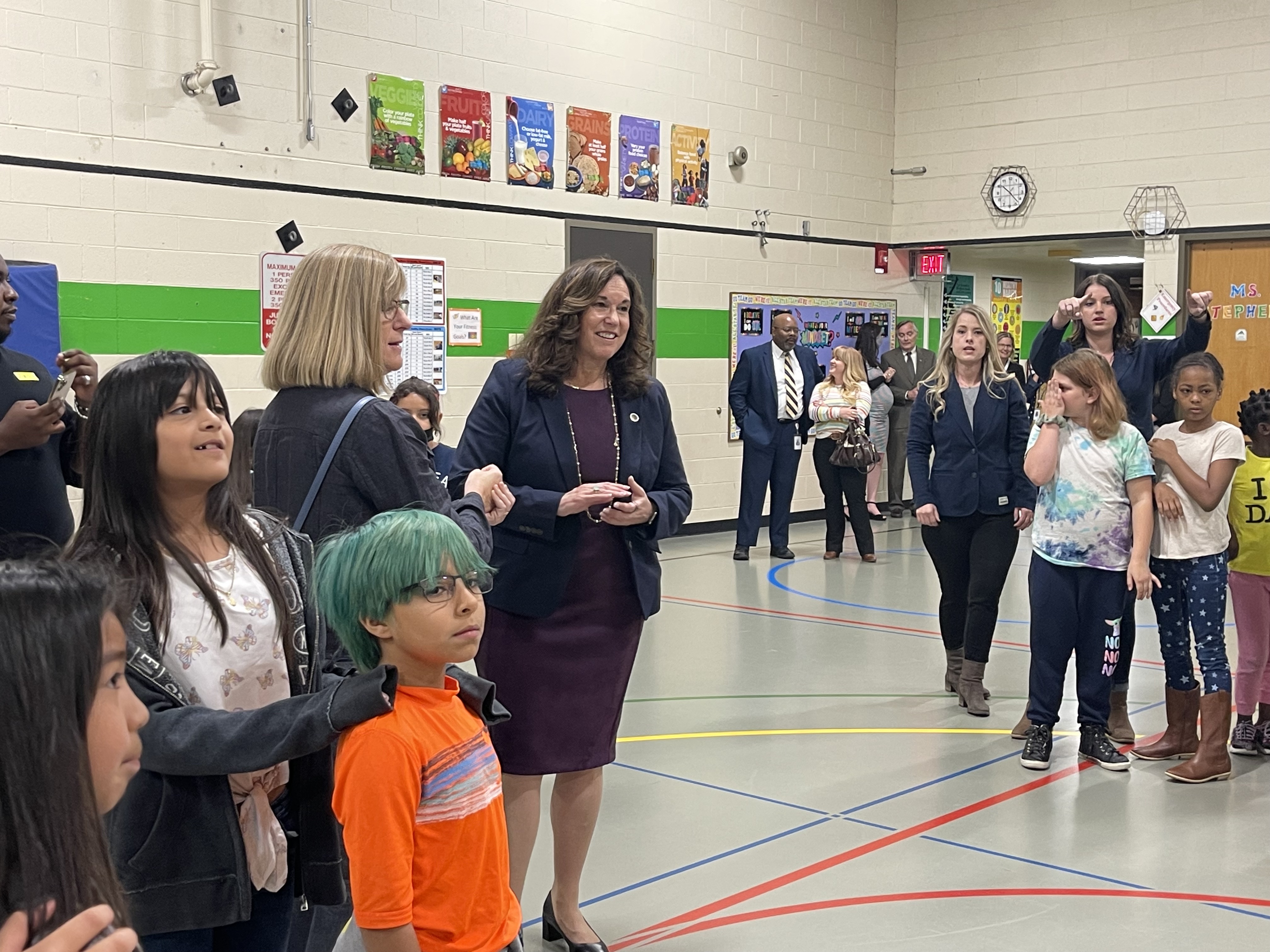
School officials also showed Marten their implementation of Playworks, which focuses on social-emotional learning through play. It has been implemented in each of the district’s 31 elementary schools, said Munn.
Forrest said this was vitally important for first and second graders who had only known school from behind a computer screen and had lost crucial social skills.
“Students learn sportsmanship and social cues they may have missed out on,” Forrest said. “They play soccer and volleyball and tons of games, so kids are able to enjoy that break in the day and they return to class more focused.”
Following her visit at Clyde Miller, Marten visited Virginia Court Elementary School, where she talked with teachers about the impact of tutoring that has been funded through emergency relief.
Marten said she was impressed with the ways schools in Colorado used their funds.
“The entire state of Colorado has really shown up very well,” Marten said. “Almost everybody has been impacted in one way or another, and so to see (a) whole community approach the way Colorado has taken this on was worth the trip.”