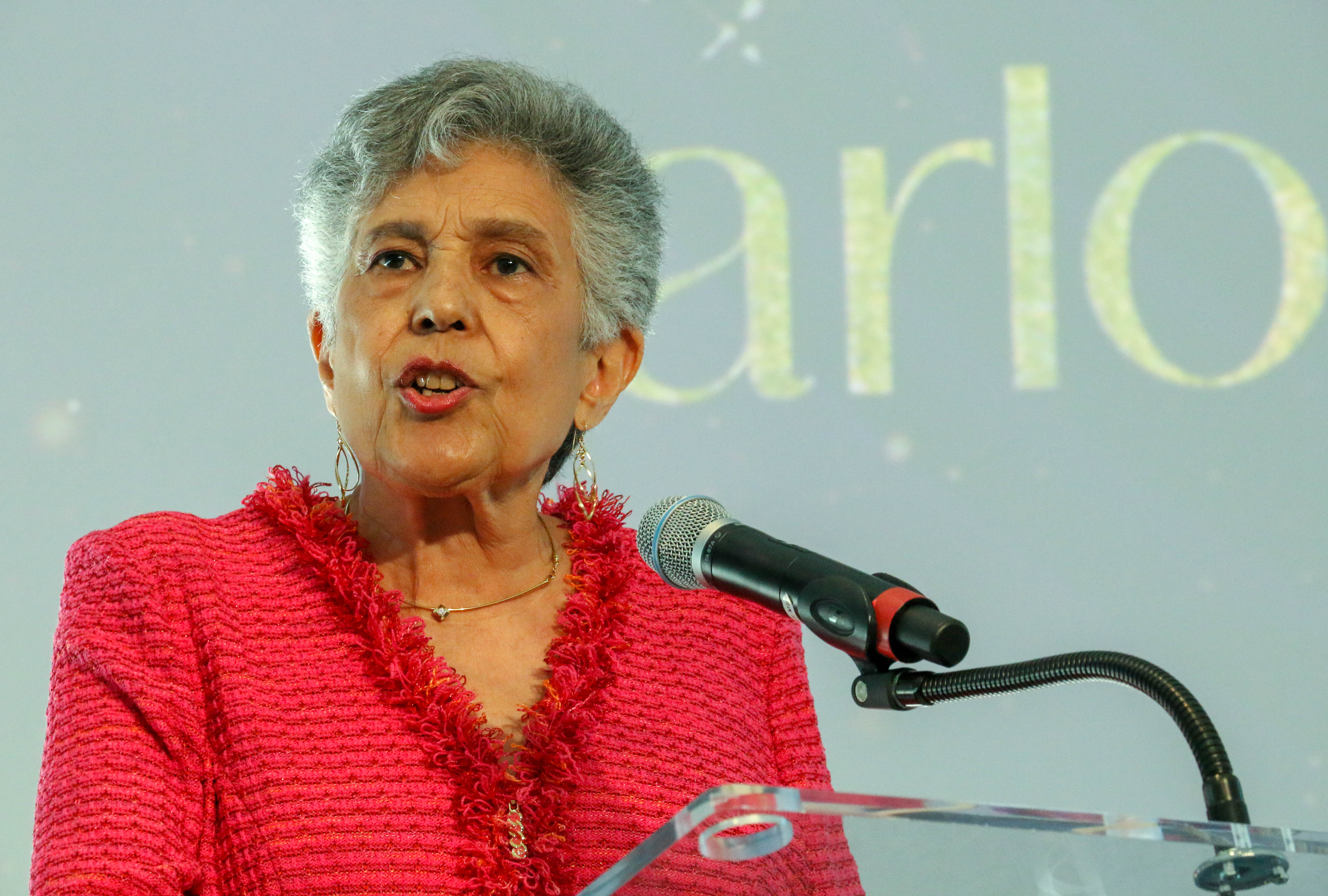
Carlotta Walls LaNier on the enduring lessons from Little Rock

Carlotta Walls LaNier never thought she’d still be talking about high school 65 years later. But when you are one of the Little Rock Nine, your high school story is one that will be told forever.
LaNier, at age 14, was the youngest of the nine Black students who integrated Little Rock Central High School in 1957. Their enrollment tested the landmark U.S. Supreme Court decision declaring segregation in public schools unconstitutional three years earlier, and became a catalyzing event in the American civil-rights movement.
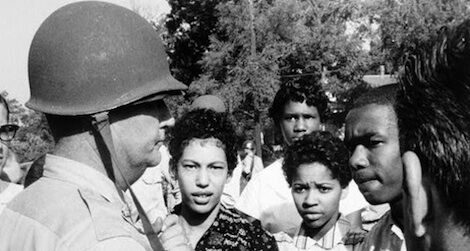
The ruling was challenged on every level, from governors to angry mobs. Three weeks after being denied entry on the first day of classes by the Arkansas National Guard on orders from Gov. Orval Faubus, LaNier and her fellow students were escorted into the school by the 101st Airborne Division of the U.S. Army at the directive of President Dwight Eisenhower.
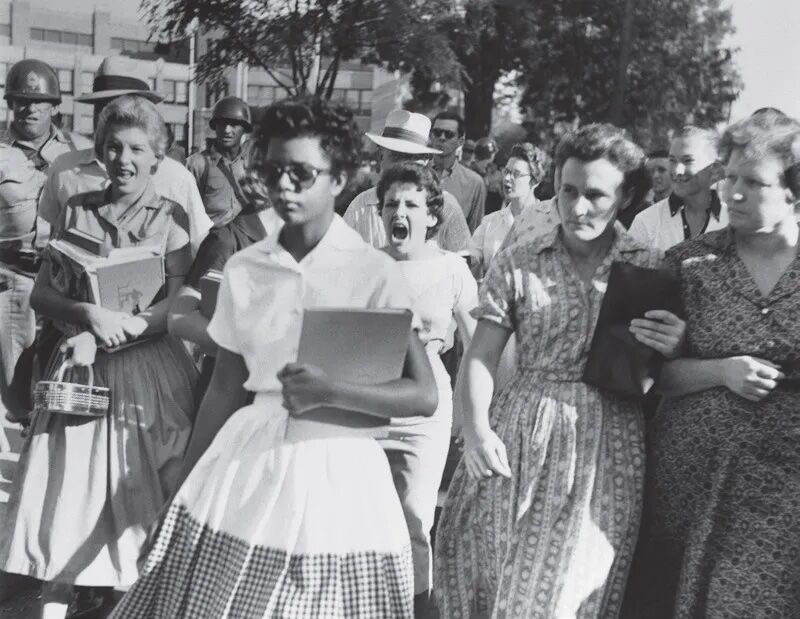
One 11-year-old face in the crowd watching the mob try to intimidate those students that day was future President Bill Clinton, who later said the ugly incident forced White people in Arkansas to pick a side: You either had to be for integration or against it.
In protest, one year after Central High was integrated, Faubus closed every Little Rock high school for the 1958-59 school year, during which Little Rock citizens voted more than 3:1 against Black attendance in White schools. But the federal law had been set.
When the schools reopened, LaNier and two others returned, continuing to endure daily verbal taunts and physical harassment. Four weeks before her graduation in 1960, a bomb exploded at the Walls family home. LaNier, her mother and sister were inside.
“I knew this was a message to me,” LaNier said. “So that very next day, I was determined to go back to school.”
The next month, Walls became the first Black woman to graduate from Central High School. She moved to Denver in 1962 and graduated from the University of Northern Colorado in 1968.
“It was Denver that gave me a different way of thinking about where one plants her roots,” she said.
LaNier, now 79, has received many prestigious honors in her lifetime, including the Congressional Gold Medal – the nation’s highest civilian award – from Clinton himself in 1999. She holds four honorary doctorate degrees and is an inductee into the national Women’s Hall of Fame.
(Story continues below the photo gallery)
On Friday, she accepted the Women+Film Impact Award from Denver Film at the Denver Art Museum alongside pioneering movie star Rita Moreno, who received the Barbara Bridges Inspiration Award. Among those in attendance were Colorado Gov. Jared Polis and Michael Hancock, Denver’s second Black mayor. In 2017, Hancock attended the 60th anniversary commemoration of the Little Rock Nine at LaNier’s invitation. She told him then: “In spite of the constant bullying, being pushed down the stairs, sitting in spittle, being spat on and having my heels walked on until they bled, I still made the honor roll. I couldn’t allow them to think they had won.”
On Friday, Hancock told those gathered: “I am deeply in love with Carlotta’s courage; her leadership; and her calm, suave demeanor.”
By walking into that school in Little Rock, added Colorado Lt. Gov. Dianne Primavera, “Lanier set the precedent for countless little girls who had been told that the color of their skin determined where they did and did not belong.”
LaNier makes it clear that she was not “selected” to be part of that inaugural integrated class.
“We elected to go,” she said. “That is very key to me. When that sheet of paper came around in my ninth-grade class, it was not a recruitment. It was something that I always felt I had a right to do. It was within the law.” So she signed that enrollment paper – and didn’t even tell her parents for two months. Her mother later said she never could understand how people could be so ugly to her little girl.
“I have lived my life trying to be the best that I can be,” said LaNier. “I was guided by my parents, my extended family, my neighborhood and my faith. They all played a part in preparing me when I was younger to go to a school that would just as soon have me go elsewhere.”

Because the Little Rock Nine was ultimately successful in integrating Central High School 65 years ago, LaNier added, “We showed the country that schools that included all children can work. In fact, we might be richer in many ways because we learned early to get along with others different from ourselves.”
Tina Walls, herself a prominent investor and philanthropist living in Denver, said her sister’s legacy “is that normal people can do really brave and great things that have a lasting impact on so many people and can inspire others to keep moving society forward.”
After the luncheon, LaNier was surrounded by dozens of younger women, many of color, telling her of the impact her story has had on their own lives.
“More than anything, I want young women to know who they are — and whose they are,” LaNier told The Denver Gazette. “Once they know who they are, they are able to do anything in the world they want to do.
“I just want to encourage those who are sitting on the sideline that they have a voice, and to use that voice.”