







Possible meteor shower could light up night sky on Monday
NASA/JPL-Caltech
The end of May could bring a potential meteor shower visible Monday night into early Tuesday morning, according to NASA.
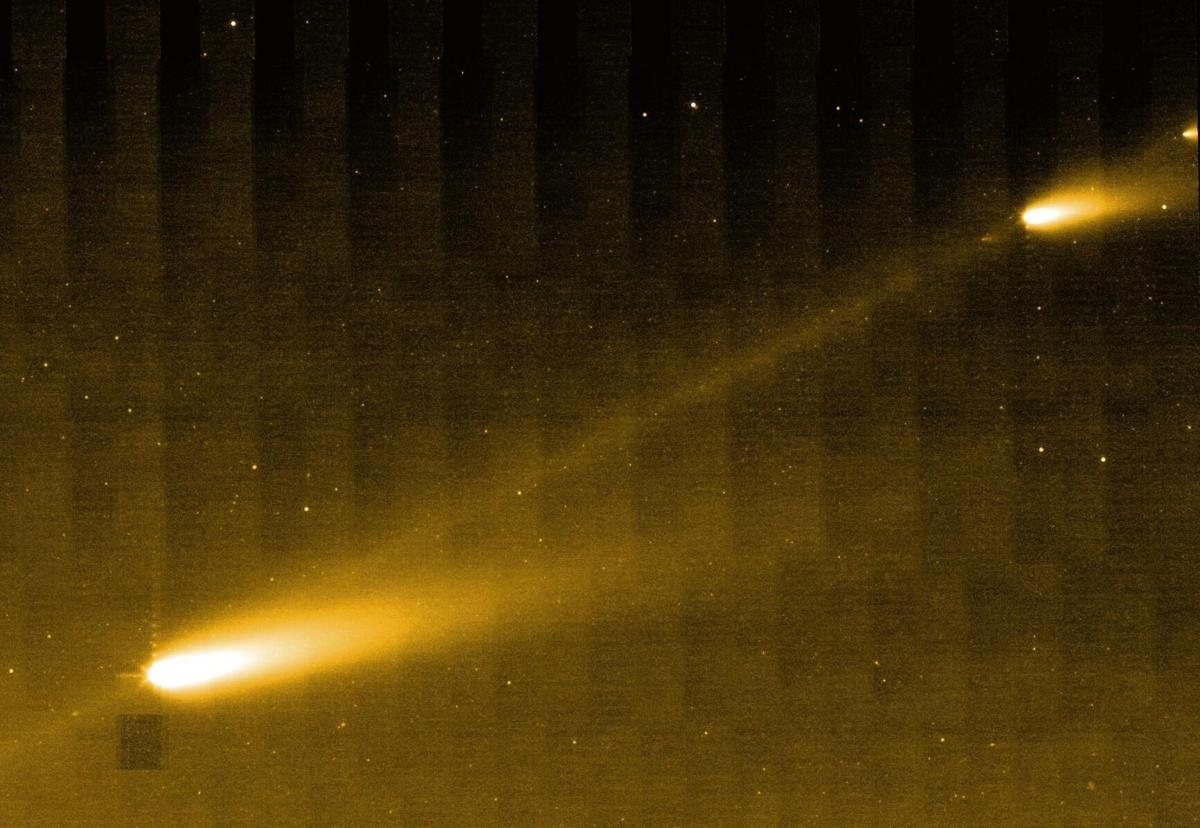
On Monday night, Earth could pass through the broken debris of comet 73P/Schwassmann-Wachmann (SW3), which was first discovered in 1930, orbits the sun about every five years and first began breaking apart in 1995.
If the comet’s debris comes into earth’s atmosphere, it will a produce a meteor shower called tau Herculids.
NASA astronomer Bill Cooke described it as an “all or nothing” event in a recent statement.
“If the debris from SW3 was traveling more than 220 miles per hour when it separated from the comet, we might see a nice meteor shower. If the debris had slower ejection speeds, then nothing will make it to Earth and there will be no meteors from this comet,” he said.
If the debris does end up reaching earth’s atmosphere, stargazers in North America are expected to get the best view around 11 p.m. (MDT) if skies are clear and dark.