








Polis signs new law mandating disclosure of fracking chemicals

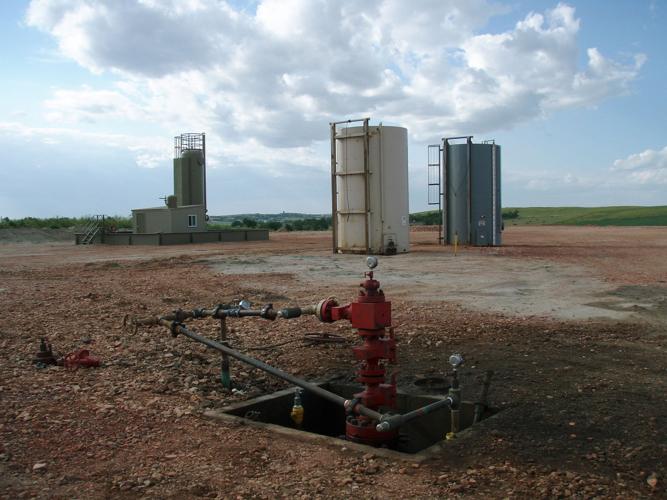
Gov. Jared Polis Thursday signed legislation that requires manufacturers and users of hydraulic fracking chemicals to disclose to the state each chemical in their products.
The new law mandates that the list of ingredients be made available on a publicly accessible website, which the Colorado Oil & Gas Conservation Commission is tasked with developing.
Under House Bill 22-1348, the required information includes the trade name of the chemical product, a list of the names of each chemical in the product, the estimated amount of each chemical, and a description of the intended purpose of each chemical in the formulation.
Manufacturers and end users must also provide a declaration that the chemical product contains no intentionally added perfluoroalkyl or polyfluoroalkyl (PFAS) chemicals, the so-called forever chemicals used in many consumer products and industrial applications.
Polis signs $15M bill to fund transition efforts for coal, power workers
The law still allows manufacturers to make trade-secret claims and the COGCC may exempt them from public disclosure after examining the claims. However, the full list of chemicals must be disclosed to the COGCC to petition for a trade-secret exemption.
The Sierra Club criticized the exemption.
“Colorado requires reporting of chemicals used in fracking, but it allows generous exemptions,” the group said, citing data from the Physicians for Social Responsibility that, since 2011, operators of more than 12,000 wells in Colorado have “invoked secrecy claims.”
“This issue has been reignited by national reporting that highly toxic chemicals known as per- and polyfluoroalkyl substances or ‘PFAS’ were used in fracking wells,” the Sierra Club said. “The widespread use of secrecy claims at Colorado’s fracking sites means that it is impossible to gauge if PFAS and other highly toxic chemicals have been used in the state.”
The American Petroleum Institute, the industry’s trade association and research organization, told The Denver Gazette that drillers in Colorado do not use PFAS in drilling fluids.
Refinery owner Suncor fires back at critics over water pollution claims
The law also requires that before beginning fracking operations the operator must notify “communities near where downhole operations will be conducted, local public water administrators, and, if there is a high-priority habitat near where downhole operations are being conducted, the division of parks and wildlife.”
Testifying before a legislative committee in May, Lynn Granger, executive director for API Colorado, opposed the bill in part, arguing it creates a duplicate of the existing national hydraulic fracturing chemical registry, FracFocus.org, which is managed by the Ground Water Protection Council, a conservation and environmental protection organization whose members include state government officials. Granger said Colorado already works closely with the group.
FracFocus was created in part due to regulations promulgated in 2011 by former Gov. John Hickenlooper’s administration.
Today, FracFocus says it receives reports from more than 1,600 companies on chemicals for more than 189,000 hydraulic fracturing operations nationwide.
Granger said the state database is not just duplicative but also underfunded.
Legislature approves bill to reduce, delay implementation of vehicle fees
“We remain puzzled by the bill’s fiscal note of only $61,500,” said Granger during the committee hearing. “FracFocus is a multimillion-dollar operation and only tracks chemicals used in HF fluid, not all downhole operations as this bill seeks to do. We simply do not understand how the state intends to accomplish what this bill seeks with that fiscal note.”
According to a 2021 economic analysis by the American Petroleum Institute (API), oil and gas extraction in Colorado supported 340,000 total jobs, or 8.6% of Colorado’s workforce, provided $34.1 billion in labor income and contributed $46.1 billion to Colorado’s gross domestic product.
Fracking fluids are used to assist in fracturing underground rock structures to free up oil and natural gas.
After a well is drilled and steel casings are installed and pressure-tested, a slurry of sand, fracking fluids and water are injected into the well bore at extremely high pressures that create a web of small cracks in the surrounding rock.
Settlement to close Xcel Energy's remaining coal plants by 2031 nears approval
The sand in the slurry enters the cracks and, in effect, props them open to increase the flow of gas and oil. The fracking chemicals help lubricate the flow of sand and perform other functions thousands of feet underground in the oil producing layers.
API insists there are no instances of fracking chemicals escaping and contaminating water supplies in Colorado.
Developments in horizontal drilling and fracking technology have dramatically increased U.S. output of both natural gas and oil, leading to the U.S. becoming a net exporter and the world’s No. 1 producer of both in recent years, according to the Heritage Institute.

Denver Water to replace aging pipes under Sheridan Boulevard
Deborah Grigsby
deborah.smith@denvergazette.com
Updated 2 hours ago
More than a mile and a half of aging water pipes along Sheridan Boulevard will be replaced beginning in January as part of a year-long project by Denver Water. The project will begin at West 17th Avenue and move north...

Deborah Grigsby
Reporter

Did Broncos stadium proposal help fast-track Denver’s 8th Avenue Viaduct project?
Deborah Grigsby
deborah.smith@denvergazette.com
Updated 2 hours ago
Denver voters recently gave a thumbs up to an $89 million overhaul of Denver’s 8th Avenue Viaduct, part of Mayor Mike Johnston’s $950 million Vibrant Bond package — a six-year accelerated bond to fund city infrastructure such as roads, bridges...
Deborah Grigsby
Reporter

Commerce City to become largest Colorado city with fully EV trash-collection fleet
Kyla Pearce
kyla-pearce@denvergazette.com
Updated 2 hours ago
Starting in January, Commerce City will roll out a fully electric recycling and waste collection fleet, making it the largest Colorado city to adopt such a fleet, a city news release announced. In partnership with Republic Services, Commerce City officials...

Kyla Pearce
Reporter
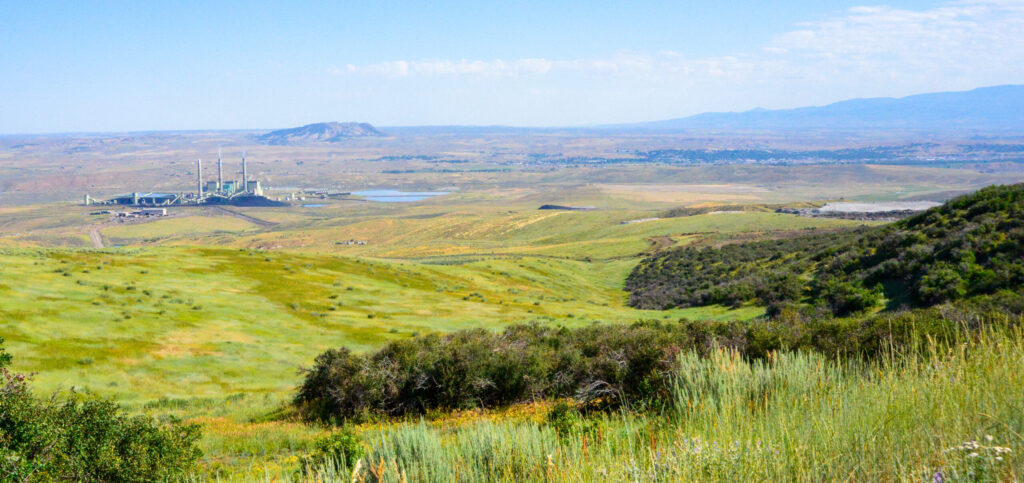
Feds order coal-fired Craig power plant to remain open
Scott Weiser
scott-weiser@denvergazette.com
Updated 10 hours ago
The Trump administration’s energy agency has ordered one of three generating units at a Colorado power plant to remain available for operation amid an impending shutdown of the station and its supplying coal mines. The move is one of the...
Scott Weiser
Reporter
Colorado legislature votes to make committee hearing livestreams permanent
Marianne Goodland
marianne-goodland@denvergazette.com
Updated 21 hours ago
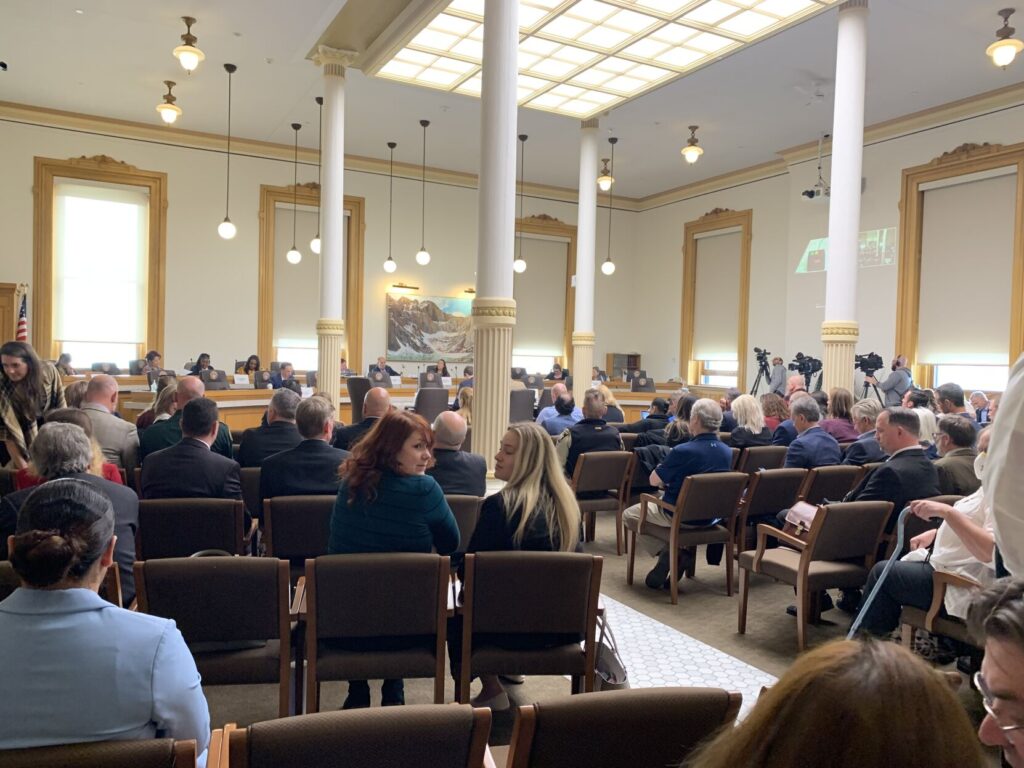
The executive committee of the legislative council — the six top leaders of the House and Senate — voted 5-1 Wednesday to make permanent the video livestreaming of committee hearings, starting in the 2026 legislative session, which begins Jan. 14....

Marianne Goodland
Reporter

US Rep. Lauren Boebert calls for override vote after Trump vetoes bipartisan Colorado water bill
Marianne Goodland
marianne-goodland@denvergazette.com
Updated 1 day ago
President Donald Trump issued the first veto of his second term Tuesday, blocking a long-awaited bipartisan effort to finish a southeastern Colorado water project that supporters say is critical to delivering clean drinking water to roughly 50,000 residents of the...
Marianne Goodland
Reporter
Denver government and services to close for New Year’s Day
Michael Braithwaite
michael.braithwaite@gazette.com
Updated 2 days ago
After the world rings in the new year Wednesday night, Denver city officials, like many others, will be taking Thursday off. In observance of New Year’s Day on Thursday, the Denver city government and city services will be closed to...

Michael Braithwaite
Reporter

Voters flip Aurora City Council, homeless navigation campus opens
Kyla Pearce
kyla-pearce@denvergazette.com
Updated 3 days ago
In November’s election, Aurora voters flipped what was previously a seven-to-three conservative majority on the City Council to a six-to-four progressive majority. Conservative incumbents Danielle Jurinsky, Steve Sundberg and Amsalu Kassaw were all voted out in favor of progressive Councilmembers...
Kyla Pearce
Reporter
Jefferson County sends out surveys for Hazard Mitigation Plan
Sage Kelley
sage-kelley@denvergazette.com
Updated 3 days ago
Jefferson County officials asked residents to chime in on potential hazards to their communities to help secure mitigation funding in the future. The county sent out its Hazard Mitigation Plan Survey on Saturday, asking residents to categorize the risk levels...

Sage Kelley
Reporter
Proposed Lao Hmong memorial in Westminster shelved
Sage Kelley
sage-kelley@denvergazette.com
Updated 3 days ago
A nearly $80,000 Vietnam memorial is not coming to Westminster despite being planned for over a decade. City Manager Jody Andrews announced to the City Council on Dec. 15 that the National Lao Hmong Memorial Foundation has decided to relocate...
Sage Kelley
Reporter
PREV
PREVIOUS

Bills signed to crack down on human trafficking, missing Indigenous people in Colorado
Facebook Twitter WhatsApp SMS Email Print Copy article link Save Gov. Jared Polis signed two bills into law Wednesday that aim to crack down on crime in the state, targeting human trafficking operations and missing Indigenous people. The first bill, House Bill 1300, seeks to address human trafficking in illicit massage parlors by giving counties […]

Task force to assess use of facial recognition by Colorado law enforcement, government
Facebook Twitter WhatsApp SMS Email Print Copy article link Save A bill signed into law Wednesday establishes a task force to look into the use of facial recognition technology by law enforcement and government agencies in Colorado. Senate Bill 113, scheduled to take effect in August, creates the task force to study how agencies use […]