







Hiker requires rescue on infamous Manitou Incline trail in Colorado
EPCSR
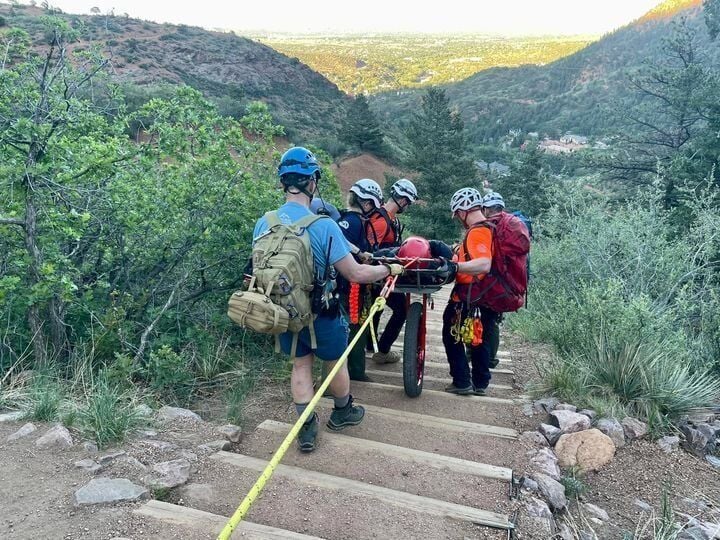
A sick hiker was rescued near the 900th step of the Manitou Incline on Wednesday, roughly a third of the way up the notoriously steep route.
El Paso County Search and Rescue hiked up over a quarter of the popular mountain steps to rescue the hiker, with help from the Manitou Springs Fire Department.
The hiker was wheeled back down the steps on a gurney.
“It took lots of convincing to make the subject believe that we do this as volunteers, but we do and we love it,” EPCSR wrote on Facebook.
Somewhat spectacular, most of Colorado’s extensive search and rescue operation relies on volunteers, with many services free to the person in need of assistance. Many missions also come at a cost to rescue crews that participate, with some aspects of the operation covered by money from the pockets of volunteers that show up to help.
Any time someone is embarking on an adventure in Colorado, it’s crucial to take safety seriously in order to prevent adding more strain to the search and rescue network. That means doing adequate preliminary research, packing the right gear, and being aware of one’s abilities.
In the case of the Manitou Incline, here are a few safety tips to note:
1. The Manitou Incline hike is extremely vertical and strenuous, making it easy to underestimate the effort required to complete the route. Climbing about 2,000 feet up more than 2,700 steps in less than a mile, it is a physical hike unlike any other. While some people can complete it in less than 20 minutes, it takes most people more than an hour. Do not underestimate the effort and energy that it will require and take advantage of bail out spots, if needed, knowing where those are located prior to the start of the hike.
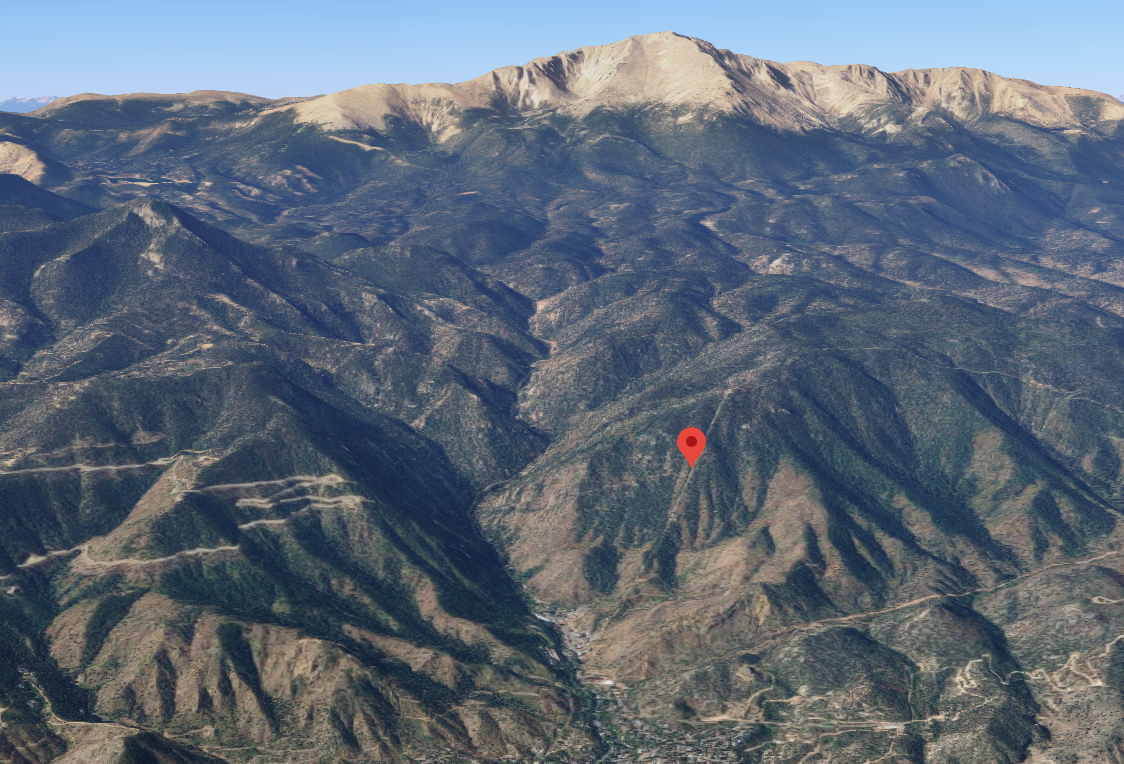
The red pin on this map shows the location of the Manitou Incline, which is a steep route that travels roughly 2,000 vertical feet uphill over 2,768 steps in less than a mile. It is found in the foothills beneath Pikes Peak, above a town called Manitou Springs, near Colorado Springs. Photo: ©2022 Google Maps.

The red pin on this map shows the location of the Manitou Incline, which is a steep route that travels roughly 2,000 vertical feet uphill over 2,768 steps in less than a mile. It is found in the foothills beneath Pikes Peak, above a town called Manitou Springs, near Colorado Springs. Photo: ©2022 Google Maps.
2. Drink plenty of water. The difficult nature of the hike means you’ll be sweating in any season. Make sure you’re replenishing fluids.
3. Know when to safely turn back. If you can’t make it to the top, try again on another day. While climbing down the steps of the Incline can be dangerous and is not recommended, several bail outs exist along the climb that allow hikers to travel back down the mountain on a normal trail. Know where these are at prior to the hike and find them once on the Incline by noting number plates found on some steps.
4. Take breaks. This is a cardio-intensive hiking experience, making it important to manage the stress that’s put on the body. If it’s your first time on the Incline, don’t push for a certain time, but aim to enjoy the experience. Don’t forget to pause periodically to soak up the stunning views.
5. Be aware of the symptoms of altitude sickness and if they are felt, descend the route. Climbing 2,000 vertical feet puts hikers at an elevation of about 8,550 feet in a quick and exhausting way. This elevation is right around where most people start to feel altitude sickness-related effects. Nausea, dizziness, and shortness of breath are three common symptoms, though a full list can be found here.
Those interested in helping to support Colorado’s volunteer-driven search and rescue network can do so by purchasing a CORSAR card here.
STAY INFORMED: Sign-up for the daily OutThere Colorado newsletter here