







History of the Hill: A look back at over a century of races up Pikes Peak
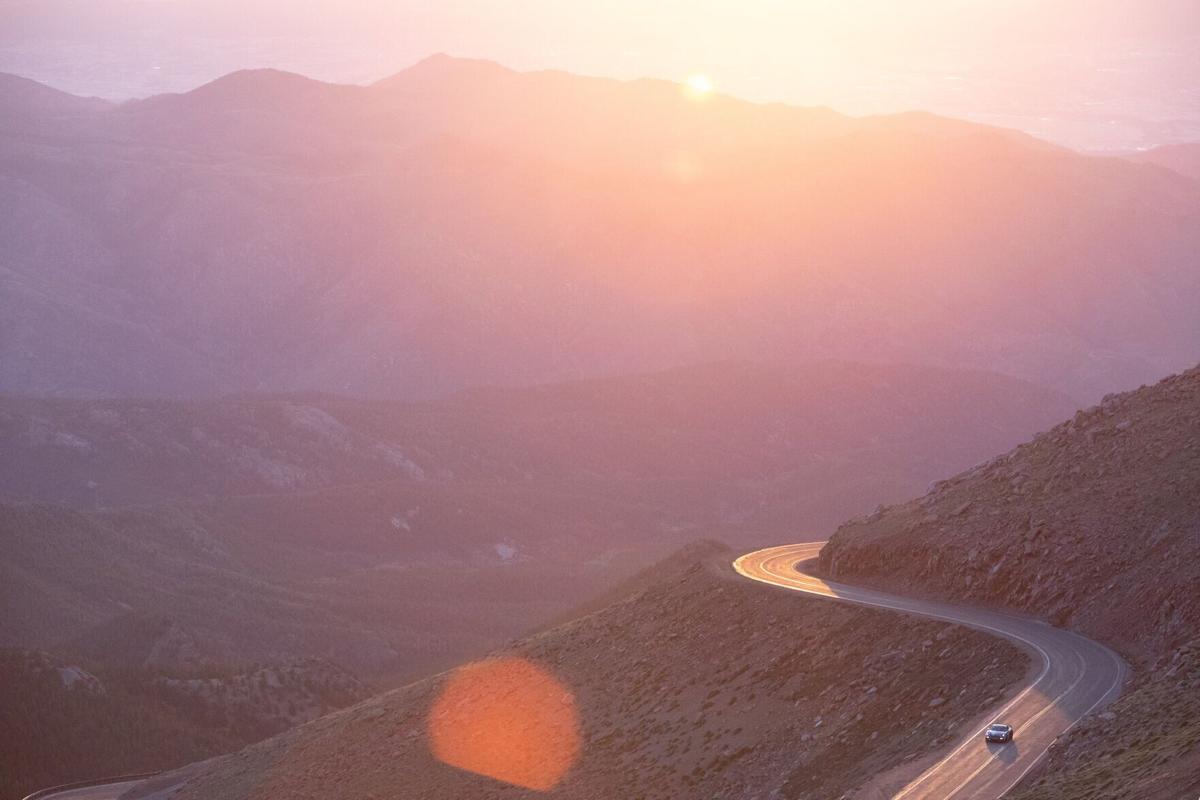
John Stember, The Gazette
The Broadmoor Pikes Peak International Hill Climb has been through a lot.
Two World Wars, a global pandemic and the modernization of vehicles, in general, all headline the race’s coinciding events. Through it all, the race has persevered.
From 1917 to 1919, there were no races because of the first World War. The second caused a four-year break from 1942-1945.
Pikes Peak International Hill Climb’s 100th running: Fan guide
As the race reaches its 100th running, the years it took to get there are what stand out. The people, course changes and cars have created one of the nation’s longest-running international events on a track — or, a mountain, to be sure.
Here’s a look at the history of the event as it readies to pass the century mark, with John Graham, the mayor of Manitou Springs, hoping it will only continue in the future.
A history of champions
There are a lot of racing events in the world. Few feature the title of King or Queen of the Mountain for the event’s top time.
Through decades of winners, several stand out above the rest as examples for subsequent generations.
This year’s Hall of Fame class alone features race standouts like Grier Manning, Wes Vandervoort and the duo of Greg Tracy and Gary Trachy — another duo to dominate the race, much like the 1930s and ’50s were dominated by Louis and Bobby Unser who captured 17 top times between them.
Later on, Bobby’s son, Robby, even captured four top times from 1989 to 2004. The Unser name is synonymous with success in the race.
In 1985, the race was won by the first Queen of the Mountain in Michèle Mouton who set the course record at the time in a Audi Sport Quattro.
More recently, the race has been an event marked by parity. Romain Dumas and Nobuhiro Tajima had their respective runs — four titles in five years and six consecutive wins from 2006-2011 for the latter.
Robin Shute, winner of two of the last three Hill Climbs, will once again race Sunday. He’ll pilot a 2018 Wolf TCS-FS as the 34-year-old racer from the United Kingdom looks to lap the field once more.
The rides that tell the tale
If you’re going to ‘race to the clouds,’ there’s probably going to be quite the chariot involved.
The race’s early days were dominated by open-wheel vehicles. Stock cars were around in the early 1900s, but disappeared from the race for over three decades until coming back into form in 1956.
Motorcycles first appeared in the races in 1916 and it wasn’t until 1965 that vehicles racing up the mountain even featured automatic transmissions.
Soon after, in 1973, Ak Miller debuted the first propane-powered car, giving way to a record 279 entrants into the race just two years later.
As the technologies have advanced, so too have the times. Rea Lentz, the race’s first King, accomplished the feat in a then-record time of 20:55.60. For comparison, the last full-length race was won by Clint Vahsholtz with a 9:35.49-second mark.
Tajima was the first racer to break the 10-minute mark, accomplishing the feat in a Suzuki SX5 in 2011. This just over a decade after the race’s top times were accomplished in a Toyota Tacoma in back-to-back years by Rod Millen.
Electric cars also made an appearance in the race in 1981 when Joe Ball drove the first to a 32:07.41-second mark. Compare the landmark to today where the Exhibition Division alone features three models of Teslas, all with qualifying times faster than five minutes.
It wasn’t until 2012 that the race’s course was fully paved — though it still stands alongside the Indianapolis 500 as the two oldest races to compete on the same course throughout their history.
Whether it’s two wheels or four, paved or unpaved, the race’s vehicles have changed drastically since the event’s induction.
The return of motorcycles to the Hill Climb may never happen after 2019’s tragic news, but the four-wheeled peers will only get stronger as technology advances.
Drivers lost too soon
The aforementioned tragedy of 2019 was one of seven deaths that have occurred either during the Hill Climb or soon after from injuries sustained on the course.
Carlin Dunne, 36, as a leader of the motorcycle pack heading into the 2019 race, hit a jagged section of pavement and his 2019 Ducati careened off the course right before the finish line.
The four-time champion of the two-wheeled field succumbed to his injuries soon after the race. Of the seven deaths, Dunne is among the four that have occurred in the motorcycle division.
Carl Sorenson, Bobby Goodin and Bill Gross were also lost to the race’s winding path while attempting to win on two wheels.
Race official Henry J. Bresciani, Ralph Chandler Bruning Jr. and Wallace Coleman make up the race’s other three fatalities in its history.
Each occurred during practice runs leading up to the race, with Bresciani being struck by another car during practice. Bruning succumbed to his injuries soon after his car veered off the track at 80 miles per hour and struck a tree.
The race’s vehicles and course, due to pavement and extreme vigilance of weather conditions, have become safer since the event’s debut.
But, with drivers battling different conditions through separate legs of the race, and the steep incline and drop-off of the course, the danger of the race is ever-present.