







What if Watergate had happened today? | Vince Bzdek

Associated Press file
My kids and I used to love playing Mad Libs, the storytelling game in which you ask somebody for a list of random verbs and nouns and adjectives to inject into blank spaces in a story, and then you read the hilarious end result aloud.
The more creative the subbed-in words the better, so that you end up with colorful stories like this:
Ladies and Gentleman, and members of the Raspberry, it is my pleasure to speak to you today. Ours is a gooey country and I will work hard to make it even weirder. If you elect me as President, I promise to put a licorice in every Studebaker and two platypuses in every garage. I will set aside each Monday as Bananas Foster Day and I will lower taxes forever. I propose a 3-day school week and propose jousting be a required class in school.
I’m Esmerelda and I approve of this message.
SONDERMANN | How’s your memory about Watergate 50 years later?
I’ve been thinking about Mad Libs during this convergence of two Washington scandals: the Jan. 6 Capitol riot hearings happening now, and the anniversary of the Watergate break-in exactly 50 years ago, which led to its own rather famous hearings that we all watched like a Netflix binge back in the day.
I can’t help but wonder how Watergate might have played out today, in the current political climate.
What if we plugged the nouns and verbs and adjectives of Watergate into the framework we’re operating in today, with two parties that can’t even agree on the facts of the election results, the nonstop snark of the Twitterverse, and the polarized bunkers everyone has retreated to? I’m not sure Bob Woodward’s and Carl Bernstein’s story would even be paid attention to by many people, let alone believed.
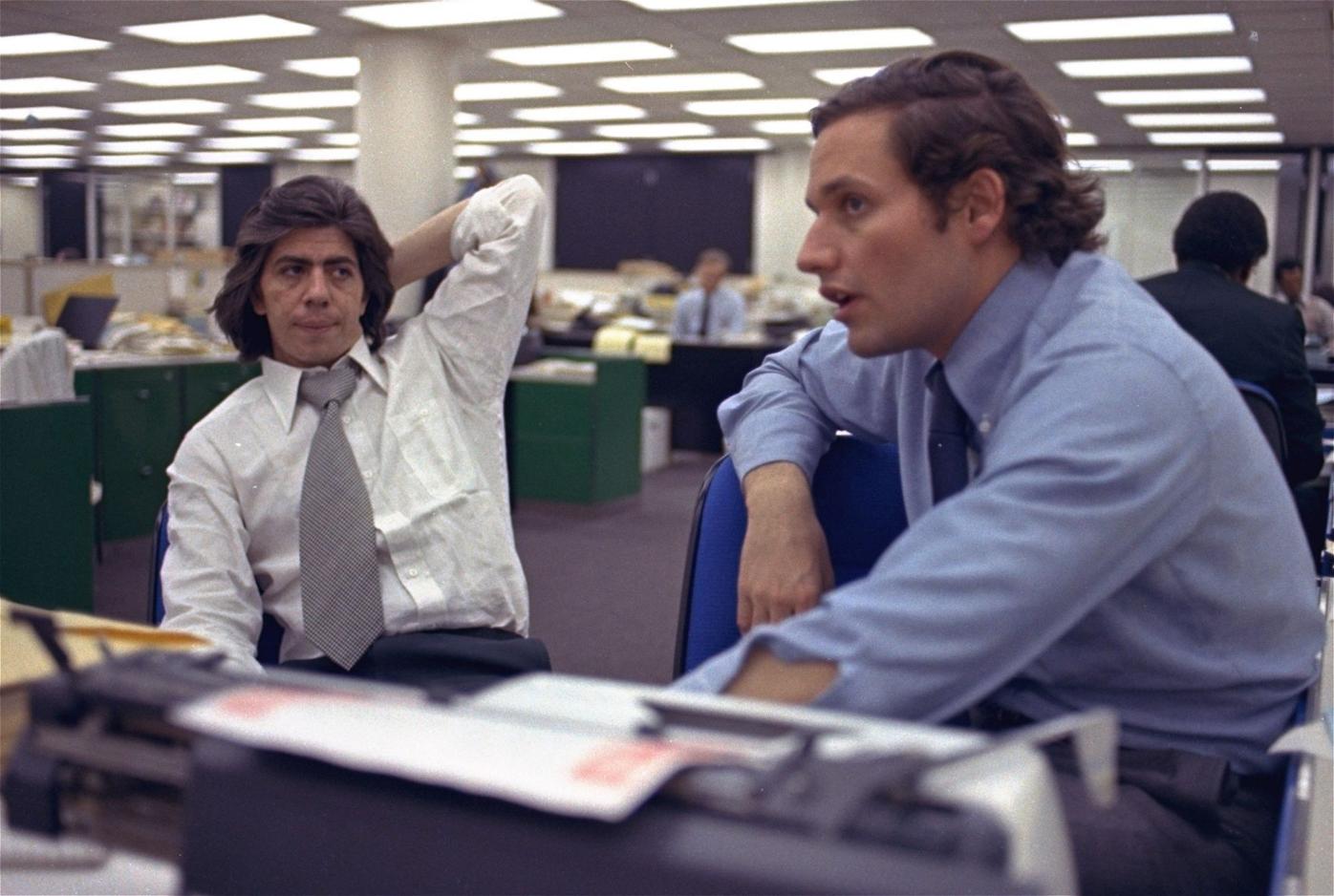
FILE - In this May 7, 1973, file photo, reporters Bob Woodward, right, and Carl Bernstein, whose reporting of the Watergate case won them a Pulitzer Prize, sit in the newsroom of the Washington Post in Washington. (AP Photo)
STF


FILE – In this May 7, 1973, file photo, reporters Bob Woodward, right, and Carl Bernstein, whose reporting of the Watergate case won them a Pulitzer Prize, sit in the newsroom of the Washington Post in Washington. (AP Photo)
If Woodward and Bernstein were writing about all the misdeeds of President Richard Nixon’s men in today’s mediascape, surely we’d see an alternate train of reporting from other opposing media outlets, and maybe even Nixon’s own media outlet. And cable TV talking heads would have dissected and likely countered every one of Woodward and Bernstein’s findings with questions about the reporters, their sources, The Washington Post, its owner Jeff Bezos, and its political leanings. And that kind of daily sandblasting of the truth of their reporting would have raised questions in people’s minds about the truth of the whole Watergate conspiracy, I have to believe.
At the time, Woodward and Bernstein were often out there alone with their reports, facing artfully worded “non-denial denials” from the White House, but no challenges from other media.
Today, it would be a “they said, we said” kind of dialectic, instead of a long, steady uncovering of deep-rooted corruption.
A stirring reminder that America working together can do the impossible | Vince Bzdek
Of course, it’s not just media that has changed. Parties have changed and we, the people, have changed since then, too. We are all much more siloed into our own ideological camps and less likely to believe each other, and social media seems to have made us all nastier to each other.
Alas, Watergate is probably responsible for initiating that changed landscape, in that it broke public trust in government.
In a recent Q&A, Bernstein zeroed in on how the accountability faced by President Donald Trump has been far different than that faced by Richard Nixon. Many people in the Republican Party still embrace or excuse Donald Trump’s behavior, Bernstein pointed out.
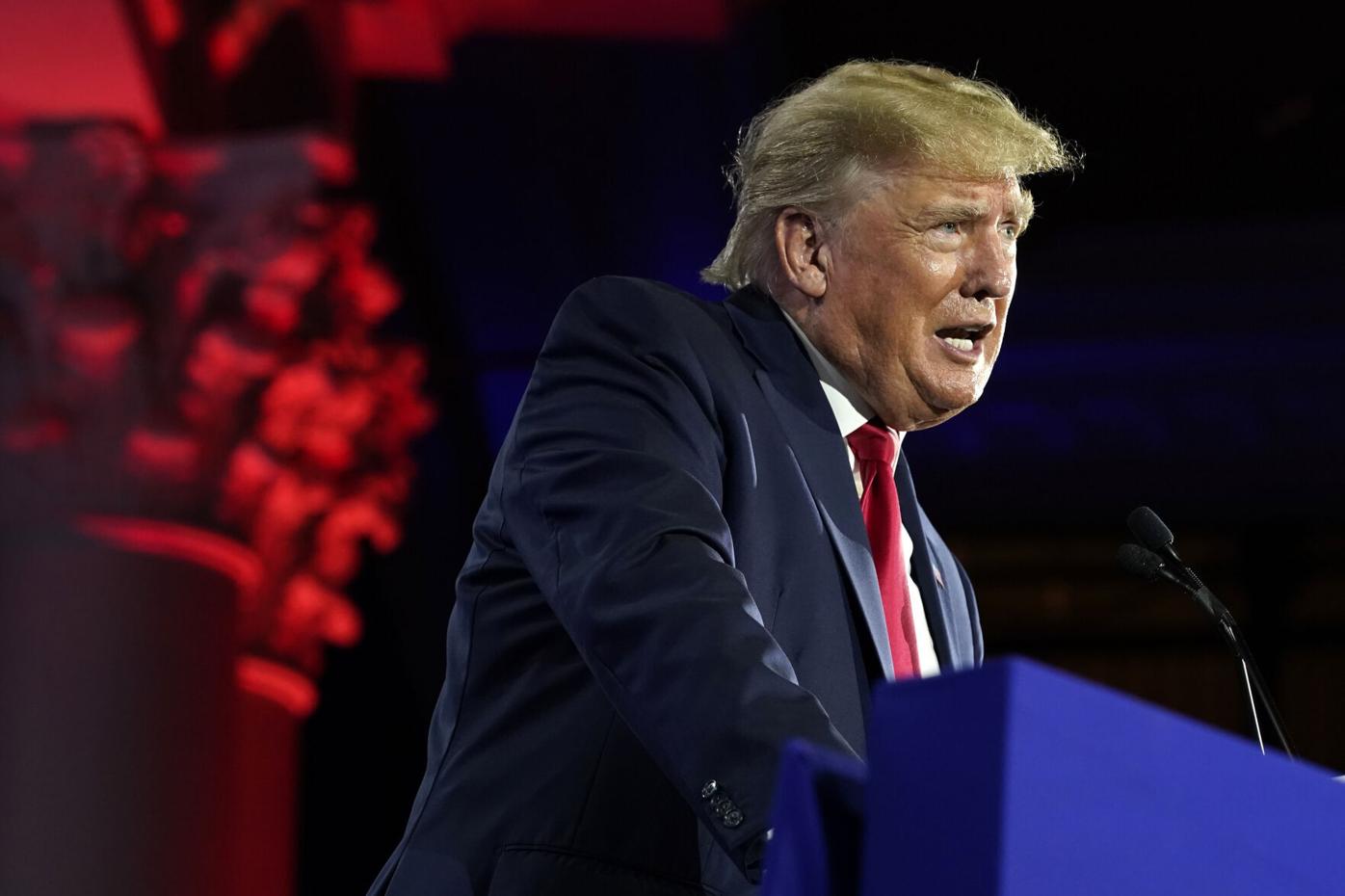
Former President Donald Trump speaks at the Faith and Freedom Coalition’s “Road to Majority” event on June 17 in Nashville, Tenn.
Associated Press file


Former President Donald Trump speaks at the Faith and Freedom Coalition’s “Road to Majority” event on June 17 in Nashville, Tenn.
“This is a dangerous equation, probably unique in our history, where such a president has had the enthusiastic support of his party and so many people, even after his criminality and corruption has been exposed,” Bernstein said in a Washington Post chat. “In the case of Richard Nixon, a criminal president was forced to resign because courageous Republicans in the House and the Senate were willing to vote for his impeachment and, if he didn’t resign, his conviction in a Senate trial.”
I imagine Nixon would still have enormous support in today’s climate even after Woodward and Bernstein revealed that he actively participated in the coverup of the Watergate break-in as well as a massive campaign of political espionage, sabotage and disinformation. Both presidents sought to subvert our electoral process. Nixon did it stealthily, in back rooms and behind closed doors. Trump did it out in the open for everyone to see, and many people just didn’t care.
Dad jokes just might save the world | Vince Bzdek
Given that, I have to conclude that Richard M. Nixon would have never resigned in the current climate, and we’d have a very different country than we have today, if we’d have a country at all. That’s pretty scary.
Len Downie, an editor I used to work for who was in charge of much of the editing of the Watergate stories during the scandal, told me the way Watergate ended, with Nixon’s resignation, was actually a relief.
“So the country was relieved; shocked that it had happened, but relieved that it had been resolved in a peaceable and in an orderly fashion,” he once told me. “It was a reinforcement of American democratic institutions.”
I don’t see that we’ve had such a satisfyingly peaceful conclusion or reinforcement of our institutions yet this go-round. Those institutions are still pretty wobbly, and I think we’re all still waiting for more moral clarity on what happened on Jan. 6. Maybe these hearings will give us that.
I’ve been lucky enough to talk some with Woodward over the years about the reporting of the original Watergate story, and about how that reporting was able to help spotlight and eventually lead to repairs of a very broken system in Washington.
“We were the local paper,” Woodward told me. “We had great editors who were curious about what was this about a break-in into the Democratic headquarters? The clues were quite substantial, and Carl Bernstein and I were young, unmarried, and they turned us loose on it and quite frankly, I think it was the culture of The Washington Post at the time, and continues to be that culture of ‘we have a responsibility to dig into things.’ And that’s the job of a newspaper.”
Responsibility — that’s not a word you hear much in the context of Jan. 6.
“Now Katharine Graham, who was the publisher and owner of the Post at the time … she thought we had maybe a triple, quadruple responsibility to dig into it because it involved the president of the United States, that gave us a greater responsibility,” Woodward said.
When the Senate launched a bipartisan investigation of Watergate, the vote was 77-0 to set up an investigative committee.
Forty-eight years later, only two House Republicans — Reps. Liz Cheney of Wyoming and Adam Kinzinger of Illinois, joined Democrats in voting 222-190 to establish a committee to investigate the Jan. 6, 2021, Capitol attack.
Where is the responsibility in that?
In a commemorative, 50th-anniversary edition of their famous book, “All the President’s Men,” Woodward and Bernstein have penned a fresh foreword comparing Jan. 6 and Watergate. They conclude that “Both Nixon and Trump created a conspiratorial world in which the U.S. Constitution, laws and fragile democratic traditions were to be manipulated or ignored, political opponents and the media were ‘enemies,’ and there were few or no restraints on the powers entrusted to presidents.”
They don’t like to engage in Mad Lib history really, but it is clear from the new edition of their book they believe what happened on Jan. 6 and the current corrosion of our American institutions may actually be worse than Watergate.
“Donald Trump not only sought to destroy the electoral system through false claims of voter fraud and unprecedented public intimidation of state election officials,” they wrote, “but he also then attempted to prevent the peaceful transfer of power to his duly elected successor, for the first time in American history.”
“Both Nixon and Trump have been willing prisoners of their compulsions to dominate, and to gain and hold political power through virtually any means. In leaning so heavily on these dark impulses, they defined two of the most dangerous and troubling eras in American history.”