







Confusion swirls as Colorado imposes new retail delivery fee, catching businesses by surprise
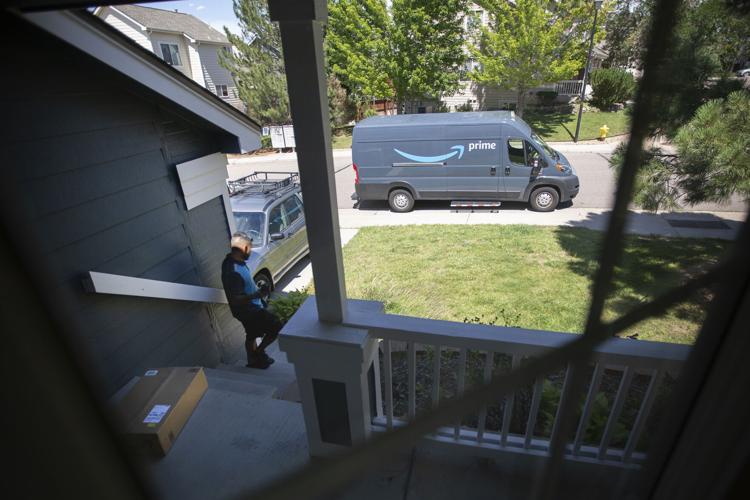
An Amazon delivery driver drops off a package on Friday, July 8, 2022, in Highlands Ranch, Colo. (Timothy Hurst/The Denver Gazette)
TIMOTHY HURST/THE DENVER GAZETTE
Colorado consumers will start noticing a 27-cent fee on receipts for almost everything that gets delivered to them, including restaurant food, after Colorado’s new “retail delivery fee” took effect July 1.
The fee must be collected and paid to the state by retailers “on all deliveries by motor vehicle to a location in Colorado with at least one item of tangible personal property subject to state sales or use tax,” according to the new law.
The new fee is occurring at a time of record-setting inflation, spiking home prices, and a general sense of how unaffordable living in Colorado has become, particularly in metro Denver. It’s also occurring even as elected officials promise to do everything in their power to lift the economic burden on residents.
Proof of residency no longer required to apply for Denver business license
It’s part of the transportation package the legislature passed in 2021 and is expected to generate hundreds of millions of dollars in coming years for road improvements, transit projects and electric vehicle programs.
The Colorado Department of Revenue only finalized draft rules for the new fee – which is actually four fees rolled into one – in May, and the final rules are still weeks away. A department spokesman said they sent letters to retailers “both by mail and email depending on what we had on file in our GenTax system” and held a public rule making hearing on June 23, which was attended by hundreds. The department also created a Q&A site on its website tax.colorado.gov.
Denver inventory of for-sale homes 'skyrockets' in June
Department officials “auto-registered” all sales tax business to collect the new fee, Tax Policy Manager Erika Hoxeng told attendees.
But many business representatives who attended that meeting said they were unaware of the new fee, complained that it was incredibly complicated to comply with and worried about raising prices for customers already enduring the worst inflation the nation has seen in decades.
It also comes at a time when many Coloradans have grown used to the convenience of home delivery after years of a pandemic.
Americans for Prosperity, which advocates for “economic freedom” and limited government, has sued the state, alleging legislators skirted TABOR requirements that voters must approve all new taxes by creating four new enterprises to collect the fees. State attorneys deny the claim and have asked a judge to dismiss the lawsuit.
“This certainly has been challenging to our tax teams,” said Chris Howes, president of the Colorado Retail Council. “This is a really unique fee. The first in the nation. … We’re working through creation software that will allow our members to comply.”
The council represents 1,800 retail locations in the state, including all the major chain retailers and giant Amazon.
While Amazon officials declined to specifically address the retail delivery fee, they said, “Amazon complies with all applicable tax laws.”
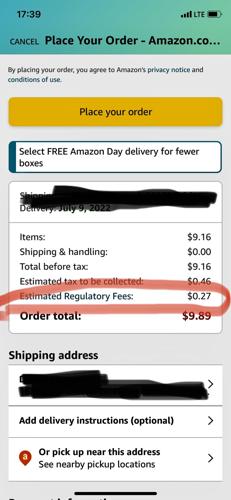
And sure enough, Amazon’s Colorado customers will notice on receipts since July 1 an “estimated regulatory fees $0.27.”
The issue predictably split people along political lines.
“These delivery and rideshare fees are the latest example of Democrats being out of touch,” Michael Fields, president of Advance Colorado and a plaintiff in the Americans For Prosperity lawsuit, told The Denver Gazette in an email. “With 9% inflation in Colorado, families are struggling to make ends meet. Government shouldn’t be raising taxes or fees on anything right now.”
The non-profit Advance Colorado describes itself as an educational group in “areas of fiscal responsibility and transparency, limited government, free enterprise, lower taxes, strong public safety, and an accountable education system.”
Gov. Jared Polis countered that the transportation package received bi-partisan backing and is necessary to help Colorado’s ailing roads, bridges and transportation infrastructure.
“Coloradans are smart enough to understand that these delivery trucks and services are contributing to wear and tear on our roads, and in order to keep the roads up for the rest of us and improve transit, there is a fee that goes towards transportation,” Polis said via a spokesperson.
The governor’s response continued his oft-repeated theme of “saving Coloradans money” when describing the whole transportation package.
“The same bill that had the delivery fee also cut the vehicle registration fee,” gubernatorial spokesperson Conor Cahill said via email. “A family with two cars saves money overall unless they have over 82 deliveries.”
In its motion to dismiss the Americans for Prosperity lawsuit, the state insists that lawmakers passed the bill for the “sustainability of the transportation system,” and that the enterprises created by the 2021 law – and fees they will collect to fund programs – will “benefit the health and safety of all Coloradans.”
The motion describes the law as fully TABOR compliant.
The lawsuit, filed in April in Denver District Court, alleges the “legislature’s sleight of hand is illegal.”
“Rather than listen to the people, the General Assembly took their scheming to a new high with S.B. 21-260,” the lawsuit says. “In that bill, the General Assembly decided several aspects of Colorado’s transportation system needed more funding. Instead of going to the voters to authorize new taxes, as would be required by TABOR, the General Assembly decided to use their favorite revenue generator: enterprises and fees.”
Area chambers of commerce are split on support for the fee.
“While SB21-260 was far from perfect, it was a bill rooted in the reality of our current situation and the funding we so desperately need to address serious transportation issues that plague Colorado,” said Adam Burg, the vice president of Government Affairs at the Denver Metro Chamber of Commerce, via email. “The Denver Metro Chamber supported this bill with the understanding that its constitutionality will be questioned and determined by the courts.”
“This fee is not friendly to businesses or the consumer,” countered Jeff Keener, president and CEO of the South Metro Denver Chamber, via email, referring to the new delivery fee. “It also appears from the information available the monies collected, and the allocation of these funds, is not well planned. The South Metro Denver Chamber opposed this additional fee.”
Confusion about the retail delivery fee swirls, as evidenced by questions in the June 23 meeting and to the Colorado Retail Council.
What if a taxable good is delivered via bicycle or electric bike?
Is the fee subject to sales tax? (No, according to revenue department officials.)
Is a customer refunded the fee if they return a product delivered by companies like Amazon?
Can a business not charge customers and just pay the fee instead?
“The cost to program out systems to collect this fee will be expensive and it will be much more cost-effective for us to just pay the fee,” said one business representative.
“This is a little more complicated than what was described to the business community while the bill was being passed at the legislature,” Howes said. “Many of our members are concerned about liability issues. What if we charge a customer too much or too little?”
Out of caution, many council members are just eating the cost of the new fee in an “escrow-type situation,” Howes said.
There’s also the question of delivery of non-taxed items, such as fruits, vegetables, or ground beef, for example.
“If just one item in that order is taxed, like a tube of toothpaste, it triggers the fee,” he said.
Food delivery services, such as UberEats, DoorDash, InstaCart or even pizza houses, are now required to charge the fee.
“As required by Colorado law, we now collect and remit a retail delivery fee from customers on each delivery order in the state,” according to a DoorDash spokesperson. “Customers in Colorado now see this fee displayed on the checkout screen prior to placing their order, as well as on their receipt.”
While the Department of Revenue has no ability to delay implementation, it seems to sympathize with business owners trying to comply and won’t “prioritize enforcement.”
“We understand that some retailers may have difficulty implementing this new retail delivery fee program by July 1,” according to the department’s website. “State statute generally requires retailers to add the retail delivery fee to the sale and show it on the receipt or invoice as a separately stated item. However, the Department currently has no plans to prioritize enforcement of this provision as long as retailers are paying the full amount of the fees due in accordance with their liability under section 43-4-605(6)(c), C.R.S.
“Furthermore, for those retailers who are making a good-faith effort to comply with these new requirements, we plan to be generous in granting requests to waive late filing and payment penalties and interest.”
Editor Luige Del Puerto contributed to this report.