







Basin states unlikely to meet federal deadline to draft plan to save Colorado River reservoirs
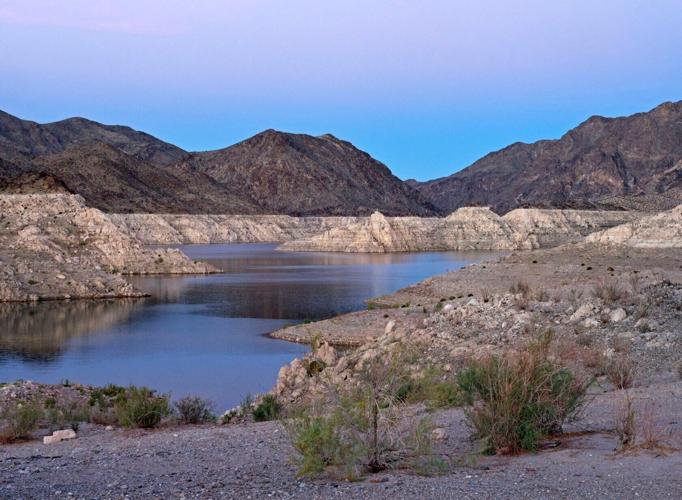
The Earth's shadow rises at dawn above the landscape near Channel Island at the head of Virgin Canyon in Lake Mead in the Lake Mead National Recreation Area on the Arizona-Nevada border (Photo from Arizona)
Colleen Miniuk-Sperry
Tuesday is expected to be the day the seven states along the Colorado River Basin must propose a plan to conserve 2 to 4 million acre-feet of water in the coming year, in part to save hydroelectric power operations at the Glen Canyon and Hoover dams.
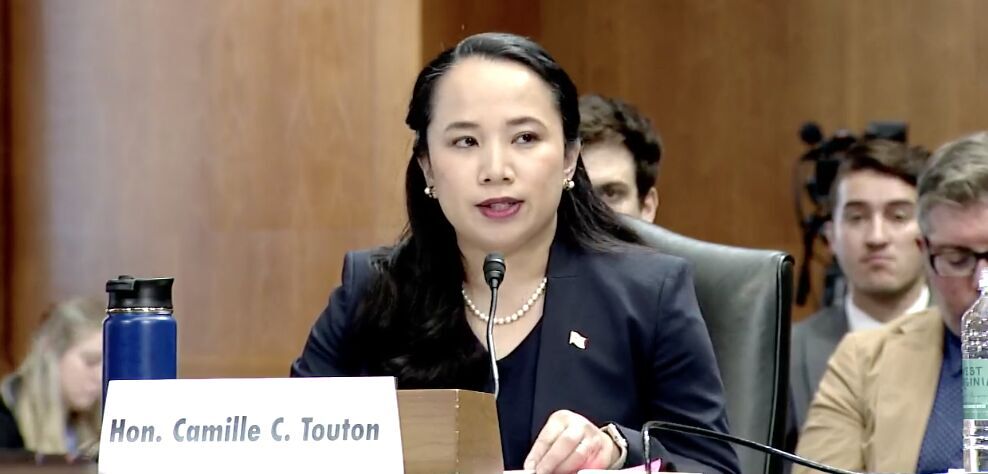
But the chances of a negotiated plan coming from the seven states appear to be nil. And that could lead the U.S. Bureau of Reclamation, and Commissioner Camille Touton, who ordered the plan in June, to step in.
Touton did not say how much water each state, or even each basin, would have to give up, although agriculture could be especially targeted for those cuts.
“Four million acre feet is obviously out of reach. It always was,” John Fleck, a University of New Mexico professor who focuses on water policy, wrote last week.
And even 2 million acre feet may be “beyond the grasp of a voluntary deal, as well,” he said.
Touton’s announcement in June had caught some by surprise. The seven states have largely worked collaboratively in the past decade, taking significant and often painful actions to conserver water. They worked on a drought contingency plan in 2019, for example. But the states appear less inclined to play nice this time around.
The Upper Colorado River Commission (UCRC), which includes Colorado, Utah, Wyoming and New Mexico, put forward a five-point plan in July, along with a statement that said the upper basin states have already cut back on their water consumption and their options for doing more are limited. The upper basin states are estimated to use about 4 million acre-feet of water per year, under the 1922 Colorado River compact and ensuing legal agreements over the last 100 years.
“Our water users already suffer chronic shortages under current conditions resulting in uncompensated priority administration, which includes cuts to numerous present perfected rights in each of our states,” the UCRC commissioners said in a letter to the Bureau of Reclamation.
There is no similar organization for the lower basin states of Arizona, Nevada and southern California. Under the compact, the three states share 7.5 million acre-feet of water per year; Arizona gets 2.8 million acre-feet; Nevada 300,000 and California 4.4 million. However, more recent estimates show that in 2021 the three states took 6.8 million acre-feet.
It’s likely that, with the upper basin states saying “no more,” most of the cuts will fall on Arizona and southern California.
Fleck said Nevada’s allocation is “so tiny that its contribution is couch cushion change, a rounding error.”
Arizona appears to be the most nervous about what could happen, as most of its water rights on the Colorado are junior to the other states.
Sen. Mark Kelly, D-Ariz., in that same June 14 Senate Natural Resources Committee hearing Touton spoke at, told her that if his state had to absorb the 2 to 4 million acre-feet reduction, “it would wipe out deliveries, water deliveries, to cities, tribes and farms in Phoenix and in Tucson.”
“This is certainly not in the public interest, given our state’s national role in ag, strategic minerals, and semiconductor manufacturing,” he said.
Arizona water officials stated during a July 13 meeting that they would not allow the Central Arizona Project, which provides water to more than 80% of Arizona residents, to be sent “into the mud.”
“We in Arizona are not going to walk out of any room in which an agreed-upon outcome is CAP going to zero. That is not something that Ted and I will ever agree to,” Arizona Department of Water Resources Director Tom Buschatzke said, referring to himself and Central Arizona Project General Manager Ted Cooke. “If they want to force that outcome on us we will deal with those impacts, but we are not going to voluntarily send CAP into the mud.”
At that same meeting, Wade Noble, coordinator of the Yuma County Agriculture Water Coalition, presented an agriculture conservation plan that he said would cost the Arizona government between $4 billion and $8 billion.
“If you look at the agriculture in the lower basin, there’s about 925,000 acres of ag land. Two million acre feet would be left in the river,” he said.
It is not a fallowing program and has nothing to do with the crops already grown, Noble added.
Last year, the three lower basin states signed an agreement to reduce their allocation by 500,000 acre-feet, known as the “500+ Plan.” The plan is intended to benefit Lake Mead, the water “bank” for the lower basin states, through voluntary and compensated reductions, new system water conservation; new Intentionally Created Surplus (ICS) water, defined as water conserved through an extraordinary conservation measure, such as land fallowing; and, leaving existing ICS water in Lake Mead that had been scheduled to be withdrawn. Combined with the water Arizona alone was expected to conserve from the 2019 Drought Contingency Plan and other voluntary measures, that would come up to about 800,000 acre-feet per year.
Clearly, that was not enough, based on the demand from reclamation bureau and the worsening situation for Lake Mead and Lake Powell.
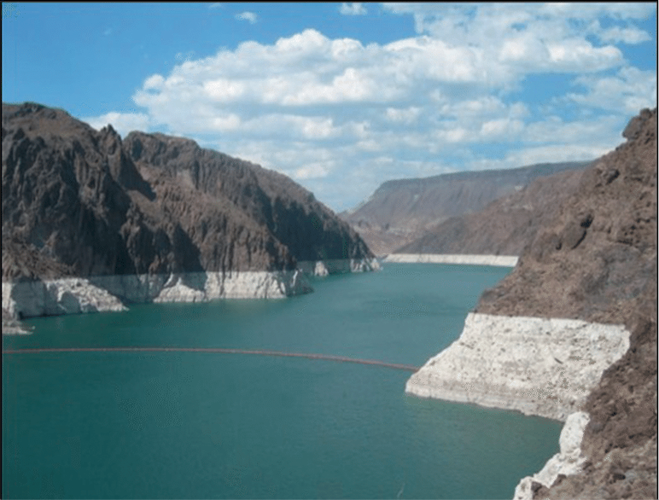
According to Robert Glennon at the University of Arizona, Mead is approaching what’s known as “deadpool,” when water levels are so low that pumping no longer can take place. Touton called for the plan to protect critical levels in Mead at 1,000 feet and Powell at 3,500 feet.
According to the Bureau of Reclamation, this is what dead pool looks like:

Courtesy Bureau of Reclamation.
California is reportedly willing to provide 400,000 to 500,000 acre-feet of water to address the Colorado River shortage through voluntary cuts to agriculture and to water supplies for Los Angeles.
In addition, California Gov. Gavin Newsom on Thursday announced a new strategy for dealing with drought in his state.
“The volume of water used by people in California for agriculture, urban, and environmental purposes ranges from 60 million acre-feet per year to 90 million acre-feet per year. A loss of 10 percent of that volume to hotter, drier conditions could mean the disappearance of about six million acre-feet to nine million acre-feet of water supply,” the plan states.
The plan calls for expanding water storage by 4 million acre-feet, recycling as much as 800,000 per year, conserving 500,000 per year through more efficient use, and making new water available through desalination.


Can deliberation save democracy? | Vince Bzdek
vince-bzdek
vince.bzdek@gazette.com
Updated 4 hours ago
By Vince Bzdek In September 2019, 523 Americans traveled to Dallas, Texas, for an experiment called “America in One Room.” The gathering was designed to test a theory: Could representative citizens deliberate productively even in an era of intense polarization?...

vince-bzdek
Reporter

Colorado health equity funder’s redirection debated
Debbie Kelley
debbie.kelley@gazette.com
Updated 17 hours ago
A redirection in grantmaking that began two years ago for The Colorado Trust, a 40-year-old Denver-headquartered funder, has led some employees to now voice concerns, which has reportedly put their jobs in jeopardy. The vice president of communications for the...

Debbie Kelley
Reporter

Battle of the Badges connects cops, community and cancer
John Moore
john.moore@denvergazette.com
Updated 3 hours ago
For Aurora and Denver first responders, the gloves come on for a good time and a good cause Guns down, gloves up. That was the mantra last Saturday night for the 30 Denver and Aurora police officers, firefighters, corrections officers...

John Moore
Reporter

Europe faces gas trouble as war strains supplies and Russia weighs cut-off
Maydeen Merino, Washington Examiner
maydeen-merino-washington-examiner@import.placeholder
Updated 21 hours ago
Europe is facing major economic trouble due to constrained natural gas supplies as the war in Iran upends global energy flows, with further disruptions possible as Russia weighs suspending gas exports. In the days since the start of the war in Iran, Europe has seen a...

Maydeen Merino, Washington Examiner
Reporter

Hopes and fears: Colorado Iranians speak out on widening war
Mark Samuelson
mark.samuelson@denvergazette.com
Updated 4 hours ago
Group talks about young people protesting against the Islamic Republic, and Reza Pahlavi and the monarchy When Denver area real estate agent Fara Novin dined out for her birthday Friday night, Feb. 27, she blew out a candle on a...

Mark Samuelson
Reporter
DOJ publishes more Epstein documents mentioning Trump after initial omission
Rena Rowe, Washington Examiner
rena.rowe.washington.examiner@gazetteedit.wpenginepowered.com
Updated 22 hours ago
The Justice Department released additional Epstein files on Thursday, including uncorroborated accusations from a woman claiming she was sexually assaulted by President Donald Trump. Last week, Rep. Robert Garcia (D-CA), the top Democrat on the House Oversight and Government Reform...

Rena Rowe, Washington Examiner
Reporter
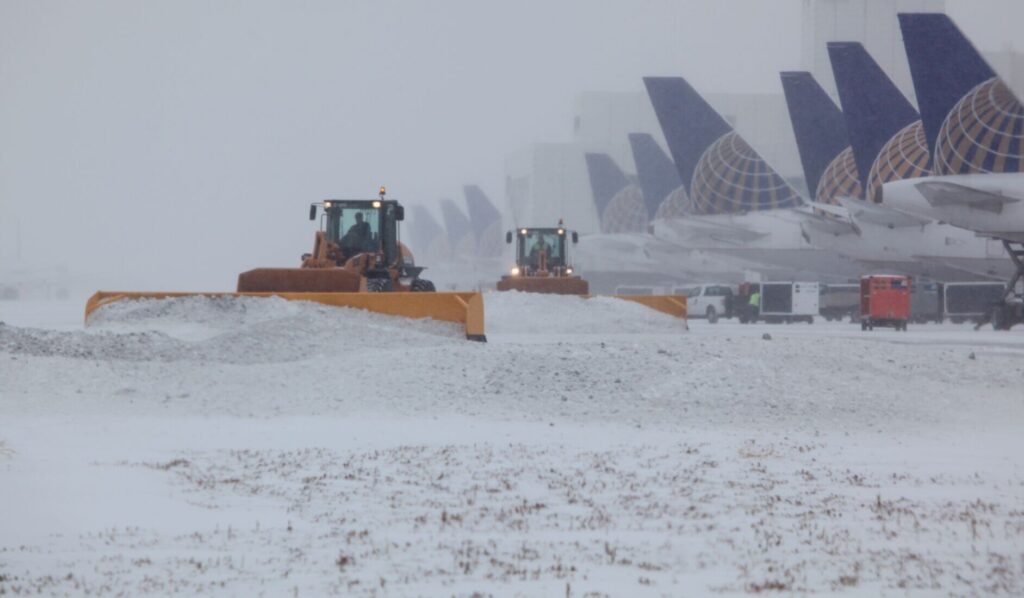
Truck driver hospitalized, United flight deplaned after Denver airport crash
Michael Braithwaite
michael.braithwaite@gazette.com
Updated 20 hours ago
The driver of a de-icing truck was hospitalized and a United Airlines flight was deplaned after a crash at Denver International Airport Friday morning. Amid heavy snowfall, United Airlines flight 605 headed to Nashville hit the truck while leaving the...

Michael Braithwaite
Reporter

House GOP leaders begin push for reconciliation 2.0
Lauren Green, Washington Examiner
lauren.green.washington.examiner@gazetteedit.wpenginepowered.com
Updated 21 hours ago
House Republican leaders are pushing for a second party-line reconciliation bill and plan to discuss it at their upcoming policy retreat in Doral, Florida, next week. Sources close to GOP leadership told the Washington Examiner that Speaker Mike Johnson (R-LA)...

Lauren Green, Washington Examiner
Reporter

Trump confirms frustration over Noem’s $220 million ad campaign: ‘Didn’t know about it’
Emily Hallas, Washington Examiner
emily.hallas.washington.examiner@gazetteedit.wpenginepowered.com
Updated 22 hours ago
President Donald Trump questioned former Homeland Security Secretary Kristi Noem’s approval of a costly ad campaign prominently featuring herself. Noem has repeatedly claimed, including during congressional testimony on Tuesday, that Trump personally asked her to craft the DHS ad campaign,...

Emily Hallas, Washington Examiner
Reporter

Khamenei’s secret bunker under Tehran destroyed by Israeli military jet bombardment
Brady Knox, Washington Examiner
brady.knox.washington.examiner@gazetteedit.wpenginepowered.com
Updated 22 hours ago
The bunker created for former Iranian Ayatollah Ali Khamenei was reportedly still in use by senior Iranian figures when it was obliterated in a bombardment from 50 Israeli Air Force jets Friday. Khamenei was assassinated in an Israeli airstrike in...

Brady Knox, Washington Examiner
Reporter
PREV
PREVIOUS

Small plane lands on busy road east of Colorado Springs
Facebook Twitter WhatsApp SMS Email Print Copy article link Save Facebook Twitter WhatsApp SMS Email Print Copy article link Save A small plane landed on Woodmen Road Sunday morning before taking off again, according to posts on the Meridian Ranch/Woodmen Hills Facebook page. The plane landed safely on Woodmen Road near Marksheffel Road or near […]

15 people rescued in Colorado as mudslide shuts down mountain pass
Facebook Twitter WhatsApp SMS Email Print Copy article link Save Facebook Twitter WhatsApp SMS Email Print Copy article link Save Eight cars and 15 occupants were stranded on Saturday after being caught in a major mudslide at the Ingram Falls area of Black Bear Pass, according to the San Miguel County Sheriff’s Office. Black Bear Pass […]