







Ignored for decades, Colorado River tribes fight for their water rights
MONUMENT VALLEY, Utah • Navajo Nation residents in pickup trucks rumbled along dusty dirt roads in the ethereal painted desert of Monument Valley in August to a well where they fill up water tanks, sometimes multiple times a day.
The well spigot in the dirt parking lot next to a shuttered post office in Goulding, Utah, is just up the road from modern lodges that house tourists visiting the valley, one of the most iconic settings for Western movies.
Some 10,000 households on the vast Navajo Nation, which covers 27,000 square miles in three states, are still without running water. Native American tribes hold some of the most senior water rights in the Colorado River Basin, but history has shown that having senior water rights and having water are two different realities. The tribes, including the Ute Mountain Utes in southwest Colorado are fighting to gain their rights, in some places successfully, as the basin struggles with an epic megadrought and new federal calls to conserve massive amounts of water next year. (Video by Skyler Ballard & Mary Shinn)
{
“@context”: “https://schema.org”,
“@type”: “VideoObject”,
“name”: “Tipping Point: Colorado River tribes fight for their water rights”,
“description”: “Some 10,000 households on the vast Navajo Nation, which covers 27,000 square miles in three states, are still without running water. Native American tribes hold some of the most senior water rights in the Colorado River Basin, but history has shown that having senior water rights and having water are two different realities. The tribes, including the Ute Mountain Utes in southwest Colorado are fighting to gain their rights, in some places successfully, as the basin struggles with an epic megadrought and new federal calls to conserve massive amounts of water next year. (Video by Skyler Ballard & Mary Shinn)”,
“thumbnailUrl”: “https://bloximages.newyork1.vip.townnews.com/denvergazette.com/content/tncms/assets/v3/editorial/0/c1/0c18fd9c-22ce-5063-ab2f-72c198403f5d/6464b419c15c4.image.jpg?resize=1200%2C675”,
“uploadDate”: “2022-08-18T07:00:00-06:00”,
“contentUrl”: “https://cdn.field59.com/GAZETTE/d335c697c8a3133bbcdbe6f5d141de2ae665fe28_fl9-360p.mp4”
}
On their way to get critical drinking water for themselves and their livestock, residents can end up waiting for tourists standing in the middle of the highway taking photos of the huge rock formations.

The rising sun shines on the water spigot, located in a dirt lot near a run down post office, in Goulding, Utah, on Aug. 3. Hundreds of people and their livestock from Navajo Nation rely on water from this well.
On a baking August day, families, teenagers and seniors in their 80s pulled up to use the unassuming single pipe spigot with a black hose tossed over a barbwire fence. They filled container after container of water by climbing into pickup truck beds to fill huge tanks that can hold hundreds of gallons, 50-gallon barrels and some much smaller 10-gallon containers.
Left sitting too long, this water can start tasting like algae, but several residents said they trust the ground water from the spigot more than San Juan River water, that has been contaminated in the past by runoff from historic mines.
Waiting in line to haul water home, sometimes for as long as six hours, is just part of regular chores on the Navajo Nation, a hardship and drudgery unknown to most Americans. Some residents have done it all their lives. Like many bored modern people waiting in lines, many pass time in line on their cellphones.

Kayto Sullivan Sr. sits on the tailgate of his truck while filling hundreds of gallons worth of containers with water from a spigot in Goulding, Utah on Aug. 3. Approximately 20% of Navajo Nation households live without running water and have to haul it from watering stations, sometimes hours away from their homes.
The Navajo, or Diné, have heard for decades the promise of running water in their homes. Many have yet to see it, and they don’t expect it to arrive any time soon.
Resident Shannon Cly remembers hearing that running water was on its way when she was a child. Now a mom with four kids, she spent four years designing a system that replicates having running water because she was determined to change her lifestyle. Caring for her elderly grandmother who had health challenges including diabetes without running water for bathing was particularly tough, she said.
“I wanted my kids to have a different life,” said Cly, who was flipping through her planner with manicured nails while waiting for water with two of her kids.
While she still has to haul water regularly — twice on laundry day — once she gets home, a pump ensures water flows to the bathrooms and sink taps. The family no longer uses pots to bring water into the house from 50-gallon drums as they did before. Once water is used for tasks like showering and washing dishes, it flows into a tank to water her trees. Water from toilets has its own tank. It’s a system that other people are interested in replicating, she said.
The lack of running water is a widespread problem across the vast and often desolate Navajo Nation, where 9,600 households, or about 20%, live without it, said Jason John, director of the Navajo Department of Water Resources.

Approximately 9,600 homes across the sprawling 27,000 square miles of the Navajo Nation do not have running water.
The Navajo Nation is the largest reservation in the U.S., covering about 27,000 square miles and portions of Arizona, New Mexico and Utah. Many live in remote areas down dirt roads on land their families have occupied for generations.
The Utah Navajo Water Rights Settlement that recognized the tribe’s right to 81,500 acre-feet of Colorado River Basin water, signed in May, could bring San Juan River drinking water to Nation residents living on the Utah side of Monument Valley. But water resources director John said many years likely lie ahead before it actually reaches homes.
Still, the agreement is a big step and one the Navajo Nation and other tribes are hoping they can replicate in other cases along the Colorado River Basin.
A coordinated effort
Eleven other tribes, including the Ute Mountain Ute Tribe in southwest Colorado near the Four Corners, are also working to have their water rights on the river recognized and quantified.
Tribal leadership would like to reach a resolution ahead of the new interim guidelines for managing the river, set to be finalized in 2026. If not, the tribes fear losing some of their rights, said Ute Mountain Ute Tribal Chairman Manuel Heart in an interview with The Gazette.
“We, as tribes, need to be able to utilize these waters for our own future,” he said, during an interview in his tidy office in Towaoc, the largest community on the Ute Mountain Ute reservation that covers 575,000 acres across Colorado, New Mexico and Utah.

It is a historic push for the tribes to access water for diverse needs such as drinking water, community development, agriculture and sustaining ecosystems, he said.
“It is going to take partnerships and negotiations to make things happen in the time frame that we have,” he said.
U.S. Secretary of the Interior Deb Haaland, a member of Laguna Pueblo, has made tribal infrastructure issues a priority and Heart is optimistic that she will be able to get the water rights quantified.
In response to Heart’s statement that the tribes fear losing their rights if they are not quantified, the Bureau of Reclamation’s chief of public affairs Rob Manning said, “We take seriously the inclusion of the tribes.” Thirty tribes have claims to Colorado River water.
Drought threatens Colorado River hydropower, major source of renewable energy
Running water is a key tool for economic development to support retail business, agriculture and industry and to protect public health. During the pandemic, the lack of running water contributed to the high rates of COVID-19 mortality on the Navajo Nation. The nation’s dashboard reported on Wednesday that 1,883 residents have died during the pandemic.
Nationally, Native Americans are the most likely group to lack potable water in their homes, said University of Utah Professor Heather Tanana, who is Navajo and authored the report “Universal Access to Clean Water for Tribes in the Colorado River Basin.“
Settling water rights and properly funding infrastructure projects to bring that water to tribes could help restore tribal life and correct historical harm, she said.
“The failure of water security to be achieved — that’s why some of the areas are economically depressed,” she said.
The Colorado River tribes were not included in the original 1922 compact that governs water use among seven states, because they were not recognized as citizens until 1924, tribal Chairman Heart said. U.S. officials could have represented the tribes in the compact because the federal government had a recognized obligation at the time to deliver water to the tribes, but they didn’t negotiate on behalf of the tribes, said Troy Eid, former U.S. attorney for Colorado, the president of the Navajo Nation Bar Association and an expert on tribal water rights.
Tribes have had to fight for their rights and have relied on a 1908 Supreme Court decision that established U.S. tribes have the right to enough water to ensure their reservations can be permanent homelands, he said.
Colorado River basin farms stunted by megadrought, as more sacrifice lies ahead
However, the tribes could not retain their own lawyers to fight for their water rights until the 1960s because the federal government appointed attorneys for them, creating conflicts of interest. In one case, the same lawyer argued on behalf of the Bureau of Reclamation and on behalf the Pyramid Lake Paiute Tribe that had seen its fishing decimated by dams without fish ladders for spawning.
For decades, the federal government did not consider tribes’ needs for infrastructure to access their water and in some cases built projects that took their water away. For example, Colorado River Basin water was completely diverted away from the Gila River Indian Community, Eid said.
“The bureau did not advocate for decade after decade for the tribes,” Eid said.
In water-settlement cases and negotiations, like those ongoing, the seniority of the tribes’ water rights is established by the date of the treaty between each tribe and the U.S. government, he said. Senior rights are less likely be to be shut off in times of drought because they receive priority. Within the states, there are other highly senior water-rights holders, and those rights also get priority.
Settling the highly senior tribal rights could be tough at a time when the Bureau of Reclamation is asking the seven Colorado River Basin states including Colorado, New Mexico, Utah, Wyoming, Nevada, Arizona and California to conserve 2 million to 4 million acre-feet of water next year. Just how that might happen remains elusive after an Aug. 16 deadline set by the bureau came and went. A new deadline has not been set.

The Colorado River Basin
The conservation is needed to protect the Colorado River system, and includes reservoir releases and power production on Lake Powell and Lake Mead after a 22-year megadrought in the basin has brought them to record low levels. Federal hydrologists estimate a roughly 25% chance that the two largest reservoirs in the United States could reach deadpool status over the next three years, losing the ability to function as producers of hydroelectricity.
Tribes are aware of climate change and they are interested in creative solutions and partnerships, Tanana said.
“They acknowledge the reality of the conditions we are facing,” she said.
At the same time, safe, clean drinking water for every American should be a priority, she said. She was heartened by the recent federal infrastructure bill that set aside $13 billion for tribal communities, including $2.5 billion for the Indian Water Rights Settlement Completion Fund. It was a level of funding Tanana and her colleagues didn’t think they would see in their lifetimes, she said.
Water rights in use
After jackhammering through solid rock in the New Mexico desert to avoid an archeological site, crews prepared this month to install a section of a pipeline that will ultimately stretch about 200 miles from the San Juan River near Farmington, N.M., climbing 2,000 feet of elevation on its uphill journey to the city of Gallup, N.M.
Gallup, a financial partner in the project, borders the Navajo Nation and it is anxiously awaiting the water pipeline, because its aquifer levels have dropped 700 feet, city officials said.

Pipes that will eventually be laid underground as part of the Navajo-Gallup Water Supply Project sit on a construction site in the New Mexico desert on Aug. 4. The pipeline, being built by the Bureau of Reclamation, will ultimately stretch for about 200 miles from the San Juan River near Farmington gaining 2,000 feet of elevation on its uphill journey to the city of Gallup, N.M.
The pipeline is part of the Navajo-Gallup Water Supply Project, an endeavor that includes two separate delivery systems that could cost an estimated $1.9 billion and, when complete, could deliver about 37,000 acre-feet of water annually, said Bart Deming, construction engineer for the agency.
It is the largest Bureau of Reclamation project currently under construction and settles a portion of the tribe’s water rights that date back to the treaty signed with the U.S. government in 1868. The Navajo Nation first requested inclusion in a project planned to serve Gallup in 1975, going on 50 years ago, according the bureau’s history of the project.
“We committed to providing water to the Navajo with that treaty. This is fulfilling that commitment,” Deming said.

A construction worker surveys to make sure that the pipeline being constructed to bring water from the San Juan River near Farmington, N.M, to Gallup, N.M., is aligned on Aug. 4. At an estimated cost of $1.9 billion, the pipeline is part of the largest Bureau of Reclamation project currently under construction.
The project was funded in 2009 and water started flowing last year to 1,500 households or about 6,000 people along a 100-mile delivery system, known as the Cutter Lateral, south of Navajo Reservoir, a lake on the Colorado-New Mexico border.
The river water is treated in a brand-new $70 million water plant and the high-quality water now flows to homes once reliant on well-water systems contaminated with arsenic and uranium, Deming said.
At buildout, both pipelines are expected to serve 250,000 people by 2040. That number includes the the city of Gallup, a portion of the Jicarilla Apache reservation and 43 of the 110 chapters of the Navajo Nation. A chapter is similar to a county as a form of local government.
The Cutter Lateral could allow ranches and oil and gas operations in the area to expand, said John, with the Navajo Nation.
“It’s been a blessing for a lot of those communities,” he said.
The lateral is expected to reach the Jicarilla Apache Nation in the fall, Deming said.
The second portion of the project running to Gallup is six times larger than the first delivery system and could be complete by 2029, but it faces a huge funding shortfall. Congress needs to allocate an additional $513 million to cover escalating costs driven in part by inflation.
Colorado River strain casts shadow over recreation
Without additional funding, the project will likely run out of money in 2025, leaving a water treatment plant and pumping plants unbuilt, Deming said.
“That is a huge challenge,” he said, of the project that’s been decades in the making.
The city of Gallup and the Navajo Nation have worked together to draft legislation for additional money and hope to have it introduced soon. In the meantime, Gallup is drilling up to six previously unanticipated wells, more straws in the declining groundwater, as it waits for the pipeline to arrive, said Maryann Ustick, city manager.
Among other delays, the pipeline’s route is being redesigned to use a reservoir the Bureau of Reclamation is purchasing from the San Juan Generating Station, a massive coal-fired power plant northwest of Farmington that is being shuttered by its owner, Public Service Company of New Mexico (PNM).
The reservoir will help settle sediment out of San Juan River water and ensure that it’s cleaner upon arrival for treatment, Deming said.
Climate change is punishing the Colorado River — and fueling devastating wildfires on the basin
But Gallup officials are nervous the bureau won’t make the new 2029 deadline and they will need to drill even more wells, while also being committed to paying $76 million for pipeline projects, Ustick said. Gallup serves as a border town to several reservations and the population is about 48% Native American, according to the U.S. Census.
“The delay is very frightening to the city,” she said.
The community has already instituted a tiered water rate structure so that those that use more, pay more and that has encouraged conservation, she said.
A Colorado fight
Unplanted dirt under huge center-pivot sprinkler systems stretches for miles across Ute Mountain Ute tribal land this year. Despite recent rain, work trucks kicked up billowing clouds of dust in early August.
The drought forced both cuts to production and employment on the Ute Mountain Ute Tribe Farm and Ranch Enterprise, said Simon Martinez, general manager. Some of those jobs, critical in a highly rural area, have been preserved through special projects, like installing new micro-hydro generators, he said.

Simon Martinez, the general manager of the Ute Mountain Ute Tribe Farm and Ranch Enterprise stands in the community garden that grows sweet corn and pumpkins to share with tribal members. The garden was fallowed last year amid drought conditions.
“The rewards are outweighing the challenges. … People are still making a living,” he said.
A Farm and Ranch Enterprise employee, Henrietta Jones was out stacking alfalfa hay bales in a specialized truck in early August, one of her many duties on the farm where she has worked for nine years and watched fields go fallow during the drought.

A Ute Mountain Ute Farm and Ranch Enterprise employee Henrietta Jones poses for a photo in a hay stacker.
“There is nothing green. … where you are used to seeing crops. Now, it’s just nothing. It’s sad,” said Jones, a Ute Mountain Ute tribal member.
The Farm and Ranch Enterprise typically raises 700 cattle and 7,600 acres of alfalfa, corn and triticale, a hybrid of wheat and rye. The drought has forced the tribe to fallow 6,000 of those acres. Last year, the tribe even left the beloved community garden that features sweet corn and pumpkins unplanted, Martinez said.
The tribe’s mill that produces Bow and Arrow Brand corn meal mostly for boutique shops is still operating, even though they have had to purchase some corn to keep it going, he said.
The tribe took those cuts because the leadership gave up their senior water rights on the Mancos River as part of a deal to build McPhee Reservoir in the 1980s. The reservoir provides Ute Mountain Ute reservation with 1,000 acre-feet of drinking water and 25,000 acre-feet of agricultural water for the farm and ranch. Last year amid dramatic drought, the tribe received 10% of its agriculture water rights, Heart, the tribal chairman, said.

Ute Mountain Ute Tribe Farm and Ranch Enterprise employees load alfalfa hay with a specialized truck. The tribe had to fallow most of its land because of the drought.
“We had to subordinate … to give up our senior water right and get a junior water right to have McPhee Reservoir built. We had to give up something to get something. I feel it was wrong,” he said.
As part of the deal, a water main was built that serves Towaoc, home to about 1,500 people. It brought running water to homes and eliminated the need to truck water into town, he said. Previously residents had to fill barrels and tanks for drinking and home use from trucks. It also allowed the farm and ranch enterprise to get started and provided water for an operation irrigated entirely by center-pivot sprinklers.
The tribe is also working on several other water rights cases that could provide clean drinking water to new areas.
The Ute Mountain Ute have rights to 16,000 acre-feet of water in Lake Nighthorse, water stored from the Animas River, on the Colorado River basin. But the tribe has no access to that water and they cannot use it to expand their farm and ranch enterprises. They can’t let the water flow down into the San Juan River and take it from where the river crosses into Colorado reservation land because at that point it would have spent time in New Mexico, Heart said.
So the tribe is thinking about creative solutions, including starting a new community south of Durango, where they would be closer to the water and closer to Farmington, where many people already work and shop, Heart said. Once rights are settled in New Mexico, that water could also support new residences and hydropower.
In Utah, Colorado River basin rights could help address some health concerns for Ute Mountain Ute tribal members in White Mesa, a community of about 200, north of Bluff. The community has concerns about groundwater contamination from nearby uranium storage sites.
“We are starting to see medical concerns from some of the tribal members that live down there,” Heart said.
So the tribe would like to bring water from Recapture Reservoir, north of Blanding, to serve White Mesa. But Heart is worried about the timeline as the whole basin faces cutbacks and faster decisions are crucial, he said.
He also sees a need for broader solutions as the river basin grapples with a 22-year megadrought.
“They’ve been Band-Aiding it up to now. And now there is no more Band-Aiding. We got to figure out some type of water management plan and it is just going to be give and take from all the entities, all the partners and owners,” he said.
An endless wait
As for the Navajo Nation residents in Monument Valley, Utah, John, director of Navajo water resources, expects their wait for water to continue.
The water rights still need to be decreed in Utah’s state court, a technical process, and then the secretary of the Interior needs to publish a record of decision on the rights, John said. He expects those steps could happen next year or the year after.
Some of the early plans for a water delivery system that has $210 million in federal funding anticipate water could be diverted from the community of Montezuma Creek near the river to serve Navajo homes in Utah, including Monument Valley.
The new pipelines to the area could help create new water systems and supplement existing older systems, he said, including the lone spigot and hose.
For those hauling water and living in the desert, the wait is frustrating, particularly as they watch monsoon rains fill desert arroyos with water headed for Lake Powell and the cities in Arizona, Nevada and California, said a rancher who fills up on water sometimes twice a day at the spigot in Monument Valley.
The man in a cowboy hat said the water might take decades to show up and so “why talk about it?” Now age 60, he said, if the water takes 60 years to arrive, he won’t see it.
“They make promises, and then they break them,” he said, declining to give his name.
But he will keep hauling water to his neighbors down a washed-out road, he said. They need it to survive.
Contact the writer at mary.shinn@gazette.com or 719-429-9264.

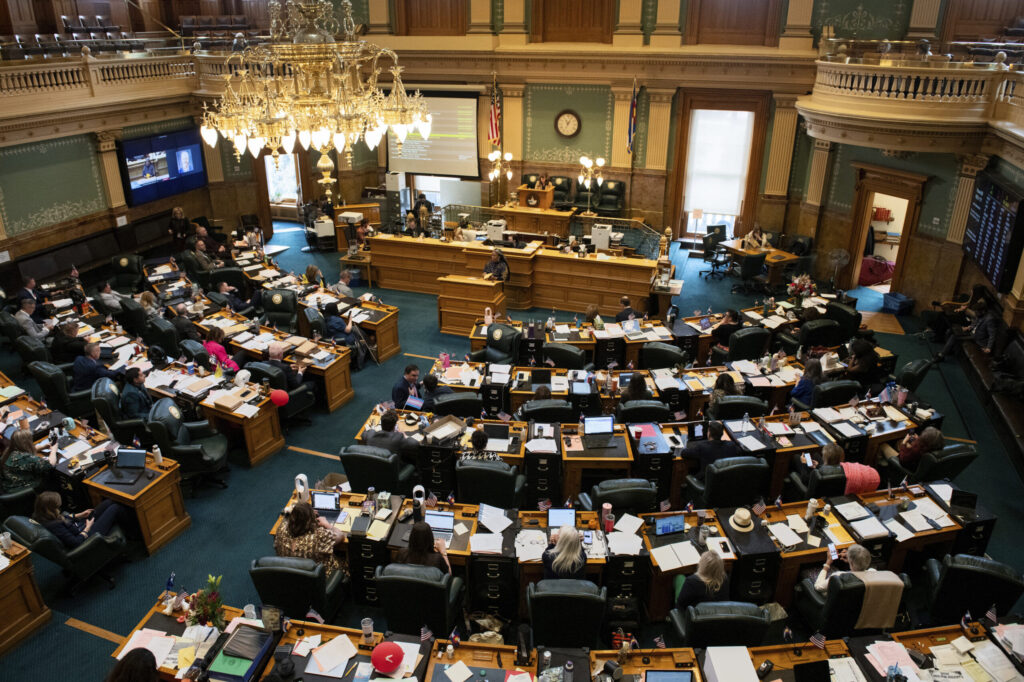
Colorado lawmakers’ speeches on immigration, Iran draw worries about decorum, grandstanding
Marianne Goodland
marianne.goodland@coloradopolitics.com
Updated 5 minutes ago
Several speeches from Colorado legislators this week have raised new worries about decorum and grandstanding in the state House after two members talked about immigration and Iran using what’s called a “point of personal privilege.” Under the rules of the...

Marianne Goodland
Reporter

Colorado’s outdoor economy is slowing down
Bernadette Berdychowski
bernadette.berdychowski@denvergazette.com
Updated 1 hour ago
The post-pandemic boom in the outdoor recreation world appears to have slowed, according to new federal data. The industry is still growing nationwide, but it’s been slower than in past years. The trend is evident in Colorado, as well, though...

Bernadette Berdychowski
Reporter

Trump fires Homeland Security Secretary Noem after mounting criticism over her leadership
Michelle L. Price
michelle.l..price@associatedpress.com
Updated 39 minutes ago
WASHINGTON (AP) — President Donald Trump on Thursday fired his embattled Homeland Security Secretary Kristi Noem, after mounting criticism over her leadership of the department, including the handling of the administration’s immigration crackdown and disaster response. Trump, who said he...

Michelle L. Price
Reporter

Trump wants to be personally ‘involved’ in picking next Iranian leader: Report
Christian Datoc, Washington Examiner
christian.datoc.washington.examiner@gazetteedit.wpenginepowered.com
Updated 2 hours ago
President Donald Trump told Axios Thursday that he wants to be personally involved with picking Iran‘s next leader, despite multiple senior administration officials repeatedly declaring that “regime change” is not a stated objective of Operation Epic Fury. Trump conducted an...

Christian Datoc, Washington Examiner
Reporter
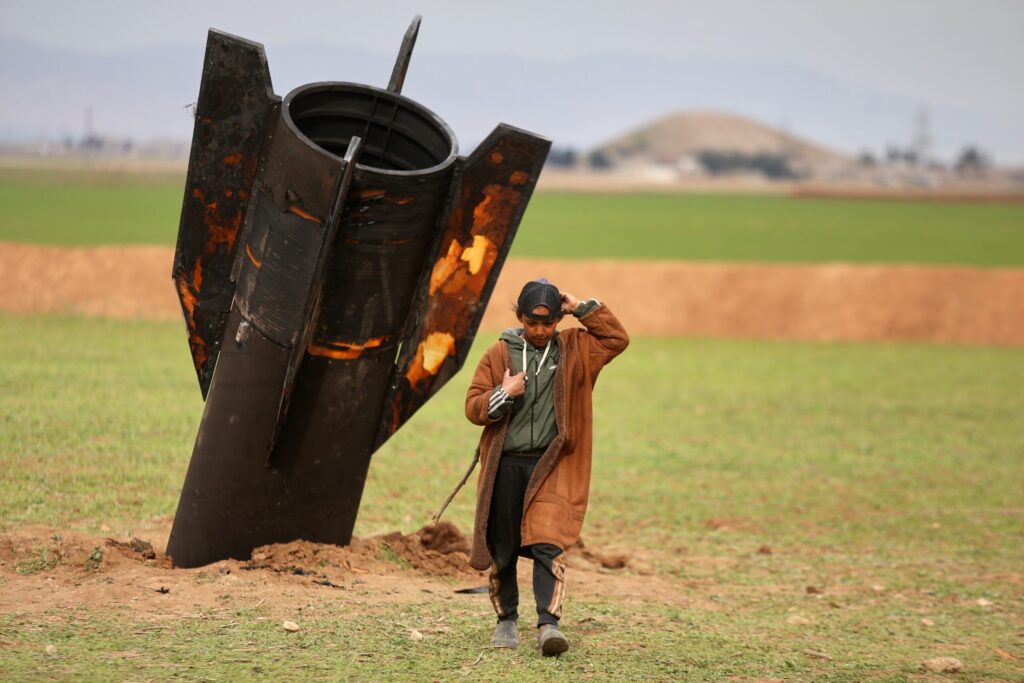
Iran widens regional war with first strike into Azerbaijan
Brady Knox, Washington Examiner
brady.knox.washington.examiner@gazetteedit.wpenginepowered.com
Updated 2 hours ago
Iran spread the growing regional war to the Caucasus with its first drone strike into Azerbaijan, hitting an airport terminal and damaging a nearby school. A video recorded by someone at Nakhchivan International Airport showed one of the drones exploding...

Brady Knox, Washington Examiner
Reporter

Rand Paul excoriates Congress for failure to pass War Powers Resolution: ‘Should be ashamed’
Claire Carter, Washington Examiner
claire.carter.washington.examiner@gazetteedit.wpenginepowered.com
Updated 2 hours ago
Sen. Rand Paul (R-KY) blasted his colleagues for failing to pass a resolution aimed at limiting President Donald Trump’s military campaign in Iran. The Kentucky Republican made the remarks in an opinion column published on Fox News a day after...

Claire Carter, Washington Examiner
Reporter
White House Correspondents’ Association dinner gives Trump chance to hit media critics
Mabinty Quarshie, Washington Examiner
mabinty.quarshie.washington.examiner@gazetteedit.wpenginepowered.com
Updated 2 hours ago
At the 2011 White House Correspondents’ Association annual dinner, former President Barack Obama delivered withering jokes against then-businessman Donald Trump. “Donald Trump is here tonight! Now, I know that he’s taken some flak lately, but no one is happier, no...


DOJ quietly closes autopen investigation targeting Biden and aides
Kaelan Deese, Washington Examiner
kaelan.deese.washington.examiner@gazetteedit.wpenginepowered.com
Updated 3 hours ago
The Department of Justice has quietly closed an investigation into former President Joe Biden’s use of an autopen to sign official documents, according to a source familiar with the matter. DOJ pardon attorney Ed Martin, the former “weaponization” czar, opened...

Kaelan Deese, Washington Examiner
Reporter
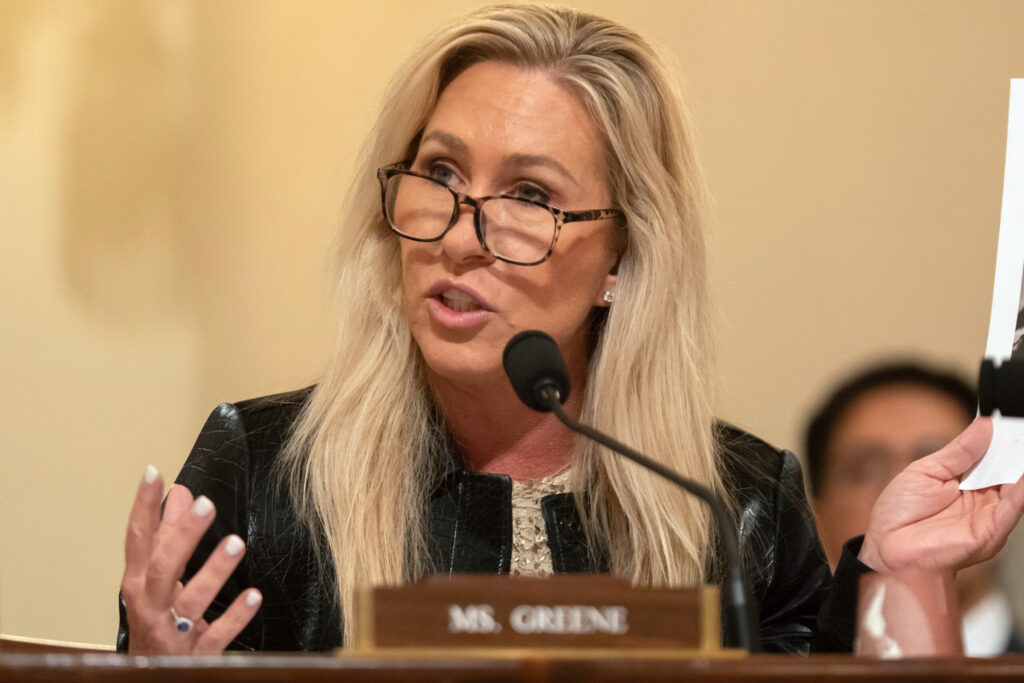
Here’s where House and Senate retirements stand in 2026
Rachel Schilke, Washington Examiner
rachel.schilke.washington.examiner@gazetteedit.wpenginepowered.com
Updated 3 hours ago
Nearly 11% of lawmakers are looking to make a change after the 2026 midterm elections, with several in both chambers either retiring or seeking higher office. The House received its first departure on Jan. 5. Rep. Marjorie Taylor Greene (R-GA)...

Rachel Schilke, Washington Examiner
Reporter

Starmer defends waffling on Iran: ‘Hanging on to President Trump’s latest words’ is not ‘special relationship in action’
Timothy Nerozzi, Washington Examiner
timothy.nerozzi.washington.examiner@gazetteedit.wpenginepowered.com
Updated 3 hours ago
British Prime Minister Keir Starmer came out swinging at Prime Minister’s Questions this week, blasting his opponents for questioning his posture on unrest in the Middle East. Fresh off the indignity of President Donald Trump dismissing him as “not Winston...

Timothy Nerozzi, Washington Examiner
Reporter
PREV
PREVIOUS
Old Spaghetti Factory poised for Colorado Springs opening
Facebook Twitter WhatsApp SMS Email Print Copy article link Save Facebook Twitter WhatsApp SMS Email Print Copy article link Save The Old Spaghetti Factory bills itself as a family-friendly restaurant chain — and plenty of families in Colorado Springs made the city a perfect fit for its latest expansion. Portland, Ore.,-based Old Spaghetti Factory will […]

See the 6 proposed new names for Mount Evans
Facebook Twitter WhatsApp SMS Email Print Copy article link Save Facebook Twitter WhatsApp SMS Email Print Copy article link Save A Colorado panel is getting ready to take on the most controversial name change in its two-year history: Mount Evans. The Colorado Geographic Naming Advisory Board, which is tasked with finding replacement names for geographic […]