







Aurora lawmakers debate election timing, partisan races
The Aurora Channel
Ideas percolating among Aurora councilmembers would shake up the way council elections are run, but debate swiftly brewed about whether the public would be on board.
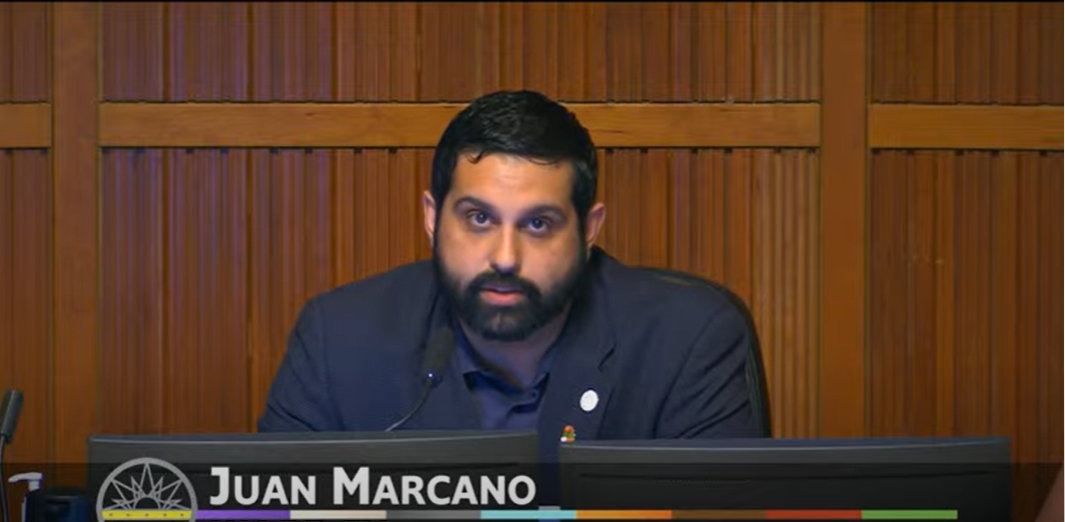
Ward IV Councilmember Juan Marcano is spearheading proposals to switch council elections from off-years to even-years so that they coincide with state and federal elections. He also wants council races to become partisan.
Marcano’s pitch is that moving elections will drive up participation, which he describes as “pitiful” in city elections to date, and ensure election results represent a majority of the city’s electorate. He also called nonpartisan races “a beautiful dream” but unrealistic, and said conducting partisan races would be more honest with voters.
Marcano raised the ideas during the Charter Review Ad Hoc Committee meeting on Aug. 2, where both were shot down by conservative committee member. Marcano can still take his proposal to the full council, and he said he plans to do that next year but wants to hold public hearings first.
Any changes to the charter would need voter approval. When asked if city staff could provide cost estimates for conducting elections in even-years, a city spokesman said the committee is set to discuss the topic again at its Aug. 23 meeting.
Most agree —participation in city elections has historically been low. Nearly 31% of registered voters participated in the 2021 city election.
Marcano provided the charter committee with several studies about other communities that switched their elections to even-years, noting Los Angeles saw a dramatic 400% increase in participation by doing so. At-Large Councilmember Angela Lawson was skeptical of comparing Aurora and L.A., saying they are starkly different communities.
Locally, Castle Rock and Parker both run their municipal elections in even years and see higher turnout, Marcano said. It’s not just a local issue, Marcano told The Denver Gazette. A recent decline in participation among federal elections signaled to him that people “are losing faith in in our democracy.”
What happens at city hall affects people’s daily lives more than D.C. does, Marcano said, calling the local level a logical place to start improving people’s engagement in elections.
“I think that that will have a trickle up effect in terms of faith of our institutions,” Marcano said.
Marcano said making races partisan will also increase participation. Finding quality information on local candidates can be difficult and many candidates “run on platitudes,” he said. Providing someone’s party affiliation is a quick indicator to voters about a candidate’s ideals, he said.
Marcano called council’s current dynamic “extremely partisan.” Nonpartisan races are “wishful thinking,” Marcano said, and not realistic in his eyes.
“It actually just basically hides the party influence from the general election because those forces are still at play,” Marcano said.
Long-term, Marcano envisions the city implementing partisan council elections and also rank-choice voting, which he said could open the door to third parties, city-specific parties and make Aurora “a laboratory of democracy.”
“Even though I am a registered Democrat, I want to see real competition,” Marcano said.
Swift criticism
Mayor Pro Tempore Francoise Bergan immediately said she would not support the proposal. Bergan questioned whether council races would get overshadowed by state and federal contests and buried on lengthy ballots.
“There is so much on those even-year ballots, like it’s crazy,” Bergan said.
The mayor pro tempore also made comments that Marcano called offensive, saying she did not think voters would make well-researched or informed decisions if the elections moved to even years.
“I don’t think it’s going to be thoughtful participation,” Bergan said.
Bergan also said she completely disagrees with characterizing the council elections as partisan, saying she was more encouraged to run because the elections were nonpartisan and that she “had no interest in being in politics, ever in my life.” She did not encounter voters asking her about her affiliation during her candidacy, she said, although Marcano said he was asked often.
Lawson said during committee talks that she thought changing the election year would overwhelm voters. Lawson also said the proposals could worsen partisanship by leading voters to vote for a candidate solely because of their affiliation.
“This is a strategy from party line, basically,” Lawson said.
Lawson was against making council races partisan, saying some people’s employers prohibit them from running in partisan elections and they would become excluded from running for local public office. Nonpartisan races make local elections unique, she said.
“I don’t care if you’re Republican or Democrat, what are you going to do for the city,” Lawson said.
Although Lawson said she opposed partisan races, she was interested to see how the public would respond to the idea, she said.
Politico insight
Vice President of Academic Success at Community College of Aurora Bobby Pace, who taught political science at Virginia Tech and the University of Colorado Boulder prior to joining CCA, said it’s “absolutely right” that turnout in local municipal elections is typically low.
Some communities have shifted local elections to November in even years, and saw greater turnout. Pace used the Olympics as an analogy, where buzz around the events can be greater when they are every four years instead of every two.
“Having the election cycles spread out over a longer array of dates tends to place folks who are not as politically active at a disadvantage — in terms of remembering to vote, actually voting, and some people can say and typically do argue that there is a relevance that is hyped when voting isn’t as often,” Pace said.
There’s also an argument that perpetual election cycles increase partisanship throughout the country, Pace said, because “it’s always making the next election right around the corner.”
Moving local elections to November could sway voters only interested in local issues to go ahead and vote in state and federal elections, Pace said.
“Very few of us recognize the power and the impact that those local municipal elections really have on our daily lives, and there are voters who are genuinely more interested in the local than the national because the national feels like it’s out of their realm of control,” Pace said.
In diverse cities like Aurora, there can often be a misconception that increasing voter turnout will lead to more progressive or liberal wins, he said. The 2020 election “really demonstrated the fact that we should not treat diverse populations as monolithic political populations,” Pace said.
“Aurora is one of the, if not the most diverse city in the state of Colorado,” Pace said, “and yet it is historically a Republican or conservative held city in terms of government structure.”
Pace said even in nonpartisan races, voters will understand a candidate’s affiliation, often expressed through political codewords. Saying they are “pro-family” can indicate a candidate is anti-LGBTQ, Pace said as an example.
“I think that the myth that folks don’t understand the partisan position of individual candidates is somewhat, I mean that’s hogwash,” Pace said.
Arapahoe County Democrats could not be reached for comment. The chair of Arapahoe County Republicans Suzanne Staiert doubted voters would support making council races partisan contests, particularly as people tire of a hyper-partisan national climate.
“Especially in a state where so many people are unaffiliated, I’m not sure they want to see more partisanship,” she said.
Partisan races make it difficult for third party and unaffiliated candidates to break through, she said, boxing out some candidates. Marcano’s proposal is also moving in the opposite direction of a push among some to make state offices like attorney general or secretary of state nonpartisan, she said.
Staiert said increasing partisanship on local bodies such as school boards has “been a bad thing for Colorado.”
“I think we already have too much partisanship,” Staiert said.

‘We’re winning so much.’ Trump delivers State of the Union address
Michelle L. Price
michelle.l..price@associatedpress.com
Updated 6 hours ago
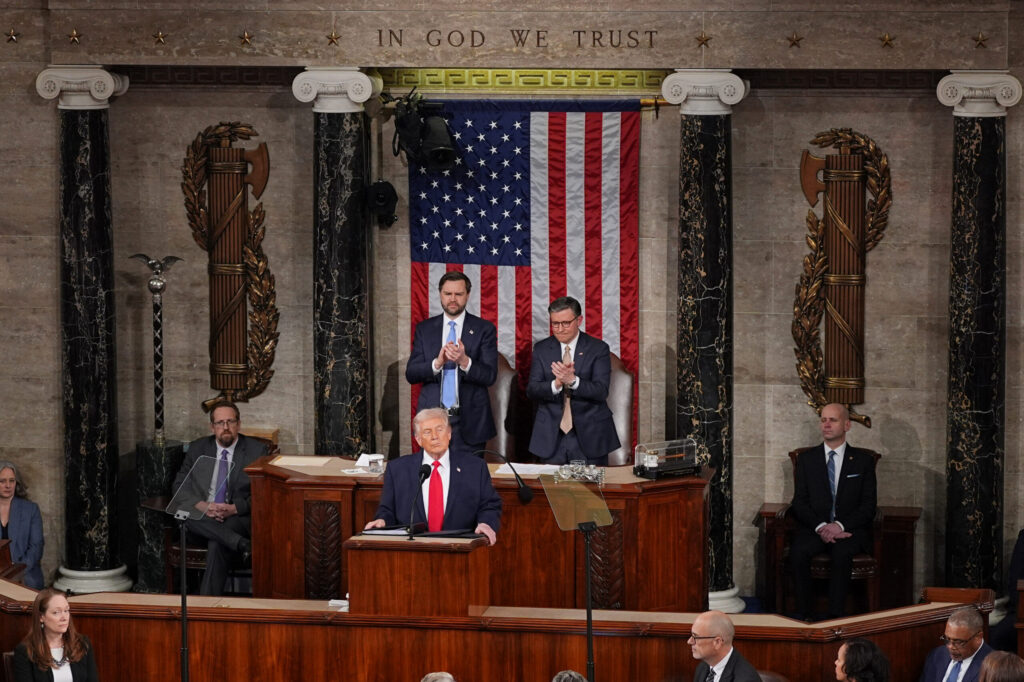
WASHINGTON • President Donald Trump said America has been “winning so much” during Tuesday’s State of the Union, touting a jobs and manufacturing boom at home and promising a “Golden Age” as the U.S. prepares to celebrate the 250th anniversary of its...

Michelle L. Price
Reporter
Watch Live: 2026 State of the Union Address
Will Weissert
will.weissert@associatedpress.com
Updated 9 hours ago
WASHINGTON (AP) — President Donald Trump will use Tuesday’s State of the Union address to champion his immigration crackdowns, his slashing of the federal government, his push to preserve widespread tariffs that the Supreme Court just struck down and his...

Will Weissert
Reporter
Senate committee kills bill to track education violations
Sage Kelley
sage.kelley@denvergazette.com
Updated 10 hours ago
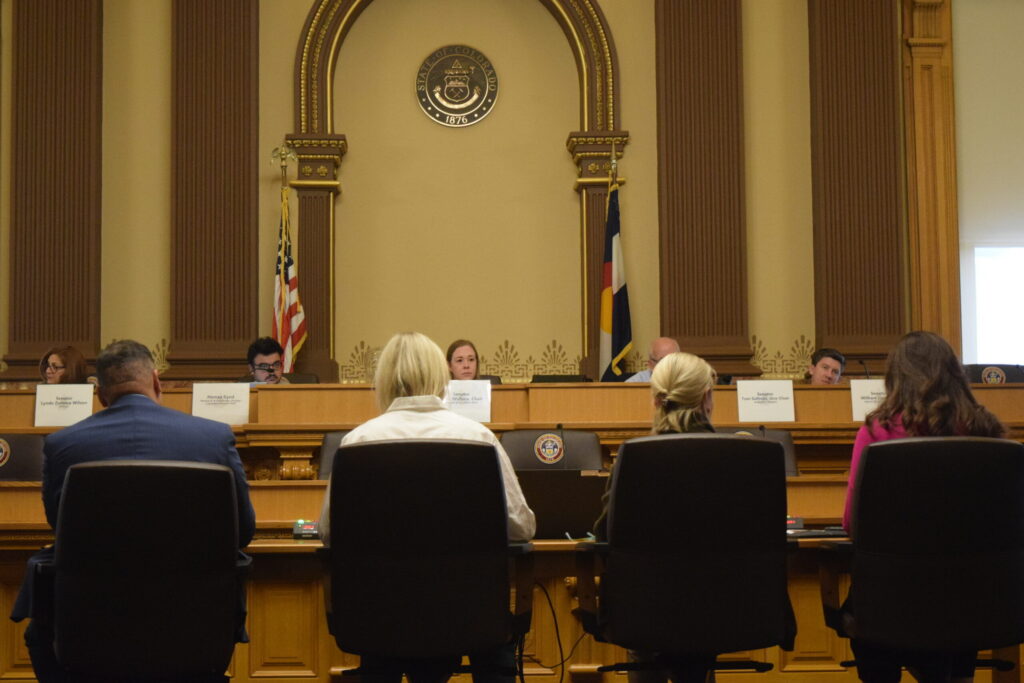
A proposed bill following in the wake of multiple Jeffco Public Schools sexual misconduct cases won’t make it to the Senate floor. The Colorado Senate State, Veterans and Military Affairs committee denied proposed Senate Bill 26-055 on Tuesday afternoon with...

Sage Kelley
Reporter
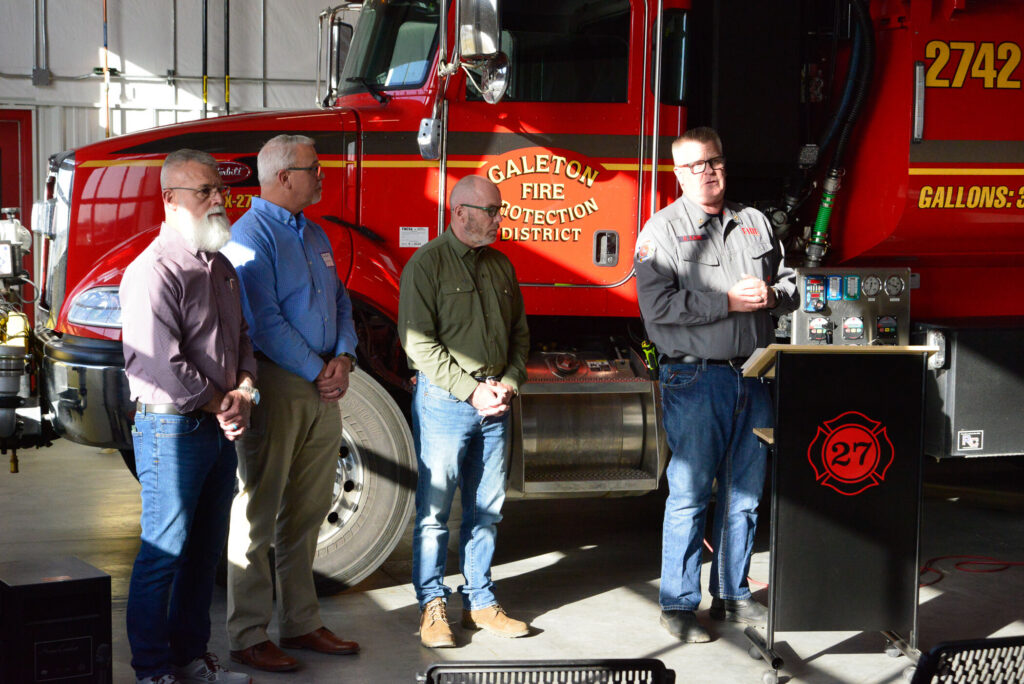
Chevron faces $1.75 million proposed penalty for Galeton Well blowout
Scott Weiser
scott-weiser@denvergazette.com
Updated 10 hours ago
The Colorado Energy and Carbon Management Commission proposed a $1.75 million penalty against Chevron for a well blowout last year at the Bishop A07-01 pad near Galeton. The cleanup could take four more years. The 2025 blowout sent contaminated fluids...

Scott Weiser
Reporter
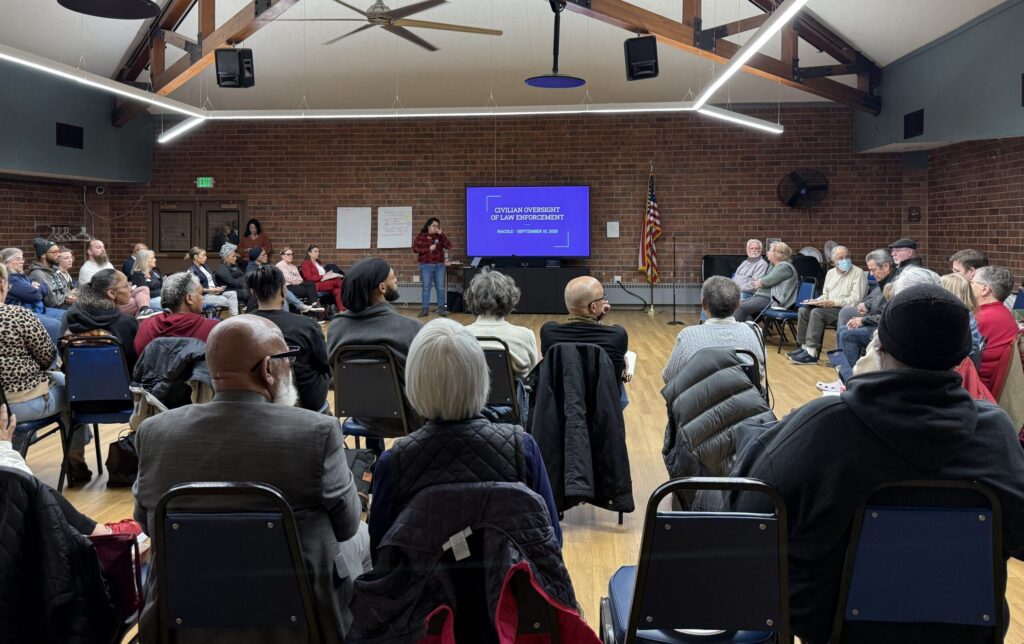
Aurora weighs options for police oversight body
Kyla Pearce
kyla-pearce@denvergazette.com
Updated 15 hours ago
Aurora officials have begun the process of creating a police oversight body, exploring similar offices in cities like Denver and Fort Worth, Texas, to understand, they said, what works and what doesn’t. Five years ago, the City Council approved funding...

Kyla Pearce
Reporter
Laura Clellan officially named director of Colorado Parks and Wildlife
Marianne Goodland
marianne-goodland@denvergazette.com
Updated 11 hours ago
Laura Clellan, who has been acting director of Colorado Parks and Wildlife since Nov. 25, was named the agency’s permanent director Monday by the Colorado Parks and Wildlife Commission. She replaced Jeff Davis, who resigned in lieu of termination weeks...

Marianne Goodland
Reporter
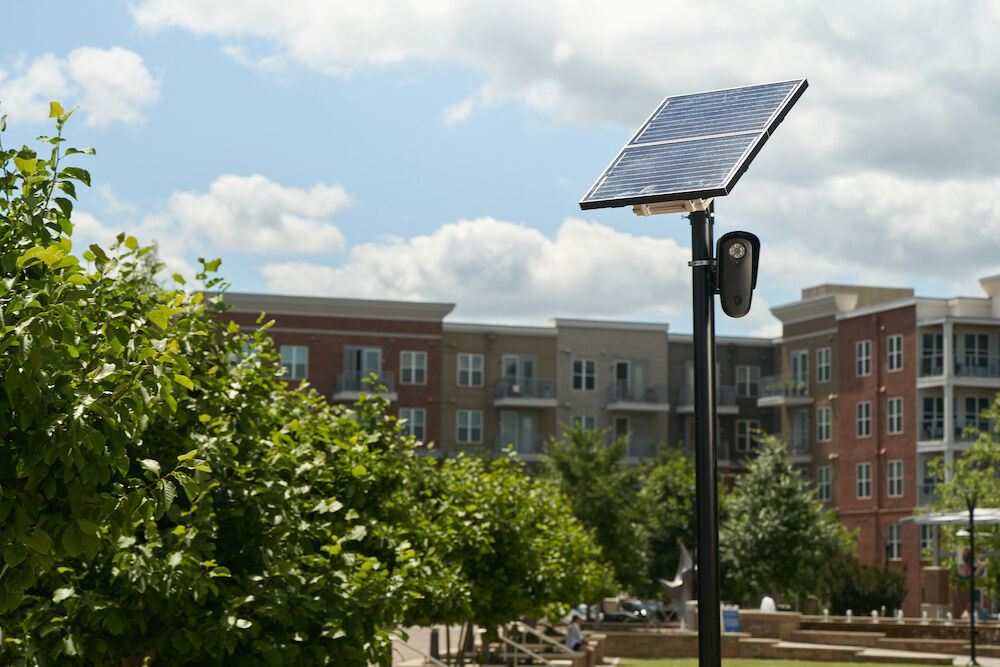
Denver ends contract with license plate camera vendor Flock
Deborah Grigsby
deborah.smith@denvergazette.com
Updated 8 hours ago
After months of tension between Mayor Mike Johnston and the City Council, Denver is ending its relationship with license plate-reading camera vendor Flock Safety, awarding the contract to Axon. “We’ve heard the community loud and clear, and it is time...

Deborah Grigsby
Reporter
Colorado group files 6 ballot measures to counter redistricting proposals backed by Democrats
Marianne Goodland
marianne-goodland@denvergazette.com
Updated 9 hours ago
A half-dozen congressional redistricting ballot measures were filed Friday by a Colorado advocacy group in response to proposals filed last week from a group seeking to flip three Republican-held U.S. House seats in two years. “The gist of it is...
Marianne Goodland
Reporter

Denver’s new property tax postcard has some residents riled
Mark Samuelson
mark-samuelson@denvergazette.com
Updated 11 hours ago
The city of Denver has launched a way of saving $100,000 toward this year’s projected $200 million budget shortfall: Instead of mailing out individual property tax bills, the city is sending postcards, reminding taxpayers that taxes are coming due and...

Mark Samuelson
Reporter
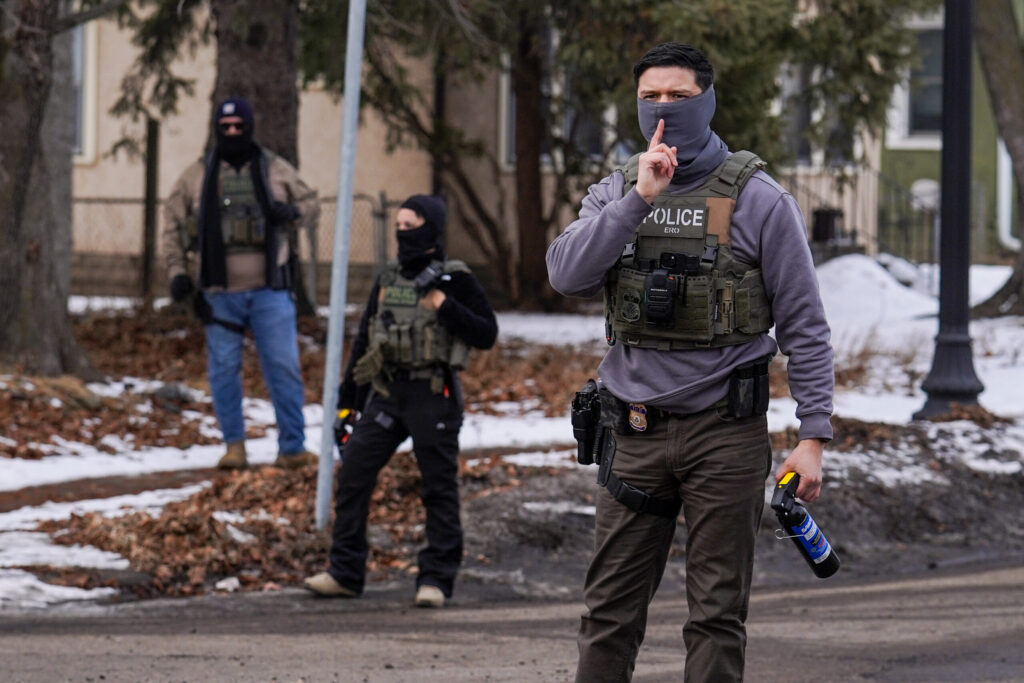
Colorado senators hold heated debate on latest immigration bill
Marianne Goodland
marianne-goodland@denvergazette.com
Updated 22 hours ago
A bill that would allow individuals who get injured during an immigration action to sue federal agents in state court won preliminary approval from the Colorado Senate on Monday. The bill would permit a “cause of action” by such individuals...
Marianne Goodland
Reporter
PREV
PREVIOUS

More than 75% of TABOR refund checks sent, but not every taxpayer will get one
Since distribution began at the beginning of the month, more than three-quarters of the $750 refund checks from the Taxpayer’s Bill of Rights have been sent to Colorado taxpayers. As of Wednesday, 2.4 million checks have been mailed to individual and joint tax filers, of the approximately 3.1 million residents who are eligible to receive […]

Q&A with Sen. Gonzales and Rep. Froelich | On making Colorado a sanctuary for abortion access
In the wake of the Supreme Court’s ruling to overturn Roe v. Wade, Colorado has emerged as a national leader for abortion protections. Even before the Dobbs v. Jackson Women’s Health Organization decision was released in June, state lawmakers enshrined abortion as a fundamental right under the Reproductive Health Equity Act. Among the most permissive […]