




2022 Colorado Springs Quality of Life Indicators report: 3 areas ‘surprisingly’ lagging
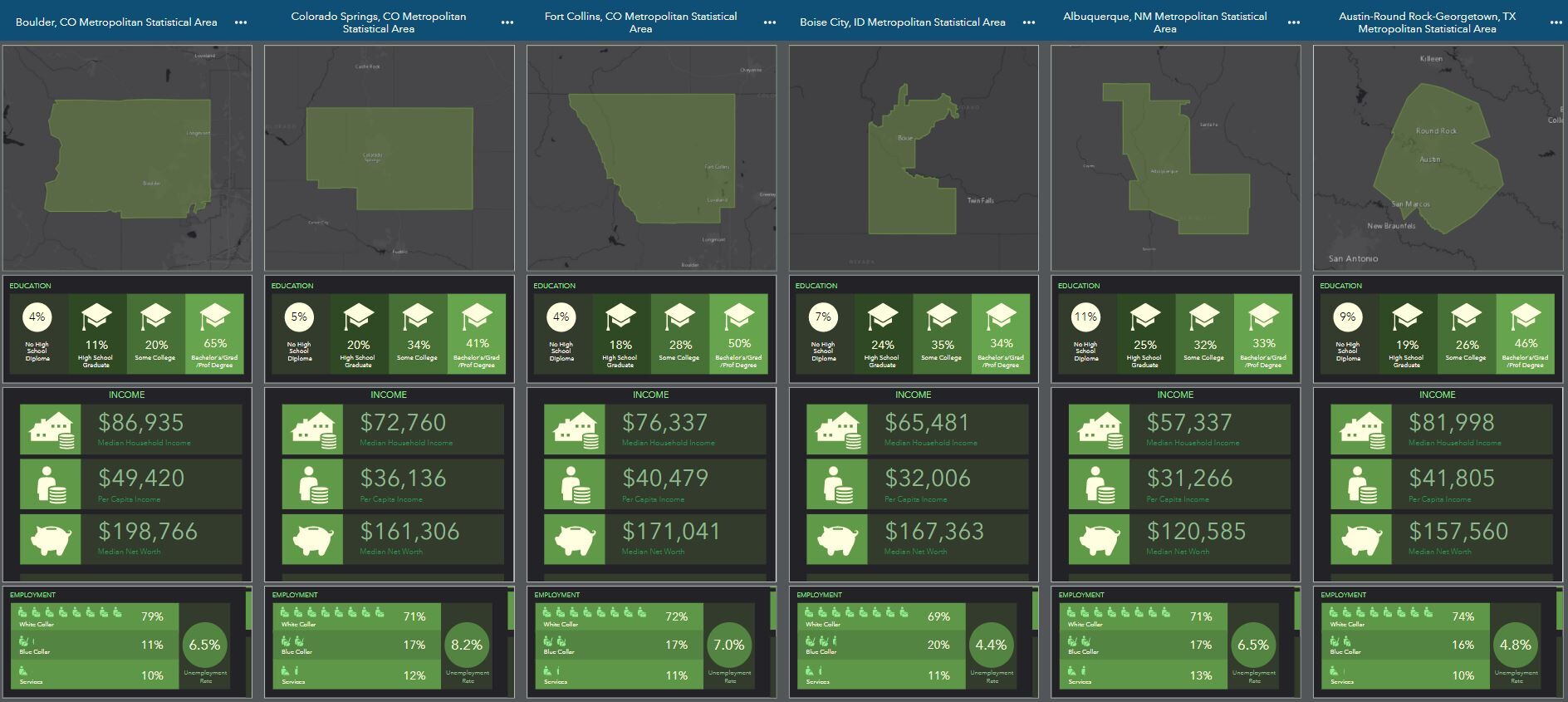
If the newly released 2022 Quality of Life Indicators report serves as the Pikes Peak region’s “report card,” outdoor recreation opportunities would receive an A-plus while facets of education, public safety and social well-being could use attention, researchers and proponents of the report said during the its formal release Wednesday.
The 15th edition of the study, rebranded this year as the Peak Progress: Quality of Life Indicators report, provides comprehensive data on 12 sectors: demographics, government, built environment, economy, social well-being, health, community engagement, education, safety, transportation, recreation and natural environment.
Have Pikes Peak region student test scores recovered since the pandemic? Here’s a look
The study compares sector data of the Colorado Springs Metropolitan Statistical Area (MSA), composed of the roughly 755,000 inhabitants of El Paso and Teller counties, with that of peer cities — Boise, Idaho; Albuquerque, N.M.; Boulder, Fort Collins and the “perceived aspirational city” of Austin, Texas — to help contextualize local and regional trends.
The report, first released by Pikes Peak United Way in 2007, is designed to provide a road map for elected officials, community leaders, nonprofits and advocacy organizations facing fiscal or policy decisions.
Experts and roughly 150 volunteers specializing in their respective sectors researched and compiled the data for the report, funded by the city of Colorado Springs, El Paso County, University of Colorado at Colorado Springs and other education institutions, and philanthropic and community alliance organizations.
But the report itself was not conducted to “shine everything up,” or seek to designate these trends as either positive or negative, according to United Way President and CEO Cindy Aubrey, but rather “objectively define” quality of life in the Pikes Peak region.
‘Very discouraging:’ Colorado Springs park director selection process scrutinized
“The goal of presenting this data is to help the community prioritize and make educated decisions about areas most deserving of time, talent and resource investment,” Aubrey said.
This year’s report is also the first to come in a digestible digital format, complete with explanatory videos, interactive graphs and charts, information summaries and more per each of the 12 sectors.
The report is based on the most current data for different indicators across the sectors, but the onset of the COVID-19 pandemic during research affected the availability and accessibility of certain data points, said Lori Obermeyer, United Way director of strategic operations.
“We tried to be really good at showing (that) some of this (data) is older than we like but that there nothing more current,” Obermeyer said.
To assuage concern over the data’s accuracy, United Way brought in third-party data quality experts from Elevated Insights, McGee Research and Catalyst Research to provide data guidance, data quality and distillation.
Jim McGee of McGee Research said the digital report includes extensive footnotes and reference lists for each sector.
“One of the things that we really worked hard to do was to source all the data so that anytime there’s a number, you can see where that number came from,” McGee said.
During the report’s launch event at United Way’s downtown office, several researchers and community members said the report revealed that certain facets of education, public safety and social well-being — including the needs of populations with disabilities or who are homeless — were “surprisingly” lagging in the Pikes Peak region behind peer cities or national trends, and that, alternatively, the satisfaction rate among residents with outdoor opportunities and spaces (92%) far exceeds that of any other aspect of living.
Colorado Springs arts organizations report low attendance, membership numbers in wake of pandemic
But Aubrey said the report’s readers, rather than its producers, will be the ultimate judges of how the data influences the allocation of public and private resources as conduits of change.
“How do we take action now that we know that we have some issues to deal with, where do we go from here?” Aubrey asked during the event. “That is what we hope will come out of this: that people will take the report and decide (that) there is work to be done.”
The full report can be found here.

Get OutThere
Signup today for free and be the first to get notified on new updates.
PREV
PREVIOUS

Aurora chooses police chief finalists, one candidate withdraws after announcement
Hours after Aurora announced the city had chosen three finalists for the city’s next permanent police chief, one of them has withdrawn from consideration. Scott Booth, currently the chief of police in Danville, Virginia, is no longer in the running, according to a news release. The two remaining finalists are: Scott Ebner, retired lieutenant colonel […]

Aurora councilmembers, mayor urge cost analysis for new proposals
The Aurora City Council has a pattern of voting on proposals without any idea of how much the policies could cost the city, some councilmembers say. And those councilmembers want that to change. The council will soon consider a resolution that could mandate fiscal notes with any proposal that will affect the city’s budget. Councilmembers […]