








Decades after displaying book bound with human skin, Denver’s Iliff School of Theology still working to make amends
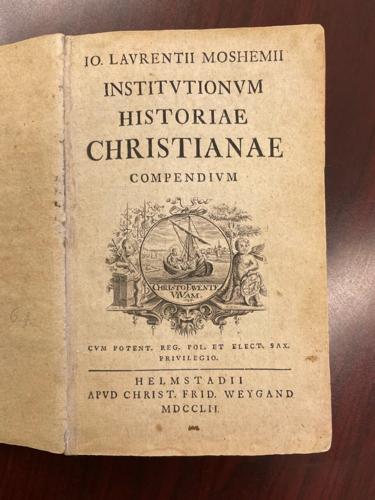
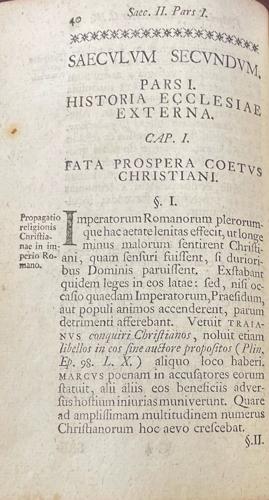
The 300-year-old uncovered "History of Christianity" was brought from a locked safe during a conference with Lenape tribal members last April. Curtis Zunigha supplied this photo of the actual book, which was kept under glass on display at the Iliff School of Theology for 80 years.
Courtesy of Curtis Zunighia
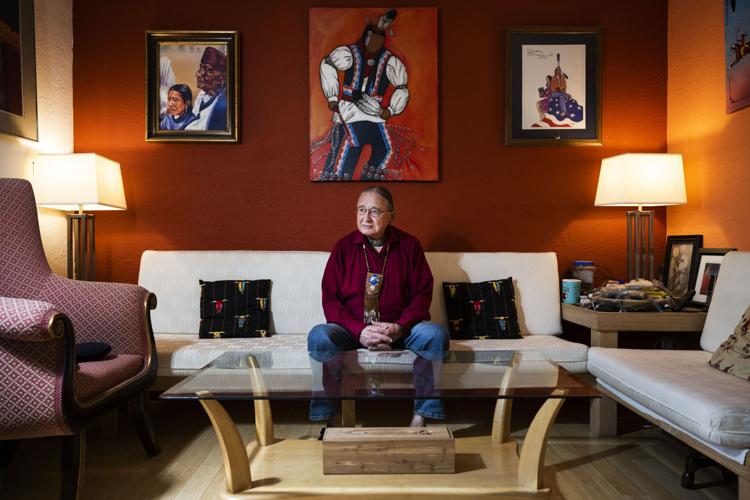
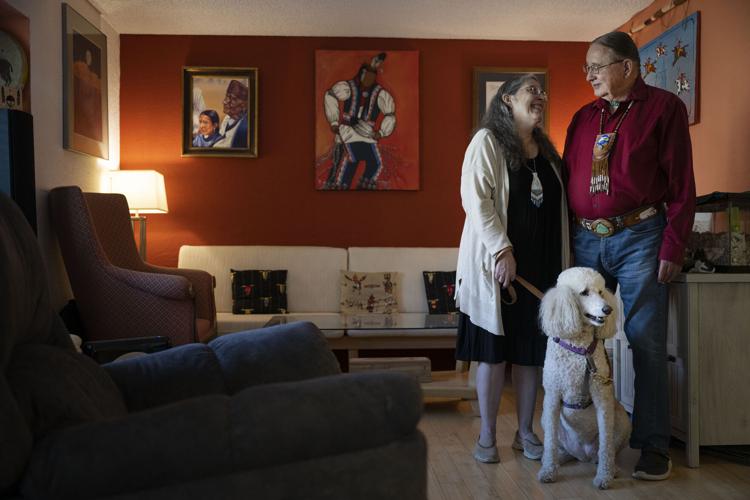
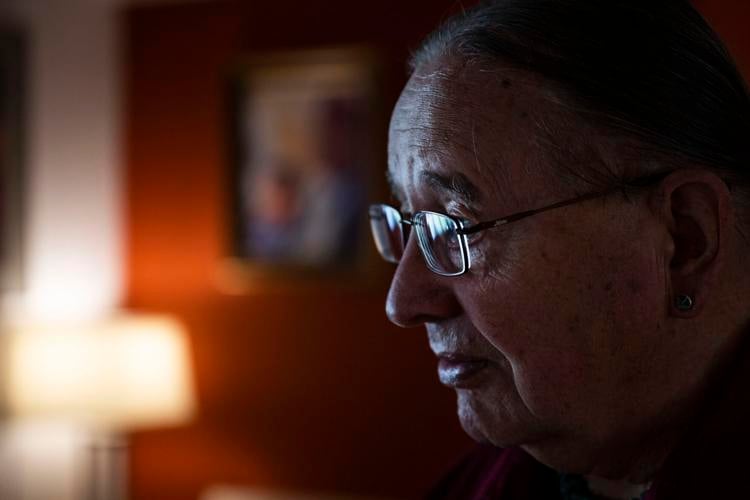
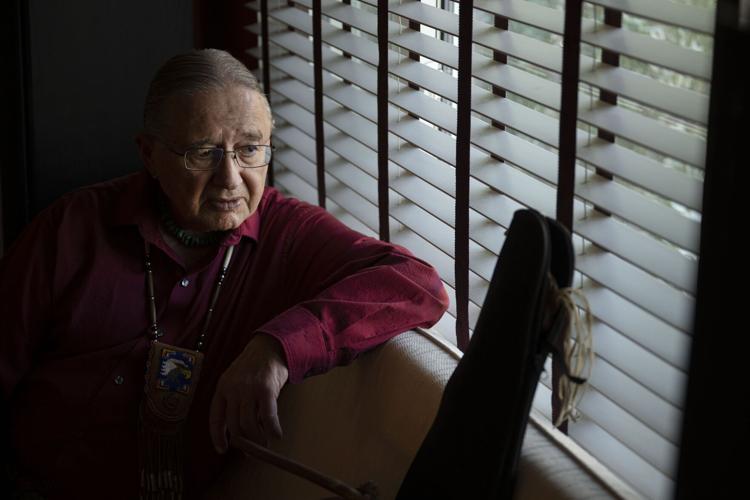
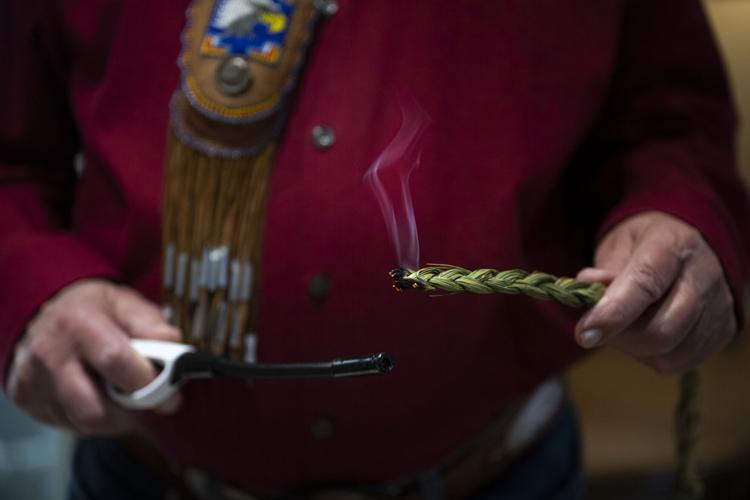
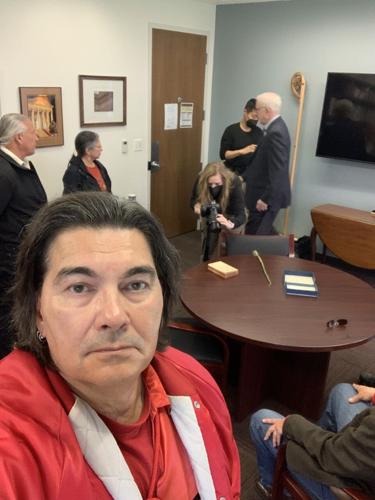
Nearly a half-century ago, a patch of human skin, stretched and tanned like an animal hide, was hand-carried to Wyoming’s Wind River Indian Reservation and quietly buried.
No one knows where it is. The cover was given to Arapaho spiritual leaders, and whether Arapaho Sundancers buried it – or somebody else did – is now lost to history.
Three-hundred-thirty miles to the southeast of that sacred burial ground sits a book without a cover locked in a safe in the basement of the Iliff School of Theology.
The skin that was buried somewhere in Wyoming once protected the old book.
Published in Latin in 1700s Europe, a Methodist minister gave “The History of Christianity,” with its ghastly cover, to Iliff as a celebrated gift in 1893.
Under one version of this story, he got it from the family of a white-squatter farmer named David Morgan, who murdered a Lenape man – or men – for daring to walk on what he considered to be his property. It’s unclear who carried out the skinning. One version says Morgan’s colleagues skinned the men and created a leather hide that was then used for knickknacks, including the book cover.
The book was then displayed for 80 years under glass like a crown jewel at Iliff’s heralded Ira J. Taylor Library.
In 1974, a group of Iliff students protested, pressuring the university to rectify the situation. They also contacted Denver Indian community through the Denver Indian Center and the Denver American Indian Movement chapter. The display was finally removed. The students and Indian leaders also sought to return the human remains.
But instead of owning up to the ugly episode, Iliff opted to erase it – by requiring everyone who was involved in the skin’s relocation to sign a confidentiality agreement.
And through that second act of indecency, the skin – and all the weight of history and violence absorbed in – would have stayed hidden had not a fellow professor told Prof. George “Tink” Tinker, an Osage scholar hired by Iliff in 1985, about the book, breaking that confidentiality.
For a while, Tinker was so hurt he couldn’t even speak about the book and considered quitting.
“I’m not Lenape, but this is an Indian person,” said Tinker, who compared the display of the “trophy” to a Confederate monument. “It justifies the whole Christian conquest, and here it was on display in a Christian school of theology.”
Instead of leaving Iliff, he decided to rip off a cover of his own with a 2014 essay titled “RedSkin, Tanned Hide: A Book of Christian History Bound in the Flayed Skin of an American Indian,” exposing his employer.
Not all scholars characterize the Western expansion as primarily a Christian movement. In his essay, Tinker sought to place this macabre episode in the context of “eurochristian invasion.” (His essay both used “christian invasion” and “eurochristian invasion.”)
Enter newly appointed Iliff President Tom Wolfe, who supported Tinker, nullified his nondisclosure obligations and vowed to take the issue head-on because, he told The Denver Gazette, “secrets kill people.”
The two are now intent on atoning for Iliff’s dark past by leaving the decision of what to do with the coverless artifact in the hands of the Lenape people.
The Lenape, now called by their English colonial name Delaware, originally lived in New Jersey, Pennsylvania and New York, but are now scattered throughout the U.S. There are about 14,000 Lenape members today.
Last April, Wolfe and Tinker brought five Lenape representatives to Denver for a conference with school leaders to discuss the book in the basement.
But when Curtis Zunigha surveyed the room, he was immediately disenchanted. The former chief and cultural director of the Oklahoma-based Delaware Tribe delegation saw a gathering of people – but no book.
“I asked Tom Wolfe specifically, ‘I want to see this. It’s in a basement or a closet. Show it to me!’ He brought it out. It’s a small book no bigger than the size of an iPad,” Zunigha said.
Even without its cover, the pages were spooky for Zunigha, who described himself as “just an old Indian” whom no one is going to listen to.
“We brought our voices to remind them to bring truth to the narrative,” he said.
Iliff’s messy narrative is but one of many incidents plaguing American universities, which are grappling with their past. A generation ago, Congress passed a law requiring colleges and museums to return Native remains and artifacts in their possession.
Harvard, the University of California Berkeley and Brown are among the schools that faced criticism for how they handled returning property to Native Americans.
The University of North Dakota is the latest to come under fire for a grisly discovery of 250 boxes of sacred Indigenous bones and artifacts on campus. University President Andrew Armocoste admits that, in those boxes, lie the remains of dozens of Native American people.
Remains from more than 108,000 Indigenous people and more than 765,000 artifacts are known to be held by museums, universities and federal agencies, according to the National Park Service.
Wolfe’s message to the Lenape is that Iliff is listening.
And the Lenape are talking.
At the end of the April conference, they gave the Iliff School of Theology a list of requests, including creating an endowed professorship to be filled by a Native American activist scholar, a required course and interpretive center, and, perhaps most surprisingly, a memorial or traveling display featuring passages of the book complete with audio recordings read by Iliff students.
Once Iliff had addressed the requests, the Lenape delegation would then recommend a course of action on the book’s disposition.
Wolfe told The Denver Gazette that the board is committed, but that the requests “will not be accomplished in one year.”
Still, Tinker is retired, Wolfe will follow him soon, and Iliff only has one Native American student and one visiting scholar, a woman from the Chickasaw Nation who is paid by an endowment created by Tinker.
Zunigha, 69, is frustrated with what he sees is a slow-motion academic process.
“It’s not just Iliff. I see it all the time with universities and museums. It’s always like, ‘My dog ate the homework’ and ‘My back hurts,’ and you never get around to getting it done.”
Said Zunigha, “We need the help of the non-Indian community to make changes and make things right. We can work together. The issues have not gone away just because we buried the Indian skin in 1974.”
Editor’s note: A section of the story on Christianity and the western expansion has been updated. Errors, such as the number of years the book was displayed, have also been corrected, and the photo captions have been revised to reflect sources’ full academic titles. Changes have also been made based on new or additional input from sources.


Understanding the rise of VPN friendly casinos in online gambling
Sponsored Content
sponsored-content@denvergazette.com
Updated 4 days ago
The landscape of online gambling has evolved dramatically in recent years, with the emergence of VPN friendly casinos playing a pivotal role in this transformation. As restrictions tighten around the globe, more players are turning to Virtual Private Networks (VPNs)...

Sponsored Content
Reporter

Exploring the dynamic landscape of new casinos in the UK
Sponsored Content
sponsored-content@denvergazette.com
Updated 4 days ago
The realm of online gambling in the UK continues to evolve, with new casinos uk making their mark on the industry. These fresh platforms are gaining traction by offering unique experiences, enhanced features, and enticing bonuses to attract players from...
Sponsored Content
Reporter

How an 815 Credit Score Secures Better Loan Options
Sponsored Content
sponsored-content@denvergazette.com
Updated 4 weeks ago
Most borrowers notice a quiet shift once their credit moves into the upper tiers. The offers feel different, the terms seem lighter, and the entire borrowing process carries less tension. An 815 credit score sits squarely in that space where...
Sponsored Content
Reporter

Exploring Denver From Home: Digital Experiences to Try Locally
Sponsored Content
sponsored-content@denvergazette.com
Updated 2 months ago
Denver buzzes with life, from its iconic skyline all the way to the glorious mountains surrounding the city. Here’s a secret that not everyone knows: some of the best experiences occur without ever having to navigate traffic, crowds, and parking...
Sponsored Content
Reporter
Denver’s Quarterback Situation: Early Expectations And Real Tests
Sponsored Content
sponsored-content@denvergazette.com
Updated 2 months ago
Facebook Twitter WhatsApp SMS Email Print Copy article link Save Denver opens the season with public title ambitions and a second-year starter at the controls. Bo Nix arrives from a record-setting rookie year, yet the test now shifts from surprise...
Sponsored Content
Reporter
Managing Financial Stress: Can Short-Term Loans Help?
Sponsored Content
sponsored-content@denvergazette.com
Updated 2 months ago
Facebook Twitter WhatsApp SMS Email Print Copy article link Save More Americans are struggling to stay financially afloat. With inflation raising the cost of basics like rent, groceries, and car repairs, many households are left with little margin for emergencies....
Sponsored Content
Reporter
Underdogs to Watch: Sleeper Picks for the 2025 Belmont Stakes
Sponsored Content
sponsored-content@denvergazette.com
Updated 2 months ago
Facebook Twitter WhatsApp SMS Email Print Copy article link Save Picture Credit The 2025 Belmont Stakes brings a shift in tradition and a reshuffling of expectations. Moved to Saratoga Race Course due to ongoing renovations at Belmont Park, this year’s...
Sponsored Content
Reporter
Key Matchups to Watch: Broncos vs. Chargers 2025 Season Preview
Sponsored Content
sponsored-content@denvergazette.com
Updated 2 months ago
Facebook Twitter WhatsApp SMS Email Print Copy article link Save Picture Credit The 2025 NFL season brings renewed intensity to the AFC West, particularly between two ambitious rivals—Denver and Los Angeles. The Broncos and Chargers are poised for two critical...
Sponsored Content
Reporter
The Evolution of Women’s Sports: Redefining Engagement for the Next Generation
Sponsored Content
sponsored-content@denvergazette.com
Updated 2 months ago
Picture Credit Photo by Jeffrey F Lin on Unsplash Women’s sports have evolved from being a marginal athletic attraction to becoming a vibrant and integral part of the global sports landscape. This evolution, shaped by perseverance, advocacy, and cultural shifts, has not only...
Sponsored Content
Reporter
Factors That Allowed Bitcoin to Exceed $100k
Sponsored Content
sponsored-content@denvergazette.com
Updated 2 months ago
source Bitcoin has finally hit the $100k mark, a huge psychological barrier people have been discussing since 2017. Every time it spiked, people started talking about the $100k mark, and every time it went down, crypto skeptics gloated that it...
Sponsored Content
Reporter
PREV
PREVIOUS

Is snowmaking an answer to Colorado's water woes?
Colorado’s lawmakers want to consider the viability of turning water into snow at high altitudes as a way to store the precious resource. They also want to focus on water year-round. The Interim Water Resources and Agricultural Review Committee, which wrapped up its summer work on Sept. 22, voted to send the two measures to […]

Allegations of racist comment, retaliation against Colorado sheriff tossed
An American Indian man formerly employed with the Logan County Sheriff’s Office has not plausibly shown he was the victim of discrimination and retaliation, a federal judge has ruled, even though the defendants did not deny the elected sheriff had repeatedly made racist comments to employees. Shadowhawk A. Tiger, who worked as a detention deputy […]