




History Colorado to offer exhibit on Sand Creek massacre
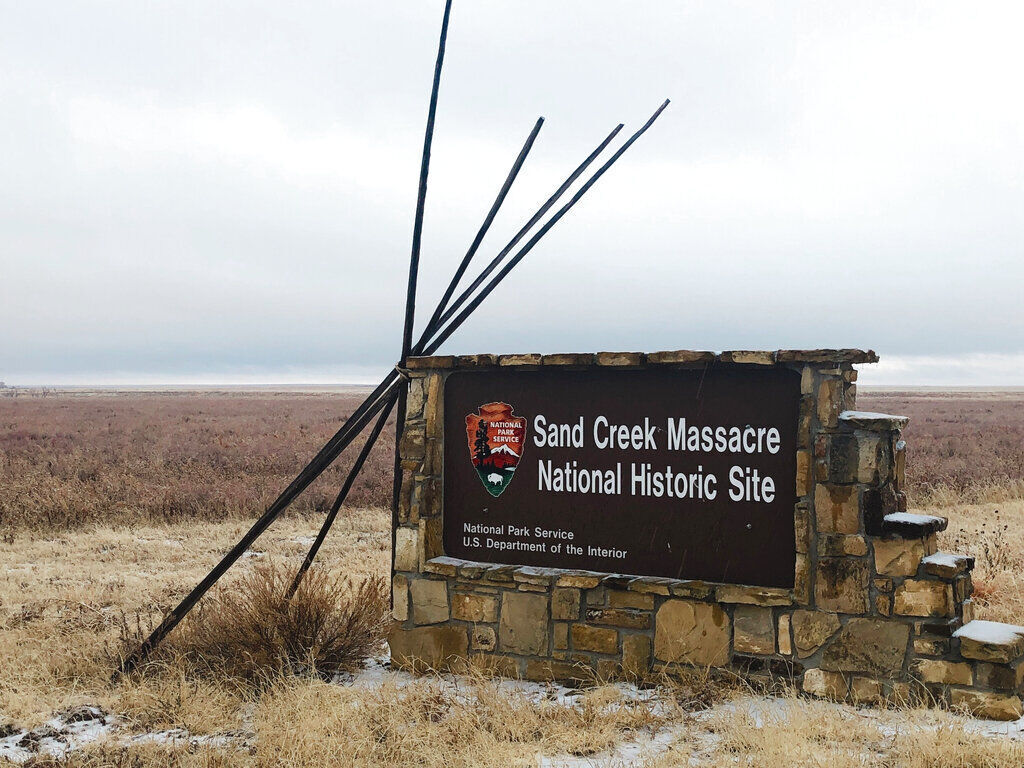
Ten days before the 158th anniversary of the Sand Creek massacre, History Colorado will open a new exhibit sharing the accounts of those who survived.
The exhibit, The Sand Creek Massacre: The Betrayal that Changed Cheyenne and Arapaho People Forever, opens on Nov. 19.
Colorado geographic naming board begins process of renaming Mount Evans
According to a news release from History Colorado, the exhibition draws from “deep consultation with representatives from the Cheyenne and Arapaho Tribes. For the first time, History Colorado will be sharing the events of the Sand Creek Massacre based on Tribal accounts and oral histories from the descendants of those who survived the Massacre.”
The exhibit also helps to begin resolving some of the difficulties the tribes have had with the state historical agency. “We’ve had difficult times in the past with History Colorado,” said Otto Braided Hair, Jr. a member of the Northern Cheyenne. “This exhibition shows commitment and dedication,” he added.
At the request of the tribes, the exhibition will not include artifacts from the day or site of the massacre.
On Nov. 29, 1864, more than 600 Colorado militia troops, led by Col. John Chivington, attacked a peaceful village of Cheyenne and Arapaho women, children and elders on the banks of Sand Creek in Kiowa County. More than 230 were slaughtered, and in the days that followed, Colorado soldiers paraded some of the remains through the streets of Denver.
Two members of the Colorado cavalry refused to participate in the massacre, and notified Washington, D.C. officials. An investigation was launched two months later. Among the outcomes of that investigation, President Andrew Johnson demanded the resignation of Colorado Territorial Gov. John Evans, who on Aug. 11, 1864 issued a proclamation that authorized the citizens of Colorado “to kill and destroy, as enemies of the country… all hostile Indians.” That proclamation was rescinded by Gov. Jared Polis last year.
A state panel is currently considering six proposed name changes for the Clear Creek County mountain named after Evans.
State geographic naming board begins process of renaming Mount Evans
The History Colorado exhibit will highlight the “living culture of the Cheyenne and Arapaho, two separate Tribes with distinct histories that were bound together forever after the tragedy at Sand Creek. Forced to leave Colorado after the Massacre, the Cheyenne and Arapaho people exist today as three sovereign Tribal nations in Montana, Oklahoma and Wyoming. The exhibition is the result of a ten-year partnership process that began in 2012 between History Colorado and the three Tribal nations,” the news release said.
The exhibit will include:
- Historic and contemporary objects exploring Cheyenne culture and traditions;
- Photos and artifacts representing Arapaho people from the 1900s to today;
- Tipis constructed in Cheyenne and Arapaho styles;
- Audio guides in four languages: Cheyenne, Arapaho, Spanish and English;
- A listening station for oral histories from Cheyenne and Arapaho descendants of survivors of the Massacre;
- A listening station for letters written by soldiers who heroically refused their orders to attack the peaceful Cheyenne and Arapaho camps;
- Historical documents from congressional and military investigations that took place following the Massacre;
- The creation of the Sand Creek Massacre National Historic Site, a unit of the National Park Service (NPS), and;
- A look at the three Tribal nations today, and the ongoing efforts to commemorate, educate, and heal from the Massacre.
Sand Creek Massacre site in Colorado to be expanded, according to Haaland
“The Sand Creek Massacre exhibition will demonstrate that people can work humbly together to remember and begin to heal from atrocities and betrayals such as this,” said Shannon Voirol, Sand Creek Massacre project director at History Colorado.
The Sand Creek Massacre National Historic Site in Kiowa County, near Eads, was authorized by an act of Congress in 2000, in collaboration with the Cheyenne and Arapaho Tribes, and dedicated in 2007. Secretary of the Interior Deb Haaland, a member of the Pueblo of Laguna, announced earlier this month the site would be expanded by 3,500 acres, more than doubling its footprint.
Get OutThere
Signup today for free and be the first to get notified on new updates.
PREV
PREVIOUS
Avid Colorado hiker died, then came back a new person
Bethany Liefer doesn’t remember anything about the morning she died. What she does remember about June 19, 2021: doing yardwork in the morning with her father, moving slowly, being out of breath, feeling unwell. Live Well: 5 things I learned this summer What she remembers next: being locked inside a coma, intubated and trached, frightened, her […]
[VIDEO] Orphaned bear cub found in tree after eluding Colorado wildlife officers for a week
Crews from Colorado Parks and Wildlife (CPW) captured a clever bear cub in Fruita on Monday, that had reportedly been eluding wildlife officers and visiting a middle school since last week. Officers were finally able to catch up with the cub after receiving a report of a young bear resting in a tree and someone’s […]